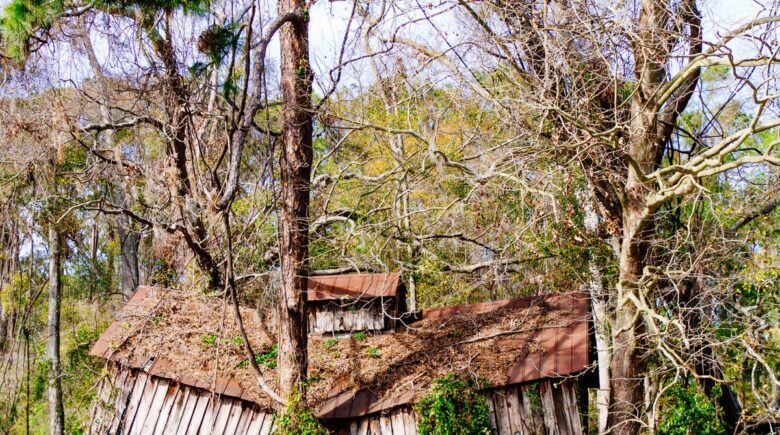
Quick Answer
Homeowners insurance tree damage in Florida is not covered when the tree was dead, diseased, or neglected before it fell. Even valid claims face hurricane deductibles of 2% to 10% of insured value and debris removal caps as low as $500 per tree.
This article is part of the broader guide on What Does Homeowners Insurance Actually Cover? A 2026 Reality Check. That guide covers the full range of homeowners perils; here the focus narrows to one issue that catches Florida homeowners off guard: a tree lands on your roof and your insurer denies the claim, or pays far less than you expected.
Florida’s storm exposure is exceptional, and so are the policy complications that come with it. Hurricane deductibles, maintenance exclusions, and debris removal sub-limits can all interact in ways that make a covered peril produce an uncovered loss. Understanding exactly where those gaps sit is the difference between a paid claim and a five-figure repair bill you absorb alone.
Key Takeaways
- Florida insurers can deny tree damage claims when an adjuster or arborist documents that the tree was visibly dead or diseased before it fell, citing the homeowner’s failure to maintain.
- Hurricane deductibles commonly run 2%, 5%, or 10% of insured dwelling value, often exceeding the cost of roof repairs from a single tree strike and leaving homeowners with no payout.
- Most standard policies cap debris removal at $500 to $1,000 per tree, even when structure damage is covered; removing a large live oak with a crane can cost $3,000 or more.
- According to the Florida Office of Insurance Regulation’s 2025 Hurricane Helene data, 33% of closed claims without payment were denied because the loss fell below the deductible.
| Policy Type | Typical Hurricane Deductible | Debris Removal Cap (per tree) | Debris Removal Endorsement Availability | Carrier Examples |
|---|---|---|---|---|
| Standard HO-3 (Admitted) | 2%, 5%, or 10% of dwelling value | $500–$1,000 | Yes (e.g., Allstate, State Farm) | Allstate, State Farm, Nationwide |
| Citizens Property Insurance | Tiered: 2% to 10% based on storm wind speed and policy age | $500 (no option to increase) | No (mandatory deductibles) | Citizens, Florida’s state-backed insurer |
| Surplus Lines (e.g., Lloyd’s, AIG) | 5% to 12% (no regulatory cap) | $250–$750 (often lower) | Possible, but underwriting varies | Lloyd’s, AIG, Chubb, ACE |
| HO-2 (Named Peril) | 2% to 10% (if storm qualifies) | $500 (standard) | Yes, but limited coverage | Citizens, Selective Insurance, USAA |
When Homeowners Insurance Typically Covers Tree Damage in Florida
Coverage exists when a covered peril causes the tree to fall. On a standard HO-3 open-peril policy, sudden and accidental damage to the dwelling from a falling tree is covered unless a specific exclusion applies. Wind, lightning, and hurricane-force gusts all qualify as covered perils under most Florida policies. If a healthy oak topples during a named storm and punches through your roof, the dwelling damage portion of your policy should respond, subject to your deductible.
The distinction between dwelling damage and yard-only falls matters enormously. If the tree lands on your house, detached garage, or a covered fence, most policies include at least some removal benefit. If the same tree falls harmlessly into your yard without striking any covered structure, standard policies will not pay for removal at all. The Florida Department of Financial Services confirms that coverage is peril-specific and structure-specific, meaning a tree lying in your lawn is generally your expense unless your policy includes a specific debris removal endorsement.
Named-peril HO-2 forms, which some surplus lines carriers and Citizens Property Insurance offer in Florida, are more restrictive than HO-3. Under HO-2, the falling tree must result from one of the listed perils in the policy, and the list is shorter. If you are unsure which form type your policy uses, the declarations page will name it. The Florida Office of Insurance Regulation notes that coverage details vary by policy type, so reading your specific form is not optional.
The Biggest Denial Trigger: Neglect and Maintenance Failures
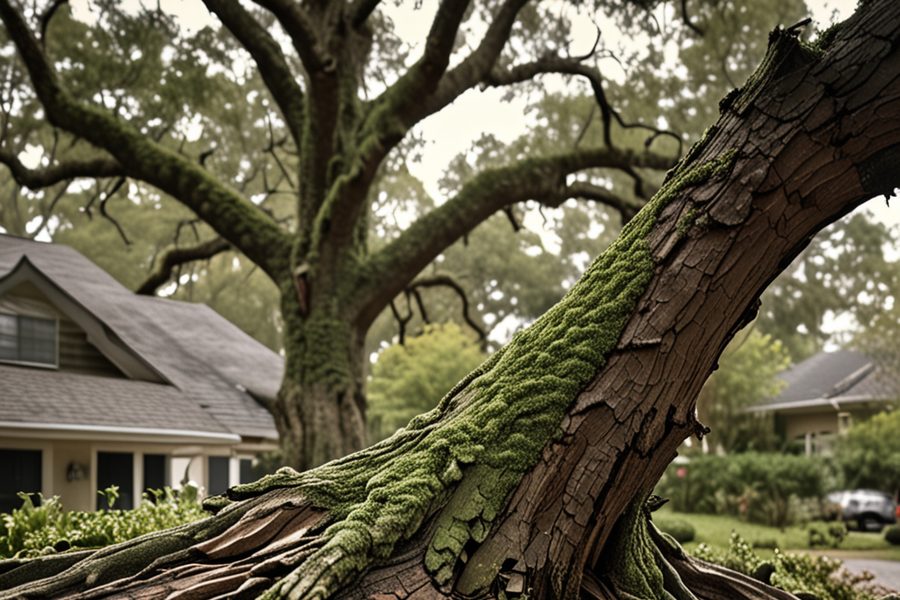
Homeowners insurance tree damage in Florida is not covered when an insurer can show the tree was already dead, rotting, or visibly hazardous before the storm arrived. This is the single most common reason tree-related roof claims are denied in Florida. Adjusters and independent arborists hired by carriers now routinely use drone imagery and pre-storm satellite photos to document decay, hollow trunks, or fungal growth that existed weeks or months before the event. If visible deterioration predates the loss, the carrier will argue the damage was not sudden and accidental but rather the foreseeable result of deferred maintenance.
Warning
If a neighbor previously notified you in writing that a tree on your property was dead or diseased and you failed to act, that notice can be used as evidence of negligence in a claim denial. Keep records of any such communications and respond promptly with documented removal or trimming.
Limits on Tree Removal and Debris Cleanup Costs
Even when the underlying structure claim is approved, the debris removal benefit is capped. Most standard Florida policies limit tree removal to $500 to $1,000 per tree, and that sub-limit is separate from your main deductible calculation. Removing a mature Florida live oak that has impaled a roof often requires a crane, a certified arborist crew, and multiple haul-away trips; the real-world cost frequently falls between $3,000 and $6,000 for large specimens.
That gap between the $1,000 policy sub-limit and a $4,500 crane removal bill is an out-of-pocket expense most homeowners do not anticipate. You can address it before the next storm by asking your insurer about a debris removal endorsement that raises the per-occurrence limit. Our guide to loss of use coverage for homeowners covers a related angle: if tree damage makes your home temporarily unlivable, that additional living expense benefit is also subject to its own caps and waiting periods, which stack on top of the removal shortfall.
Florida Hurricane Deductibles and Why Small Claims Disappear
Florida law permits carriers to apply a separate hurricane deductible whenever a named storm triggers the damage, and that deductible is expressed as a percentage of the insured dwelling value rather than a flat dollar amount. On a home insured for $400,000, a 2% hurricane deductible equals $8,000; a 5% deductible reaches $20,000. A tree that causes $9,000 in roof damage during a hurricane produces zero payout under the 2% deductible and is deeply submerged under the 5% version.
The scale of this problem showed up clearly in post-storm data. According to the Florida Office of Insurance Regulation’s 2025 analysis of Hurricane Helene claims, 33% of closed claims without payment were denied because the loss fell below the applicable deductible. For Hurricane Milton, that figure was even higher: 41% of closed claims without payment fell into the below-deductible category. To put that in dollar terms: if a homeowner with a $400,000 dwelling and a 5% hurricane deductible suffers $18,000 in tree-related roof damage, the insurer owes nothing. The full $18,000 falls within the $20,000 threshold. A separate 20% of Hurricane Helene denials cited flood coverage issues, a reminder that windstorm and flood are distinct perils under most standard policies.
Homeowners with Citizens Property Insurance or surplus lines carriers face additional complexity. Citizens applies tiered hurricane deductibles that depend on the age of the policy and the wind speed at the location during the named storm. Surplus lines carriers, which have grown common in coastal Florida as admitted carriers have exited, operate outside standard rate filing requirements and may impose higher deductibles or additional wind exclusions. Before assuming your roof claim will be paid, confirm which deductible tier applies and calculate whether the repair estimate actually clears that threshold. For broader context on how coastal policies are priced and structured, see our coverage of how coastal homeowners can still find affordable insurance in 2026.
Info
Florida’s hurricane deductible applies only to losses caused by a named storm. Damage from a non-named windstorm or a severe thunderstorm typically triggers your standard all-peril deductible, which is usually a flat dollar amount and far lower. Confirm with your insurer whether the triggering event qualifies as a named hurricane before calculating your exposure.
When a Neighbor’s Tree Falls on Your Roof
Your own homeowners policy almost always pays first when a neighbor’s tree damages your home. This surprises many Florida homeowners who assume the neighbor’s liability policy should respond immediately. Under standard homeowners liability rules, a tree fall is considered an act of nature unless the tree owner was demonstrably negligent, and negligence requires proof: a prior written notice of the hazard, a municipal citation for the dead tree, or an arborist report documenting visible decay that the owner ignored.
Subrogation is possible but not guaranteed. After your insurer pays your claim, it may pursue the neighbor’s insurer to recover costs if negligence can be established. That process takes time and documentation. You strengthen your position by saving any written communications about the tree’s condition, hiring an independent arborist immediately after the fall, and photographing the root system and trunk for evidence of pre-existing disease. For a related scenario involving neighbor liability in a different state, see the sibling article “When Does Homeowners Insurance Cover a Neighbor’s Property Damage in Texas? A 2026 Update,” which addresses the same subrogation mechanics in a slightly different regulatory environment.
One more complication worth naming: if your neighbor’s tree falls but causes no structural damage to your home, just debris in your yard, neither their liability policy nor your own homeowners policy is likely to pay. The costs of cleanup in that scenario are typically yours. This is consistent with the coverage trigger discussed in the first section: structure damage is the threshold that activates most debris removal benefits.
Related reading: homeowners policy really protecting roof.
Related reading: general insurance policy doesn’t cover.
Frequently Asked Questions
Does Florida homeowners insurance cover a tree that fell on my roof if the tree was on my neighbor’s property?
Yes, your own policy typically responds first, regardless of tree ownership. Your insurer may later pursue the neighbor’s carrier through subrogation, but only if documented negligence on the neighbor’s part can be proved. Expect your own deductible to apply while that process plays out.
What happens if the tree falls in my yard but does not hit the house?
Standard policies do not cover removal costs when a fallen tree misses all covered structures. No structure damage means no covered loss, and no debris removal benefit. You can add an endorsement to some policies that provides a small removal benefit even when no structure is struck, but this is not included by default.
How do I know if my hurricane deductible will wipe out my tree damage claim?
Multiply your insured dwelling value by your hurricane deductible percentage: for example, $350,000 times 2% equals $7,000. If your repair estimate is below that figure, your insurer owes nothing. Get a written repair estimate from a licensed contractor before filing to confirm whether you are above or below your threshold.
Can an insurer deny my claim because my tree looked dead before the storm?
Yes, and this is among the most common denial reasons in Florida. Carriers use adjuster photos, drone imagery, and arborist inspections to document pre-existing decay. If visible deterioration existed before the storm, the insurer will argue the loss was not sudden and accidental, which is the coverage trigger for most standard policies. Keeping dated photos of your trees in good health is one of the few defenses available to you after the fact.
Sources
Sources
- Florida Office of Insurance Regulation, Homeowners Insurance Overview
- Florida Department of Financial Services, Homeowners Insurance Consumer Guide
- Florida Office of Insurance Regulation, Hurricane Helene and Milton Claim Denial Data (2025)
- Smart Insurance 101, What Does Homeowners Insurance Actually Cover? A 2026 Reality Check
- Smart Insurance 101, What Happens When a Tree Falls on Your House? Insurance Explained
- Smart Insurance 101, How Homeowners in Coastal Zones Can Still Find Affordable Insurance in 2026
- Experian, Credit Reporting and Consumer Financial Data
- Federal Reserve, Financial Services and Economic Data
- Consumer Financial Protection Bureau, Insurance and Financial Consumer Rights
- Federal Deposit Insurance Corporation, Insurance and Consumer Protection
- SoFi, Personal Finance and Insurance Products
- Chase, Insurance and Financial Services
- FICO, Credit Scoring and Risk Assessment
- APR.gov, Interest Rate Transparency and Financial Data
- DTI.gov, Debt-to-Income Ratio and Credit Guidelines


