Fact-checked by the Smart Insurance 101 editorial team
Quick Answer
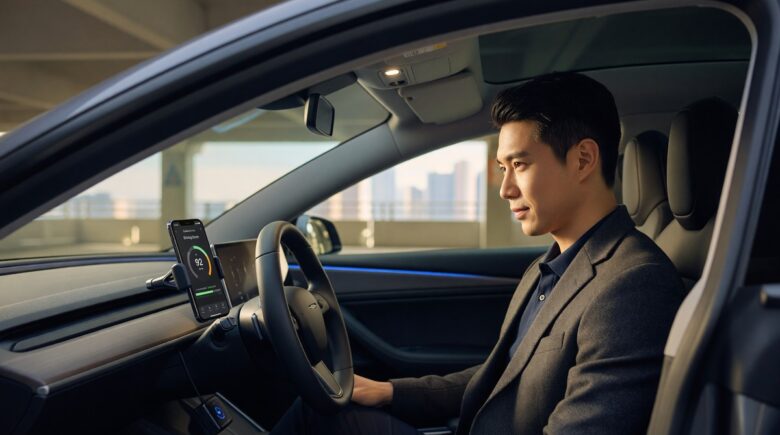
Usage-based auto insurance (UBI) uses telematics devices or apps to track your driving habits and price your premium accordingly. Safe drivers can save an average of 10–40% on their auto insurance, with programs from Progressive, State Farm, and Allstate available in most U.S. states.
Updated August 2026
Key Takeaways
- Telematics users save a median of $120 annually on auto insurance, according to Consumer Reports’ 2025 survey.
- Young drivers using telematics save a median of $245 per year, reflecting the high cost of traditional premiums for this group, per Consumer Reports (2025).
- Only 14% of American auto insurance policyholders had used telematics with their current insurer, which tells you how much room this market still has to grow, according to Consumer Reports (2025).
- Telematics programs monitor six or more crash-risk factors, including hard braking and nighttime driving, as identified by the National Highway Traffic Safety Administration.
- Progressive Snapshot is one of the few programs that can raise your premium based on poor driving behavior, while others use a no-surcharge model.
- Insurers often retain telematics data for years, and the Federal Trade Commission has flagged such data practices as a growing consumer privacy concern.
Usage-based auto insurance is a pricing model where insurers use real-time driving data, speed, braking, mileage, time of day, and phone use, to calculate your premium instead of relying solely on demographic factors. According to the Insurance Information Institute’s 2024 data, UBI programs now account for a rapidly growing share of personal auto policies issued in the United States.
Auto insurance premiums keep climbing nationwide, and usage-based pricing gives careful drivers a direct route to lower costs based on how they actually drive, not just their age or zip code.
How Does Telematics Actually Work?
Telematics collects driving data through a plug-in OBD-II device, a mobile app, or factory-installed vehicle sensors, then sends that data to your insurer for analysis. The technology has existed since the 1990s, but smartphone GPS and cloud computing have made it precise enough for widespread insurance pricing.
What Driving Behaviors Are Measured?
Most programs monitor a core set of behaviors that correlate with crash risk. Insurers weight these signals differently, but the tracked factors are largely consistent across carriers:
- Hard braking events, sudden stops that suggest following too closely
- Rapid acceleration, aggressive throttle patterns linked to higher collision rates
- Nighttime driving, miles driven between midnight and 4 a.m., a high-risk window
- Speed, sustained driving above posted limits
- Total mileage, fewer miles generally means less exposure
- Phone distraction, some apps detect screen interaction while moving
The National Highway Traffic Safety Administration (NHTSA) links distracted driving and speeding to the majority of fatal crashes. That’s exactly why insurers weight those two variables so heavily in their scoring algorithms.
Key Takeaway: Telematics programs score drivers on 6 or more behavioral signals, including hard braking and nighttime miles, using data sourced from NHTSA-identified crash risk factors. Your score directly determines your discount tier at renewal.
How Much Can You Really Save?
Safe drivers typically save between 10% and 40% on their auto premiums through usage-based auto insurance programs, depending on the carrier and driving score. The savings aren’t guaranteed. Poor scores can trigger surcharges at some insurers, but most programs promise at least a small discount just for enrolling.
For a clearer picture, consider this real-world example: a 25-year-old driver with a baseline annual premium of $1,800. If they enroll in Allstate Drivewise and land a top-tier safe driving score, they could earn a 40% discount. That’s $720 in annual savings, or $60 a month. Over a year, that’s roughly a full month’s premium wiped out. Even a modest 10% discount still saves $180, or $15 a month.
For young drivers, the median savings from telematics use is $245 annually, according to Consumer Reports’ 2025 survey, a figure that shows just how disproportionately this age group benefits.
Key Takeaway: The best usage-based auto insurance programs offer discounts up to 40% for safe drivers, with Allstate Drivewise and Nationwide SmartRide leading on maximum savings. Choose a no-surcharge program if you want to reduce your auto insurance without risk of a rate increase.
Who Benefits Most?
Drivers who stand to gain the most are low-mileage commuters, remote workers, retirees, and anyone who drives mostly during daytime hours on weekdays. Usage-based auto insurance rewards predictable, low-risk behavior, so if your lifestyle matches that profile, the savings can be substantial.
Young drivers are a particularly important group. Traditional pricing penalizes drivers under 25 heavily because of statistical risk, not individual behavior. A 22-year-old with genuinely safe habits pays the same high base rate as a reckless peer. Telematics breaks that link. According to the Insurance Information Institute, young drivers pay some of the highest premiums in the country, which makes UBI discounts especially valuable for that group.
Who Should Think Twice?
Not every driver is a good candidate. A few situations tend to reduce or wipe out potential savings:
- Frequent late-night driving for work (rideshare drivers, nurses, bartenders)
- Long highway commutes that rack up high annual mileage
- Driving in heavy urban stop-and-go traffic, which triggers braking flags
- Vehicles without an accessible OBD-II port (some hybrids and older models)
Take a rideshare driver logging 30,000 miles a year, mostly at night. Their telematics score gets penalized on both speed and time-of-day factors, and in cases like this the discount often doesn’t offset the higher base rate, or the program simply doesn’t apply. The 14% adoption rate among U.S. policyholders, per Consumer Reports (2025), suggests plenty of drivers have run the numbers and decided it’s not worth it.
Key Takeaway: Remote workers, retirees, and young safe drivers gain the most from usage-based auto insurance, while rideshare and night-shift workers may see limited benefit. Programs with surcharge risk deserve extra scrutiny, so always check the full terms of your auto insurance policy before enrolling.
What Are the Privacy Trade-Offs?
Telematics programs collect continuous location and behavioral data, which raises legitimate privacy questions every consumer should weigh before signing up. Your insurer, and potentially its data partners, will have access to a detailed record of where you drive, when, and how.
Most major carriers spell out data retention and sharing policies in their program agreements. Progressive, for example, states in its Snapshot disclosure that trip data may be used for underwriting, claims investigation, and product development. The Federal Trade Commission (FTC) has flagged connected-vehicle data as a growing consumer privacy concern, noting that data collected for one purpose can end up repurposed in ways consumers never anticipated.
Privacy laws vary by state. The California Consumer Privacy Act (CCPA) gives residents the right to request deletion of personal data, including telematics records held by insurers licensed in the state. The Utah Insurance Department defines Insurance to Value as an amount of insurance at, or close to, the value of the property insured. That principle applies directly to how insurers assess risk and set rates based on data, telematics included.
Ask These Questions Before Signing Up
Before enrolling, get clear answers to:
- Is my location data stored, and for how long?
- Can my data be sold to or shared with third parties?
- Will telematics data be used in claims investigations against me?
- Can I opt out mid-term and revert to standard pricing?
Some states, including California, have enacted stricter data protection rules. The California Consumer Privacy Act (CCPA) gives residents the right to request deletion of personal data, including telematics records held by insurers licensed in the state.
Key Takeaway: Telematics programs collect location and behavioral data that may be retained for years and used beyond just premium calculation. The FTC has warned consumers about connected-vehicle data practices, so always read the program disclosure before enrolling.
How Do You Sign Up?
Enrollment is straightforward: contact your current insurer, ask whether they offer a UBI program, and choose between a plug-in OBD-II device or a smartphone app. Most programs run a trial period of 90 to 180 days before calculating your first discount, and your adjusted rate typically takes effect at your next renewal.
If your current insurer doesn’t offer telematics, or their discount cap is low, switching carriers is worth considering. Premiums have been climbing sharply, as detailed in our analysis of why insurance premiums are exploding, which makes the 10–40% savings from UBI more valuable than ever. If you do switch, confirm that your new carrier will honor any loyalty discounts you currently hold.
How to Maximize Your Discount
- Drive during daytime hours whenever possible, nighttime miles are scored most harshly.
- Maintain a three-second following distance to reduce hard-braking events.
- Use phone-mount apps to avoid distraction flags on mobile-based programs.
- Review your weekly score reports and adjust behavior before renewal is calculated.
- Bundle your policy with homeowners coverage, many insurers stack UBI savings on top of multi-policy discounts.
For first-time buyers, our tips for getting your first auto insurance cover how to evaluate telematics enrollment alongside other starter discounts like good-student and defensive-driving credits.
Key Takeaway: Most UBI programs calculate your discount over a 90–180 day trial, with savings applied at renewal. Daytime driving and consistent braking control are the two behaviors with the greatest impact on your final score, according to published driver discount guidance.
Frequently Asked Questions
Can usage-based auto insurance raise my premium?
Yes, some programs, such as Progressive Snapshot and Travelers IntelliDrive, can increase your rate if your driving score is poor. Others, like State Farm Drive Safe & Save, Allstate Drivewise, and Nationwide SmartRide, use a no-surcharge model, meaning your rate cannot go up based on driving behavior.
Does telematics insurance track my GPS location?
Yes, most programs collect location data as part of trip tracking. How long it’s retained and whether it’s shared with third parties varies by carrier and state law. Always read the program’s privacy disclosure before enrolling and check your state’s consumer data protection rights.
How much can a safe driver save?
Safe drivers typically save between 10% and 40% on their premiums, depending on the insurer and their driving score. The highest maximum discounts, up to 40%, are offered by Allstate Drivewise and Nationwide SmartRide. For young drivers, median savings reach $245 annually, according to Consumer Reports (2025).
Is telematics worth it for low-mileage drivers?
Yes, low-mileage drivers are among the biggest beneficiaries. Some programs, including State Farm Drive Safe & Save, calculate discounts partly on annual mileage, so drivers who log fewer than 7,500 miles per year can see outsized savings. The median annual savings for telematics users is $120, per Consumer Reports (2025).
What happens if I remove the device early?
Removing an OBD-II device or uninstalling the tracking app mid-term typically ends your discount eligibility right away. Some carriers may even revert your rate to the base premium retroactively for the current term. Check your program agreement before disconnecting the device.
Can I get telematics insurance as a rideshare driver?
Rideshare drivers face complications with UBI because their driving patterns, high mileage, frequent nighttime hours, and many hard stops, tend to score poorly. Most personal auto telematics programs don’t cover the rideshare period, and a separate rideshare insurance endorsement is typically required. Consult your carrier before enrolling.
How many American drivers use telematics?
Only 14% of American auto insurance policyholders surveyed by Consumer Reports in 2024 had used telematics with their current insurer, according to Consumer Reports (2025), which points to a lot of untapped potential in the market.
Are telematics programs accurate in assessing risk?
Yes, telematics programs rely on data linked to crash risk by the National Highway Traffic Safety Administration. Hard braking, rapid acceleration, nighttime driving, and phone use are all proven to correlate with higher accident likelihood, so the scoring system is grounded in real behavioral data, not guesswork.
What if I’m uncomfortable with data collection?
If privacy is a concern, opt for a no-surcharge program with clear data policies. The Federal Trade Commission advises consumers to review privacy disclosures and understand how data may be used, shared, or retained. You can also skip telematics altogether and look at other discounts, like multi-policy or good-student credits.
Sources
- Insurance Information Institute, Auto Insurance Facts and Statistics
- National Highway Traffic Safety Administration, Distracted Driving
- Allstate, Drivewise Telematics Program
- Nationwide, SmartRide Program Overview
- Consumer Reports, Usage-Based Auto Insurance Explained
- Liberty Mutual, What Is the 80 Percent Rule for Home Insurance?
- Colorado Division of Insurance, Insurance to Value (ITV)
- Utah Insurance Department, Home Insurance Glossary
- Virginia State Corporation Commission, Insurance-to-Value Penalties
- Maine Bureau of Insurance, Homeowners Insurance FAQs


