
Updated August 2026
Quick Answer
Insurance premiums are rising because of three converging pressures: construction and repair costs that remain far above pre-pandemic levels, consecutive years of record-breaking climate disaster losses, and a global reinsurance market that has sharply raised its own prices after absorbing those losses. U.S. home insurance rates climbed 46.8% from 2020 to 2025. The increases aren’t temporary, they reflect a permanent repricing of risk across the industry.
Key Takeaways
- U.S. home insurance rates rose 46.8% cumulatively from 2020 to 2025, according to LendingTree’s 2025 State of Home Insurance report.
- The sharpest single-year jump was 12.7% in 2024, with growth moderating in 2025, still well above historical norms, per LendingTree.
- Several major carriers, including State Farm and Farmers Insurance, have stopped writing new policies in high-risk states, pushing homeowners toward state-backed insurers of last resort that often cost more and cover less.
- Motor vehicle insurance costs continue rising as repair expenses for modern vehicles stay elevated, according to the Insurance Information Institute.
- Health insurance premiums are climbing too. The average annual premium for employer-sponsored family coverage reached $26,993 in 2025, a 6% increase from the prior year, per KFF’s 2025 survey.
- Proactive steps, shopping carriers early, hardening your home against damage, and reviewing coverage annually, now make a material difference in what you pay.
Table of Contents
- The Premium Shock Hitting American Households
- Factor 1: Inflation Hasn’t Let Go
- Factor 2: Climate Risk Is Rewriting the Math
- Factor 3: The Reinsurance Squeeze
- What This Means for Homeowners and Families
- How Businesses Are Getting Hit
- Where Things Go From Here
- How to Protect Yourself Right Now
- Frequently Asked Questions
The Premium Shock Hitting American Households
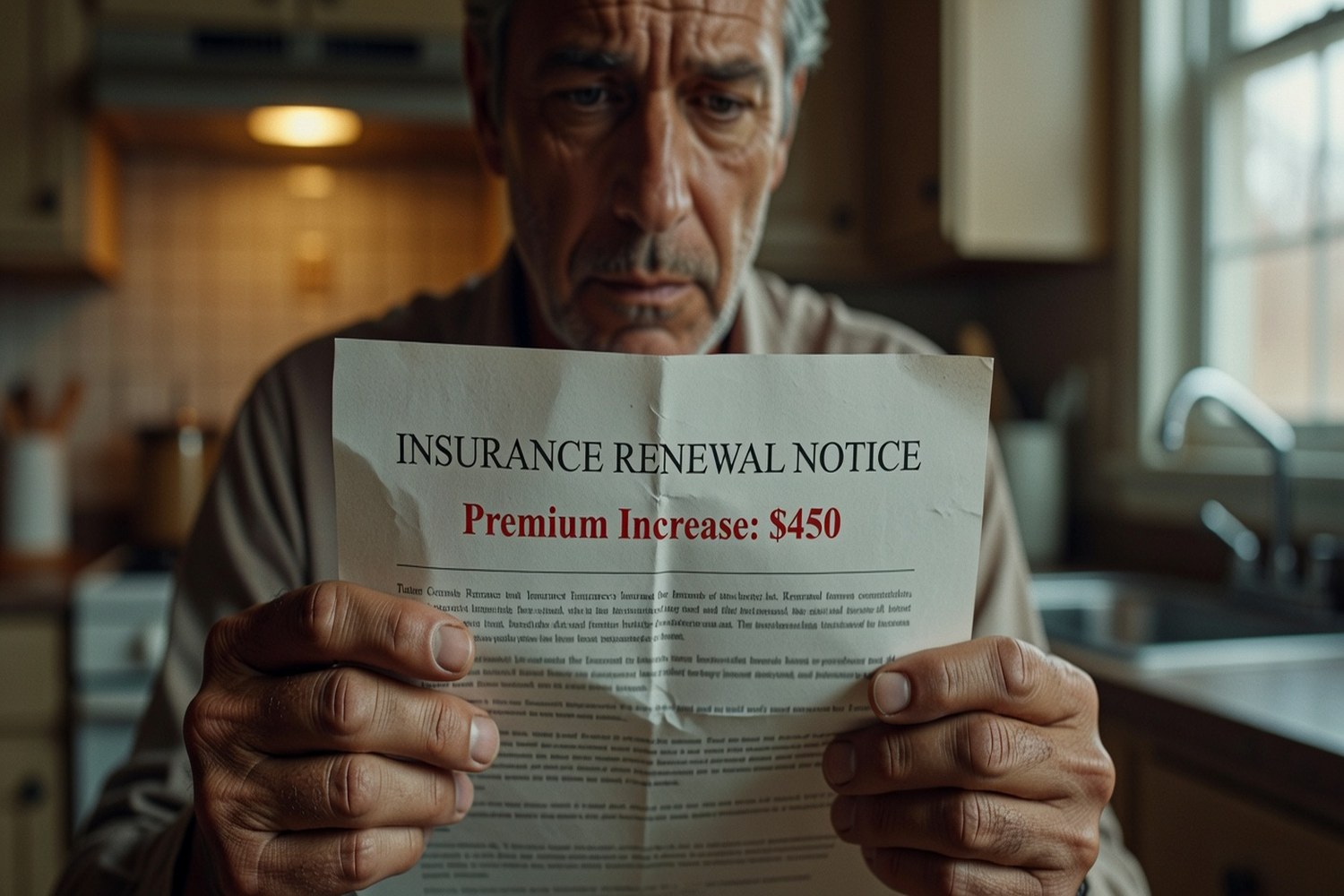
If your insurance bill feels higher this year, you’re not imagining it. Millions of Americans have opened a renewal letter and felt their stomach drop, and the numbers back them up.
Home insurance premiums are climbing at the fastest pace in decades. According to LendingTree’s 2025 State of Home Insurance report, U.S. home insurance rates rose 46.8% cumulatively from 2020 to 2025. The peak annual rise was 12.7% in 2024, with rates still growing well above historical norms into 2025. In the hardest-hit states, homeowners have seen their premiums jump 15% to 30% in a single renewal cycle. Some have watched their rates double across two consecutive renewals.
Auto coverage has spiked at double-digit rates nationally. Umbrella policies and small-business coverage are seeing hikes that nobody budgeted for. And several major carriers, names you’d recognize, have stopped writing new policies in entire states. Others are tightening underwriting so aggressively that homes easily insurable three years ago are now getting declined or priced out.
Insurance used to be a predictable line item. That era is over. What we’re seeing is a fundamental repricing of risk across the entire industry, driven by forces that aren’t going away anytime soon.
So what exactly broke? And what can you actually do about it?
Factor 1: Inflation Hasn’t Let Go
You’ve felt inflation at the grocery store and the gas pump. The insurance industry is dealing with its own version, and it’s been relentless.
When a tree goes through your roof, the cost to fix it isn’t what it was in 2019. Construction materials, lumber, roofing shingles, drywall, copper wiring, remain significantly elevated compared to pre-pandemic levels. Labor costs are up too, driven by a persistent skilled-trades shortage that’s pushing contractor rates higher in virtually every metro area.
Auto insurance is getting hammered by the same dynamic. Modern vehicles are rolling computers, packed with sensors, cameras, and aluminum body panels that cost three to five times more to repair than traditional steel. A fender-bender that would’ve been a $1,200 fix in 2018 might run $4,000 today. Parts shortages and longer repair timelines compound the problem, because the insurer is also covering your rental car while you wait. The Insurance Information Institute tracks these repair cost trends closely, and the trajectory has been relentlessly upward since 2020.
Every claim that walks in the door costs insurers more than it did a few years ago. That math flows directly into your premium. The Insurance Information Institute tracks these cost trends closely, and the trajectory has been relentlessly upward since 2020.
Factor 2: Climate Risk Is Rewriting the Math
This is the factor reshaping the entire industry’s relationship with risk.
Hurricanes, wildfires, floods, and severe convective storms are generating catastrophic losses at a pace that’s outrunning the models insurers built their pricing on. We’re not talking about one bad year. Consecutive years of insured disaster losses exceeding $100 billion globally have forced carriers to rethink assumptions they’d held for decades.
The geographic concentration makes it worse. Florida, California, Texas, Louisiana, and Colorado are absorbing a disproportionate share of climate-related losses, and those are also some of the country’s biggest insurance markets. When carriers bleed money in a major state, it puts pressure on their pricing everywhere.
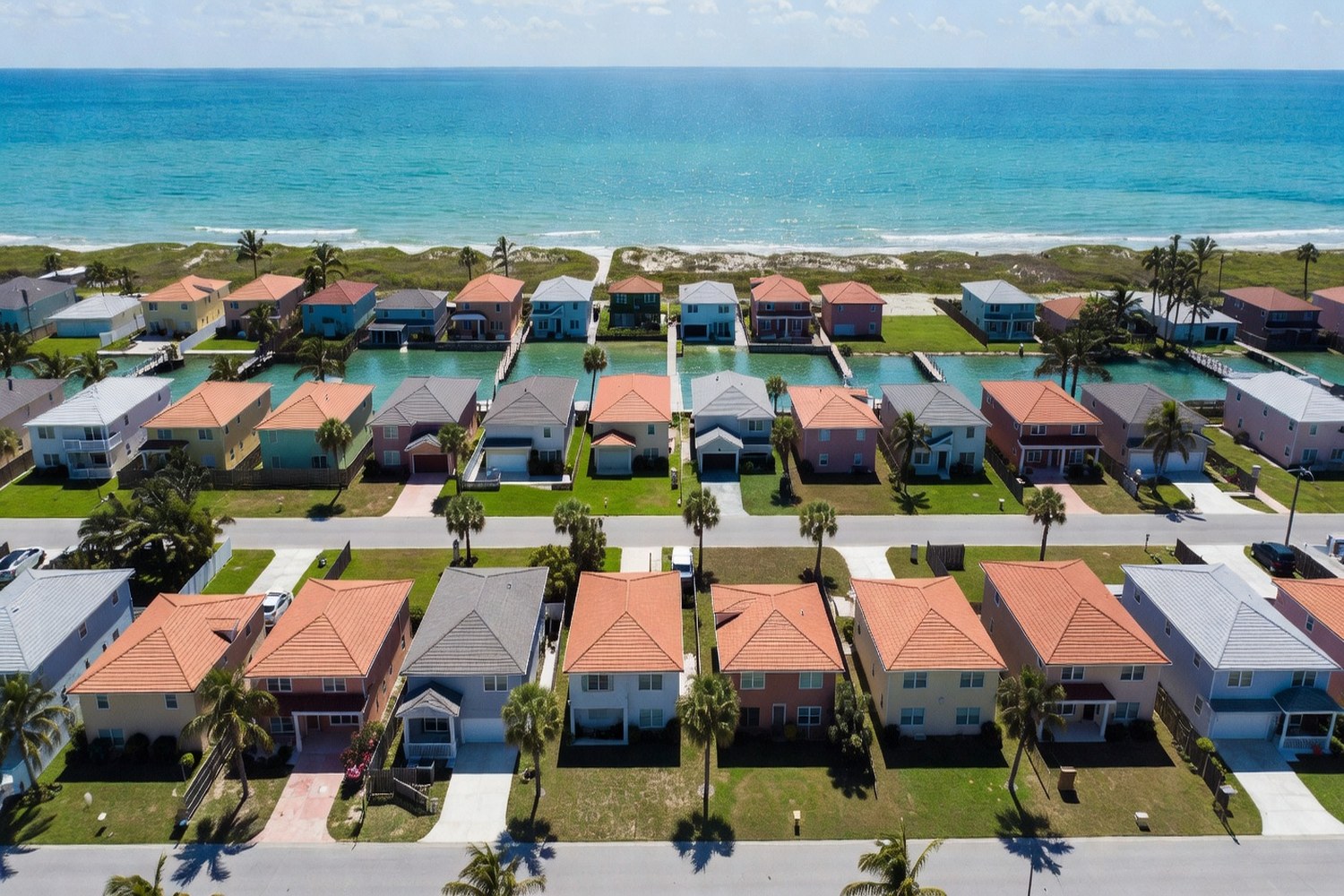
Several carriers have made drastic moves. State Farm stopped accepting new homeowners applications in California. Farmers Insurance pulled back significantly in Florida. Allstate and Nationwide have restricted new business in various high-exposure states. When private insurers retreat, homeowners get pushed to state-backed plans, like Citizens Property Insurance in Florida or the FAIR Plan in California, which are designed as backstops, not primary coverage. They’re often more expensive and less thorough than private policies.
According to FEMA, flood risk alone, which standard homeowners policies don’t cover, affects far more properties than most owners realize. Wildfire risk zones are expanding year over year. The National Association of Insurance Commissioners (NAIC) has flagged market availability in disaster-prone states as one of the most pressing regulatory challenges it faces.
⚡ Pro Tip
Check your home’s risk exposure using FEMA flood maps and your state’s wildfire risk assessment tools before your next renewal. If you’re in or near a high-risk zone and don’t carry supplemental flood or fire coverage, you’re one event away from a financial catastrophe that your standard policy won’t touch.
Factor 3: The Reinsurance Squeeze
Here’s a factor most consumers never hear about, but it’s quietly driving a substantial portion of the premium increases you’re seeing.
Reinsurance is the insurance that insurance companies buy to protect themselves. When a hurricane causes $20 billion in claims, your carrier doesn’t absorb all of that, they’ve transferred a chunk of that risk to global reinsurers like Munich Re, Swiss Re, and Berkshire Hathaway Reinsurance. It’s a safety valve for the entire system.
After years of record disaster losses, reinsurers are charging dramatically more, and in some cases pulling back from certain risk categories entirely. When a primary insurer’s reinsurance bill jumps 30 to 50%, that cost gets passed straight to policyholders.
This is why even homeowners in low-risk areas are seeing increases. It’s not that your specific house became riskier. The global pool of catastrophic risk got more expensive to insure, and everyone in the system shares that cost. Lloyd’s of London, one of the world’s oldest and largest insurance markets, has cited climate volatility as the primary driver of reinsurance repricing since 2022, as detailed in their risk reports and market insight publications.
| Factor | What Changed | Impact on Premiums | Outlook |
| Construction & Repair Inflation | Materials, labor, and vehicle parts cost 30 to 60% more than 2019 | +10 to 20% on claims costs | Moderating slowly but still elevated |
| Climate-Related Disasters | Consecutive years of $100B+ insured losses globally | +15 to 30% in high-risk states | Getting worse, models still adjusting |
| Reinsurance Costs | Global reinsurers raised rates 30 to 50% after catastrophe losses | +5 to 15% passed to consumers | Tight market through at least 2027 |
| Carrier Exits | Major insurers leaving FL, CA, LA, reducing competition | Fewer choices, higher prices | May spread to more states |
| Bottom line: Multiple structural forces are pushing premiums higher simultaneously. This isn’t a cycle, it’s a reset to a new pricing baseline. | |||
Sources: III.org, NAIC, and global reinsurance market reports. Figures represent industry-wide trends.
What This Means for Homeowners and Families
The most obvious hit is the monthly bill. But the ripple effects go deeper than most people anticipate.
A homeowners policy jumping from $2,000 to $3,000 a year doesn’t sound catastrophic in isolation, until it’s stacked on top of higher mortgage payments, rising property taxes, and utility costs that won’t stop climbing. For families already stretched, insurance is becoming the expense that tips the budget from manageable to painful. Home insurance costs have continued their steep climb, with Insurify’s 2025 projections report documenting double-digit year-over-year increases across most states.
First-time buyers are getting blindsided. You budget for the mortgage payment, the down payment, the closing costs, and then discover at the last minute that insurance in your area costs twice what you assumed. Imagine you have a 720 credit score and you’re buying a $350,000 home in a coastal county. You budgeted $1,800 for annual home insurance, only to get a quote for $4,200 a week before closing. That extra $200 a month can sink the deal. In coastal and wildfire-prone markets, premiums are becoming a genuine deal-breaker. Lenders require proof of coverage before funding, and if that coverage is unaffordable or unavailable, the transaction stalls.
Auto insurance adds another layer of pressure. Families with two or three vehicles are seeing annual increases of $500 to $1,000 or more. For younger drivers or those with less-than-perfect records, the math gets even harder. If you’re feeling that squeeze, these nine strategies for reducing your auto premium are worth working through.
And there’s a psychological shift happening. People who used to auto-renew without thinking are now scrutinizing every line of their policies. They’re raising deductibles, shopping annually, and, in some troubling cases, dropping coverage entirely to save money. That last move is the most dangerous choice a homeowner can make. Going uninsured to avoid a $1,500 annual premium is a rational-feeling decision that can result in a six-figure loss from a single event.
There’s also a caveat worth naming honestly: aggressive shopping helps, but it has limits. In states where most private carriers have exited, you may find three or four credible options instead of ten. The FAIR Plan or Citizens may genuinely be your only choice, and those plans cap coverage, exclude certain perils, and carry their own financial risks if a catastrophic event overwhelms the state fund. Having fewer options is a real constraint, not a problem that carrier comparison alone solves.
How Businesses Are Getting Hit
Small businesses are absorbing premium increases that many can’t pass along to customers without losing them. Commercial property policies, general liability, workers’ compensation, and umbrella coverage have all faced significant pricing pressure, sometimes 20 to 40% increases at renewal.
For restaurants, contractors, and retailers operating on thin margins, these aren’t abstract numbers. They translate into higher prices for customers, deferred hiring, or reduced coverage that leaves the business more exposed. Last year I walked a restaurant owner in Houston through a renewal where her commercial property premium jumped from $8,400 to $12,600. She had to decide between keeping her full liability limits or reducing them to keep a part-time cook on payroll. She chose the cook and accepted a higher deductible. That trade-off isn’t rare anymore.
The NAIC has noted that commercial lines are experiencing similar repricing dynamics to personal lines, with carriers in some states tightening underwriting criteria for businesses in flood zones, wildfire corridors, or older buildings with outdated electrical systems. If your building was built before 1990 and hasn’t been updated, expect underwriters to scrutinize it closely.
If you run a business, now is the time to review your commercial coverage carefully. Understand exactly what you’re carrying, what it’s costing, and where you might be either overinsured or dangerously underinsured. Our guide to small business liability coverage is a good starting point.
⚡ Pro Tip
Start shopping 60 to 90 days before your policy expires. In a tight market with carrier exits, waiting until the last week can leave you scrambling, or stuck with a state-backed plan at a higher rate with worse terms.
Where Things Go From Here
Relief is probably not coming soon. That’s the honest answer.
Climate risk models are still being recalibrated. Insurers who spent decades pricing based on historical loss data are rebuilding their models around forward-looking climate projections, and those projections keep getting revised upward. Inflation has moderated from its peak, but repair and construction costs remain well above pre-pandemic levels. The reinsurance market is expected to stay tight through at least 2027, according to industry analysts at Munich Re and Swiss Re.
Some carriers are investing in granular, risk-based pricing technology, using satellite imagery, IoT sensors, and hyper-local data to price individual properties more precisely. That could mean better rates for genuinely low-risk homes. It will almost certainly mean worse rates for high-risk ones. The era of broad, one-size-fits-all pricing within a ZIP code is ending, and not everyone benefits from its replacement.
Policymakers in disaster-prone states are debating structural reforms: public-private partnerships, state catastrophe funds, and financial incentives for home hardening measures like impact-resistant roofing and wildfire defensible space. Whether these initiatives move fast enough to matter remains to be seen. Florida’s ongoing Citizens depopulation effort and California’s FAIR Plan expansion are early tests of whether regulatory intervention can stabilize a market that private capital is leaving.
One thing is certain. The assumption that insurance premiums rise gradually and predictably, the assumption most household budgets were built on, no longer holds. LendingTree’s data showing a 46.8% cumulative increase in five years is a signal, not an outlier.
How to Protect Yourself Right Now
You can’t control the reinsurance market or the path of the next hurricane. But you can control how you respond. Here’s what I’d tell any homeowner or business owner sitting across from me today.
Shop aggressively and shop often. Don’t auto-renew. Get quotes from a mix of direct carriers and an independent broker, at least four or five sources. The spread between the most and least expensive carrier for the same home can be 40 to 60%. That gap is money in your pocket.
Review your coverage line by line. Make sure your dwelling limit reflects current rebuild costs, not the purchase price, not the Zillow estimate. Check your personal property limits and verify your liability is adequate for your net worth. Our homeowners coverage guide walks through each component in plain terms.
Invest in risk reduction. Impact-resistant roofing, monitored security systems, updated electrical panels, and defensive landscaping are premium-reduction tools as much as safety measures. Carriers reward documented risk reduction with lower prices. Our savings guide details which improvements produce the biggest discounts.
Don’t drop coverage to save money. I understand the temptation. But going uninsured or severely underinsured on your largest asset is a bet you cannot afford to lose. Adjust your deductible, trim unnecessary riders, shop for a better rate, but don’t go bare.
Stay informed. Insurance pricing is no longer background noise. It’s an active, evolving story that affects your household budget, your property value, and your financial security. Understanding what drives insurance costs puts you in a stronger position at every renewal.
Coverage varies by carrier and state, and the market is shifting fast. If you’re unsure where you stand, a conversation with a licensed agent or broker can clarify your options and identify savings you might be missing.
Frequently Asked Questions
Why did my home insurance premium go up so much this year?
Three structural forces are driving the increase simultaneously: construction and repair costs that remain far above 2019 levels, consecutive years of record insured disaster losses that have forced carriers to reprice risk, and a global reinsurance market that has raised its own rates 30 to 50% since 2022. U.S. home insurance rates rose 46.8% cumulatively from 2020 to 2025, according to LendingTree. Your renewal notice reflects all three forces landing at once.
Which states have the highest home insurance increases?
Florida, California, Texas, Louisiana, and Colorado have absorbed the steepest increases, driven by hurricane exposure, wildfire risk, and flooding. In some Florida ZIP codes, premiums have more than doubled in two renewal cycles. California’s FAIR Plan, the state’s insurer of last resort, has seen dramatic enrollment growth as private carriers like State Farm have stopped writing new policies there.
Is auto insurance going up for the same reasons?
Partly. Modern vehicles cost significantly more to repair, sensors, cameras, and aluminum panels that run three to five times the cost of older parts. Parts shortages and longer repair timelines mean insurers also pay extended rental car costs. The Insurance Information Institute has documented how these repair cost increases have pushed auto premiums steadily higher since 2020. Climate-driven total losses from flooding and hail also contribute, though auto is less exposed to that factor than homeowners insurance.
What is reinsurance, and why does it affect my premium?
Reinsurance is coverage that insurance companies buy to protect themselves from catastrophic losses. When global reinsurers like Munich Re, Swiss Re, and Berkshire Hathaway Reinsurance raise their rates, which they did sharply after years of billion-dollar disaster losses, primary carriers pass those costs to policyholders. Even homeowners in low-risk states are affected, because reinsurance pricing is pooled across the entire market.
Why are insurers leaving states like Florida and California?
They’re losing money. When annual claim payouts exceed collected premiums, and when the reinsurance required to backstop those claims costs more than carriers can recoup through rate increases, the rational business decision is to exit. State regulators in Florida and California historically restricted how quickly carriers could raise rates, which squeezed margins further. State Farm, Farmers Insurance, Allstate, and others have all restricted or halted new business in one or both states.
What is a FAIR Plan, and should I be worried about ending up on one?
FAIR Plans (Fair Access to Insurance Requirements) are state-mandated insurers of last resort, available to homeowners who can’t get private coverage. California and Florida both operate versions. They’re better than having no coverage, but they typically carry higher premiums than comparable private policies, lower coverage limits, and fewer optional endorsements. If you’re on a FAIR Plan, keep shopping the private market annually, conditions change, and a private policy may become available.
Will insurance premiums come down anytime soon?
Unlikely in the near term. The reinsurance market is expected to stay tight through at least 2027. Climate-related loss trends aren’t reversing. Construction costs, while moderating, remain elevated. The 12.7% peak increase in 2024 slowed in 2025, according to LendingTree, so the rate of increase is slowing, but premiums themselves are not falling. A meaningful correction would require several consecutive low-loss years and significant easing in construction inflation.
Does my credit score affect my insurance premium?
In most states, yes. Insurers use a credit-based insurance score, distinct from your FICO Score but derived from similar data, to price homeowners and auto policies. Consumers with higher scores generally pay less. The practice is regulated differently by state: California, Maryland, and Massachusetts prohibit its use for auto insurance entirely. If you’ve improved your credit significantly, it’s worth asking your carrier to re-rate your policy or shopping with carriers who weight credit differently.
What can I actually do to lower my premium without giving up coverage?
Start by shopping, the spread between carriers for identical coverage can reach 40 to 60%. Then look at your deductible. Raising it from $1,000 to $2,500 can cut your annual premium by 10 to 20%, though you’re accepting more out-of-pocket exposure on small claims. Home hardening measures, impact-resistant roofing, storm shutters, updated electrical panels, generate documented discounts with many carriers. Bundling home and auto with the same carrier also produces meaningful savings, though it’s worth verifying the bundled price is actually lower than buying each policy separately.
Are health insurance costs rising for the same reasons?
Different causes, but also rising. The KFF 2025 Employer Health Benefits Survey found that the average annual premium for employer-sponsored family coverage reached $26,993 in 2025, up 6% from 2024. Health insurance cost drivers, prescription drug pricing, hospital consolidation, and utilization patterns, are largely separate from the property and casualty pressures described in this article. On the individual market side, the Peterson-KFF Health System Tracker reported that median proposed premium increases across ACA Marketplace insurers hit 15% for 2026, the largest requested jump in more than five years. State-level approvals are also climbing: Washington’s insurance commissioner approved an average 10.7% rate increase for the 2025 individual market. The cumulative effect of rising home, auto, and health premiums on household budgets is compounding.
How do I know if I’m underinsured on my home?
Compare your dwelling coverage limit to local rebuild costs per square foot, not your home’s market value. A contractor or local builder’s association can give you a current per-square-foot estimate for your area. If your limit hasn’t been updated in three years, it’s almost certainly too low. Also check that your personal property coverage and loss-of-use limits haven’t been eroded by inflation. An independent agent can run a replacement cost estimator that accounts for local labor and material rates.
Sources
- LendingTree, State of Home Insurance (2025)
- Insurify, Home Insurance Price Projections Report (2025)
- Insurance Information Institute, Facts & Statistics: Homeowners and Renters Insurance (2025)
- Insurance Information Institute, Facts & Statistics: Auto Insurance (2025)
- FEMA, National Flood Insurance Program (2025)
- National Association of Insurance Commissioners (NAIC), Dwelling Fire, Homeowners Owner-Occupied (2025)
- KFF, Annual Family Premiums for Employer Coverage Rise 6% in 2025
- Peterson-KFF Health System Tracker, Individual Market Insurers Requesting Largest Premium Increases in More Than 5 Years (2025)
- Washington Office of the Insurance Commissioner, Average 10.7% Rate Increase Approved for 2025 Individual Health Insurance Market
- Munich Re, Natural Disaster Risk and Loss Data
- Swiss Re Institute, Sigma Research on Global Insurance and Reinsurance
- Citizens Property Insurance Corporation (Florida)
- California FAIR Plan Association
- U.S. Bureau of Labor Statistics, Consumer Price Index (CPI)
- Lloyd’s of London, Risk Reports and Market Insight
Keep Reading
Take action on your own coverage:


