Fact-checked by the Smart Insurance 101 editorial team
Quick Answer
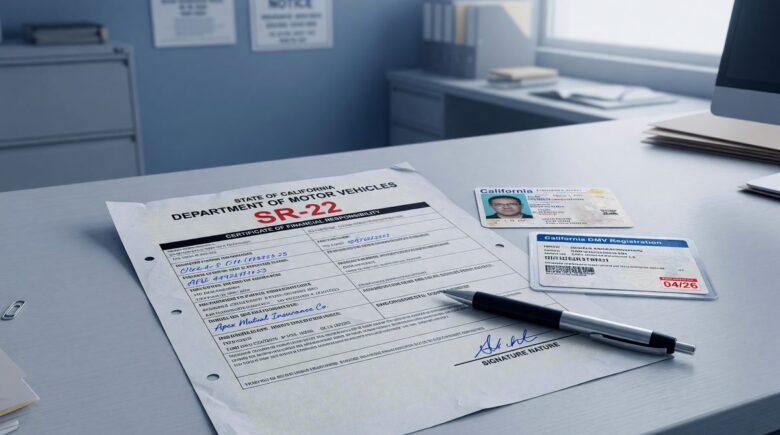
An SR-22 is a certificate your insurer files with your state DMV to prove you carry minimum liability coverage after a serious driving offense. It is not an insurance policy. Most states require it for 3 continuous years, with filing fees of $15–$50 one time. The fastest path off the requirement: confirm your exact end date with the DMV, maintain uninterrupted coverage, and ask your insurer to file the removal notice the day your period ends.
The SR-22 insurance requirement is a state-mandated financial responsibility certificate, not a separate insurance product. Your insurer files the form directly with your state’s Department of Motor Vehicles to verify that you meet minimum liability coverage standards after a qualifying offense. As the Colorado Division of Motor Vehicles explains, the SR-22 requires the insurance company to notify the DMV of any policy cancellation, and the form is not an insurance policy itself. That distinction matters more than most drivers realize.
What makes this requirement so costly is rarely the filing. It is the risk-based premium increase that follows you for years, and the ease with which a single lapse can extend your obligation. This guide covers exactly how the SR-22 process works, what it realistically costs, how long different offenses require you to hold it, and the specific steps that get you off the requirement as quickly as possible without setbacks.
Key Takeaways
- An SR-22 is a DMV filing by your insurer, not a policy: it adds no additional coverage, only proof of minimum liability insurance (per the Texas Department of Public Safety).
- Most states mandate the SR-22 for 3 continuous years; a single coverage lapse resets the clock and can trigger immediate license suspension.
- One-time filing fees run $15–$50, but premium increases for high-risk drivers can raise annual auto insurance costs by 50–100% or more depending on the triggering offense.
- Alaska requires SR-22 for five years on a first DUI offense, ten years on a second, and twenty years on a third, according to the Alaska Division of Motor Vehicles.
- Drivers who do not own a vehicle can still satisfy the requirement with a non-owner SR-22 policy, which typically costs less than a standard owner policy while maintaining the required liability minimums.
In This Guide
What Exactly Is an SR-22 and Who Needs One?
An SR-22 is a certificate of financial responsibility, a document your auto insurer files with the state DMV on your behalf. It proves you carry at least the state’s minimum required liability coverage. The form carries no coverage of its own and provides no benefit to the policyholder beyond satisfying the state’s proof-of-insurance mandate.
Common Triggers for the Requirement
States order SR-22 filings after specific high-risk events. The most common triggers are DUI or DWI convictions, driving without insurance, reckless driving charges, at-fault accidents without coverage, and license suspensions or revocations. The Oregon Driver and Motor Vehicle Services lists involvement in an uninsured crash and conviction for driving under the influence among the statutory reasons for requiring an SR-22 filing.
You typically learn about the requirement through a court order after sentencing or a direct notice from your state DMV following a license suspension. The notification will specify the start date and duration. Do not wait for a second notice before contacting your insurer: the requirement is often retroactive to the conviction or suspension date, and delays in filing can extend the period or prevent license reinstatement.
Who Does Not Need an SR-22
Drivers with clean records, no license suspensions, and no high-risk convictions are never required to file. A minority of states, including Delaware, Kentucky, Minnesota, New Mexico, Oklahoma, and Pennsylvania, do not use the SR-22 form at all; they use alternative filings such as the FR-44 (used in Florida and Virginia, which require higher liability limits) or state-specific equivalents. If you have recently moved, confirm which form your new state requires. For a broader look at the auto insurance obligations that apply to standard drivers, our guide on everything you need to know about car insurance covers the full baseline.
The SR-22 form itself is submitted electronically in most states, often within 24 hours of your insurer receiving the request. The certificate number then appears directly in the DMV’s system, which means you rarely need to hand-deliver paperwork to a DMV office to begin the reinstatement process.
How the SR-22 Filing Process Works
The process is straightforward: contact a licensed insurer that offers SR-22 filings, purchase or update a policy that meets your state’s minimum liability requirements, pay a one-time filing fee (typically $15–$50), and the insurer submits the certificate electronically to the DMV. Most electronic filings are processed the same day, and your license reinstatement can follow within 24–72 hours in many states, though processing times vary.
Here’s the thing: not every insurer handles SR-22 filings. Standard carriers sometimes decline high-risk applicants, which means you may need to shop among non-standard or specialty auto insurers. Comparing quotes before committing is worth the time. Our step-by-step guide to car insurance quote comparison can help you move through that process efficiently. Once the insurer files, you will receive a copy of the certificate for your records. Keep it: you may need it if the DMV claims the filing was not received.
What Does the SR-22 Requirement Actually Cost?
The filing fee is almost irrelevant compared to the premium increase. Insurers classify drivers who require an SR-22 as high-risk, and high-risk classification triggers a risk-based rate adjustment that can raise annual premiums by 50% to more than 100% depending on the offense and the driver’s prior record. A DUI conviction typically produces steeper increases than an uninsured driving citation, though both categories result in meaningful rate hikes.
Standard Policies vs. High-Risk Policies
Standard carriers price based on actuarial risk. When a driver’s profile crosses into high-risk territory, many standard carriers will non-renew the policy or decline coverage outright. Non-standard insurers accept these drivers but charge accordingly. The practical difference: a driver paying $1,200 annually before a DUI might see quotes ranging from $2,000 to $2,800 per year during the SR-22 period, depending on state and insurer.
| Trigger Offense | Typical Annual Premium Increase | Common SR-22 Duration |
|---|---|---|
| DUI / DWI (1st offense) | 70–100%+ | 3 years (most states); 5 years (Alaska) |
| Driving Without Insurance | 30–60% | 3 years |
| Reckless Driving | 50–80% | 3 years |
| At-Fault Accident, No Insurance | 60–90% | 3 years |
| Multiple Violations (stacked) | 100%+ | 3–5 years or more |
Ways to Reduce Costs During the Requirement Period
Several strategies can lower your out-of-pocket costs without risking a lapse. First, ask about state-mandated minimums: carrying exactly the minimum required liability limits reduces your premium, though you should weigh that against the coverage exposure. Second, defensive driving or DUI education courses, when completed voluntarily, sometimes qualify for modest rate discounts with certain insurers. Third, if you do not own a vehicle, a non-owner SR-22 policy is almost always cheaper than a standard owner policy because it covers only liability, not the vehicle itself.
One honest concession: your rate will not return to pre-offense levels the day your SR-22 period ends. Most insurers reprice at the next renewal cycle after the violation ages off your motor vehicle record, which can take an additional year or two beyond the SR-22 period itself. The filing ends before the rate penalty does. That is a genuine cost most guides gloss over. For more context on what drives rate increases across insurance types, see our piece on why insurance premiums are exploding.
In Nevada, the state DMV requires drivers to maintain an SR-22 for 3 years if their insurance has lapsed for 91 days or more, according to the Nevada Department of Motor Vehicles. A single day of uncovered driving during that period can restart the entire obligation.
How Long Does the Requirement Last?
Three years of continuous SR-22 coverage is the standard in most states, but the exceptions are significant. Offense severity, state law, and the number of prior violations all affect the duration.
When the Clock Starts
This is where many drivers miscalculate. The start date is typically the date of conviction or license suspension, not the date you filed the SR-22. If you waited six months after a DUI conviction before contacting an insurer, you have not reduced your obligation: you have added six months of unmet requirement to your timeline. Confirm the specific start date in writing from your DMV before calculating your end date.
Alaska’s SR-22 durations illustrate how severity compounds the obligation. According to the Alaska Division of Motor Vehicles, DUI and refusal convictions require SR-22 filings for five years from the ending date on a first offense, ten years on a second offense, and twenty years on a third. Those timelines mean a second DUI in Alaska is effectively a decade-long insurance burden. Moving to another state does not automatically eliminate the Alaska obligation, either: your new state’s DMV may require proof that the originating state has released you from the requirement before removing it from your record.
, no state has enacted a formal early-removal provision that allows courts to judicially backdate or shorten SR-22 obligations based solely on good driving behavior during the period. Completing the required duration without a lapse remains the only recognized path to removal.
The Fastest Way to Meet and Exit the SR-22 Requirement
Speed comes from two things: filing correctly the first time and managing the exit process proactively. Most delays happen because drivers assume the requirement ends automatically or that the insurer will handle the removal without prompting.
Getting Filed Quickly
Choose an insurer that accepts high-risk drivers and offers same-day electronic filings. Provide complete information on your first call: your license number, the offense date, and the state that ordered the SR-22. Incomplete applications are the most common source of filing delays. If you do not own a vehicle, request a non-owner SR-22 policy explicitly. These policies satisfy the liability filing requirement without requiring a vehicle on the policy, and they typically cost less than owner policies because there is no comprehensive or collision component.
Switching insurers mid-requirement is possible without restarting the clock, as long as the new policy becomes effective before the old one lapses. The new insurer files a fresh SR-22 certificate, and the original SR-22 cancels automatically. The risk: any gap between the two policies, even one day, triggers a DMV notification of cancellation and can result in immediate license suspension. If you plan to switch, set the new policy’s effective date one or two days before the old policy’s cancellation date to build in a buffer.
Exiting the Requirement Without Delays
Here’s the thing: the SR-22 does not remove itself. Insurers file the removal certificate only when prompted, and DMVs do not automatically clear the requirement on the end date. The practical steps are:
- Contact your state DMV at least 30 days before your expected end date to confirm the exact date in writing.
- On or after that date, contact your insurer and request that they file the SR-22 cancellation certificate with the DMV.
- Obtain written confirmation from the insurer that the cancellation was filed.
- Log into your state’s DMV online portal (available in most states, including Texas, California, and Florida) to verify the SR-22 status has been cleared on your record.
- Do not cancel your underlying insurance policy until after you have confirmed DMV clearance. Canceling coverage before the DMV updates its records can trigger a false-lapse notification.
Some state DMV portals allow real-time SR-22 status verification. The Texas Department of Public Safety maintains a financial responsibility verification system where drivers can confirm their SR-22 status directly. Checking this before making any insurance changes removes guesswork from the process. For drivers thinking about their broader auto insurance strategy once the SR-22 period ends, our guide to 9 ways to reduce your auto insurance covers the rate-recovery moves worth making.
Set a calendar reminder 60 days before your SR-22 end date. Use it to request your end date in writing from the DMV and to notify your insurer. This two-month runway gives you time to resolve any discrepancies between the insurer’s records and the DMV’s records before the deadline, which is where most exit delays actually originate.
What Happens If Coverage Lapses Near the End Date
A lapse in coverage, even in the final month of a three-year obligation, typically restarts the entire requirement period. Insurers are legally required to notify the DMV the moment a policy is cancelled or non-renewed. According to the Colorado Division of Motor Vehicles, the SR-22 filing specifically requires the insurer to notify the DMV of any policy cancellation. That notification triggers an automatic suspension of driving privileges in most states. The cure is the same as the original process: obtain new coverage, file a fresh SR-22, and pay any reinstatement fees the DMV requires. The three-year clock restarts from the new filing date. This risk is real enough that it is worth being more careful about premium payments in the final quarter of your obligation than at any earlier point.
Drivers who are self-employed or have irregular income streams sometimes find premium management harder during this period. If cash flow is a constraint, ask your insurer about monthly payment plans and whether they offer a grace period for late payments before triggering a cancellation notice. Most standard grace periods are 10–30 days, but that window varies by insurer and state law. Understanding how to shop your overall insurance coverage efficiently is also worth doing now, especially if you are balancing multiple policies. Our car insurance quotes explained guide walks through how carriers assess risk so you know what to expect when the SR-22 period ends and you seek better rates.
Related reading: How a 24.
Frequently Asked Questions
Does an SR-22 provide extra insurance coverage?
No. An SR-22 is a filing that proves you have minimum liability coverage; it adds no coverage of its own. Your actual protection depends entirely on the underlying policy you purchase, not on the SR-22 certificate.
Can I get an SR-22 if I don’t own a car?
Yes. A non-owner SR-22 policy covers liability for vehicles you drive but do not own, and it satisfies the SR-22 filing requirement. These policies cost less than standard owner policies because they do not include comprehensive or collision coverage. They are a practical option for drivers who rely on rentals, car-sharing, or borrowed vehicles.
What happens if my insurer cancels my policy during the SR-22 period?
The insurer is required to notify the DMV immediately when a policy is cancelled. That notification typically triggers a license suspension. You must obtain new coverage, file a fresh SR-22, and pay reinstatement fees before you can legally drive again. In most states, the three-year obligation restarts from the new filing date.
Does moving to another state cancel my SR-22 requirement?
Moving states does not eliminate the obligation imposed by the originating state. Your new state’s DMV may require proof of release from the original state before removing the requirement from your record. Contact both DMVs when relocating to understand exactly what each state requires during the transition.
How long does it take for my license to be reinstated after filing an SR-22?
Most electronic SR-22 filings are processed same-day, and many state DMVs update their records within 24–72 hours. Some states require a separate reinstatement application and fee before restoring driving privileges, which can add a few business days. Check your specific state’s DMV process to avoid assuming reinstatement is automatic.
Will my insurance rates drop immediately after the SR-22 period ends?
Not immediately. Most insurers reprice at the next renewal cycle after the violation ages off your motor vehicle record, which can take an additional one to two years beyond the SR-22 end date. Shopping for new quotes at renewal, once the violation has cleared, is the most direct way to accelerate the rate recovery.
Sources
- Colorado Division of Motor Vehicles, SR-22 and Insurance Information
- Texas Department of Public Safety, Financial Responsibility Insurance Certificate (SR-22)
- Oregon Driver and Motor Vehicle Services, SR-22 Information
- Alaska Division of Motor Vehicles, SR-22 Insurance
- Nevada Department of Motor Vehicles, Insurance Requirements
- Insurance Information Institute, What Is SR-22 Insurance?
- National Association of Insurance Commissioners, Auto Insurance Topic
- Consumer Financial Protection Bureau, Auto Loans and Insurance


