Key Takeaways
- Homeowners insurance premiums have jumped 15–30% in a single year in many states, with auto and commercial coverage following the same trajectory.
- Three forces are driving the surge: persistent inflation in repair and construction costs, record-breaking climate-related disaster losses, and a tightening global reinsurance market.
- Several major carriers have pulled out of high-risk states entirely, leaving millions of homeowners scrambling for coverage or turning to state-backed insurers of last resort.
- The ripple effects extend beyond monthly bills — rising premiums are disrupting real estate transactions, squeezing small businesses, and reshaping how consumers approach coverage decisions.
- Proactive steps like shopping carriers aggressively, hardening your home, and reviewing coverage annually are now essential, not optional.
Table of Contents
The Premium Shock Hitting American Households
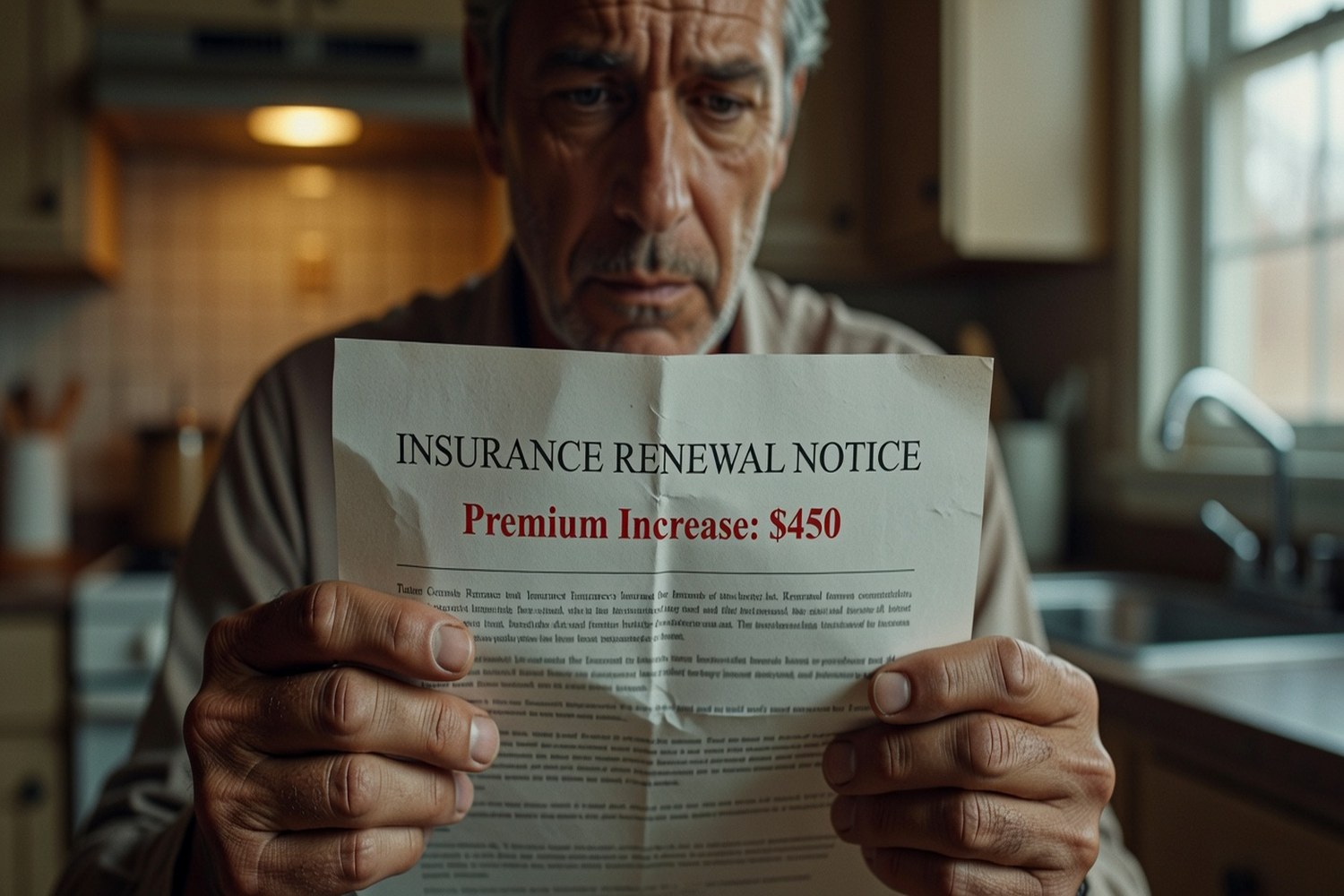
If your insurance bill feels higher this year, you’re not imagining it. You’re living it — along with millions of other Americans who’ve opened a renewal letter and felt their stomach drop.
Home insurance premiums are climbing at the fastest pace in decades. Auto coverage has spiked at double-digit rates nationally. Even umbrella policies and small-business coverage are seeing hikes that nobody budgeted for. In many states, homeowners premiums have jumped 15% to 30% in a single year. Some policyholders have seen their rates double in two renewal cycles.
And this isn’t a temporary blip. Some major carriers — names you’d recognize — have stopped writing new policies in entire states. Others are tightening underwriting so aggressively that homes that were easily insurable three years ago are now getting declined or priced out.
Insurance used to be one of those set-it-and-forget-it expenses. A predictable line item. That era is over. What we’re seeing now is a fundamental repricing of risk across the entire industry, driven by forces that aren’t going away anytime soon.
So what exactly broke? And what can you actually do about it?
Factor 1: Inflation Hasn’t Let Go
You’ve felt inflation at the grocery store and the gas pump. But the insurance industry is dealing with its own version — and it’s brutal.
When a tree goes through your roof, the cost to fix it isn’t what it was in 2019. Construction materials — lumber, roofing shingles, drywall, copper wiring — remain significantly elevated compared to pre-pandemic levels. Labor costs are up too, thanks to a persistent skilled-trades shortage that’s driving contractor rates higher in virtually every metro area.
Auto insurance is getting hammered by the same dynamic. Modern vehicles are rolling computers — packed with sensors, cameras, LIDAR, and aluminum body panels that cost three to five times more to repair than traditional steel. A fender-bender that would’ve been a $1,200 fix in 2018 might run $4,000 today. Parts shortages and longer repair timelines make it worse, because the insurer is also paying for your rental car while you wait.
Every claim that walks in the door costs insurers more than it did a few years ago. That math flows directly into your premium. The Insurance Information Institute tracks these cost trends closely, and the trajectory has been relentlessly upward since 2020.
Factor 2: Climate Risk Is Rewriting the Math
This is the big one — the factor that’s reshaping the entire industry’s relationship with risk.
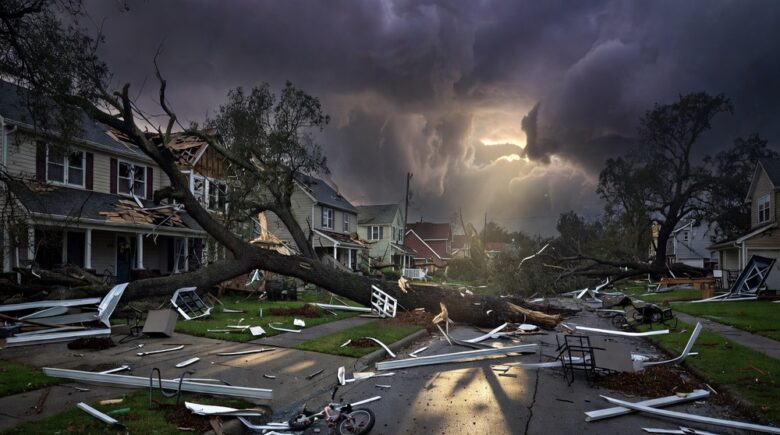
Hurricanes, wildfires, floods, hailstorms, tornadoes, and severe convective storms are generating catastrophic losses at a pace that’s outrunning the models insurers built their pricing on. We’re not talking about one bad year. We’re talking about a pattern of consecutive years where insured disaster losses have exceeded $100 billion globally.
The geographic concentration makes it worse. Florida, California, Texas, Louisiana, and Colorado are absorbing a disproportionate share of climate-related losses — and those are also some of the country’s biggest insurance markets. When carriers hemorrhage money in a major state, it puts pressure on their pricing everywhere.
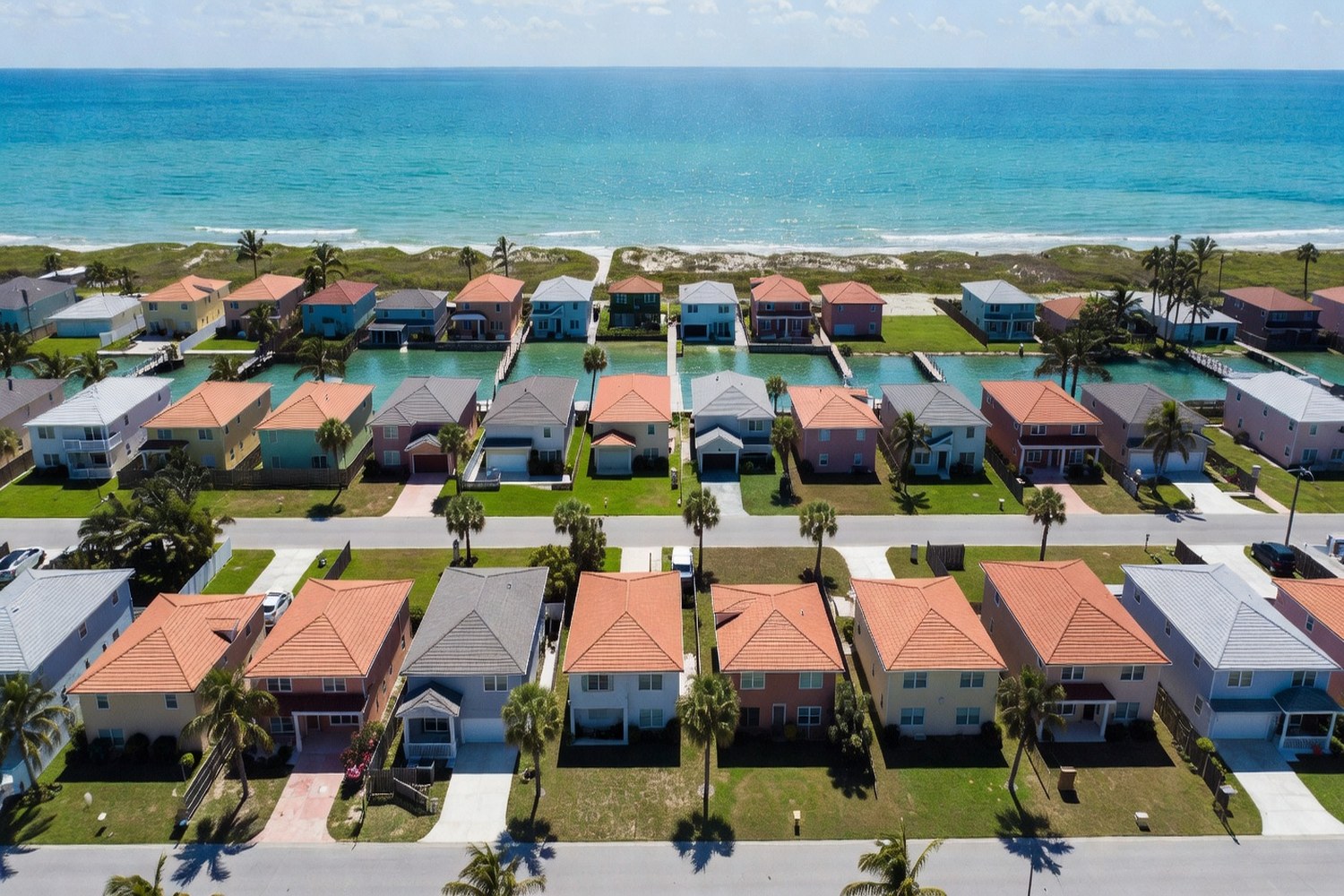
Several carriers have made drastic moves. State Farm stopped accepting new homeowners applications in California. Farmers Insurance pulled back significantly in Florida. Allstate, Nationwide, and others have restricted new business in various high-exposure states. When private insurers retreat, homeowners get pushed to state-backed plans — like Citizens in Florida or the FAIR Plan in California — which are designed as backstops, not primary coverage. They’re often more expensive and less comprehensive than private policies.
According to FEMA, flood risk alone — which standard homeowners policies don’t even cover — affects far more properties than most homeowners realize. And wildfire risk zones are expanding every year.
⚡ Pro Tip
Check your home’s risk exposure using FEMA flood maps and your state’s wildfire risk assessment tools before your next renewal. If you’re in or near a high-risk zone and don’t carry supplemental flood or fire coverage, you’re one event away from a financial catastrophe that your standard policy won’t touch.
Factor 3: The Reinsurance Squeeze
Here’s a factor most consumers never hear about, but it’s quietly driving a huge portion of the premium increases you’re seeing.
Reinsurance is the insurance that insurance companies buy to protect themselves. When a hurricane causes $20 billion in claims, your carrier doesn’t absorb all of that — they’ve transferred a chunk of that risk to global reinsurers like Munich Re, Swiss Re, and Berkshire Hathaway. It’s a safety valve for the entire system.
The problem? After years of record disaster losses, reinsurers are charging dramatically more — and in some cases, pulling back from certain risk categories entirely. When a primary insurer’s reinsurance bill jumps 30–50%, that cost gets passed straight to you.
This is why even homeowners in low-risk areas are seeing premium increases. It’s not that your specific house became riskier. It’s that the global pool of catastrophic risk got more expensive to insure, and everyone in the system shares that cost.
| Factor | What Changed | Impact on Premiums | Outlook |
| Construction & Repair Inflation | Materials, labor, and vehicle parts cost 30–60% more than 2019 | +10–20% on claims costs | Moderating slowly but still elevated |
| Climate-Related Disasters | Consecutive years of $100B+ insured losses globally | +15–30% in high-risk states | Getting worse — models still adjusting |
| Reinsurance Costs | Global reinsurers raised rates 30–50% after catastrophe losses | +5–15% passed to consumers | Tight market through at least 2027 |
| Carrier Exits | Major insurers leaving FL, CA, LA — reducing competition | Fewer choices, higher prices | May spread to more states |
| Bottom line: Multiple structural forces are pushing premiums higher simultaneously. This isn’t a cycle — it’s a reset to a new pricing baseline. | |||
Sources: III.org, NAIC, and global reinsurance market reports. Figures represent industry-wide trends.
What This Means for Homeowners and Families
The most obvious hit is the monthly bill. But the ripple effects go deeper than most people realize.
A homeowners policy jumping from $2,000 to $3,000 a year doesn’t sound catastrophic in isolation — until it’s stacked on top of higher mortgage payments, rising property taxes, and utility costs that won’t stop climbing. For families already stretched, insurance is becoming the expense that tips the budget from manageable to painful.
First-time buyers are getting blindsided. You budget for the mortgage payment, the down payment, the closing costs — and then discover at the last minute that insurance in your area costs twice what you assumed. In some coastal and wildfire-prone markets, premiums are becoming a genuine deal-breaker. Lenders require proof of coverage before funding, and if that coverage is unaffordable — or unavailable — the transaction stalls.
Auto insurance is another compounding pressure point. Families with two or three vehicles are seeing annual increases of $500–$1,000 or more. For younger drivers or those with less-than-perfect records, the math gets even uglier. If you’re feeling the squeeze on auto costs, these nine strategies for reducing your auto premium are worth working through.
And there’s a psychological shift happening. People who used to auto-renew without thinking are now scrutinizing every line of their policies. They’re raising deductibles, shopping annually, questioning coverage levels, and — in some troubling cases — dropping coverage entirely to save money. That last move is the most dangerous choice a homeowner can make.
How Businesses Are Getting Hit
Small businesses are absorbing premium increases that many can’t pass along to customers without losing them. Commercial property policies, general liability, workers’ compensation, and umbrella coverage have all seen pricing pressure — sometimes 20–40% increases at renewal.
For restaurants, contractors, and retailers operating on thin margins, these aren’t abstract numbers. They translate directly into higher prices for customers, deferred hiring, or reduced coverage that leaves the business more exposed. I’ve worked with business owners who had to choose between maintaining their liability limits and keeping an employee — that’s not a choice anyone should have to make.
If you run a business, now is the time to review your commercial coverage carefully. Understand exactly what you’re carrying, what it’s costing, and where you might be either overinsured or dangerously underinsured. Our guide to small business liability coverage is a good starting point.
⚡ Pro Tip
Don’t wait for your renewal date to start shopping. Begin requesting quotes 60–90 days before your policy expires. In a tight market with carrier exits, waiting until the last week can leave you scrambling — or stuck with a state-backed plan at a higher rate with worse terms.
Where Things Go From Here
I wish I could tell you relief is coming soon. The honest answer is: probably not.
Climate risk models are still being recalibrated. Insurers who spent decades pricing based on historical loss data are now rebuilding their models around forward-looking climate projections — and those projections keep getting revised upward. Inflation has moderated from its peak but repair and construction costs remain well above pre-pandemic levels. The reinsurance market is expected to stay tight through at least 2027.
Some carriers are investing heavily in granular, risk-based pricing technology — using satellite imagery, IoT sensors, and hyper-local data to price individual properties more precisely. That could mean better rates for genuinely low-risk homes and worse rates for high-risk ones. The days of broad, one-size-fits-all pricing within a ZIP code are ending.
Policymakers are debating structural reforms. In disaster-prone states, conversations are underway about public-private partnerships, state catastrophe funds, and financial incentives for home hardening measures like impact-resistant roofing and wildfire defensible space. Whether these initiatives move fast enough to make a difference remains to be seen.
One thing is certain: the assumption that insurance premiums rise gradually and predictably — the assumption most household budgets were built on — no longer holds.
How to Protect Yourself Right Now
You can’t control the reinsurance market or the path of the next hurricane. But you can control how you respond. Here’s what I’d tell any homeowner or business owner sitting across from me today:
Shop aggressively and shop often. Don’t auto-renew. Get 3–5 quotes from a mix of direct carriers and an independent broker. The spread between the most and least expensive carrier for the same home can be 40–60%. That gap is money in your pocket.
Review your coverage line by line. Make sure your dwelling limit reflects current rebuild costs — not the purchase price, not the Zillow estimate. Check your personal property limits. Verify your liability is adequate for your net worth. Our homeowners coverage guide walks through each component.
Invest in risk reduction. Impact-resistant roofing, monitored security systems, updated electrical, and defensive landscaping aren’t just safety measures — they’re premium-reduction tools. Carriers reward lower risk with lower prices. Our savings guide details which improvements produce the biggest discounts.
Don’t drop coverage to save money. I understand the temptation. But going uninsured or underinsured on your largest asset is a bet you cannot afford to lose. Adjust your deductible, trim unnecessary riders, shop for a better rate — but don’t go naked.
Stay informed. Insurance pricing is no longer background noise. It’s an active, evolving story that affects your household budget, your property value, and your financial security. Understanding what drives insurance costs puts you in a stronger position at every renewal.
Coverage varies by carrier and state, and the market is shifting fast. If you’re unsure where you stand, a conversation with a licensed agent or broker can clarify your options and identify savings you might be missing.
References
- Insurance Information Institute, 2025, “Facts + Statistics: Homeowners and Renters Insurance“
- FEMA, 2025, “Flood Insurance“
- National Association of Insurance Commissioners, 2025, “Dwelling Fire, Homeowners Owner-Occupied“
Keep Reading
Take action on your own coverage: