
Updated January 2026
Key Takeaways
- Standard homeowners policies cap off-premises personal property at roughly 10% of the dwelling limit and typically exclude business gear, a structural gap that matters more when you work from three or more locations a month.
- The unemployment rate fell to 4.20%, per the Federal Reserve’s UNRATE series, a labor backdrop that keeps hybrid and remote arrangements common enough to matter for coverage planning.
- Auto loan financing costs sit at 7.47% for new 48-month loans, according to FRED’s TERMCBAUTO48NS series, a reminder that replacing damaged mobile work equipment on credit costs more than it did a year ago.
- Gasoline prices fell 9.7% month over month but remain up 26.7% year over year, per BLS CPI data (series CUUR0000SETB01), which affects the real cost of commuting between multiple work sites.
- Insurer earnings news this week was mixed: Arch Capital reported $1 billion in Q2 2026 net income despite rising catastrophe losses, a signal that carriers are still pricing weather and liability risk cautiously.
- Texas complaint filings show life insurer complaint indexes running as high as 41.37 in 2025 for one major carrier, far above the state average of 1.00, underscoring why reading a carrier’s complaint history matters before adding riders for remote work.
If you split your workweek between a home office, a co-working space, and the occasional client site in another state, your insurance probably has a hole in it. Most homeowners and renters policies were written for a single fixed address, and they were never built to answer the question a lot of hybrid and nomadic workers are now asking: what happens if my laptop gets stolen from a co-working space, or a client trips over my cord at their office. Getting remote work insurance right in 2026 means understanding where standard policies stop and where specialized coverage needs to pick up.
This matters right now because the labor market backdrop keeps flexible work arrangements durable rather than temporary. The unemployment rate dropped to 4.20% in June 2026, according to the Federal Reserve’s UNRATE data, which means employers aren’t under heavy pressure to force everyone back to a single office, and freelancers and contractors keep juggling multiple client locations. At the same time, insurer earnings reports this week, including Arch Capital’s disclosure of rising catastrophe losses alongside $1 billion in Q2 2026 net income, are a reminder that carriers are tightening underwriting standards, which can trickle down to how liberally they write riders for off-premises equipment and multi-location liability.
Data as of
Official figures in this article come from the Federal Reserve’s FRED database (UNRATE and TERMCBAUTO48NS series, observed through June and May 2026 respectively), the Bureau of Labor Statistics CPI release (June 2026 observation), and Texas Department of Insurance complaint index filings for 2022 through 2025. Market color, including insurer stock quotes and earnings headlines, comes from Finnhub and Marketaux news feeds dated July 29 to July 31, 2026, and is included only for “why now” context, not as a substitute for the official series.
What the Data Says
The clearest signal in the official data is that carriers are seeing wide swings in complaint activity for products remote workers rely on, and the unemployment rate sitting at 4.20% according to FRED suggests flexible work arrangements aren’t going away soon. Complaint indexes from the Texas Department of Insurance, which tracks confirmed complaints against policies in force, show that swings can be dramatic year over year even for the same carrier.
Take American General Life Insurance Company as an example. Its complaint index jumped from 32.42 in 2024 to 41.37 in 2025, even as its policy count declined slightly from 576,267 to 567,435. That’s a meaningfully worse ratio of complaints to policies in force, and it’s the kind of shift a shopper comparing riders or standalone policies should check before signing. Meanwhile, Continental General Insurance Company’s accident and health complaint index actually fell from 35.84 in 2024 to 16.70 in 2025, showing that service quality moves in both directions and isn’t static from one renewal to the next.
| Indicator | Latest | Prior / YoY | Source |
|---|---|---|---|
| Unemployment Rate | 4.20% (Jun 2026) | 4.30% (May 2026) | FRED UNRATE |
| Auto Loan Rate, 48mo New | 7.47% (May 2026) | 7.37% (Feb 2026) | FRED TERMCBAUTO48NS |
| CPI All Items (NSA) | 333.952 (Jun 2026) | +3.5% YoY | BLS CUUR0000SA0 |
| Gasoline CPI (NSA) | 358.518 (Jun 2026) | +26.7% YoY | BLS CUUR0000SETB01 |
| AmGen Life Complaint Index | 41.37 (2025) | 32.42 (2024) | Texas DOI Filings |
Gasoline prices dropped 9.7% month over month in June 2026 but are still up 26.7% year over year, per BLS CPI data, a real cost consideration for anyone driving between a home office, a co-working space, and client meetings across a metro area or state line.
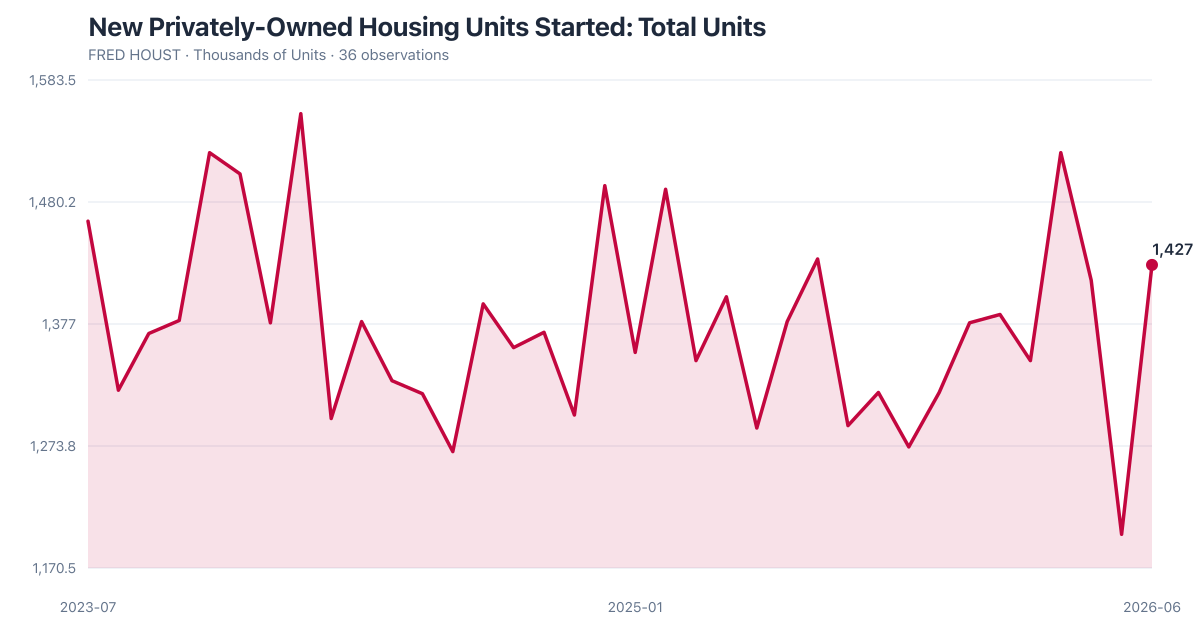
New housing starts also jumped 19% between May and June 2026, rising from 1.2 thousand to 1.4 thousand units according to the Census Bureau and FRED’s HOUST series. That uptick matters indirectly: more new construction often means more people relocating or splitting time between a primary residence and a second property, which is exactly the scenario where standard homeowners coverage starts to strain against its limits.
Key Takeaway: Complaint indexes swing meaningfully year to year, with one major life insurer moving from 32.42 to 41.37 in 2025 according to Texas DOI filings, so checking a carrier’s recent history before adding a remote-work rider is worth the ten minutes it takes.
What Markets Are Reacting To
Insurer stocks traded modestly lower on July 31, 2026, reflecting a broader earnings season where catastrophe losses are eating into otherwise solid underwriting profits. Progressive (PGR) closed down 0.87% and Allstate (ALL) fell 0.49% on the day, both dated snapshots-07-31, while Chubb (CB) was one of the few insurers in positive territory, up 0.15%.
The earnings backdrop explains some of that softness. Arch Capital posted $1 billion in net income for Q2 2026, but the accompanying commentary on rising catastrophe losses carried a negative sentiment reading, a sign that investors are watching claims costs from severe weather events closely. On the other side, AXIS Capital reported net income rising to $251 million for the same quarter, with a positive sentiment tag, suggesting some reinsurers are managing catastrophe exposure better than others right now.
Fairfax Financial also released its second-quarter results this week, though the coverage carried a neutral tone without a clear directional signal for shareholders. For homeowners and remote workers alike, the throughline across these reports is that primary insurers and reinsurers are both being more careful about pricing property and liability risk, which can mean tighter underwriting on riders for home offices, portable electronics, and multi-location endorsements over the coming renewal cycles.
Key Takeaway: Rising catastrophe losses flagged in Arch Capital’s Q2 2026 results point toward continued underwriting caution, meaning remote workers shopping for multi-location riders should expect more documentation requirements at renewal, not fewer.
Choosing Remote Work Insurance Across Multiple Sites
Standard homeowners and renters policies were written around a single, stationary household. Most cap off-premises personal property coverage at around 10% of your dwelling limit and explicitly exclude equipment used for business purposes, a limitation that barely registers for someone who works from one desk but becomes a real gap for anyone splitting time between a home office, a co-working space, and client sites. If your policy’s dwelling limit is $300,000, that 10% cap means roughly $30,000 in off-premises coverage for everything you own away from home, and business equipment often doesn’t count toward that total at all.
The practical fix is layering three types of coverage rather than assuming one policy handles everything. First, a homeowners or renters endorsement (sometimes called a telecommute or home-business rider) extends limited business-property and liability coverage without requiring a full commercial policy; these typically run $25 to $150 a year in additional premium depending on equipment value, though exact pricing varies by carrier and state. Second, a standalone Business Owners Policy (BOP) makes sense once you’re carrying more than a few thousand dollars in gear or seeing clients regularly, with typical premiums starting around $500 to $1,000 annually for a solo consultant, bundling property and general liability together. Third, specialized digital nomad or portable-electronics policies, the kind offered by providers like SafetyWing, extend coverage internationally and are built for people who genuinely don’t have one fixed work location, often at a flat monthly rate rather than an annual premium tied to a single address. If you’re also running the business out of your home part-time, it’s worth reading up on how to adjust homeowners insurance for a home-based business before you assume a rider alone covers you.
Here’s the gap most guides skip: professional liability, sometimes called errors and omissions (E&O) coverage. If you do client work from a co-working space or a client’s office in a different state, your homeowners liability coverage almost never follows you there, and it certainly doesn’t cover claims that your advice or deliverable caused a client financial harm. A freelance consultant who splits time weekly between three cities needs E&O coverage that’s portable by design, not tied to a single business address, because a standard general liability policy written for one location can create a coverage dispute the moment an incident happens somewhere else. Layered on top of that is cyber liability: working from public Wi-Fi in a cafe or shared workspace raises the odds of a data breach, and very few homeowners or standard BOP policies include meaningful cyber coverage without an added endorsement.
A freelance designer owns a laptop ($2,200), a monitor ($400), and a tablet ($600), for $3,200 in mobile equipment. Under a standard renters policy with a $50,000 personal property limit, off-premises coverage might cap at $5,000 (10%), which technically covers the gear, but a business-use exclusion could void the claim entirely if the laptop was being used for client invoicing at the time of theft. A telecommute endorsement adding $3,500 in scheduled business-property coverage for about $60 a year closes that specific gap far more reliably than hoping the base policy’s off-premises clause applies.
Closing the Gaps: Equipment, Locations, and Renewals
Start with an inventory, not a policy comparison. List every piece of equipment you carry between locations, its replacement cost, and where it typically sits: home office, co-working desk, client site, or in transit. Insurers generally want a per-item value for anything over $500 to $1,000, and equipment in transit between locations, including international border crossings, is one of the most commonly missed exposures because most travel insurance excludes business property and most property policies exclude coverage while items are actively moving.
Multi-state residency complicates things further. If you maintain a primary residence in one state but spend part of the year working from a second property or a long-term rental in another, your homeowners policy’s terms and even your state’s insurance regulations may not travel with you the way you’d expect. Coverage requirements, minimum limits, and even claims-handling timelines vary by state, so a policy written under one state’s rules can behave differently when a loss occurs somewhere else. This is also where the tax question comes up: premiums for a dedicated home-business rider or standalone BOP are often deductible as a business expense if you’re self-employed, but check with a tax professional since deductibility depends on how much of the equipment and space is used exclusively for work.
When you’re ready to shop, ask each carrier or agent three direct questions: does this policy cover equipment while it’s in transit between locations, does the liability coverage extend to client sites and co-working spaces I don’t own or lease, and what happens to my coverage if my primary address changes mid-term. Failing to notify your insurer of an address change or a shift in how you use your equipment is one of the most common reasons claims get denied, not because the coverage never existed, but because the policy was written against outdated information. If you’re also weighing how a home office affects your broader coverage, it’s worth understanding what homeowners insurance pays while your house is unlivable, since a claim tied to your work equipment can sometimes intersect with a larger property loss.

Key Takeaway: Off-premises property caps near 10% of a homeowners dwelling limit, combined with business-use exclusions, mean most remote workers carrying more than roughly $3,000 to $5,000 in mobile equipment need a dedicated endorsement or standalone policy, not just their existing renters or homeowners plan.
What This Means for You
If you’re working from two or more locations regularly, treat your current homeowners or renters policy as a starting point, not a finished answer. The math is straightforward: if your mobile equipment and business gear exceed roughly 10% of your dwelling coverage limit, or if any of it gets used for client work, you likely need a rider or separate policy layered on top. Given that auto loan financing now runs 7.47% for a new 48-month loan per FRED, replacing damaged or stolen equipment on credit costs meaningfully more than it did even a year ago, which makes adequate coverage limits worth the modest premium increase.
If you’re a W-2 employee working hybrid between a home office and an occasional co-working day, a basic telecommute endorsement is usually sufficient and cheap, often under $100 a year. If you’re self-employed and regularly seeing clients across multiple sites or states, a standalone BOP with professional liability is the more defensible choice, even though it costs more, because the liability exposure is fundamentally different. If you’re a full digital nomad crossing borders regularly, a portable, location-agnostic policy built for that lifestyle beats trying to stretch a domestic homeowners rider across international travel; those domestic riders typically stop covering you the moment you leave the country.
One honest caveat: specialized nomad and multi-location policies often cost more per dollar of coverage than a simple homeowners endorsement, and claims processing across state or country lines can take longer simply because more parties are involved in verifying the loss. If your work truly never leaves a single home office and a single state, you may not need any of this, and adding riders you don’t need is just extra premium for no real benefit.
Key Takeaway: The decision threshold is straightforward: once mobile business equipment exceeds around $3,000 to $5,000, or you regularly perform client work outside your home, a homeowners rider alone stops being adequate and it’s time to price a standalone BOP or nomad-specific policy.
Should You Act Now?
Act now if you’ve changed your primary work pattern in the last twelve months, added a second regular work location, or upgraded equipment without telling your insurer. Insurers can deny claims retroactively if usage or location changes weren’t disclosed, and that risk doesn’t improve by waiting. Anyone whose equipment inventory has grown past a few thousand dollars, or who’s started seeing clients at co-working spaces or their offices, should get a quote comparison this renewal cycle rather than the next one.
Wait if your situation is genuinely stable: one home office, no client site visits, and equipment value well under your existing off-premises cap. In that case, a policy review at your next scheduled renewal is enough, and there’s no urgency to add coverage you don’t yet need. For life insurance shoppers navigating a similar multi-policy decision, the logic is comparable to stacking multiple term life insurance policies: layering coverage only makes sense when your actual exposure has grown past what a single policy was designed to handle.
Key Takeaway: If your work locations or equipment value have changed in the past year, get quotes before your next renewal rather than after a claim exposes the gap, since insurers can deny claims tied to undisclosed usage changes.
Frequently Asked Questions
Does homeowners insurance cover my laptop if it’s stolen from a co-working space
Possibly, but only up to the off-premises personal property limit, typically around 10% of your dwelling coverage, and only if the laptop wasn’t primarily used for business. If it was doing client work at the time of the theft, many standard policies apply a business-use exclusion that voids the claim entirely.
What is remote work insurance and do I actually need a separate policy
Remote work insurance generally refers to endorsements, riders, or standalone policies that extend property and liability coverage across multiple work locations. You need one if you carry meaningful business equipment, see clients outside a single fixed office, or split time between two or more regular work sites.
How does professional liability coverage work when I see clients in different states
Professional liability, or errors and omissions coverage, is typically written to follow you rather than a single address, unlike general liability tied to a fixed location. If you regularly meet clients across state lines, confirm your policy explicitly covers work performed away from your listed business address, since some cheaper policies restrict coverage to a single site.
Should I wait for my next renewal to add a home-business rider
Wait only if your work setup hasn’t changed and your equipment value stays under your policy’s off-premises cap. If you’ve added a second work location, increased equipment value, or started client visits, get a quote now rather than risking a denied claim before your next scheduled renewal.
Are multi-location insurance premiums tax deductible
Premiums for a dedicated home-business rider or standalone business policy are often deductible as a business expense if you’re self-employed and the coverage relates directly to work equipment or liability. Confirm the specific deductibility rules with a tax professional, since it depends on how much of the coverage applies to business versus personal use.
What happens to my coverage if I move equipment across an international border
Standard domestic homeowners and renters policies almost always exclude coverage once equipment leaves the country, and most travel insurance excludes business property outright. Digital nomad-focused providers, including options like SafetyWing’s electronics add-ons, are built specifically to close this gap for people who cross borders with work gear regularly.
Sources
- Federal Reserve Economic Data (FRED), UNRATE: Civilian Unemployment Rate
- Federal Reserve Economic Data (FRED), TERMCBAUTO48NS: 48-Month Auto Loan Interest Rate
- Bureau of Labor Statistics, Consumer Price Index (CPI) Data
- Texas Department of Insurance, Complaint Index Filings (2022–2025)
- Reinsurance News, Arch Capital Reports $1 Billion in Q2 2026 Net Income Amid Rising Catastrophe Losses
- Reinsurance News, AXIS Capital Reports Net Income of $251 Million in Q2 2026
- Federal Reserve Economic Data (FRED), HOUST: New Private Housing Units Started
- Smart Insurance 101, How to Adjust Homeowners Insurance for a Home-Based Business
- Smart Insurance 101, What Homeowners Insurance Pays While Your House Is Unlivable
- Smart Insurance 101, Stacking Multiple Term Life Insurance Policies


