The Verdict
HSA for single mothers is usually worth it if you’re enrolled in a high-deductible health plan and can afford a $1,700 annual deductible. It’s not if you rely on Medicaid, have unpredictable income, or cannot afford a high out-of-pocket cost. In Colorado, this setup can save you up to $100 monthly after tax advantages and lower premiums.
Updated March 2026
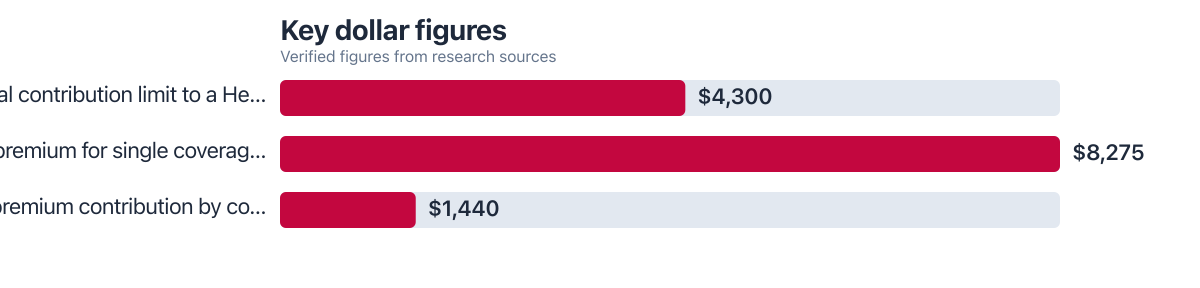
Balancing childcare, a job, and medical bills on one income is hard enough without healthcare costs piling on top. For single mothers in Colorado who qualify, an HSA can chip away at monthly premiums while quietly building a tax-free cushion. The average annual premium for a single HDHP in 2024 hit $8,275, according to the Kaiser Family Foundation. Subsidies through Connect for Health Colorado bring that number down considerably for many families. Workers, on average, put in $1,440 toward their own premiums in 2025.
Colorado’s marketplace now treats every bronze and catastrophic plan as HSA-eligible. That single change opened the door wider for single parents juggling variable paychecks, daycare bills, and doctor visits.
| Column 1 | Column 2 | Column 3 |
|---|---|---|
| Reasons to use an HSA | Monthly premiums on HSA-eligible bronze plans in Colorado average $250, up to $100 less than silver plans after subsidies. | Contributions to an HSA are tax-deductible, reducing your taxable income. For a single filer, this can save up to 22% in federal taxes. |
| Reasons not to use an HSA | Many single mothers in Colorado earn too little to benefit from tax savings, especially if they qualify for Medicaid or CHIP. | Families with children who need frequent care may struggle with a $1,700 deductible, even with an HSA buffer. |
| Reasons to use an HSA | Unused HSA funds roll over indefinitely. By age 50, even modest contributions can grow to over $20,000 with compound growth. | Some Colorado employers don’t offer HSA-compatible plans. If you’re self-employed, you must manage contributions yourself. |
| Reasons not to use an HSA | Medicaid eligibility can be lost if your income rises above the threshold, especially if you’re enrolled in a high-deductible plan. | Child Health Plan Plus (CHPP) in Colorado covers many services, but only if you meet income and residency rules. |
| Reasons to use an HSA | You can use HSA funds to pay for children’s dental, vision, and therapy, even if they aren’t covered by your plan. | Some parents report confusion about which expenses qualify. The IRS provides a list, but interpretation varies by provider. |
| Reasons not to use an HSA | Switching plans mid-year can reduce your contribution window. If you switch in June, you can only contribute for six months. | Some HSA providers charge maintenance fees, especially if you don’t meet minimum balance thresholds. |
Key Takeaways
- Check if your plan is HSA-eligible: all 2026 bronze and catastrophic plans on Connect for Health Colorado qualify.
- Your net savings are strongest if your new monthly premium is at least $100 lower than your current plan.
- You must be enrolled in a high-deductible plan on the first day of the month to contribute.
- Contribution limits are $4,400 for self-only in 2026, up to $8,750 for family coverage.
- Use HSA funds for children’s care, even if they’re not on your plan, IRS rules allow this for dependents.
- Ensure your income doesn’t exceed the limit to keep Medicaid or CHPP eligibility if applicable.
- Consider consulting a tax pro if you file as head of household or have fluctuating income.
Is a High-Deductible Plan Right for a Single Mother in Colorado?
Yes, provided your deductible sits at or above $1,700, per the Kaiser Family Foundation, and the plan itself is HSA-eligible. That’s the line that matters most. Can’t stomach a high out-of-pocket cost right now? Skip it and revisit later.
Every bronze and catastrophic plan listed on Connect for Health Colorado carries HSA eligibility. A 2024 survey found 21% of covered workers, according to the Kaiser Family Foundation, were already in HSA-qualified plans. Take a single mother earning $45,000 a year: a bronze plan with a $1,700 deductible usually runs about $250 a month, well under the $300 average for a comparable silver plan.
All 2026 Bronze and Catastrophic plans are HSA-eligible, per Healthcare.gov, and that covers offerings from Cigna, Kaiser Permanente, and UnitedHealthcare. State employees in Colorado may also qualify through an employer HDHP, no marketplace shopping required.
How Do HSA Tax Advantages Boost Net Savings?
Three layers of savings stack up here: what you put in, what it grows into, and what you take out. That triple structure is why HSAs matter so much for single mothers stretching a tight budget.
A single filer who contributes $4,400, the limit set by the Internal Revenue Service, shaves that same amount off taxable income. At a 22% federal rate, that’s $968 back in your pocket. Withdrawals for qualified medical expenses cost nothing extra in taxes, either. Pay for your child’s therapy or a round of dental work straight from the account and no tax bill follows.
One catch worth flagging: the IRS requires HDHP coverage on the first day of the month to contribute. You also can’t be claimed as someone else’s dependent, enrolled in Medicare, or carrying disqualifying coverage like a general-purpose FSA.
Can Single Mothers Use HSA Funds for Dependent Kids?
Yes. HSA dollars cover medical, dental, or vision costs for any qualifying dependent, whether or not that child is enrolled in your HDHP.
Biological, adopted, or foster children you claim as dependents all count under IRS rules. Picture a single mother in Denver with two kids under 18: she can tap her HSA for orthodontic work, mental health counseling, or prescription eye drops for either child, regardless of whether they’re covered by her plan or by Medicaid.
The IRS rules are clear: qualified medical expenses include those for dependents. That flexibility is a big reason HSAs fit single-parent households so well.
Who Should and Who Should Not Use an HSA
Good candidates
Single mothers who can cover a $1,700 deductible, per Kaiser Family Foundation data, and whose income arrives predictably each month tend to do well here. Filing as head of household with a child under 18 strengthens the case further.
- Single mother in Colorado earning $40,000–$60,000, enrolled in a Connect for Health Colorado bronze plan.
- Self-employed parent with variable income who can set aside funds monthly.
- Parent who qualifies for a premium tax credit and wants to maximize net savings.
- Parent with a child requiring frequent dental or mental health care.
Who should skip it
Single mothers relying on Medicaid, CHIP, or income that swings unpredictably month to month generally shouldn’t bother. The math falls apart fast on a tight budget.
- Single mother with a child covered under Child Health Plan Plus (CHPP) and income below $26,000 annually.
- Parent who cannot afford a $1,700 deductible and lacks emergency savings.
- Individual receiving a premium tax credit who fears losing eligibility due to income spikes.
- Parent who is not eligible for HSA contributions due to being claimed as a dependent.
How to Maximize HSA Savings With Regular Contributions
Automate the deposits and an HSA stops being an afterthought and starts working like a real financial tool. Even $300 a month adds up faster than most people expect. By December, that’s $3,600 banked, edging close to the $4,400 cap for 2026. Self-employed? You can contribute whenever cash flow allows, full-time work or not.
A parent in Aurora, Colorado, started putting $350 a month into her HSA after dropping a silver plan for a bronze one. Between lower premiums and the tax break, she saved $108 a month. Two years in, she’d built a $7,000 cushion earmarked for her daughter’s therapy visits. The tax savings alone paid for her contributions. Not a bad return for a decision that took one afternoon of comparison shopping.
For parents stretched between childcare, a job, and medical appointments, consistent saving through an HSA tends to pay off quietly over time. If you’re not sure where to begin, a provider like Health Savings Accounts of America offers zero-fee accounts with mobile tracking built in. You can watch your spending in real time and set reminders, no need to wait until tax season to see what you’ve saved.
Protecting your family financially goes beyond healthcare accounts, though. If life insurance is also on your mind, a guide like Term Life Insurance Payout Process: What Beneficiaries Need to Do After a Death walks through what happens when the unexpected occurs, including claim filing, required documents, and typical timelines.
How HSAs Protect Financial Stability in Unpredictable Situations
Plans fall apart. A sudden illness, a busted water heater, an unexpected medical bill, any of these can wreck a carefully balanced budget in a week. This is where HSAs earn their keep. Unlike FSAs, which reset every year and force you to use it or lose it, HSA balances roll over indefinitely and can even fund care decades from now, in retirement.
A single mother in Colorado Springs lost her second job in 2025 right as a $2,100 medical bill landed. She covered it with HSA savings built up over the previous 18 months, no loan, no dipping into her emergency fund.
Variable income doesn’t rule you out either. If you’re self-employed or working part-time hours, contribute when you can and skip months when you can’t. Consistency matters more than the size of any single deposit. Small amounts compound over years, and a $20,000 balance by age 50 is realistic, not wishful thinking.
Dependency rules trip up a lot of parents who assume their HSA won’t cover a child not listed on their own plan. The IRS says otherwise: claim the child as a dependent, and their medical costs qualify, a hearing test, a school nurse visit, all of it. That’s part of why families in Fort Collins increasingly lean on HSAs for routine care instead of paying out of pocket.
Anyone juggling several financial obligations at once needs to think about coverage gaps too, not just medical ones. Delivery drivers and gig workers in particular should check How Delivery Drivers Should Stack Auto Insurance to Avoid Costly Coverage Gaps for guidance on layering policies correctly. One uncovered accident can erase months of HSA progress in a single afternoon.
A Single Mother in Denver Reduced Her Healthcare Costs by $100 Per Month
Maria, a single mother of two in Denver earning $48,000 a year, used to pay $340 a month for a silver plan with a $2,500 deductible. In 2026 she switched to a bronze plan through Connect for Health Colorado, HSA-eligible, with a $1,700 deductible.
Her premium dropped to $240 a month. She began contributing $350 monthly to her HSA, and at a 22% federal rate, that saved her $77 in taxes every month. Combine the premium drop with the tax savings and her net gain landed at $100 a month, $1,200 over the year.
She’s since used the account to cover her younger child’s orthodontic treatment and her older child’s mental health counseling. No tax return required to see any of it, the savings showed up immediately, month after month.
By December she had $4,100 sitting in her HSA, nearly touching the $4,400 cap. Now she’s got a buffer for whatever comes next and one less thing keeping her up at night.
How to Start Using an HSA as a Single Mother
Here’s a straightforward sequence to follow:
- Check your plan: Go to Connect for Health Colorado and verify your plan is HSA-eligible.
- Compare premiums: Use the marketplace to see how much you’d save on a bronze plan versus silver.
- Calculate your net savings: Use the HSA tax calculator to estimate your federal tax savings.
- Open an HSA account: Choose a low-fee provider like HSA Bank or Health Savings Accounts of America.
- Set up automatic contributions: Start with $250–$350 per month. Adjust as your income allows.
- Track your spending: Use the HSA app to monitor medical expenses and avoid non-qualified withdrawals.
- Review annually: Reassess at renewal time. If your income changes, you may need to adjust your strategy.
Long-term security matters too, and life insurance often gets overlooked while people focus on healthcare costs. How to Compare Term Life Insurance Quotes Without Getting Misled can help you sidestep inflated rates and save both money and frustration down the road.
Related reading: Single Parent in Georgia Saved $127/Month on Health Insurance Using HSA.
Related reading: How a 29.
Frequently Asked Questions
Is it worth switching to an HSA plan if my monthly premium drops by $50?
No. If your savings are under $100 per month after tax advantages, the effort isn’t worth it. Focus on plans with larger premium reductions.
Can I use my HSA to pay for my child’s therapy if they’re on Medicaid?
Yes. As long as you claim them as a dependent, HSA funds can cover therapy, even if they’re on Medicaid. The IRS doesn’t restrict this use.
What happens if I don’t use all my HSA funds by the end of the year?
Nothing. Funds roll over indefinitely. You can use them for future medical expenses, including retirement healthcare needs.
Can I open an HSA if I’m not employed?
Yes. Any individual covered by an HDHP can open and contribute to an HSA. You don’t need employer sponsorship. Many banks and brokers offer no-fee accounts.
Should I worry about losing Medicaid if I start an HSA?
Yes, only if your income exceeds the threshold. Medicaid eligibility in Colorado is based on income and household size. If you’re near the cutoff, a small raise could disqualify you. Talk to your caseworker before switching plans.
Can I use HSA funds for my child’s vision care if they’re not on my plan?
Yes. As long as they’re a dependent, you can use HSA funds for eye exams, glasses, or contact lenses, even if they’re covered under a different plan or CHIP.
Sources
- Internal Revenue Service, Health Savings Accounts (HSA) Guide
- Healthcare.gov, HSA-Eligible Plans
- Colorado Department of Human Resources, HSA for State Employees
- Kaiser Family Foundation, Employer Health Benefits Survey 2024
- Kaiser Family Foundation, 2025 Employer Survey Summary
- Insurance Journal, AM Best Shifts Outlooks to Negative for Safety Insurance