
Fact-checked by the Smart Insurance 101 editorial team
Quick Answer
Standard homeowners insurance never covers earthquake damage. The earth movement exclusion appears in virtually every HO-3 policy, meaning structural damage, foundation cracks, and personal property losses from seismic shaking all require a separate earthquake policy or endorsement. Earthquake deductibles run 10–25% of the home’s insured value, not a flat dollar figure, so a $500,000 home can carry a $50,000–$125,000 out-of-pocket threshold before insurance pays anything.
Most homeowners assume their insurance policy covers just about anything that could go wrong with their house. Then an earthquake strikes, and the ground shifts beneath that assumption entirely. Earthquake insurance coverage is one of the most misunderstood and overlooked protections in the American insurance market, and that blind spot costs homeowners billions of dollars after every major seismic event.
The numbers are staggering. The 1994 Northridge earthquake caused approximately $44 billion in total damage, yet only about 25% of affected homeowners had earthquake coverage at the time. After the 2014 South Napa earthquake, insured losses represented just 10% of the $1 billion in total damages. The Federal Emergency Management Agency (FEMA) estimates that a major earthquake in a densely populated area could cause up to $200 billion in losses, most of it uninsured.
This guide breaks down exactly what separates standard homeowners insurance from standalone earthquake policies. You will learn which perils each covers, how deductibles work differently, what earthquake coverage actually costs, and how to decide whether adding a separate policy makes financial sense for your home. By the end, you will have a clear, actionable framework to protect your single largest asset.
Key Takeaways
- Standard homeowners insurance never covers earthquake damage, a separate policy or endorsement is always required.
- Earthquake insurance deductibles are typically 10–25% of a home’s insured value, meaning a $500,000 home could carry a $50,000–$125,000 out-of-pocket threshold.
- Only about 11% of California homeowners carry earthquake insurance, despite the state accounting for roughly 90% of U.S. earthquake risk by insured value.
- Average annual earthquake insurance premiums range from $800 to $5,000+ depending on location, home construction type, and coverage limits.
- The California Earthquake Authority (CEA) is the world’s largest residential earthquake insurer, providing coverage to over 1.1 million policyholders.
- FEMA disaster assistance after an earthquake averages only $5,000–$8,000 per household, far below typical repair costs for structural damage.
In This Guide
- What Homeowners Insurance Actually Covers
- The Earthquake Exclusion: Why Your Standard Policy Falls Short
- What Earthquake Insurance Coverage Includes
- Deductibles: A Critical Difference You Cannot Ignore
- How Much Does Earthquake Insurance Cost?
- Who Needs Earthquake Insurance Coverage?
- The CEA and the Private Earthquake Insurance Market
- Closing the Coverage Gap: Strategies and Add-Ons
- Filing an Earthquake Claim: What to Expect
What Homeowners Insurance Actually Covers
A standard homeowners insurance policy, typically a HO-3 form, covers your home against a broad list of “named perils” and your personal property against specific listed causes of loss. Fire, theft, windstorm, hail, and lightning are classic examples, as is water damage from burst pipes. The policy also covers personal liability if someone is injured on your property.
Most policies are structured around four key coverages: dwelling coverage (the structure itself), other structures (fences, detached garages), personal property (contents), and loss of use (temporary living expenses if your home becomes uninhabitable). Each carries its own limit and may have sublimits for certain items like jewelry or electronics.
For a solid foundation on how these protections are structured, the Homeowners Insurance Guide: A Beginner’s Overview is an excellent starting point before working through the gaps that earthquake coverage addresses.
Named Perils vs. Open Perils
An open perils (or “all-risk”) policy covers everything except what is explicitly excluded. A named perils policy only covers causes of loss that are listed. In both cases, earthquake is virtually always excluded, either by name or by the catch-all exclusion for “earth movement.”
The earth movement exclusion is broad by design. It encompasses earthquakes, volcanic eruptions, landslides, sinkholes, and mudslides. If the ground moves and damages your home, your standard policy almost certainly will not pay.
What Homeowners Insurance Does NOT Cover
Beyond earthquakes, standard policies also exclude flood damage, nuclear hazard, government action, and normal wear and tear. These exclusions are not accidents, they represent systemic, catastrophic risk categories that insurers price and sell separately.
Understanding these exclusions matters enormously. Many homeowners discover the gaps only at claim time, which is far too late. Exploring what you are and are not covered for regarding your home and belongings before a disaster strikes can save you from financial ruin.
The Insurance Information Institute reports that fewer than 10% of U.S. homeowners outside California carry earthquake insurance, even in states like Oregon, Washington, and Utah with significant seismic risk.
The Earthquake Exclusion: Why Your Standard Policy Falls Short
The earthquake exclusion has been a standard feature of homeowners insurance since the early 20th century. After the catastrophic 1906 San Francisco earthquake and fire, insurers paid enormous claims for the fire damage, but specifically excluded earthquake-triggered losses in subsequent policy language.
Today, virtually every standard homeowners policy contains an earth movement exclusion that explicitly bars coverage for “loss or damage caused by, resulting from, contributed to, or aggravated by earthquake, including land shock waves or tremors before, during, or after a volcanic eruption.” That is a very broad net.
The Fire-Following-Earthquake Problem
Here is a nuance that surprises many homeowners: fire following an earthquake is generally covered by a standard policy. If broken gas lines ignite and burn your home after a quake, your homeowners insurance typically pays for that fire damage.
The structural damage caused by the shaking itself, cracked foundations, collapsed walls, broken chimneys, is not covered. In many earthquakes, the fire-following loss is a fraction of the total structural loss. Do not rely on this limited protection as a substitute for proper earthquake coverage.
Some homeowners assume that because their insurer paid a fire claim after an earthquake, they have “earthquake coverage.” They do not. The structural and foundation damage, often the most expensive portion, remains excluded.
The distinction matters enormously in loss scenarios. After the 1989 Loma Prieta earthquake, the California Department of Insurance found that the majority of homeowners who filed claims only recovered for fire-related losses, leaving billions in structural damage uncompensated.
Water Damage Complications After Earthquakes
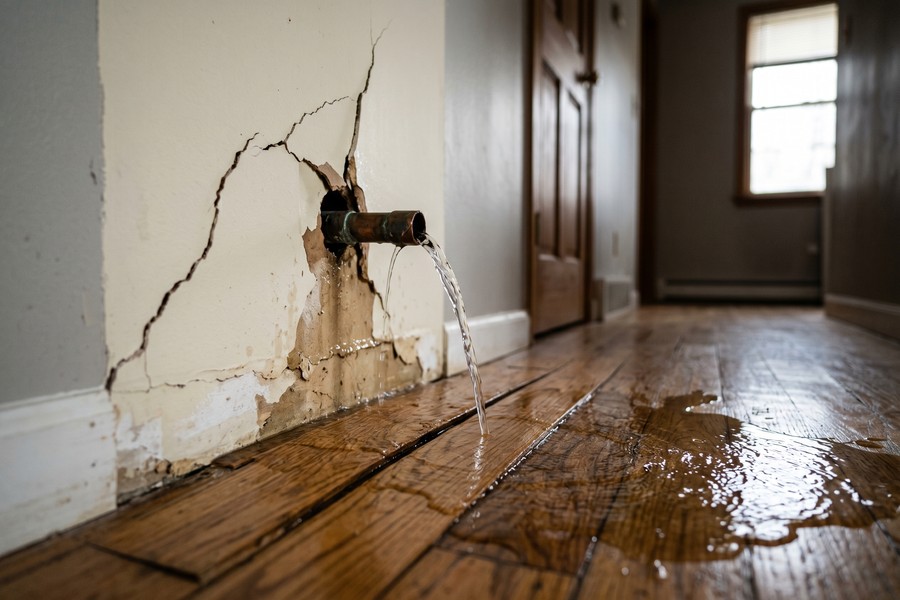
Earthquakes frequently rupture water lines both inside and outside a home. Internal pipe bursts may be covered under a standard homeowners policy as “sudden and accidental water damage.” External main breaks, flooding from infrastructure failure, and sewer backup from ground movement typically are not covered.
This creates complex, disputed claims. Insurers often argue that damage appearing to come from broken pipes was actually caused by earth movement, and therefore excluded. Document everything carefully after any seismic event, even a minor one.
What Earthquake Insurance Coverage Includes
A standalone earthquake insurance policy or endorsement is specifically designed to fill the gap left by standard homeowners insurance. It mirrors the structure of a homeowners policy but applies specifically to earthquake-caused damage. The core coverages are dwelling, personal property, and loss of use, each with separate limits and deductibles.
Quality earthquake insurance typically addresses damage to the home’s structure, including foundation cracks, collapsed chimneys, broken exterior walls, and damaged roofing caused by seismic shaking. These are precisely the losses that generate the largest repair bills after a significant event.
Dwelling Coverage Under an Earthquake Policy
Dwelling coverage in an earthquake policy pays to repair or rebuild the structure of your home after earthquake damage. Limits should be set to reflect the full replacement cost of the home, not its market value, which includes land.
In high-risk states, some policies offer extended replacement cost or guaranteed replacement cost. These are valuable upgrades. Post-earthquake construction costs can spike dramatically due to demand surge, and a bare replacement cost limit may leave you 20–30% short of actual rebuild expenses.
Personal Property and Loss of Use
Personal property coverage under an earthquake policy typically pays for broken furniture, shattered electronics, and dishware damaged by shaking. Note that this is separate from the personal property coverage under your homeowners policy, each handles different causes of loss.
Loss of use (also called “additional living expenses”) covers hotel stays, restaurant meals, and temporary rental costs if your home is declared uninhabitable after an earthquake. Given that major repairs can take 12–18 months, this coverage can easily pay out $30,000–$60,000 in a significant loss scenario.
| Coverage Type | Standard Homeowners Policy | Earthquake Insurance Policy |
|---|---|---|
| Earthquake structural damage | Not covered | Covered up to dwelling limit |
| Fire following earthquake | Covered | Covered (or covered by HO policy) |
| Personal property (quake) | Not covered | Covered up to contents limit |
| Loss of use (quake) | Not covered | Covered up to ALE limit |
| Foundation damage | Not covered | Covered |
| Burst pipes (internal) | May be covered | Covered under earthquake policy |
After the 1994 Northridge earthquake, the average insured loss per claim was approximately $42,000. Homeowners without earthquake coverage received an average of just $5,261 from FEMA disaster assistance, a gap of nearly $37,000.
Deductibles: A Critical Difference You Cannot Ignore
This is where earthquake insurance most sharply diverges from standard homeowners coverage. Standard homeowners policies typically carry flat-dollar deductibles, $500, $1,000, or $2,500 are common. You pay that fixed amount; your insurer pays the rest.
Earthquake policies use percentage-based deductibles, calculated as a percentage of the home’s insured value, not the claim amount. This is a fundamental distinction that catches many policyholders off guard at claim time.
How Percentage Deductibles Work
Say your home is insured for $500,000 and your earthquake deductible is 15%. You owe $75,000 out of pocket before your insurer contributes a single dollar. A $80,000 repair bill after a moderate quake would net you only $5,000 from insurance, after covering that $75,000 deductible yourself.
Deductible percentages typically range from 10% to 25%, depending on your insurer, state, and how close you live to known fault lines. The California Earthquake Authority offers policies with deductibles as low as 5% for some higher-premium tiers.
Deductible Comparison: Homeowners vs. Earthquake
| Home Insured Value | HO Flat Deductible | EQ 10% Deductible | EQ 15% Deductible | EQ 25% Deductible |
|---|---|---|---|---|
| $250,000 | $1,000 | $25,000 | $37,500 | $62,500 |
| $500,000 | $1,000 | $50,000 | $75,000 | $125,000 |
| $750,000 | $2,500 | $75,000 | $112,500 | $187,500 |
| $1,000,000 | $2,500 | $100,000 | $150,000 | $250,000 |
The implication is clear: earthquake insurance is most valuable in truly catastrophic scenarios, major structural damage or total losses. For moderate damage that falls below your deductible, you bear the entire cost yourself. This is why earthquake policies are often described as catastrophe insurance rather than first-dollar coverage.
The high deductible structure is the policy’s most significant limitation. A homeowner who suffers $60,000 in damage on a $500,000 home with a 15% deductible collects nothing. That math should drive your decision about how much liquid savings to keep on hand alongside any policy you carry.
Amy Bach, Executive Director of United Policyholders, a nonprofit that advocates for insurance consumers and has tracked earthquake claims across California for decades, has made the point clearly in public guidance: earthquake insurance is designed to protect against the big one, specifically total or near-total losses that would otherwise wipe out a family’s equity and leave them underwater on a mortgage for a home they cannot live in. That framing matters. If you carry earthquake coverage expecting it to pay for moderate damage, the deductible structure will disappoint you.
How Much Does Earthquake Insurance Cost?
Earthquake insurance premiums vary more widely than almost any other residential insurance product. The range, from roughly $300 annually in low-risk areas to over $5,000 in high-risk zones, reflects the enormous variation in seismic hazard across the U.S.
Nationally, the Insurance Information Institute estimates that the average earthquake insurance premium is approximately $800 per year. That average obscures tremendous variation. A wood-frame home in suburban Indianapolis might cost $300–$400 annually. A masonry home on soft soil in San Francisco could cost $3,000–$6,000 per year.
Key Factors That Determine Your Premium
Location and proximity to fault lines is the dominant pricing factor. Insurers use seismic hazard maps from the U.S. Geological Survey (USGS) to assess the probability of damaging shaking at a specific address. Being one mile from an active fault versus ten miles can double or triple your premium.
Construction type is the second major driver. Wood-frame homes flex during shaking and generally sustain less structural damage than unreinforced masonry (brick) homes, which are far more vulnerable. A brick home in a moderate-risk zone may carry higher premiums than a wood-frame home in a slightly higher-risk zone.
Soil type matters more than many homeowners realize. Homes built on soft, loose soils, particularly former bay fill or marshland, experience amplified shaking compared to homes on bedrock. This is called soil liquefaction risk, and it dramatically increases both damage probability and insurance premiums.
Premium Comparison by Risk Category
| Risk Level | Example Locations | Estimated Annual Premium (HO $400K) | Typical Deductible |
|---|---|---|---|
| Very High | San Francisco Bay Area, Los Angeles | $2,000–$6,000+ | 15–25% |
| High | Seattle, Portland, Salt Lake City | $800–$2,500 | 10–20% |
| Moderate | Memphis, Charleston SC, Anchorage | $400–$1,200 | 10–15% |
| Low | Minneapolis, Denver, Indianapolis | $200–$500 | 10% |
Rising insurance costs are a trend across all property coverage types. Our analysis on why insurance premiums are exploding provides useful background on the broader market forces at play.
Choosing a higher deductible (e.g., 20% instead of 10%) can reduce your earthquake premium by 30–50%. This strategy makes sense if you have sufficient liquid savings to cover the higher out-of-pocket threshold and primarily want protection against catastrophic total loss.
Who Needs Earthquake Insurance Coverage?
The conventional wisdom says earthquake coverage is primarily a California concern. The data tells a more complex story. The USGS estimates that 45 states and territories in the U.S. face some level of earthquake hazard. Sixteen states have “moderate to very high” seismic hazard, including states that many homeowners consider safe from earthquakes.
The New Madrid Seismic Zone, spanning parts of Arkansas, Illinois, Indiana, Kentucky, Mississippi, Missouri, and Tennessee, is one of the most seismically active regions in North America. A repeat of the 1811–1812 New Madrid earthquakes (estimated magnitude 7.5–8.0) would cause catastrophic damage across a region where earthquake insurance take-up rates are below 2%.
The Risk Assessment Framework
Consider these four questions to assess your personal need for earthquake insurance coverage:
- Do you live within 50 miles of a known active fault line?
- Is your home built from unreinforced masonry (brick, stone, or adobe) or older concrete?
- Does your home sit on soft, fill, or alluvial soils?
- Would a $50,000–$150,000 uninsured repair bill threaten your financial stability?
Two or more “yes” answers means the cost-benefit math of earthquake insurance tilts toward purchasing coverage. The question is not whether earthquakes can happen near you, it is whether you can self-insure against the worst-case outcome.
Renters and Earthquake Risk
Renters are not off the hook. Renters earthquake insurance covers personal property damaged by seismic events. Standard renters insurance excludes earthquake damage just as homeowners policies do. A renter who loses $15,000 worth of furniture, electronics, and clothing in a quake has no recourse without earthquake coverage.
Renters earthquake coverage is typically inexpensive, often $50–$150 per year for contents coverage, making it one of the most cost-effective insurance purchases available in high-risk areas.
The Pacific Northwest faces a particularly severe threat from the Cascadia Subduction Zone, which is capable of producing a magnitude 9.0 earthquake. FEMA estimates such an event could kill 13,000 people and cause $82 billion in damage in Oregon and Washington alone.
The CEA and the Private Earthquake Insurance Market
The California Earthquake Authority (CEA) was created by the California legislature in 1996 after the Northridge earthquake caused major private insurers to exit the state’s residential market. Today it is the world’s largest residential earthquake insurer, with over 1.1 million policies in force and more than $21 billion in claim-paying capacity.
The CEA does not sell policies directly. Instead, it partners with participating insurance companies, including some of the largest carriers in the U.S., who sell CEA policies alongside their homeowners products. Your homeowners insurer may already participate; it is worth asking before shopping elsewhere.
CEA Policy Features and Limitations
CEA policies are standardized but offer some choice in coverage levels. The basic “Homeowners Choice” policy covers dwelling, personal property (with a $5,000–$200,000 limit), loss of use ($1,500–$100,000), and emergency repairs ($1,500). More expansive tiers add higher limits and optional coverages like building code upgrade coverage.
One notable limitation: CEA policies do not cover detached structures like garages, fences, or pools. They also do not cover land repair (retaining walls, grading) or vehicles. For complete coverage, you may need both a CEA policy and additional endorsements.
Private Market Alternatives
Outside California, the primary market for earthquake insurance consists of private insurers offering standalone policies or endorsements to homeowners policies. Major players include GeoVera, Palomar Specialty, and various Lloyd’s of London syndicates. These carriers can sometimes offer more flexible coverage terms than the CEA, including lower deductibles and broader coverage for detached structures.
A knowledgeable insurance broker is invaluable when comparing earthquake policies. The differences in deductibles, coverage terms, and exclusions across carriers can be significant. Our guide on how choosing an insurance broker can save you time and money explains how to find and work with the right professional for complex coverage decisions like this one.
State insurance regulators, including the California Department of Insurance, the Oregon Insurance Division, and the Washington Office of the Insurance Commissioner, publish consumer guides and rate comparison tools for earthquake policies in their respective states. The National Association of Insurance Commissioners (NAIC) maintains a national directory of state regulators for homeowners in other seismically active states.
The CEA reports that its average annual premium is approximately $1,040 for a single-family home in California, but premiums can range from under $500 to over $5,000 depending on location and construction type.
Closing the Coverage Gap: Strategies and Add-Ons
Buying a basic earthquake policy is a starting point, not a finishing line. Smart homeowners layer additional protections to close the specific gaps that standard earthquake policies leave open. Understanding these options can make the difference between full recovery and a financially devastating shortfall.
Building Code Upgrade Coverage
Building code upgrade coverage (also called “ordinance or law coverage”) pays the additional cost of bringing a repaired or rebuilt home up to current building codes. This matters enormously after major earthquakes. Codes in seismically active states have been substantially upgraded since many existing homes were built.
Rebuilding a 1960s-era California home to 2024 code requirements might add 15–25% to total reconstruction cost. Without this endorsement, you pay that premium out of pocket even with a full earthquake insurance payout. Many homeowners skip this coverage and discover the gap only when their contractor presents the final bill.
Earthquake Retrofit Discounts
Many insurers offer premium discounts for seismic retrofits, structural improvements that make older homes more earthquake-resistant. Common retrofits include cripple wall bracing and anchor bolts securing the foundation to the frame. Soft-story retrofits apply specifically to multi-unit buildings.
A properly permitted cripple wall retrofit can cost $3,000–$10,000 but may reduce earthquake insurance premiums by 10–30% annually. In some California jurisdictions, retrofit rebate programs offset part of that upfront cost. The retrofit also directly reduces your risk of damage, a dual financial benefit.
Parametric Earthquake Insurance
Parametric earthquake insurance is an emerging product that pays a predetermined amount based on the measured magnitude and location of an earthquake, not the actual assessed damage to your property. Payouts trigger automatically when a qualifying seismic event occurs at or above a set threshold within a defined radius of your home.
The advantage is speed and simplicity: no adjuster visit, no drawn-out claims process. The risk is basis risk, the earthquake could cause significant damage to your specific property but fail to trigger the parametric threshold, leaving you without a payout. Parametric policies work best as a supplement to traditional earthquake coverage, not a replacement.

Karl Susman, Principal of Susman Insurance Agency in Los Angeles, has noted in public client guidance that the biggest mistake homeowners make is buying earthquake insurance but skipping the loss-of-use and building code upgrade coverages to save on premium. After a major event, those are often the coverages that matter most for getting life back to normal. The United Policyholders nonprofit, which has tracked earthquake claim outcomes for decades, echoes that finding in its published earthquake insurance guides.
Filing an Earthquake Claim: What to Expect
The claims process for earthquake insurance differs from standard homeowners claims in important ways. Understanding the process before disaster strikes helps you avoid costly mistakes, preserve your documentation, and navigate insurer timelines more effectively.
Immediate Steps After an Earthquake
Safety comes first. Once you and your family are secure, begin documenting damage immediately. Take photos and video of every affected area before any cleanup or temporary repairs. Record damage to the structure, contents, landscaping, and utilities. This visual record is foundational to a successful claim.
Contact your earthquake insurer (not just your homeowners insurer, they are often different entities) as soon as possible. Most policies require prompt notice of loss. Delays in reporting can complicate or limit your claim. Make temporary repairs only to prevent further damage, and save all receipts for those emergency expenses, most policies reimburse reasonable emergency repair costs.
The Adjuster Process and Common Disputes
Your insurer will assign a claims adjuster, who will inspect the damage and produce a loss estimate. In major earthquake events, adjusters are often overwhelmed with claims, and wait times can stretch to several weeks. Consider hiring a public adjuster, a licensed professional who represents your interests rather than the insurer’s, for complex or large claims.
The most common disputes in earthquake claims involve distinguishing earthquake damage from pre-existing conditions or normal settlement. Insurers may argue that foundation cracks existed before the earthquake. Obtain an independent structural engineer’s assessment early in the process. That expert opinion can be decisive if a dispute escalates to appraisal or litigation.
After the 2014 South Napa earthquake, the California Department of Insurance reported that the average time from earthquake occurrence to final claim settlement was 14 months, meaning families were often in limbo for over a year while repairs proceeded.
The Mortgage Complication
With a mortgage in place, your lender is listed as a loss payee on your insurance proceeds. For large structural claims, the insurer may issue the check jointly to you and your lender. The lender must endorse the check before you can access the funds. This process can add weeks to your recovery timeline, plan accordingly and communicate with your mortgage servicer early in the claim process.
Understanding how deductibles and claim payments interact with your broader financial picture is important. Many of the same principles that apply to understanding deductible structures versus out-of-pocket maximums in health insurance are relevant here, know your thresholds before you need to use them.
Anita Taff-Rice, an insurance coverage attorney based in San Francisco who has represented policyholders in earthquake disputes, has stated in public legal guidance that documentation is everything in earthquake claims. The policyholders who recover fully are almost always the ones who photographed their homes thoroughly before any event ever occurred, a home inventory is your best pre-loss investment.
According to the Insurance Information Institute, earthquake losses in the U.S. from 1992 to 2021 totaled approximately $28.7 billion in insured losses, but total economic losses during that same period exceeded $174 billion, meaning over 83% of earthquake losses were uninsured.

Real-World Example: The Martinez Family’s Napa Experience
In August 2014, a magnitude 6.0 earthquake struck the South Napa area of California, the largest Bay Area quake in 25 years. The Martinez family, owners of a 1958-era wood-frame home in Napa valued at $620,000, had purchased a CEA earthquake policy two years earlier at an annual premium of $1,840, with a 15% deductible. Their homeowners policy alone would have left them entirely exposed.
The earthquake cracked the home’s foundation in three places, sheared a brick chimney, and shifted interior walls enough to jam most doors and windows. Initial repair estimates from two contractors came in at $148,000 and $163,000. The 15% CEA deductible on their $620,000 insured dwelling value was $93,000, a number that initially shocked them. After meeting their deductible, their CEA policy paid approximately $62,000 toward the $155,000 average repair estimate. Their additional living expenses coverage paid $28,000 over 11 months while repairs proceeded, and emergency repair reimbursements added another $4,200.
Total CEA payouts: approximately $94,200. The Martinez family covered the remaining $60,800 through a combination of emergency savings and a low-interest home improvement loan. Without the earthquake policy, they would have faced the entire $155,000 uninsured, likely forcing a distressed sale. They also discovered their policy lacked building code upgrade coverage; the $18,000 cost of bringing the repaired foundation up to current seismic standards came entirely out of pocket, a lesson they immediately corrected at renewal by adding that endorsement.
The key takeaway from their experience: earthquake insurance did not make them whole, but it preserved their ability to stay in their home and avoided financial catastrophe. They estimate the policy returned over five times its two-year premium cost in a single event. They now maintain a digital home inventory, carry building code upgrade coverage, and have increased their liquid emergency reserves to cover a larger portion of their deductible.
Your Action Plan
-
Confirm Your Homeowners Policy Excludes Earthquake Damage
Pull out your current homeowners policy and locate the exclusions section. Find the “earth movement” or “earthquake” exclusion. Confirm it is there, it almost certainly is. This is your baseline: you have zero earthquake coverage until you take action.
-
Assess Your Personal Seismic Risk
Visit the USGS Earthquake Hazards Program website and use their hazard map tool to check the seismic risk for your specific address. Also research whether your home sits near known fault lines and what soil type underlies your neighborhood. This assessment determines how urgently you need coverage and how much premium you should expect to pay.
-
Get Your Home’s Replacement Cost Value Right
Earthquake insurance limits should be based on the full replacement cost to rebuild your home, not its market value or assessed value. If you are unsure, hire a licensed appraiser for a replacement cost estimate. Underinsuring your dwelling means your earthquake coverage may be inadequate even before the percentage deductible applies.
-
Obtain at Least Three Earthquake Insurance Quotes
Contact your existing homeowners insurer first to ask whether they offer an earthquake endorsement or access to CEA policies. Then get quotes from at least two independent sources, a specialist earthquake broker or a carrier like GeoVera or Palomar. Compare not just premiums but deductible percentages, coverage scope, and whether building code upgrade coverage is included or available as an add-on.
-
Add Building Code Upgrade and Evaluate Loss of Use Limits
When reviewing policy options, confirm that building code upgrade coverage (ordinance or law) is included or available. Also review the loss of use limit, $15,000 may sound generous until you are renting an apartment for 14 months at $2,500 per month. Set loss of use limits at a minimum of 20% of your dwelling coverage amount.
-
Create a Home Inventory
Walk through your home with your smartphone and record video of every room, opening every closet and drawer. Note serial numbers, purchase dates, and estimated values for electronics, appliances, and furniture. Store this inventory in cloud storage or a secure offsite location. This documentation is essential for personal property claims and takes less than two hours to create.
-
Explore Seismic Retrofit Options
If your home was built before 1980 and has a raised foundation or cripple walls, contact a licensed contractor for a retrofit assessment. Ask your insurer whether a retrofit would reduce your earthquake premium. In California, check the CEA Brace + Bolt program for rebates up to $3,000 toward retrofit costs.
-
Review Coverage Annually and After Any Major Renovation
Earthquake insurance needs to be revisited every year at renewal. Home values change, construction costs rise, and your personal financial situation evolves. After any significant renovation or addition, update your insured dwelling value to reflect the change. Also check whether your deductible choice still aligns with your current liquid savings capacity.
Frequently Asked Questions
Does homeowners insurance ever cover earthquake damage?
No. Standard homeowners insurance policies universally exclude earthquake damage through an “earth movement” exclusion. The one narrow exception is fire damage that occurs as a direct result of an earthquake (such as broken gas lines igniting), that fire loss is typically covered under the homeowners policy. All structural, foundation, and property damage from seismic shaking requires a separate earthquake policy or endorsement.
Is earthquake insurance worth it if I live outside California?
Potentially yes, especially in the Pacific Northwest, the New Madrid Seismic Zone (central U.S.), South Carolina, and Alaska. These regions face significant seismic risk that most homeowners underestimate. The critical question is whether you could financially absorb a major uninsured structural loss. Outside high-risk zones, earthquake premiums are relatively affordable, often $200–$500 per year, making the cost-benefit math favorable even at moderate risk levels.
What is the waiting period for earthquake insurance to take effect?
Most earthquake insurance policies have a 30-day waiting period before coverage begins after purchase. You cannot purchase a policy when an earthquake is imminent and expect immediate coverage. This is a critical reason to purchase earthquake insurance well in advance of any event, and never to delay after deciding you need coverage.
How is earthquake insurance different from flood insurance?
Both are excluded from standard homeowners insurance and must be purchased separately. Flood insurance in the U.S. is primarily provided through the federal National Flood Insurance Program (NFIP) administered by FEMA, while earthquake insurance is sold exclusively through private carriers (including the CEA, which is a quasi-public entity). Both use percentage deductibles in high-risk zones and require separate policies with separate premium payments. They cover entirely different perils and do not overlap.
Can renters buy earthquake insurance?
Yes, and they should in seismically active areas. Renters earthquake insurance covers personal property, furniture, electronics, clothing, and other belongings, damaged by an earthquake. It does not cover the building structure (that is the landlord’s responsibility). Renters earthquake coverage is typically very affordable, often $50–$150 per year, and can usually be added as an endorsement to a standard renters insurance policy.
Does earthquake insurance cover my car?
No. Earthquake insurance policies for homeowners cover the structure, contents, and additional living expenses, not vehicles. Car damage from an earthquake (such as a structure collapsing onto your vehicle) would be covered by the comprehensive coverage portion of your auto insurance policy, if you carry it. Standard liability-only auto policies do not cover earthquake damage to your vehicle.
What does “loss of use” coverage pay for after an earthquake?
Loss of use coverage (also called additional living expenses or ALE) pays for the reasonable cost of temporary housing, meals above your normal food budget, and other increased living expenses incurred because your home is uninhabitable after earthquake damage. It covers hotel costs, short-term rental apartments, restaurant meals, and extra commuting costs. Coverage continues until your home is repaired or rebuilt, up to the policy’s ALE limit and time limit, which are often 12–24 months.
Will my mortgage lender require earthquake insurance?
Mortgage lenders generally do not require earthquake insurance, even in high-risk areas, with some exceptions for properties in designated high-hazard zones or for certain government-backed loan programs. This differs from flood insurance, which lenders often mandate for properties in FEMA-designated flood zones. The absence of a lender requirement does not mean earthquake coverage is unnecessary, it simply means the decision rests with you.
What is not covered by a typical earthquake insurance policy?
Most earthquake policies exclude vehicles, land (including soil settling, grading, and landscaping), fences and detached structures (unless specifically endorsed), swimming pools, pre-existing damage, and losses below the deductible threshold. Some policies also exclude masonry veneers or certain types of foundation damage. Reading the policy exclusions section carefully, and asking your agent to walk through them, is essential before purchasing.
How do I know if my home qualifies for a lower earthquake insurance premium?
Homes that have been seismically retrofitted, are built on bedrock rather than soft or fill soils, meet current seismic building codes, or are wood-frame construction typically qualify for lower premiums. Some insurers also offer discounts for homes with automatic gas shutoff valves. Request that your insurer review your specific construction details and any completed retrofit work before finalizing your premium, discounts are available but not always automatically applied.
Does the CEA cover the same things as a private earthquake insurer?
Not exactly. The California Earthquake Authority offers standardized policies with defined tiers, which means less flexibility but more predictability in what you get. Private carriers like GeoVera and Palomar Specialty may offer lower deductibles, broader coverage for detached structures, or higher personal property limits, but their underwriting criteria and pricing vary significantly. The right choice depends on your home’s construction, your deductible tolerance, and whether your homeowners insurer participates in the CEA program.
How does a public adjuster differ from my insurance company’s adjuster?
Your insurer’s adjuster represents the insurance company’s interests. A public adjuster is an independent, licensed professional you hire to represent your interests during the claims process. Public adjusters typically charge 10–15% of the final claim settlement, so they make the most sense for large, complex losses where the insurer’s initial estimate may be contested. The California Department of Insurance licenses and regulates public adjusters in that state; similar licensing requirements apply in Oregon, Washington, and most other states.
Can I get earthquake insurance if I have an older home?
Yes, though the cost will generally be higher. Older homes, particularly those built before seismic codes were strengthened in the 1970s and 1980s, carry greater earthquake risk, which insurers price accordingly. Some carriers may require a seismic inspection or retrofit before offering coverage. The CEA insures homes of any age, though it adjusts premiums based on construction type and year. Getting a retrofit assessment before shopping for coverage often results in better pricing and faster underwriting approval.
Sources
- U.S. Geological Survey, Earthquake Hazards Program
- California Earthquake Authority, Official Website
- Insurance Information Institute, Earthquake Facts and Statistics
- Insurance Information Institute, Background on Earthquake Insurance and Risk
- National Association of Insurance Commissioners, Earthquake Insurance Topic Overview
- U.S. Geological Survey, The South Napa Earthquake of 2014
- RMS, North America Earthquake Risk Analysis