Fact-checked by the Smart Insurance 101 editorial team
Quick Answer
Understanding dwelling vs other structures coverage means knowing that dwelling coverage (Coverage A) protects your home’s main structure, while other structures coverage (Coverage B) protects detached buildings on your property, typically set at 10% of your dwelling limit., most standard homeowners policies include both automatically, but limits and exclusions differ significantly between them.
When comparing dwelling vs other structures coverage, the core difference is straightforward: dwelling coverage pays to repair or rebuild your home’s primary structure after a covered loss, while other structures coverage handles detached buildings like garages, fences, and sheds. According to the Insurance Information Institute’s homeowners insurance overview, the standard HO-3 policy, the most common policy type in the U.S., automatically bundles both coverages together, but they operate under separate limits and separate rules., getting this distinction right can mean the difference between a fully paid claim and a costly coverage gap.
Rising construction costs and an increase in backyard upgrades, home offices, detached garages, pool houses, have made this distinction more financially consequential than ever. The National Association of Home Builders reports that residential construction costs have climbed sharply over the past three years, meaning an outdated Coverage B limit may leave you underinsured on structures you use every day.
This guide is for homeowners who want to understand exactly what each coverage type does, how the limits are calculated, and how to make sure neither their home nor their outbuildings are left exposed. By the end, you will know how to read your declarations page, spot coverage gaps, and have an informed conversation with your insurer.
Key Takeaways
- Coverage B (other structures) is automatically set at 10% of Coverage A (dwelling) on most standard HO-3 policies, according to the Insurance Information Institute.
- The average U.S. homeowner insures their dwelling for approximately $250,000, meaning a default Coverage B limit of $25,000, which may not cover a new detached garage costing $35,000–$50,000.
- Dwelling coverage protects structures attached to the main home, including attached garages, while other structures coverage applies only to detached buildings on the same property.
- Both Coverage A and Coverage B are subject to the same named perils or open-perils framework of the underlying policy, but each has its own separate sub-limit that does not roll over or share limits.
- You can typically increase Coverage B limits for $5–$15 per year in additional premium, making it one of the least expensive coverage upgrades available, per Policygenius research.
- Structures used for business purposes are frequently excluded from Coverage B under standard policies, a gap that affects an estimated 27 million U.S. home-based business owners, according to the U.S. Small Business Administration.
In This Guide
- What exactly does dwelling coverage cover on a homeowners policy?
- What does other structures coverage actually include, and what does it leave out?
- What are the key differences between dwelling vs other structures coverage?
- How are dwelling and other structures coverage limits calculated?
- How do I know if my other structures coverage limit is too low?
- How do I increase my other structures coverage without overpaying?
- Frequently Asked Questions
Step 1: What Exactly Does Dwelling Coverage Cover on a Homeowners Policy?
Dwelling coverage, labeled Coverage A on your policy declarations page, pays to repair or rebuild the physical structure of your home after a covered loss such as fire, windstorm, hail, or lightning. It covers the walls, roof, floors, built-in appliances, and any structures attached directly to the main house, including an attached garage or a covered porch.
How to Identify What Dwelling Coverage Includes
Your Coverage A limit appears on the first page of your declarations document and represents the maximum payout to rebuild your home from the ground up. This figure should reflect your home’s replacement cost value, what it would cost to rebuild using similar materials at current labor rates, not its market value or what you paid for it.
Standard HO-3 policies, filed under forms developed by the Insurance Services Office (ISO), cover the dwelling on an open-perils basis, meaning all risks are covered except those specifically excluded. Common exclusions include flooding, earthquakes, and normal wear and tear. For a full primer on what a standard policy covers, see our Homeowners Insurance Guide: A Beginner’s Overview.
What to Watch Out For
The most common mistake homeowners make is confusing replacement cost with market value. If your home’s market value is $400,000 but it would cost $520,000 to rebuild from scratch, due to local labor and material costs, your Coverage A should reflect $520,000, not $400,000. Insuring for market value can leave a six-figure gap.
If you renovate your kitchen, add a room, or finish your basement, your home’s replacement cost increases immediately. Many homeowners forget to update their Coverage A limit after major improvements, which creates a significant underinsurance risk at claim time.
Step 2: What Does Other Structures Coverage Actually Include, and What Does It Leave Out?
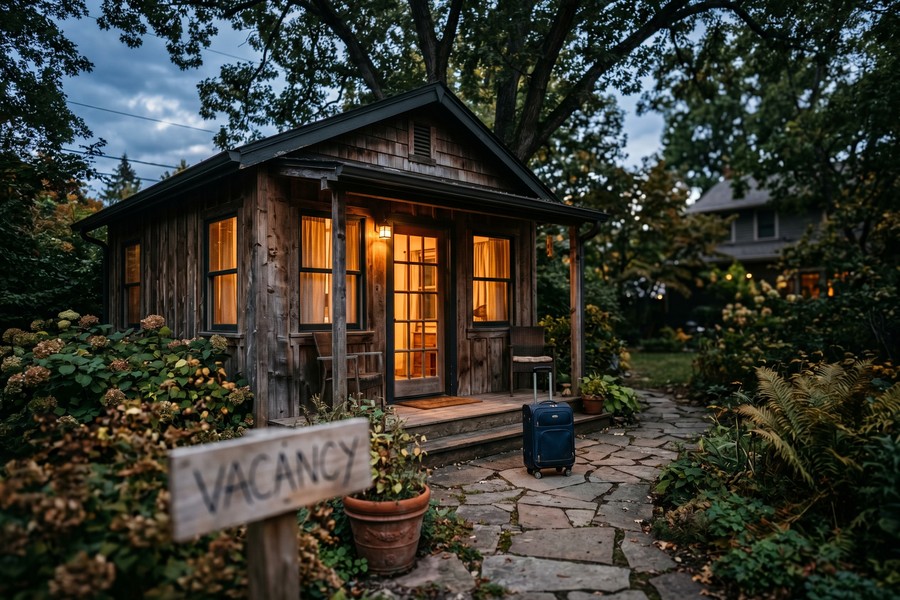
Other structures coverage, Coverage B, pays to repair or replace structures on your property that are not attached to your main home. This includes detached garages, fences, driveways, garden sheds, swimming pool enclosures, gazebos, and guest houses.
How to Identify What Coverage B Protects
The defining test for Coverage B is physical separation. If a structure is connected to your home by nothing more than a fence, utility line, or pathway, it qualifies as an “other structure.” If it shares a wall or roof with your main home, it falls under Coverage A. Your declarations page will list your Coverage B limit separately, typically as a dollar amount equal to 10% of your Coverage A limit.
Coverage B is subject to the same perils framework as Coverage A. On an HO-3 policy, other structures are also covered on an open-perils basis, protecting against fire, windstorm, vandalism, and most sudden accidental events. To understand how these coverages fit into the broader picture of what your policy does and does not protect, our article on what your home and belongings policy actually covers is worth reviewing.
What Coverage B Excludes
Three exclusions catch homeowners off guard most often. First, structures rented to others (such as a detached guesthouse you lease on Airbnb) may be partially or fully excluded. Second, structures used primarily for business purposes, a home workshop where you run a side business, are typically not covered under standard Coverage B. Third, land itself is never covered; only the structure sitting on it.
It is also worth knowing that Coverage B limits have a ceiling problem that the ISO standard form does not automatically solve. Even if you increase Coverage B by endorsement, some carriers cap the maximum at 20% of Coverage A, which can still fall short for a large detached structure like a barn, pool house, or workshop. This is a real limitation for rural properties or homes with substantial outbuildings, and it is one area where shopping insurers, rather than simply adjusting an existing policy, may be the only path to adequate protection.
A standard wooden privacy fence can cost $1,500 to $4,000 to replace after a windstorm. If your Coverage B limit is already low, a single fence claim can exhaust a significant portion of your available benefit, leaving nothing for a shed or detached garage damaged in the same event.
Step 3: What Are the Key Differences Between Dwelling vs Other Structures Coverage?
The clearest way to understand dwelling vs other structures coverage is to examine five specific dimensions: what structures each covers, how limits are set, how claims are paid, what exclusions apply, and how each interacts with your deductible.
Side-by-Side Comparison
Both coverages appear on the same policy, but they operate as separate buckets. You cannot borrow from Coverage A to pay a Coverage B claim, and vice versa. This is a point that surprises many policyholders when they file a claim and discover their Coverage B limit was exhausted before all damage was addressed.
| Feature | Dwelling Coverage (Coverage A) | Other Structures Coverage (Coverage B) |
|---|---|---|
| What It Covers | Main home structure, attached garage, built-in appliances, attached decks | Detached garage, fence, shed, pool enclosure, gazebo, driveway |
| Default Limit | Set by you at policy purchase, based on replacement cost (e.g., $250,000) | Automatically 10% of Coverage A (e.g., $25,000 if Coverage A is $250,000) |
| Perils Covered (HO-3) | Open perils, all risks except listed exclusions | Open perils, same exclusions as Coverage A |
| Deductible | Single policy deductible applies (typically $1,000–$2,500) | Same policy deductible applies, separate from Coverage A claim |
| Business Use Exclusion | Business equipment excluded; structure itself generally covered | Structure used primarily for business is typically excluded entirely |
| Rental Income Exclusion | Main home rented to others may require landlord/DP policy | Detached structure rented to non-household members often excluded |
| Limit Flexibility | Can be set to any amount; typically requires appraisal or cost estimator | Can be increased above 10% for modest premium increase ($5–$15/year) |
“Most homeowners set their Coverage B limit when they first buy their policy and never look at it again. But over time, they add fences, sheds, and detached garages — and suddenly their 10% default is nowhere near enough to cover what they’ve built.”
What to Watch Out For
Many homeowners assume one deductible covers the entire claim when both their home and a detached garage are damaged in the same storm. In practice, your insurer may treat them as a single claim event with one deductible, or as two separate occurrences, it depends on your policy language. Always clarify this with your agent before a loss occurs.
The average cost to build a detached two-car garage in the U.S. is $27,000 to $52,000, according to home improvement data aggregated by HomeAdvisor. A default Coverage B limit of $25,000 on a $250,000 dwelling policy would not fully replace even a basic detached garage at today’s construction prices.
Step 4: How Are Dwelling and Other Structures Coverage Limits Calculated?
Dwelling coverage limits are calculated using your home’s replacement cost value, which estimates what it would cost to rebuild the structure from scratch using comparable materials and current labor rates. Other structures limits are then derived as a percentage of that dwelling limit, almost always 10% by default.
How to Calculate Your Correct Limits
To determine Coverage A, use a replacement cost estimator, major insurers including State Farm, Allstate, and Liberty Mutual provide these tools online or through their agents. These calculators factor in square footage, construction type, roof material, and local cost-per-square-foot data. The Insurance Information Institute recommends reviewing this figure annually, especially after renovations or significant market changes in construction costs.
For Coverage B, add up the current replacement cost of every detached structure on your property. Include fencing (measure linear feet and multiply by current cost per foot), sheds, detached garages, and any permanent outdoor structures. If that total exceeds 10% of your Coverage A, you need to increase Coverage B.
Replacement Cost vs. Actual Cash Value
Both Coverage A and Coverage B can be written on either a replacement cost (RCV) or actual cash value (ACV) basis. RCV pays what it costs to rebuild or replace the structure new. ACV deducts for depreciation, so a 15-year-old shed might only pay out a fraction of what you need to buy a new one. Most standard HO-3 policies default to RCV for Coverage A, but Coverage B treatment varies by insurer and policy form. Carriers such as Travelers, Nationwide, and USAA differ in how they handle this distinction, so the specific policy form matters.
When reviewing your policy, look specifically at whether Coverage B is listed as RCV or ACV. If your detached garage is 20 years old and insured on an ACV basis, depreciation could reduce your payout by 40–60%. Upgrading to RCV for other structures typically costs less than $20 per year in additional premium.

Step 5: How Do I Know If My Other Structures Coverage Limit Is Too Low?
Your Coverage B limit is almost certainly too low if you have added any detached structure, a fence, shed, or garage, since you last updated your policy, or if construction costs in your area have risen since your last policy review. A quick inventory of your property’s detached structures will reveal whether your current limit is adequate.
How to Conduct a Property Inventory for Coverage B
Walk your property and list every structure that is not physically attached to your main home. For each item, note its approximate replacement cost, not what you paid for it originally, but what it would cost to rebuild or replace it today with new materials. Use contractor estimates or online cost calculators for accuracy.
Common structures homeowners overlook include:
- Fencing (all types, wood, vinyl, iron, chain-link)
- Detached garages and carports
- Garden sheds and tool sheds
- Swimming pool enclosures and pool houses
- Gazebos and pergolas
- Driveways and retaining walls
- Guest houses or in-law suites (detached)
- Greenhouse structures
Understanding your total exposure is part of the broader conversation about getting the best home insurance coverage without overpaying, because the goal is precise protection, not blanket over-insuring.
What to Watch Out For
Homeowners who received their policy years ago and never revisited it are most at risk. A fence that cost $3,000 in 2015 may cost $5,500 to replace in 2025 due to material inflation. If your total Coverage B inventory now exceeds your current limit, you have an active coverage gap, even if you have never filed a claim.
If you run a business from a detached structure, such as a photography studio, auto repair workshop, or home daycare in a converted garage, that structure is typically excluded under standard Coverage B. You will need a commercial policy endorsement or a separate commercial insurance policy to cover it properly.
Step 6: How Do I Increase My Other Structures Coverage Without Overpaying?
Increasing Coverage B is one of the simplest and least expensive policy changes available to homeowners. Contact your insurer or agent, request a Coverage B limit increase to match your total detached structure inventory, and the adjustment typically takes effect within 24–48 hours.
How to Request a Coverage B Increase
Call your insurance company’s customer service line or log in to your online account and request a policy endorsement to increase Coverage B above the default 10%. Most insurers allow this in increments, and the additional premium is minimal, typically $5 to $15 per year for each $5,000 increase in Coverage B limit, according to Policygenius research on other structures coverage.
When you call, be prepared to describe the structures you want to protect, their estimated replacement cost values, and the year each was built or installed. Some insurers may request a property photo or short questionnaire for significant increases, particularly for structures valued above $50,000.
Shopping for a New Policy With Better Coverage B Terms
If your current insurer offers limited Coverage B flexibility or charges a high premium for increases, consider shopping your policy. When comparing quotes, ask each insurer specifically what their default Coverage B percentage is and whether it can be increased, some carriers offer 20% or even customizable limits as a baseline. Our guide to saving money on homeowners insurance walks through the quote comparison process in detail.
“One of the most overlooked optimization moves in homeowners insurance is simply increasing Coverage B to match what you actually own. Most people have more in detached structures than they realize, and the cost to close that gap is genuinely small.”
What to Watch Out For
Do not increase Coverage B so far above actual value that you create a moral hazard flag or pay unnecessarily high premiums. Insure your other structures for their actual replacement cost, no more, no less. Also confirm whether your policy endorsement extends to any newly constructed structures automatically or whether each addition requires a separate update.
Rapid premium increases across the industry, driven by climate risk and reinsurance costs, mean that even modest coverage adjustments can have compounding effects on your total bill. Our analysis of why insurance premiums are rising so fast explains the broader forces at work.
Bundle your Coverage B review with your annual home insurance check-up. Each year, update your coverage to reflect any new structures, renovations, or significant changes in construction costs in your region. Setting a calendar reminder for your policy renewal date takes 30 seconds and can prevent a five-figure coverage gap.
Frequently Asked Questions
Does my attached garage fall under dwelling coverage or other structures coverage?
An attached garage is covered under dwelling coverage (Coverage A), not other structures coverage. Because it shares a wall with your main home, it is considered part of the primary structure. Only detached garages, those physically separated from the main house, fall under Coverage B.
What happens if my detached garage costs more to rebuild than my Coverage B limit allows?
If rebuild costs exceed your Coverage B limit, you pay the difference out of pocket. For example, if your detached garage is destroyed and costs $45,000 to rebuild but your Coverage B limit is $25,000, you would owe the remaining $20,000. This is why reviewing and increasing your Coverage B limit before a loss matters. Increasing your limit by $20,000 typically costs less than $40 per year in additional premium.
Is a fence covered under dwelling coverage or other structures coverage?
A fence is covered under other structures coverage (Coverage B), provided it was damaged by a covered peril such as wind, fire, or vandalism. It does not matter whether the fence is attached to your home, fences are treated as detached structures. Normal wear, rot, and pest damage are not covered under any standard homeowners policy.
Can I use my dwelling coverage to pay for damage to my shed?
No. Dwelling coverage and other structures coverage are separate benefit pools with separate limits. You cannot redirect Coverage A funds to pay a Coverage B claim. If your shed is damaged, the claim is drawn from your Coverage B limit only. This is why understanding dwelling vs other structures coverage matters before you need to file a claim.
What is the standard Coverage B limit as a percentage of dwelling coverage?
The standard Coverage B limit is 10% of your Coverage A (dwelling) limit on most HO-3 homeowners policies. If your home is insured for $300,000, your default other structures limit is $30,000. This percentage is set by the Insurance Services Office (ISO) standard policy form and is used by the majority of U.S. insurers, though it can be increased by endorsement.
Does Coverage B cover a swimming pool?
Coverage B covers a swimming pool’s structure, the shell, enclosure, and permanent equipment, if it is damaged by a covered peril. Coverage for pools can be nuanced: some insurers exclude pools or add specific conditions. A pool does not generate personal liability protection through Coverage B, that is handled by Coverage E (personal liability) in your policy. Review your policy language or contact your agent for pool-specific terms.
Will my Coverage B pay out if I use my detached garage as a home office?
It depends on the extent of business use. If you occasionally work from a detached garage that is primarily used for personal purposes, Coverage B typically still applies. If the structure is used primarily or exclusively for business, standard Coverage B is likely excluded. You would need a home business endorsement or a separate business liability policy to protect that structure properly.
Does other structures coverage apply to a guest house I rent out on Airbnb?
Generally, no. Standard Coverage B excludes structures regularly rented to parties outside your household. If you rent a detached guest house through Airbnb or any short-term rental platform, your standard policy likely does not cover that structure under Coverage B. You would need a landlord insurance policy or a short-term rental endorsement to be properly protected.
How does dwelling vs other structures coverage handle a total loss from a fire?
In a total loss fire affecting both the main home and a detached structure, each coverage applies separately up to its own limit. Coverage A pays up to your dwelling limit for the main home rebuild; Coverage B pays up to its separate limit for the detached structure. You file one claim, but the insurer evaluates and pays each coverage bucket independently. This is one reason understanding your homeowners policy’s structure before a major loss is so valuable.
Do I need to list every structure on my property for Coverage B to apply?
No. Coverage B automatically applies to all qualifying detached structures on your insured property, you do not need to list them individually. Your Coverage B limit must be high enough to cover all of them combined. If multiple structures are damaged in a single event and their combined repair cost exceeds your Coverage B limit, you are responsible for the overage.
Does the National Association of Insurance Commissioners have rules on Coverage B minimums?
The National Association of Insurance Commissioners (NAIC) does not set Coverage B minimums directly. The NAIC provides model regulations and publishes market data, but individual state insurance departments set the rules that apply in each state. The 10% default comes from the ISO HO-3 standard form, which most states have adopted, but states such as California and Florida have passed specific homeowners insurance reform legislation that affects how policies are written and renewed. Check with your state’s insurance commissioner for rules specific to where you live.
How does Coverage B interact with my mortgage lender’s insurance requirements?
Mortgage lenders, including major servicers like Chase, Wells Fargo, and Rocket Mortgage, typically require that Coverage A meet or exceed the outstanding loan balance or the home’s replacement cost value, whichever is higher. They generally do not set explicit requirements for Coverage B. If a significant detached structure (such as a barn or large garage) was part of the property’s appraised value when you borrowed, a lender could theoretically require it be insured. Review your loan agreement’s insurance clause if you are uncertain.
Can homeowners in high-risk states get adequate Coverage B if the insurance market is restricted?
This is a real problem in states like California, Florida, and Louisiana, where many private carriers have reduced or stopped writing new homeowners policies due to wildfire and hurricane exposure. Homeowners in those markets may be pushed to state-backed plans, California’s FAIR Plan or Florida’s Citizens Property Insurance, which often carry lower Coverage B limits and fewer endorsement options than standard market policies. If you are in a restricted market, compare the Coverage B terms carefully before accepting a plan, and ask whether a surplus lines insurer offers better terms for your specific property.