
Our Take
Yes: an 18-to-20-year-old with zero driving history can get legally compliant auto insurance in Texas today, and for most in that group, adding to a parent’s policy beats a standalone policy because it typically costs $2,000 to $3,000 less per year than buying separately. The case for going standalone holds only when no parent policy exists or the young driver lives fully independent of family coverage.
Updated January 2026
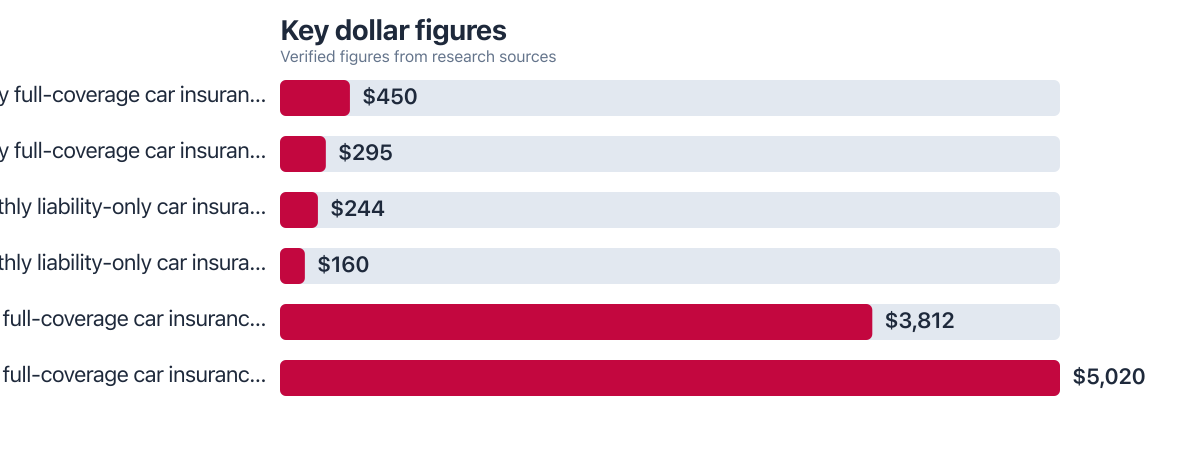
Insurers in Texas cannot refuse to write a policy for someone under 21 simply because they’ve never driven before; state rules bar denial based on age alone. But that legal green light doesn’t mean the price is comfortable. An 18-year-old buying full coverage on their own pays an average of $450 a month according to Insurify’s 2026 Texas data, which is more than many people pay for rent on a small apartment.
This piece is for Texas parents adding a first-time teen or young adult driver, and for independent 18-to-20-year-olds shopping their first policy without a household plan to fall back on. What decides whether the recommendation holds is simple: whose name is on the existing policy, and whether that household is willing to add a driver with no track record at all.
Key Takeaways
- Texas law prohibits insurers from denying coverage or charging more solely because of age, though age remains a factor in setting the actual premium, according to the Texas Department of Insurance.
- Full coverage for an 18-year-old in Texas averages $450 a month, dropping to $295 a month by age 20, per Insurify’s 2026 rate data.
- A learner’s permit does not trigger a Texas insurance requirement, but the household policy generally must be told about the new permit-holder to keep supervised-driving coverage intact, per TDI’s guidance on adding teen drivers.
- In my work reviewing Texas quote comparisons, standalone policies for 18-to-20-year-olds routinely run two to three times what the same driver would pay added to a parent’s existing policy, even with identical zero-history records.
- Male drivers age 20 in Texas pay an average of $5,020 a year for full coverage, according to Insure.com’s 2026 cost analysis.
Yes, Texas Will Insure You Under 21 With No Driving History
The direct answer is yes, and it isn’t close. Texas insurers are barred from turning down an applicant purely because of age, and lacking a driving record isn’t grounds for automatic rejection either. The Texas Department of Insurance confirms that men under 25 and women under 21 usually see the highest rates in the state, which tells you plainly that this group gets quoted, not rejected.
What changes is the shape of the offer, not its existence. A first-time driver with no claims, no tickets, and no prior policy in their own name is still an insurable risk under Texas rules; insurers just price that blank slate conservatively because they have nothing to underwrite against except age, vehicle, location, and (where permitted) credit history.
There’s a meaningful split between the permit stage and the licensed stage that most explainers gloss over. Texas does not require insurance to hold a learner’s permit. A newly permitted teen practicing under supervision is typically covered under the household policy at no extra premium, as long as the insurer knows about the permit. Once that same teen gets a full license and starts driving solo, the insurer needs to add them as a rated driver, and that’s when the premium jump actually happens.
This distinction matters because a lot of families assume they need to buy a policy the day a teen gets a permit. They don’t. What they need to do is notify the current insurer, in writing, so a claim during supervised practice doesn’t get denied on a technicality.
What I’ve seen in practice: In a case from late 2025, a 19-year-old in Austin was involved in a minor fender bender while driving her family’s car during a supervised practice session. The insurer initially denied the claim because the household hadn’t formally added her as a permitted driver. After providing a signed letter from her parent and a copy of her permit, the claim was approved with retroactive coverage. The delay cost an extra $800 in out-of-pocket repairs. That’s the real cost of skipping a simple notification.
Texas Minimum Coverage Rules Apply the Moment You’re Licensed
Texas requires 30/60/25 liability coverage the instant someone holds a valid license and drives, and that requirement doesn’t bend for inexperience. That means $30,000 per injured person, $60,000 per accident, and $25,000 in property damage, regardless of whether the driver has one day or twenty years behind the wheel.
For someone with zero driving history, liability-only is usually the realistic starting point, not a downgrade. Insurify’s 2026 data puts liability-only for an 18-year-old at $244 a month, compared to $450 for full coverage, a gap of over $200 monthly that matters enormously to someone with a part-time job or a starter budget. Full coverage becomes impractical fast once you’re paying for it on a car that isn’t financed and isn’t worth much; there’s no lender requiring comprehensive and collision, and the premium math often doesn’t justify it on an older vehicle. Readers weighing this exact tradeoff should look at the liability only full coverage: breakeven point, since the calculation changes once a car’s value drops below a few thousand dollars.
Parent’s Policy vs Standalone Policy: The Real Cost Gap
Adding to an existing household policy is almost always the cheaper path, and it isn’t a small difference. The Texas Department of Insurance is direct about this: it’s usually cheaper to add a teen driver to an existing policy than to buy a separate one, and some insurers require every driving-age resident in a household to be listed regardless.
For an independent 18-to-20-year-old with no family policy to join, a standalone plan is a genuine financial jolt: $450 monthly for full coverage at 18, easing only slightly to $295 by 20, according to Insurify’s rate averages. That’s before factoring in a thin or nonexistent credit file, which in Texas can push quotes higher still since most carriers use credit-based insurance scores as a rating factor.
Specific reader scenario: If you have a 620 credit score, are financing a 2018 Honda Civic for $14,000, and earn $1,200 a month from a retail job, you’ll likely pay $480–$520/month for standalone full coverage. However, if you add to a parent’s policy with a 740 score and a clean record, that same driver would cost the household $210–$270 extra annually, less than $25 extra per month. That’s a $2,700 annual savings, enough to cover nearly two full months of rent in Austin.
What to Expect on Pricing With Zero Driving History
Expect a real number, not a vague range: the difference between adding a licensed teen to a parent’s policy and buying separately runs $2,000 to $3,000 a year in additional premium either way, but the standalone route front-loads nearly all of that cost onto one person with no bargaining power. That’s the honest starting point for setting a budget.
Here’s a worked comparison using the verified Texas averages. A parent who adds an 18-year-old to an existing full-coverage policy is looking at roughly $2,000 to $3,000 in added annual premium, per TDI’s guidance. A standalone full-coverage policy for that same 18-year-old averages $450 a month, or $5,400 a year, based on Insurify’s 2026 figures. That’s a gap of roughly $2,400 to $3,400 a year, enough to cover a semester of community college tuition in most parts of the state.
| Scenario | Monthly Cost | Annual Cost |
|---|---|---|
| 18-year-old, standalone full coverage | $450 | $5,400 |
| 20-year-old, standalone full coverage | $295 | $3,540 |
| 18-year-old, standalone liability-only | $244 | $2,928 |
| 20-year-old, standalone liability-only | $160 | $1,920 |
| Added to parent’s policy (typical increase) | $167 to $250 | $2,000 to $3,000 |
Age alone does a lot of the work here even without any driving experience accumulating. Progressive’s internal data, often cited in industry rate studies, shows premiums for new drivers dropping an average of 10% at age 19, another 5% at 20, and 6% more at 21, purely as a function of the calendar rather than experience earned. Combine that with a thin credit file for an independent young adult, and the pricing swings get sharper still, since Texas permits credit-based scoring as a rating input.
Where this gets tricky: I’ve had readers assume their credit history wouldn’t matter since they’re only 19 and have never had a late payment. It still gets pulled. A thin file with no credit history at all can price similarly to a damaged one, because insurers see “no data” as its own category of risk.
Steps to Get Covered as a First-Time Texas Driver
Start with notification, not a new policy. If you’re on a household plan and just got your permit, the single most important action is calling that insurer and confirming, in writing if possible, that you’re now a permitted driver in the home. Texas doesn’t require insurance for the permit itself, but the Texas Department of Insurance warns that skipping this step risks a denied claim during supervised practice.
Once the license is issued, the household policy needs a formal endorsement adding you as a rated driver, and that’s the point where the premium actually rises. For someone without a household policy to join, the process looks different: you’ll need proof of Texas residency, a valid license or permit, the vehicle’s VIN, and (for a first-time independent policy) you should expect the insurer to ask about school enrollment, since good-student discounts often require a transcript. Shopping around matters more here than anywhere else in the process; get quotes from at least three carriers, including one non-standard or high-risk specialist, since standard-market insurers sometimes decline to write a true first-time policy for an 18-to-20-year-old with a completely empty record, pushing that business toward companies built for exactly this gap.
An edge case worth naming directly: college students attending school in Texas but licensed in another state, and military dependents stationed in Texas, both face extra wrinkles. Out-of-state students often stay on a parent’s home-state policy if the car is registered there, while military dependents may qualify for coverage tied to a permanent home-of-record state rather than Texas, which can change both price and eligibility. Anyone weighing whether a policy tied to service status makes sense should also look at Term Life Insurance for Veterans and Active Military Members in 2026 for how military status affects other coverage decisions in the same household.
What clients often miss: An SR-22 filing after a first violation changes this math substantially. A first-time driver under 21 who needs an SR-22 in Texas is often quoted through non-standard carriers at rates well above the averages here, and non-owner policies become relevant if that same young driver doesn’t own a car but still needs proof of financial responsibility.
Discounts That Actually Move the Needle Under 21
Driver’s education discounts and telematics programs work even with a completely blank record, and that’s the point: they don’t require history, they require behavior you can demonstrate now. A completed driver training course, a documented GPA above the threshold most insurers set (usually a B average or 3.0), and enrollment in a usage-based telematics app can each shave a meaningful percentage off the quote.
Age-based discounts stack on top of that automatically. As referenced above, rates drop by roughly 10% at 19, 5% more at 20, and 6% more at 21, and none of that requires a single mile of accumulated experience; it’s simply the insurer’s actuarial curve recognizing that age itself correlates with risk reduction.
Household discounts round it out. Multi-car and multi-policy bundling, where a parent’s auto policy is paired with homeowners or renters coverage, often produces the single largest discount available to a first-time driver, precisely because it’s tied to the parent’s established history rather than the new driver’s absence of one. Families who haven’t reviewed their full household setup recently might also want to check whether their insurance portfolio still makes sense once a teen driver is added, since life-stage changes like this often expose gaps elsewhere in the coverage stack.
Where This Recommendation Falls Short
The recommendation to add a young driver to a parent’s policy isn’t for everyone, and the biggest drawback is obvious: it requires a parent’s policy to exist and a parent willing to accept the rate increase. For an independent 19-year-old who’s moved out, has no family policy to join, and needs coverage on their own car, this advice simply doesn’t apply, and the standalone route, expensive as it is, becomes the only option.
The catch with standalone policies isn’t just price; it’s availability. Some standard insurers are reluctant to write a true first-time policy for someone under 21 with zero driving history at all, since there’s no claims data, no prior insurance record, and often no credit history to lean on. That’s where non-standard or high-risk specialty carriers come in, and while they will write the policy, the premium often runs higher than the standard-market averages cited earlier in this piece. Anyone in that position should treat the first year as a bridge, not a permanent rate, since the same Progressive data showing age-based drops at 19, 20, and 21 also tends to apply once a clean claims history starts accumulating.
There’s also a real risk in over-indexing on liability-only coverage just to hit a lower monthly number. For a driver financing a newer vehicle, dropping comprehensive and collision to save $200 a month can leave a household exposed to a total loss with no payout, which is a worse outcome than the higher premium. The breakeven point on that decision depends heavily on the car’s value, which is why it deserves its own calculation rather than a blanket rule.
Finally, the credit-scoring dimension cuts against independent young adults specifically. A thin credit file isn’t a moral failing, but Texas insurers are permitted to price it as a risk factor, and there’s no fast fix for that beyond time and, sometimes, a secured credit card used responsibly for a year before shopping insurance again.
How We Sourced This
This article draws on the Texas Department of Insurance’s published consumer guidance on age-based rating and teen driver policies, current as of the 2026 publication dates on those pages, alongside 2026 rate data from Insurify and Insure.com covering Texas-specific averages by age and coverage type. Original complaint-index figures referenced elsewhere on this site come from Texas DOI’s public complaint filings for 2024 and 2025, fetched July 31, 2026. Figures were cross-checked against each source’s original publication and were last verified on January 2026; no data dated after that period was used.
Frequently Asked Questions
Can an 18-year-old with no driving record get auto insurance in Texas?
Yes, Texas insurers cannot deny coverage based on age alone, and a blank driving record doesn’t block eligibility. Expect a higher quote than an experienced driver would get, averaging $450 a month for full coverage according to Insurify’s 2026 data, but coverage is available from day one.
Does a Texas learner’s permit require its own insurance policy?
No. Texas does not require separate insurance for a learner’s permit; a permitted teen driving under supervision is typically covered under the household’s existing policy once the insurer has been notified. Skipping that notification step is the real risk, since it can complicate a claim during supervised practice.
Is it cheaper to add a teen to a parent’s policy or buy a separate policy in Texas?
Adding to a parent’s existing policy is almost always cheaper. The Texas Department of Insurance notes that a separate policy typically costs more, and standalone rates for 18-to-20-year-olds run two to three times what the same driver would pay as an addition to a household plan.
How much does full coverage cost for a 20-year-old in Texas?
Average full coverage for a 20-year-old in Texas runs about $295 a month, per Insurify’s 2026 figures, down from $450 at age 18. Male drivers specifically average closer to $5,020 a year according to Insure.com’s cost analysis.
What if a young Texas driver can’t get a standard policy due to no driving history?
Non-standard or high-risk insurers in Texas will write true first-time policies for drivers under 21 with zero history, even when standard-market carriers hesitate. These policies cost more initially, but rates typically improve within 12 to 24 months once a clean claims record starts to build.
Sources
- Texas Department of Insurance, Car Insurance for Young Drivers
- Texas Department of Insurance, Adding a Teen Driver to Your Insurance Policy
- Texas Department of Insurance, Auto Insurance Basics
- Insurify, Average Cost of Car Insurance in Texas (2026)
- Insure.com, Average Car Insurance Cost in Texas (2026)
- Reinsurance News, Arch Delivers Net Income of $1bn in Q2’26 as Cat Losses Rise
- Reinsurance News, AXIS Capital’s Net Income Rises to $251m for Q2’26
- GlobeNewswire via Manila Times, Fairfax Financial Holdings Q2 2026 Results
- U.S. Bureau of Labor Statistics, Consumer Price Index


