
Reviewed by the Smart Insurance 101 Editorial Team
Our Take
For most policyholders in 2026, AI-driven underwriting is a net positive, faster decisions, more individualized pricing, and better fraud detection. 88% of auto insurers and 92% of health insurers already use or plan to use AI/ML models, per NAIC data. If you have a clean behavioral record and modern IoT devices, AI underwriting likely lowers your rates. The case against it is real, though: consumers in underserved demographics face documented bias risks, and the data these systems collect is far broader than most people realize. Know what you’re sharing before you opt in.
Insurance pricing has always been an exercise in predicting the future from limited information. In 2026, that calculus has shifted sharply. AI insurance underwriting 2026 is no longer a pilot program or a futurist concept, it’s the operating standard for most major carriers, with NAIC survey data showing 92% of health insurers and 88% of auto insurers already using or actively exploring AI and machine learning models in their operations. The pace caught a lot of consumers off guard.
This article is for anyone who buys personal or commercial insurance and wants to understand what these systems actually know, how they price risk, and where the process can work against you. The recommendation here is clear, but it comes with a real caveat, one that depends heavily on your data footprint and which insurer you’re dealing with.
Key Takeaways
- 92% of health insurers use, plan to use, or plan to explore AI/ML in their operations, according to NAIC’s 2025 insurer survey, the highest adoption rate across all major lines.
- Only 14% of underwriting organizations currently use AI to a large or very large extent, but that figure is projected to reach 70% within three years, per Accenture’s 2025 underwriting research.
- Hiscox cut underwriting time from 3 days to 3 minutes using AI, and straight-through processing rates across carriers have jumped from 10-15% to as high as 70-90%, meaning most simple policies now approve without human review.
- The NAIC AI Systems Evaluation Tool pilot launched March 2026, with nationwide rollout expected by the November 2026 fall meeting, the first structured framework for regulators to audit insurer AI governance programs during examinations.
- From my observation reading carrier disclosures and regulatory filings: most policyholders underestimate by a wide margin how many data streams feed their AI risk score. The number is often in the hundreds of variables, not dozens.
What AI-Driven Underwriting Actually Means in 2026
Traditional underwriting was static. A carrier pulled your credit score, reviewed your claims history, maybe ran a motor vehicle report, and set a rate that held for 12 months. AI underwriting is continuous. Risk models now ingest streaming data and recalculate exposure in near-real time, meaning your premium isn’t necessarily locked in the way it used to be.
The underlying technologies vary by carrier, but the common stack includes machine learning models for pattern recognition, natural language processing for extracting signals from unstructured data like social media or maintenance records, and increasingly, agentic AI systems that can autonomously request additional data and make routing decisions during the underwriting workflow. These models process anywhere from 500 to 1,500-plus variables per applicant, far more than any human underwriter reviews in a standard submission.
From Annual Reviews to Continuous Assessment
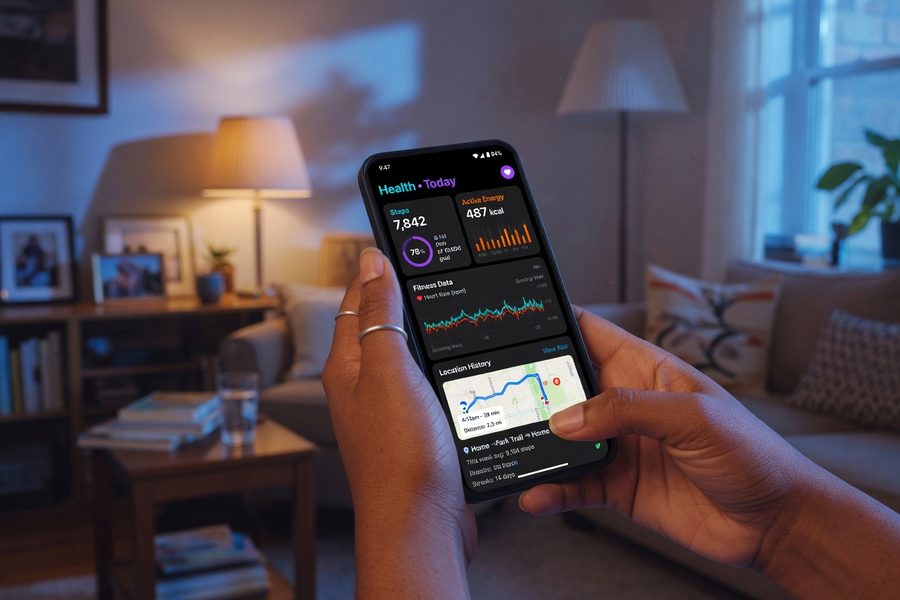
The shift from annual to continuous matters practically. For auto insurance, telematics data from your phone or OBD-II device feeds your risk profile every time you drive. For property insurance, satellite imagery and aerial drone passes update carrier records on your roof condition, landscaping, and outbuildings without requiring an inspection. For life insurance, some carriers now incorporate wearable device data from Fitbit or Apple Watch. The insurer’s picture of you isn’t a snapshot anymore. It’s a running film.
What I see in practice: Readers are often surprised to learn that “opting into” a telematics discount program also means consenting to ongoing data collection that feeds renewal pricing decisions, not just the initial quote. The consent language in most enrollment flows buries this detail several screens deep.
The New Data Insurers Are Actually Pulling On You
Beyond credit scores and claims history, carriers are now drawing from sources most policyholders have never considered sharing with an insurer.
Satellite and aerial imagery providers like Cape Analytics and Nearmap give property insurers condition-level data on every insured structure without sending an adjuster. IoT sensors embedded in smart home systems report water leak events, HVAC failures, and security activity back to carriers that partner with device manufacturers. Public records aggregators pull building permits, business filings, court records, and property tax assessments. Telematics companies aggregate driving behavior data across entire fleets and individual drivers. For cyber and commercial lines, insurtechs like At-Bay and Coalition parse external attack surface data, open ports, software versions, exposed credentials, and price policies based on your live security posture, not a questionnaire you filled out six months ago.
How Your Rates Are Being Recalculated in Real Time
Speed is the most visible change. Hiscox reduced commercial underwriting from three days to three minutes through AI-assisted workflow. Straight-through processing rates, policies that go from application to approval without human review, have jumped from roughly 10-15% to 70-90% at carriers that have fully deployed these systems. For a consumer, that means faster quotes. For a carrier, it means dramatically lower acquisition costs per policy.
The implications for renewals are less comfortable. Dynamic pricing models can adjust your renewal premium based on signals captured throughout the policy year, not just at renewal time. A telematics score that deteriorated because you drove more during a winter storm season, a satellite pass that flagged new tree encroachment on your roof, a public record showing a home equity line opened, any of these can shift your risk tier between terms. As our coverage of why insurance premiums are exploding explains, underwriting precision is one reason carriers can segment risk more sharply than ever, which cuts both ways for consumers.
The Arithmetic on Segmentation
Consider a simple illustration. If an auto insurer moves from 10 broad risk tiers to 50 AI-defined micro-segments, the spread between the lowest and highest tier widens. Suppose the current spread is $800 to $2,400 annually. In a 50-tier model, the lowest-risk tier might fall to $650 while the highest climbs to $3,200. The math is straightforward: a 14% drop for the safest drivers, a 33% increase for the riskiest. AI doesn’t lower average premiums, it reallocates them. Knowing which tier you fall into, and why, matters more than ever.
| Insurance Line | AI/ML Adoption Rate (2025) | Key Data Inputs Added by AI |
|---|---|---|
| Health | 92% | Wearables, claims patterns, pharmacy data |
| Auto | 88% | Telematics, driving behavior, real-time MVR |
| Home | 70% | Satellite imagery, IoT sensors, weather data |
| Life | 58% | Wearables, mortality models, biometric data |
| Cyber/Commercial | Rapidly expanding | Attack surface data, security posture scans |
Privacy, Bias, and What Happens to Your Data
The data collection scope is the least-discussed part of this shift, and the most consequential for everyday policyholders.
The NAIC Model Bulletin on the Use of AI Systems by Insurers sets explicit expectations for transparency, fairness, and governance across the insurance lifecycle including underwriting and pricing. States have begun adopting it: Wisconsin’s Office of the Commissioner of Insurance issued a formal bulletin in March 2025 aligning its expectations with NAIC AI Principles, requiring carriers to govern AI across all stages of underwriting.
Enforcement is still catching up to the technology. The NAIC AI Systems Evaluation Tool pilot, launched March 2026, gives regulators a structured framework to audit insurer AI governance programs, data inputs, and high-risk models during examinations. Nationwide rollout is expected by November 2026. Until that structure is fully deployed, regulatory review of what insurers actually feed their models remains inconsistent across states.
The Bias Problem Is Real and Specific
Fairness concerns in AI underwriting aren’t hypothetical. Proxies for protected characteristics, zip code, purchasing behavior, credit history, can reproduce demographic discrimination even when race or income are never explicitly modeled. This risk is most acute in agentic AI systems that make autonomous routing decisions for underrepresented applicants, where edge cases fall outside the training distribution the model was built on. The NAIC’s state adoption tracking shows progress, but the map is uneven, several high-population states haven’t formally adopted the Model Bulletin’s consumer protections.
Where this gets tricky: Consumers in majority-minority zip codes with similar risk profiles to suburban counterparts still see systematically higher quotes from AI models trained on historical loss data, which itself reflects decades of discriminatory pricing. The AI inherits the bias of the data it was trained on.
Real-World Wins and Honest Limits for Consumers
The performance gains at carriers using sophisticated AI analytics are measurable. A WTW 2026 survey of 59 P&C insurers found that sophisticated analytics users achieved combined ratios 6 percentage points lower than peers and premium growth 3 points higher. At-Bay reports ransomware claims rates roughly 7 times lower than the industry average, attributed largely to continuous security posture monitoring built into its underwriting model. LLM-based underwriting tools are achieving 95%+ accuracy in policy gap detection at speeds 50 times faster than manual review.
Those wins translate to real consumer benefits: faster decisions, better-priced policies for low-risk applicants, and insurers willing to write coverage in segments they previously avoided because the risk was too hard to price. If you’re shopping for term life insurance in 2026, AI-enabled underwriting has meaningfully expanded the pool of applicants who qualify for preferred rates without invasive medical exams.
The limits are also real. Complex cases, unusual property types, applicants with complicated medical histories, commercial risks with idiosyncratic exposures, still require human underwriter judgment. Straight-through processing works because it routes simple, clean cases. The moment your situation deviates from the training distribution, model performance degrades and human oversight becomes essential. Carriers that over-automate without maintaining that human check are taking on model risk they may not fully understand yet.

What to Do About It as a Policyholder in 2026
Understanding the system gives you practical leverage. Most people don’t use it.
First, read the data consent disclosures before enrolling in any telematics, wellness, or smart home discount program. The discount is real; so is the ongoing data collection that informs your renewal. If a carrier’s disclosure doesn’t clearly state what data is collected, how long it’s retained, and whether it’s shared with third parties, treat that opacity as a red flag. Second, shop actively. AI underwriting means different carriers may assess your risk profile very differently depending on their training data and model architecture. Comparing quotes isn’t just price shopping, it’s revealing how different AI systems read your profile. Our car insurance quote comparison guide walks through this process systematically for auto coverage.
What clients often miss: Requesting your CLUE report annually from LexisNexis, it’s free under FCRA, lets you see what loss history data insurers are actually pulling. Errors in that report directly affect AI model outputs, and disputing inaccuracies can shift your risk tier.
Third, think about data minimization for the long term. Smart home devices, fitness wearables, and connected vehicles all generate data streams that may eventually feed insurer models, whether you consented explicitly or through a data broker intermediary. The more of those streams you control, the more negotiating leverage you retain over your own risk profile. For homeowners wondering how their property data is being used, our homeowners insurance guide covers what carriers typically assess. And if you’re self-employed, the data footprint question gets more complicated, health insurance for self-employed workers in 2026 increasingly intersects with AI underwriting decisions as carriers blur the line between business and personal risk.
Where This Recommendation Falls Short
The recommendation to engage with AI-powered insurance systems and use them to your advantage is sound for a specific profile: consumers with clean records, modern data infrastructure (telematics, smart home devices), and the time and literacy to read disclosure documents carefully. For everyone outside that profile, the tradeoffs are significant enough that I’d qualify the advice substantially.
The catch is that AI underwriting benefits are asymmetrically distributed. Low-risk consumers with rich, favorable data get the clearest wins, faster approvals, lower premiums, access to preferred tiers previously reserved for narrower segments. Higher-risk consumers, or those in underserved demographics, may find AI systems price them out of standard markets more efficiently than human underwriters did. The model is faster and more consistent, but consistency in a biased dataset means consistently biased outputs. A human underwriter might have given a complex case a second look; an agentic AI system routes it to decline in milliseconds.
There’s a second drawback that affects nearly everyone: data portability is essentially nonexistent in 2026. When you switch carriers, the behavioral and IoT data your previous insurer collected doesn’t travel with you in usable form. You start fresh with a new model, without the favorable behavioral history you built up. That creates real switching costs that didn’t exist under traditional underwriting, and it subtly reduces the competitive pressure on incumbent carriers to improve pricing for existing policyholders.
The risk is also that regulatory oversight hasn’t kept pace. The NAIC evaluation tool pilot is progress, but it launched in March 2026 and won’t be fully deployed nationally until November at the earliest. In the intervening months, carriers are using models that no external body has systematically reviewed. Consumers who believe transparency requirements protect them now are ahead of the actual regulatory timeline. That’s not a reason to avoid AI-underwritten insurance, the alternatives are limited, but it’s a reason to stay skeptical of carrier claims about fairness and explainability until third-party audits confirm them.
How We Sourced This
This article draws primarily from NAIC insurer survey data published in 2025, the NAIC Model Bulletin on AI Systems, the NAIC AI Systems Evaluation Tool version 4.0 (released March 2026), and Wisconsin OCI’s March 2025 AI governance bulletin. Adoption statistics come from NAIC’s AI topic page, which aggregates survey responses from 193 auto, 194 home, 161 life, and 93 health insurers. The Accenture underwriting projection figure comes from Accenture’s 2025 “Underwriting Rewritten” research brief. Performance data for Hiscox and At-Bay reflects figures reported in industry analyses published prior to April 2026. All statistics were verified against primary source documents in April 2026. Where carrier-specific performance claims appear (combined ratio, processing speed), they reflect reported figures rather than independently audited results.
Related reading: General Insurance vs. Umbrella Policies: Which Protects You Better in 2026?.
Frequently Asked Questions
Can an insurer legally use my social media or browsing history to price my policy?
In most U.S. states, yes, with significant caveats. Carriers can use publicly available data from social media if it’s processed through an approved rating factor. Direct use of browsing history is more restricted. The NAIC Model Bulletin requires insurers to document and justify any data inputs used in AI underwriting, and state regulators are increasingly scrutinizing non-traditional data sources for discriminatory proxies.
What is the NAIC AI Systems Evaluation Tool and how does it protect me?
The NAIC AI Systems Evaluation Tool is a structured audit framework that allows state regulators to review an insurer’s AI governance program, data inputs, and high-risk models during examinations. The pilot launched March 2026, with nationwide rollout expected by November 2026. Once fully deployed, it gives regulators, and by extension consumers, a clearer window into how carriers are using AI in underwriting decisions.
Will opting out of telematics programs hurt my insurance rates?
Opting out typically means you don’t receive a telematics-based discount, but it shouldn’t directly raise your base premium at most carriers. The risk is indirect: as telematics becomes more standard, carriers may eventually build their base rates around behavioral data, making opt-out a de facto penalty. Read your carrier’s current program terms before deciding.
How do I find out what data an insurer is using to price my policy?
Start with your free annual CLUE report from LexisNexis under the Fair Credit Reporting Act, which shows the loss history data most property and auto insurers pull. For credit-based insurance scores, you can request details from your insurer. The NAIC Model Bulletin requires carriers to maintain documentation of their AI data inputs, and you can ask your state insurance commissioner to initiate a review if you suspect discriminatory pricing.
Does AI underwriting affect life insurance applications the same way it affects auto or home?
Adoption is lower but growing. 58% of life insurers use or plan to explore AI/ML, compared to 88% for auto. The practical difference is that life underwriting still relies heavily on medical records and lab results, which AI accelerates but doesn’t replace. Wearable device data is beginning to factor in, particularly for accelerated underwriting programs that skip traditional medical exams for qualifying applicants.
Sources
- National Association of Insurance Commissioners, Artificial Intelligence Topic Page (2025 Insurer Survey Data)
- NAIC, Model Bulletin on the Use of Artificial Intelligence Systems by Insurers
- NAIC, AI Systems Evaluation Tool Version 4.0 (March 2026)
- NAIC, State Adoption Map: Model Bulletin on AI Systems by Insurers
- Wisconsin Office of the Commissioner of Insurance, AI Governance Bulletin (March 2025)
- Accenture, Underwriting Rewritten: AI Adoption Research (2025)
- Federal Trade Commission, Fair Credit Reporting Act (Consumer Data Rights)


