
Quick Answer
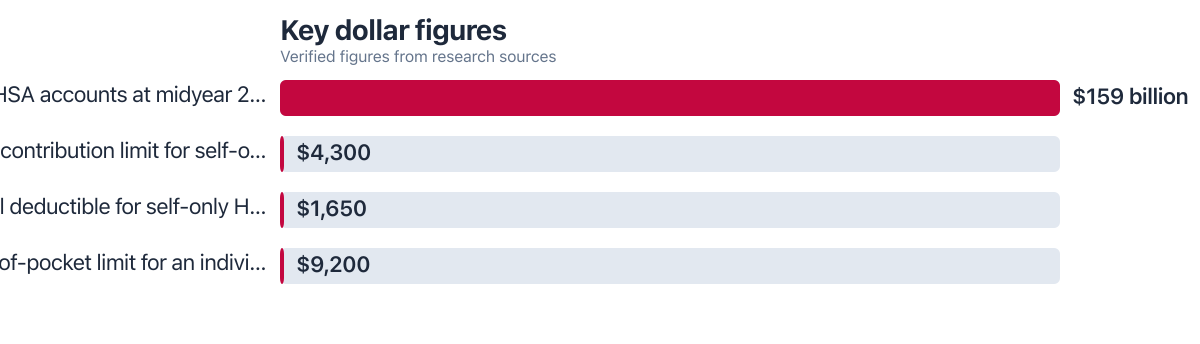
For most healthy freelancers, an HSA-eligible high-deductible plan wins financially: it pairs a 2025 self-only contribution cap of $4,300 with a minimum deductible of $1,650, and premiums typically run 20-40% lower than richer plans. Freelancers with ongoing prescriptions or a chronic condition often do better with a lower-deductible marketplace plan instead.
Updated December 2025
The comparison behind “HSA vs high-deductible plan” is a bit of a misnomer: you don’t choose one over the other. You choose an HSA-eligible high-deductible health plan (HDHP), and the HSA is the tax-advantaged savings account that comes attached to it, according to IRS Publication 969. The real decision freelancers face is whether an HDHP paired with an HSA beats a traditional lower-deductible marketplace plan, given irregular income and no employer contribution to soften the blow.
That question matters more in December 2025 than it did five years ago. Roughly 33% of covered workers nationally are now in an HDHP with a savings option, according to the KFF 2025 Employer Health Benefits Survey, and HSA balances have climbed past $159 billion across roughly 40 million accounts, per Devenir’s 2025 midyear research report. This guide breaks down the math for solo freelancers, including tax stacking, cash flow risk, and where an HDHP quietly fails people with real medical needs.
Key Takeaways
- The 2025 minimum deductible to qualify for HSA contributions is $1,650 for self-only coverage, per IRS Publication 969.
- Freelancers can contribute up to $4,300 to an HSA in 2025 for self-only coverage, tax-deductible even without itemizing, according to the IRS.
- About 33% of covered U.S. workers were enrolled in an HDHP with a savings option in 2025, per KFF’s 2025 survey.
- HSA assets nationwide hit $159 billion across about 40 million accounts by midyear 2025, according to Devenir.
- A Marketplace individual plan’s out-of-pocket maximum can run as high as $9,200 for the 2025 plan year, per Healthcare.gov.
In This Guide
- What Freelancers Actually Need to Know About HDHPs and HSAs in 2025
- How Do Premiums and Deductibles Stack Up for Irregular Freelance Income?
- Which Tax Benefits Matter Most for Self-Employed Workers?
- When Does an HDHP Plus HSA Actually Make Sense?
- What Hidden Risks Do Freelancers Overlook?
- Can an HSA Double as a Retirement Account?
- How Should You Compare and Enroll in an HSA-Eligible Plan?
What Freelancers Actually Need to Know About HDHPs and HSAs in 2025
An HSA is only available if you’re enrolled in a qualifying HDHP. That link is the whole ballgame: no HDHP, no HSA contributions, no tax break. The IRS sets the floor each year, and for 2025 a self-only plan needs a deductible of at least $1,650 to count, according to IRS Publication 969.
Family coverage doubles that threshold roughly, and the plan also has to cap total out-of-pocket spending. Healthcare.gov spells out the tradeoff plainly: you accept a higher deductible in exchange for a lower monthly premium and the ability to fund a tax-advantaged account. For freelancers, this setup is often the only version of employer-style benefits they can build for themselves, since there’s no HR department matching contributions or negotiating group rates on their behalf.
The U.S. Office of Personnel Management frames HDHP-HSA pairings as a savings-building tool as much as insurance. That framing matters for self-employed workers who don’t have a pension or 401(k) match waiting for them. If you’re the person legally responsible for your own health coverage, the account math starts to look less like a medical expense line and more like a second retirement account with better tax treatment.
How Do Premiums and Deductibles Stack Up for Irregular Freelance Income?
Lower premiums are the headline benefit, but the real test is whether you can cover the deductible gap during a slow month. HDHPs generally run 20 to 40 percent cheaper on monthly premium than richer marketplace plans covering the same person, a gap consistent with the broader shift toward HDHP enrollment tracked by KFF’s 2025 survey. That savings shows up every month, whether or not you use care.
Here’s a simple worked example. Say a freelancer pays $380 a month for an HDHP versus $520 a month for a Bronze-tier plan with a lower deductible. That’s $140 a month, or $1,680 a year in premium savings alone. If that freelancer stays healthy and spends less than $1,680 out of pocket on care that year, the HDHP wins outright, even before counting the HSA tax deduction. If a single ER visit or a surgery pushes them past the $1,650 deductible floor and toward the plan’s out-of-pocket maximum, which can reach $9,200 for an individual Marketplace plan in 2025 according to Healthcare.gov, the math flips fast.
The bigger issue for freelancers isn’t the math on paper, it’s cash flow. A slow quarter with no invoices paid is a bad time for a $1,650 bill to land. The practical fix is treating the HSA like a sinking fund: contribute more aggressively during high-earning months and let the account cushion the low ones, rather than trying to fund it evenly every month regardless of income.
A freelancer saving $140 a month on premiums banks $1,680 a year, almost exactly covering the 2025 minimum HDHP deductible of $1,650 in a single healthy year, per IRS Publication 969.
Which Tax Benefits Matter Most for Self-Employed Workers?
The HSA’s triple tax advantage hits differently for self-employed people because it stacks with another deduction employees don’t get. Contributions go in pre-tax (or deductible above the line), the money grows tax-free, and withdrawals for qualified medical expenses are never taxed, a structure the IRS confirms applies regardless of whether you itemize.
Freelancers can also deduct 100% of their HDHP premiums through the self-employed health insurance deduction, then separately deduct their HSA contribution on top of that. A W-2 employee generally can’t replicate that stack, since their premiums are often already pre-tax through payroll and they don’t file a Schedule C. For a freelancer in the 22% federal bracket contributing the full $4,300 according to Internal Revenue Service self-only limit in 2025, that’s roughly $946 in federal tax savings from the HSA contribution alone, separate from whatever the premium deduction saves.
Just like how drivers never calculate the long-term impact of skipping collision coverage, freelancers often overlook how much financial power the HSA’s tax stack delivers. A smart strategy includes not just health savings, but also financial resilience, especially when you’re managing income volatility. If you’re unsure how to structure your personal insurance portfolio, consider reviewing guidance on how to stack auto insurance to avoid costly coverage gaps, especially if you’re a delivery driver or run a side business from home.
When Does an HDHP Plus HSA Actually Make Sense?
An HDHP-HSA combination fits best for freelancers who are generally healthy, don’t take expensive daily medications, and have at least a small cash buffer. If you see a doctor once a year for a checkup and rarely need specialist care, the lower premium almost always wins over a full year, especially once you count the HSA deduction as effective savings rather than a sunk cost.
It also works for freelancers managing a known, moderate condition, as long as the expected annual cost stays under the deductible. Someone managing mild asthma with a $30 inhaler refill and one annual specialist visit will likely spend less than the deductible floor, even with a bad month or two. Where it breaks down is anyone with a chronic condition requiring frequent specialist visits, ongoing therapy, or expensive maintenance medication: those costs hit the deductible early and repeatedly, and the premium savings rarely make up the difference. A freelancer managing diabetes with insulin costs, for instance, may be better served by a richer plan with lower cost-sharing on prescriptions, even at a higher monthly premium.
For freelancers with a side gig that involves driving, it’s worth double-checking how your auto insurance stacks with your health coverage. Many people don’t realize that even a small accident can trigger a cascade of medical and insurance costs. A good way to avoid that? Learn how delivery drivers should stack auto insurance to avoid costly coverage gaps, especially if you’re on the road frequently for work.
What Hidden Risks Do Freelancers Overlook?
HDHPs carry network and timing risks that rarely show up in the premium comparison. Many HDHP networks, especially cheaper Bronze and Catastrophic tiers, are narrower than PPO options, which raises the odds of an accidental out-of-network bill during an emergency, an issue that echoes what we’ve seen with reading an insurance exclusions list without missing a coverage gap in any policy type.
Losing HSA eligibility mid-year is another overlooked wrinkle. If you switch off an HDHP partway through the year, whether by choice or because your income qualifies you for a subsidized non-HDHP plan, your contribution limit gets prorated for the months you were actually covered. And once you turn 65 and enroll in Medicare, you can no longer contribute to an HSA at all, though you can still spend down existing funds tax-free on qualified expenses. After 65, the account also loses its penalty on non-medical withdrawals; you’ll owe ordinary income tax but not the usual 20% penalty, which effectively turns leftover HSA money into a bonus retirement account late in life.
After age 65, HSA withdrawals for non-medical expenses are taxed like a traditional IRA distribution, ordinary income tax only, no 20% penalty, according to IRS Publication 969.
Can an HSA Double as a Retirement Account?
Yes, and for freelancers without a 401(k) match, this may be the HSA’s most underrated feature. Most HSA providers let you invest balances above a set cash threshold into mutual funds once the account grows large enough, and unlike a Flexible Spending Account, the money never expires and never has to be spent in the plan year it was earned.
With HSA assets nationwide already at $159 billion across roughly 40 million accounts according to Devenir’s 2025 midyear report, more account holders are clearly treating these as long-term vehicles rather than annual spending accounts. A freelancer who contributes the max every year starting at 35 and invests it conservatively could realistically build a six-figure medical war chest by retirement, on top of whatever they’ve saved through an IRA or SEP-IRA.
That same long-term thinking applies to life insurance planning. If you’re a veteran or active military member, you might want to explore how term life insurance for veterans and active military members in 2026 can offer affordable protection at a time when you’re focused on building financial stability. The payout process is often misunderstood, beneficiaries should know what to do after a death to avoid delays. A clear understanding of the term life insurance payout process: what beneficiaries need to do after a death, can help ensure your family gets support when it matters most.
How Should You Compare and Enroll in an HSA-Eligible Plan?
Start by filtering Marketplace plans specifically for HDHP eligibility rather than just sorting by lowest premium. Healthcare.gov flags which Bronze and Catastrophic plans actually qualify for HSA contributions, since not every low-premium plan meets the IRS deductible and structure rules.
Once you’ve picked a plan, shop the HSA provider separately from the insurer; you’re not locked into whatever bank your marketplace plan defaults to. Compare monthly maintenance fees, investment menu quality, and minimum balance requirements before investing, since a $3 monthly fee eats meaningfully into a freelancer’s smaller average balance. Time your contributions around quarterly estimated tax payments if possible: front-loading the HSA in a strong earning quarter, rather than spreading it evenly, can reduce the tax hit right when you’re calculating what you owe the IRS.
Set your HSA contribution as a percentage of each invoice paid, not a flat monthly amount. It tracks your actual cash flow instead of assuming steady income you may not have.
| Feature | HDHP + HSA | Traditional Lower-Deductible Plan |
|---|---|---|
| 2025 min. deductible | $1,650 self-only | Often $500-$1,000 |
| Typical monthly premium | 20-40% lower | Higher baseline |
| Tax-advantaged savings | Up to $4,300/year, triple tax benefit | None (no HSA eligibility) |
| Best fit | Healthy, low-usage freelancers | Chronic conditions, frequent care |
Market conditions add a little context for why this decision feels more urgent now. Consumer borrowing costs have crept up, with the average 48-month new auto loan rate at 7.47% according to the Federal Reserve’s FRED data, and overall inflation sitting at a 3.5% annual rate per the Bureau of Labor Statistics’ CPI report. Tighter household budgets make the premium-versus-deductible tradeoff feel sharper for freelancers who don’t have slack to absorb a bad month. Separately, insurers themselves are reporting healthy results this year: Allstate posted an 11.8% revenue increase to $18.6 billion in its most recent quarter, according to reinsurance industry coverage, a reminder that premium pricing pressure isn’t easing anytime soon for individual buyers.
Case Study: How One Freelancer Used an HSA to Navigate a Medical Emergency
Anna, a freelance graphic designer based in Colorado, signed up for a 2025 HDHP with an HSA after researching how to compare term life insurance quotes without getting misled. She knew her health was solid, but she also wanted to build long-term financial resilience. Over three years, she contributed the maximum $4,300 annually, investing the balance in low-cost index funds.
Then, in the summer of 2025, she was diagnosed with a rare but treatable condition requiring a specialist visit and two follow-up surgeries. Her total out-of-pocket cost was $1,870, just over the deductible. But because she had built a $14,000 HSA balance by then, she used funds to cover the gap without dipping into her savings. That year, she saved $1,680 in premiums and $946 in taxes, effectively reducing her healthcare cost by nearly $2,600 compared to a standard plan.
Her story shows that even a health event can become a financial win when paired with smart planning. It also underscores what many miss: you don’t need to be a financial expert to benefit from an HSA. The real power comes from consistency, timing, and using tools that match your actual income rhythm.
Action Plan: Your Step-by-Step Guide to Choosing the Right Plan in 2025
- Calculate your average monthly income and identify your highest-earning quarters.
- Compare HDHPs on Healthcare.gov that qualify for HSA contributions, filter by “High Deductible” and “HSA-eligible.”
- Estimate your annual medical needs: check your prescription costs, annual checkups, and any known treatments.
- Use the HSA contribution calculator to project tax savings and track how much you need to save monthly.
- Open an HSA with a low-fee provider and set up automatic deposits during high-income months.
- Review your plan annually and adjust if your health or income changes.
- Consider how this fits with other personal insurance, like auto or life, especially if you’re a delivery driver or run a home-based business.
Frequently Asked Questions
Is an HSA better than a high-deductible plan for freelancers?
They aren’t competing options; the HSA only exists because you’re enrolled in a qualifying HDHP. The real question is whether an HDHP-HSA combination beats a traditional lower-deductible marketplace plan, and for healthy freelancers with a cash cushion, it usually does.
What is the minimum deductible for an HSA-eligible plan in 2025?
The 2025 minimum is $1,650 for self-only coverage, per IRS Publication 969. Family coverage requires a higher minimum deductible under the same rules.
Can freelancers deduct both HDHP premiums and HSA contributions?
Self-employed workers can generally deduct 100% of HDHP premiums through the self-employed health insurance deduction and separately deduct HSA contributions up to the annual limit. That stacking effect is one of the strongest financial arguments for freelancers specifically, since W-2 employees typically can’t claim both deductions the same way.
What happens to HSA funds if I stop freelancing or switch plans?
The money stays yours indefinitely; HSA balances never expire and follow you regardless of employment status or insurance changes. You simply can’t contribute new money unless you’re enrolled in a qualifying HDHP that month.
Should someone with a chronic illness choose an HDHP?
Usually not, unless their annual costs reliably stay under the deductible. Frequent specialist visits or ongoing prescriptions tend to hit the deductible early every year, which erodes the premium savings that make HDHPs attractive in the first place.
Can I use HSA funds for retirement instead of medical expenses?
Yes, after age 65 you can withdraw HSA funds for any purpose and pay only ordinary income tax, similar to a traditional IRA, with no early withdrawal penalty. Before 65, non-medical withdrawals face both income tax and a 20% penalty, so the retirement flexibility only fully kicks in later in life.
Sources
- Internal Revenue Service, Publication 969 (2025)
- Healthcare.gov, High Deductible Health Plans
- U.S. Office of Personnel Management, Health Savings Accounts
- KFF, 2025 Employer Health Benefits Survey
- Devenir, 2025 Midyear HSA Research Report
- Healthcare.gov, Out-of-Pocket Maximum/Limit Glossary
- U.S. Bureau of Labor Statistics, Consumer Price Index


