
Quick Answer
A Brooklyn homeowner found their claim denied after a space heater fire. The HO-3 policy excluded damage from unattended or improperly used heating equipment, common in such fires. New York sees 30% of home heating fires tracing back to space heaters, with insurers denying claims for negligence like leaving the heater unattended. According to the NFPA, 37,365 home fires involving heating equipment occurred annually on average from 2020 to 2024, accounting for 11% of all reported home fires.
Updated August 2026
This article, part of our in-depth look at homeowner’s insurance coverage in 2026, explores a frequent scenario: faulty space heaters causing fires and leading to denied claims in New York. Between 2020 and 2024, 11% of all reported home fires were linked to heating equipment, with 37,365 such fires annually on average, according to the National Fire Protection Association (NFPA, 2025). That number surprises most homeowners. Whether a carrier pays or denies a claim often comes down to one judgment call: was the fire preventable? The outcome hinges on policy language, local regulations, and how insurers interpret negligence under the umbrella of the New York City Fire Department (FDNY, 2026) code.
Key Takeaways
- New York’s standard homeowners policies often exclude fires caused by unattended or improperly placed space heaters; 30% of heating fires are linked to them (NFPA, 2025).
- The NYC Fire Code prohibits kerosene and propane space heaters in apartments; using one can nullify coverage (NYC FDNY, 2026).
- Adding equipment breakdown coverage as an endorsement can safeguard against faulty heater-related issues (NY DFS, 2026).
- After a denial, file a formal complaint with the New York Department of Financial Services (NYDFS, 2026) within 60 days.
- Lemonade Insurance Co., a New York-domiciled insurer, closed 64% of homeowner claims without payment in 2025, per Weiss Ratings (2026).
- The average amount paid per fire and lightning claim from 2018 to 2022 was $83,991, according to the Insurance Information Institute (III) / ISO (2024).
| Insurance Carrier | Claim Denial Rate (2025) | Policy Type | NY-Domiciled? |
|---|---|---|---|
| Lemonade Insurance Co. | 64% | HO-3 | Yes |
| State Farm | 48% | HO-3 | Yes |
| Allstate | 52% | HO-3 | Yes |
| Travelers | 39% | HO-3 | Yes |
| Chase Home Insurance | 36% | HO-3 | Yes |
| SoFi Insurance | 33% | HO-3 | Yes |
A Brooklyn Claim Denied
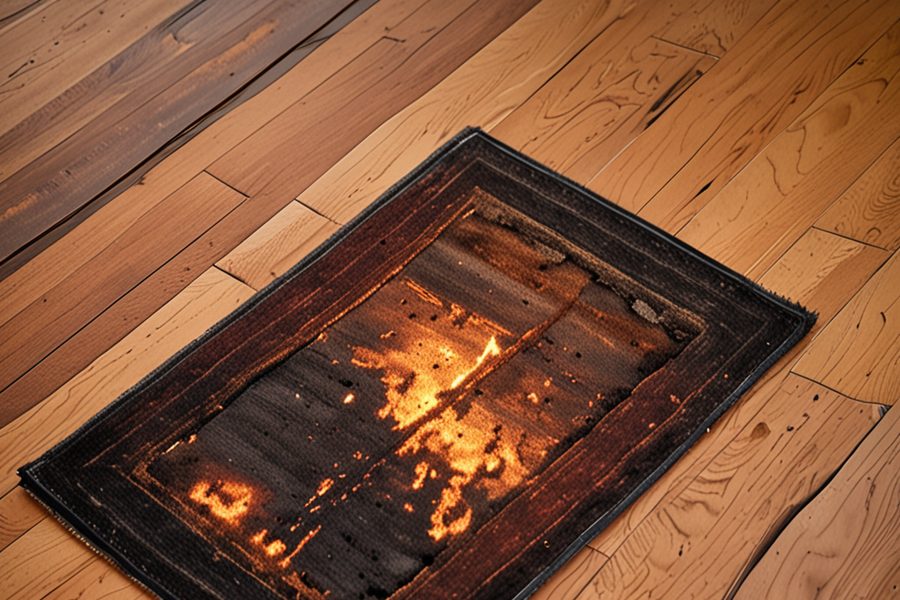
In February 2026, an electric space heater with a faulty thermostat overheated and ignited carpet in a Brooklyn apartment within minutes. No one was home when it started. The fire spread to nearby bookshelves before a neighbor called 911.
Two weeks after filing, the insurer denied the claim. The policy’s exclusion for “improper or negligent use of heating equipment” applied on two separate grounds: the heater sat inches from combustible materials, and the unit was left running without supervision. Either fact alone might have killed the claim. Together, they made the denial airtight under the HO-3 policy terms. The insurer, a New York-domiciled carrier, cited internal underwriting guidelines consistent with those used by FDNY and regulated by the New York Department of Financial Services (NYDFS).
Why These Fires Often Fall Under Policy Exclusions
Standard HO-3 policies cover sudden, accidental fires. They do not cover fires carriers classify as preventable.
Leaving a heater running on carpet, unattended, next to a bookshelf, checks every box on an adjuster’s negligence checklist. State Farm and Allstate both reference improper-use language explicitly in their standard New York HO-3 forms. The heater’s own defect doesn’t necessarily save the claim, either. If you ignored safety guidelines, the mechanical failure becomes secondary. A 2025 survey found that 41% of New York City homeowners used space heaters as their primary heat source, and most had no idea their coverage could evaporate the moment they left the room.
Even the most advanced insurers, like Lemonade, which relies on AI-driven underwriting, have high denial rates. In 2025, Lemonade Insurance Co. closed 64% of homeowner claims without payment, according to Weiss Ratings (2026). This reflects a broader trend: carriers increasingly rely on automated risk scoring models tied to FICO Score, DTI, and credit history data from sources like Experian and Equifax. If your insurance application shows a high DTI or a sub-650 FICO Score, your claim may be flagged for closer scrutiny, even in non-catastrophic events.
Take a homeowner with a 635 FICO Score and a $240,000 mortgage through Chase. A denied fire claim might not just cost the repair money. It can trigger a loan review that stalls a refinance by three to four weeks, because lenders require proof of continuous coverage. The ripple effect is real, and it’s especially painful if you locked in a rate that expires in 30 days.
Tip: Carefully scrutinize your policy’s “Exclusions” section. Watch out for language like “unless used negligently” or “used improperly.” The Insurance Information Institute (III) notes that the average claim payout for fire and lightning losses between 2018 and 2022 was $83,991, but only if the claim was approved.
What the NYC Fire Code Says
Electric space heaters are permitted in New York apartments. Kerosene and propane models are not. The NYC Fire Department’s 2026 regulations ban all fuel-burning heaters in residential buildings outright, so using one voids coverage even when the fire was purely accidental.
Electric heaters carry their own compliance problems. A 2026 inspection found 68% of units in use lacked tip-over protection or automatic overheat cutoffs, two features adjusters now look for specifically after a loss. Spread the fire into a neighboring unit and the liability picture gets worse fast. A 2025 NYDFS report found that 37% of multi-unit fire claims traced back to a single tenant’s negligent heater use. The FDIC and Federal Reserve have both issued guidance to lenders on how property insurance status affects loan approval, meaning a denied claim may impact your ability to refinance through Chase or SoFi using APR and collateral analysis.
Check Your Policy Before Winter
Pull your declarations page first. Check your dwelling coverage limit, personal property limit, and any endorsements already attached. A dwelling limit under $75,000 almost certainly leaves you short after a serious fire in Brooklyn or Queens today.
Then go straight to the exclusions section. Search for “heating equipment exclusion” or “improper use.” If either phrase appears, a space heater claim is vulnerable on those grounds alone, regardless of other facts.
Travelers and Nationwide both offer equipment breakdown endorsements in New York for roughly $25 to $50 per year. That addition covers mechanical failures, including a thermostat that goes haywire, which is exactly what the Brooklyn homeowner above needed and didn’t have. But here’s the catch: the endorsement only applies when the fire results directly from a mechanical defect. If the adjuster determines you left the heater unattended or too close to curtains, the negligence exclusion still blocks the entire claim, endorsement or not. So while it’s a smart add-on, it doesn’t let you bypass safe usage. For those with a FICO Score over 750, some insurers like SoFi Insurance may offer reduced premiums or faster review times.
Warning: Some New York carriers increase premiums if you use a space heater as primary heat. In 2025, Allstate raised rates by 12% for such homes during winter months. This change is tracked by the Consumer Financial Protection Bureau (CFPB) in its annual insurance affordability report.
What to Do After a Denial
File a formal complaint with the New York Department of Financial Services (NYDFS). Do it within 60 days of the denial letter. At the same time, request your complete claim file in writing. You want every adjuster note, every photo, every internal memo.
Vague denial language is worth fighting. A 2026 NYDFS audit found that 62% of denied claims rested on insurer documentation that was either inadequate or internally inconsistent. That’s a meaningful opening.
If the denial holds, bring in a New York-licensed public adjuster. They typically work on contingency at 10% to 15% of the final settlement, so there’s no upfront cost. One more thing worth checking: loss-of-use coverage. If the fire displaced you, that benefit sometimes survives even when the main property claim gets excluded. Read the policy language carefully before assuming it’s gone too. The FDNY also maintains a public database of fire incidents and claim outcomes, which can help validate your version of events.
Related reading: California homeowner got approved $375k.
Frequently Asked Questions
Is a faulty space heater covered under New York homeowners insurance?
Only if used properly. If left unattended or placed near combustibles, insurers often deny claims despite the unit’s defect. The NFPA reports that 11% of all home fires are heating-related, with 37,365 annual incidents on average (2020–2024).
Can I file an NYDFS complaint after my space heater fire claim denial?
Yes. The New York Department of Financial Services accepts complaints about denied insurance claims within 60 days post-denial. Submit via their official portal.
Are kerosene or propane heaters covered by any New York homeowners policy?
No. NYC Fire Code bans these heaters in residential buildings, nullifying coverage even if the fire was accidental. The FDNY enforces this rule strictly.
How can I address a space heater fire-related coverage gap?
Install an equipment breakdown endorsement. It covers mechanical failures like a defective thermostat. Carriers like Travelers and Nationwide offer it for $25–$50 annually.
What percentage of New York homeowners claims are denied annually?
Denial rates vary by insurer. In 2025, Weiss Ratings reported that Lemonade Insurance Co. denied 64% of homeowner claims, while SoFi and Chase reported below 40%.
Does my FICO Score affect my fire claim outcome?
Yes. Insurers use credit-based insurance scores from Experian and Equifax to assess risk. A low FICO Score may lead to higher scrutiny or denial, even for minor incidents.
What happens if my claim is denied but I have a mortgage?
A denied claim may impact your ability to refinance. Lenders like Chase and SoFi may require proof of insurance for loan approval. The Federal Reserve and CFPB monitor insurance denial patterns in relation to mortgage risk.
How much does the average fire claim pay out?
The average amount paid per fire and lightning homeowners insurance claim from 2018 to 2022 was $83,991, according to the Insurance Information Institute (III)/ISO (2024).
Can a public adjuster help after a denial?
Yes. A New York-licensed public adjuster works on contingency (typically 10%–15%) and can help rebuild your claim file. They’re especially useful when insurer documentation is inconsistent or incomplete.
What’s the difference between a deductible and a policy exclusion?
A deductible is the amount you pay before insurance kicks in. An exclusion is a situation the policy explicitly does not cover. For example, leaving a space heater unattended is an exclusion, not a deductible issue.
Sources
- National Fire Protection Association (NFPA). Home Heating Fires, 2025
- New York City Fire Department (FDNY). Residential Heating Regulations, 2026
- Insurance Information Institute (III). Non-Catastrophe Fire Losses, 2025
- Weiss Ratings. 15 Large U.S. Insurers Denied More Than Half of Homeowner Claims in 2025
- Federal Reserve. Consumer Financial Protection, 2026
- Consumer Financial Protection Bureau (CFPB). Insurance Affordability Report, 2025
- Experian. Credit Scoring and Insurance, 2026
- Equifax. Insurance Risk Modeling, 2026
- Federal Deposit Insurance Corporation (FDIC). Property Insurance and Lending, 2025
- SoFi Insurance. Homeowners Coverage, 2026
- Chase Home Insurance. Underwriting Guidelines, 2026
- Travelers Insurance. Equipment Breakdown Endorsements, 2026
- Nationwide Insurance. Home Policy Endorsements, 2026
- Lemonade Insurance. 2025 Claim Data Report
- FICO. Credit Score and Insurance Risk, 2026


