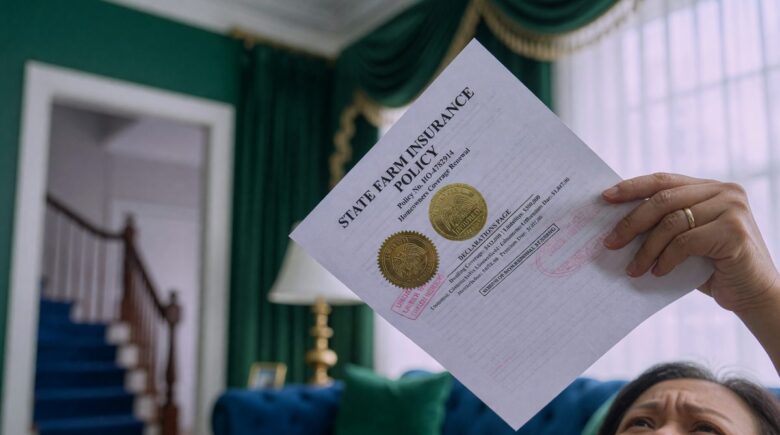
Fact-checked by the Smart Insurance 101 editorial team
Quick Answer
Standard homeowners insurance almost never covers short-term rental activity. Most policies treat paid guest stays as a commercial activity and can deny claims entirely, even when no guests are present at the time of loss. Hosts need either a dedicated short-term rental policy or a specific endorsement, and platform protections like Airbnb AirCover are not a substitute for real insurance coverage.
Short-term rental homeowners insurance is a distinct coverage category that most Airbnb hosts don’t have, and many don’t realize they need until a claim is denied. Standard homeowners policies classify paid guest stays as commercial activity, which triggers business exclusions that can void coverage for the entire property. According to the Insurance Information Institute (Triple-I), insurers may require hosts to notify them of rental activity or obtain a specialized policy, regardless of how infrequently the property is rented.
The stakes are real. A California host’s $120,000 tree-damage claim was denied because the rental listing itself triggered a policy exclusion, even though no guests were present when the tree fell. This guide covers the most common coverage mistakes short-term rental hosts make, what platform protections actually do and don’t cover, and how to match your policy to your actual risk exposure.
Key Takeaways
- Standard homeowners policies classify paid short-term rentals as a commercial activity; insurers can deny claims even when no exclusion is explicitly named, according to the National Association of Insurance Commissioners (NAIC).
- Only 52% of surveyed hosts purchased their platform’s insurance plan, and just 37% bought both a platform plan and a rental endorsement, per Insurance.com’s 2025 survey, meaning a significant share of hosts have no gap-filling coverage at all.
- Airbnb AirCover excludes natural disasters, damage from non-platform bookings, and host personal property; it is not a substitute for a dedicated short-term rental policy.
- Property insurance costs rose more than 75% in real terms from 2019 to 2024, according to the Federal Reserve Board, making the cost of carrying inadequate coverage higher than ever.
- Some states mandate minimum liability coverage for short-term rental operators; the District of Columbia requires at least $250,000 per the DC Department of Licensing and Consumer Protection, coverage that standard policies may not provide due to business-use exclusions.
In This Guide
- Why Standard Homeowners Insurance Rarely Covers Short-Term Rentals
- What Airbnb AirCover Actually Covers (and What It Doesn’t)
- Guest-Caused Damage and Liability Risks Hosts Underestimate
- Specialized STR Policies vs. Add-On Endorsements
- How Location, Frequency, and Property Type Change Your Coverage Needs
- What Actually Influences Premiums and Deductibles for STR Properties
- Practical Steps to Avoid Claim Denials Before and After Listing
Why Standard Homeowners Insurance Rarely Covers Short-Term Rentals
The moment you accept payment from a guest, your home legally functions as a commercial property in your insurer’s eyes. That single fact drives most coverage denials. Standard homeowners policies are written for owner-occupied residences, and business activity exclusions are broad enough to cover any paid rental arrangement, regardless of duration or frequency.
Business Activity Exclusions and Claim Denials
The Texas Department of Insurance states directly that most homeowners insurance won’t cover short-term rentals and that traditional landlord insurance may not be appropriate either. Hosts should contact their insurer to explicitly add coverage for paying guests. Without that conversation, a host who files a claim after a guest-caused fire may find that the entire property damage claim is excluded, not just the portion attributable to the guest.
The California tree-damage case is worth understanding in detail. A host’s $120,000 structural claim was denied because the active Airbnb listing itself triggered the rental exclusion. The tree fell during a vacancy. No guest was harmed and no guest was present. The carrier’s position was that the property’s commercial classification, established by the listing rather than the occupancy, voided the relevant coverage. That’s a documented example of how far these exclusions can reach.
The NAIC reinforces this point: insurers may deny short-term rental claims even when the policy contains no specific exclusion for home-sharing, because general business activity exclusions are broad enough to apply without naming the activity explicitly. This is not a technicality. It is standard industry practice across carriers from State Farm and Allstate to regional writers.
Primary Residence Endorsements vs. Full Exclusions
Some carriers offer a middle ground: a home-sharing endorsement that extends coverage when the owner’s primary residence is rented occasionally. These endorsements typically cap rental activity at 62 days or fewer per year and apply only to the primary home. Rent beyond that threshold, or list a secondary or vacation property, and the endorsement doesn’t apply. For anyone operating at meaningful scale, a standalone policy is the only defensible option. Our Homeowners Insurance Guide for Beginners covers the basic policy structure if you want a foundation before comparing STR-specific options.
According to the National Association of Insurance Commissioners (NAIC), insurers may deny short-term rental claims even when the policy contains no specific exclusion for home-sharing, because general business activity exclusions are broad enough to apply without naming the activity explicitly.
What Airbnb AirCover Actually Covers (and What It Doesn’t)
AirCover is not insurance. Airbnb describes it as host damage protection, and the distinction matters legally and practically. It does not replace a homeowners or short-term rental policy, and several of its most significant limitations go unread by the majority of hosts who depend on it.
Documented Gaps in Platform Protections
AirCover excludes natural disasters entirely. A hurricane, wildfire, or flood that destroys a listed property during a guest stay is outside the program’s scope. It also covers only stays booked through the Airbnb platform, so any off-platform rental, a common practice among hosts who take direct bookings, receives zero protection. Personal property belonging to the host is similarly excluded from most damage claims under the program.
The liability component of AirCover provides up to $1 million in coverage for certain guest injury claims, which sounds substantial. The problem is that it applies narrowly, excludes intentional acts and several categories of negligence, and is not backed by an admitted insurance carrier in the way a real liability policy is. If a claim escalates to litigation, hosts often discover that platform protection provides far less practical defense than a genuine liability policy would. The Consumer Financial Protection Bureau (CFPB) has noted broadly that consumers frequently misunderstand what their property coverage actually includes, a pattern that applies directly to hosts who treat AirCover as a policy substitute. For a broader view of how liability exposure is growing across all property types, see our analysis of why liability lawsuits are quietly getting more expensive.
The Insurance Information Institute has stated publicly that short-term rental activity often brings higher guest turnover and greater liability exposure than standard residential use, and that many policies simply aren’t designed to address it. That assessment applies whether the policy in question is a homeowners contract from Erie or a platform program from Airbnb or VRBO.
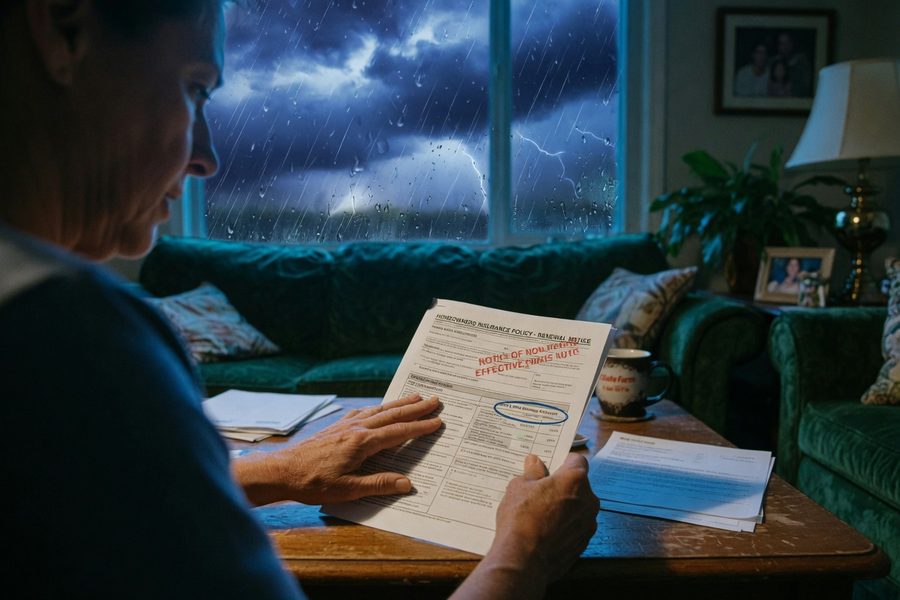
Guest-Caused Damage and Liability Risks Hosts Underestimate
Guest damage falls into two categories with very different coverage outcomes: accidental damage and intentional damage. Standard policies and most platform protections treat these differently, and the distinction catches hosts off guard.
Intentional vs. Accidental Damage
Intentional damage, a guest who breaks furniture on purpose or vandalizes a property, is frequently excluded from both standard homeowners policies and platform protection programs. The reasoning is that it’s a foreseeable commercial risk, not an accidental loss. Accidental damage during normal use is more likely to be covered under a proper STR policy, but the burden is on the host to document that the damage was accidental rather than deliberate, which can be genuinely difficult without security camera footage or witness accounts.
Bodily Injury Claims and Loss of Income
A guest who slips on a wet bathroom floor and fractures a wrist can sue the host directly. Medical costs, lost wages, and pain and suffering damages in a single slip-and-fall case can easily exceed $100,000. Standard homeowners liability coverage, typically $100,000 to $300,000, may be voided by the same business activity exclusion that voids property damage coverage, leaving the host personally exposed.
Loss of rental income during repairs is a separate gap. If a fire requires a property to be uninhabitable for three months and the host loses $6,000 in booking revenue, that loss is rarely recoverable under a standard policy. Specialized STR policies from carriers like Proper Insurance can include business income coverage that fills this gap. The important homeowners insurance policies every owner should know can help you identify which riders and endorsements to ask about when comparing quotes.
Only 37% of surveyed short-term rental hosts purchased both their platform’s insurance plan and a rental endorsement from their insurer, according to Insurance.com’s 2025 survey. That means nearly two-thirds of hosts likely have meaningful gaps in their coverage stack.
Specialized STR Policies vs. Add-On Endorsements
Two distinct paths exist for hosts who want real coverage: a short-term rental endorsement added to an existing homeowners policy, or a standalone STR policy that replaces the standard policy entirely. The right choice depends on how frequently you rent, what type of property it is, and whether your current carrier even offers a rental endorsement.
When an Endorsement Is Sufficient
For a primary residence rented fewer than 62 days per year, a home-sharing endorsement from carriers like State Farm, Allstate, or Erie can provide adequate coverage at a modest cost. These endorsements typically add $40 to $75 per year to an existing policy. They extend property and liability protection during rental periods without requiring a separate policy. The limitation is real, though: they apply only to primary residences, and many carriers won’t write them for properties in high-risk markets or for hosts with prior claims.
When a Standalone STR Policy Is Required
Vacation homes, secondary properties, and any primary residence rented more than 62 days per year generally require a full STR policy. Carriers like Proper Insurance build these to replace a standard homeowners policy, not sit alongside one. They combine dwelling coverage, contents protection, liability coverage, and often business income protection into a single contract. This eliminates the overlap and gap problems that come from stacking an endorsement on a policy that contains an active business exclusion.
Many mortgage lenders, including large servicers backed by institutions regulated by the Federal Reserve and the Federal Deposit Insurance Corporation (FDIC), are now requiring standalone STR coverage for secondary homes listed on platforms. If a lender discovers undisclosed rental activity, they can trigger force-placed insurance, which is expensive, coverage-thin, and issued without the host’s input. The CFPB defines force-placed insurance as coverage a lender purchases on the borrower’s behalf when it determines the existing coverage is inadequate, and the borrower pays the premium. Disclosing rental activity proactively is the cheaper path by a significant margin.
| Coverage Type | Best For | Annual Cost Range | Key Limitation |
|---|---|---|---|
| Home-Sharing Endorsement | Primary residence, under 62 rental days/year | $40 – $75 added to existing premium | Does not apply to vacation or secondary homes |
| Standalone STR Policy | Secondary/vacation homes, high-frequency hosts | $1,500 – $4,000+ annually | Replaces existing policy; may require re-underwriting |
| Platform Protection (AirCover) | Supplemental damage buffer only | $0 (included by Airbnb) | Excludes natural disasters, off-platform stays, personal property |
| Landlord/Dwelling Policy | Long-term rentals (30+ days) | $900 – $2,000 annually | Not designed for short stays; may exclude transient guest liability |
How Location, Frequency, and Property Type Change Your Coverage Needs
Geography and rental volume are two of the biggest underwriting variables in short-term rental insurance, yet most hosts treat them as secondary concerns.
State and municipal requirements vary widely. The District of Columbia requires proof of liability coverage with a minimum of $250,000 for all short-term rental operators, per the DC Department of Licensing and Consumer Protection. Some jurisdictions set higher thresholds. Because standard homeowners policies can exclude short-term rental liability entirely, a host operating in a high-minimum-requirement jurisdiction may be both uninsured and non-compliant simultaneously.
Properties in coastal flood zones, high wildfire-risk areas, or hurricane corridors carry additional underwriting complexity. A standard STR policy written for a property in Denver will look nothing like one written for the same property type in coastal South Carolina. Flood and windstorm coverage often requires separate riders or entirely separate policies under the National Flood Insurance Program (NFIP). Hosts in those zones who don’t address that gap explicitly are operating with a significant uninsured exposure. For context on why property insurance costs in all risk categories have been rising sharply, our post on why insurance premiums are exploding provides useful background.

What Actually Influences Premiums and Deductibles for STR Properties
Pricing for short-term rental coverage is more variable than for standard homeowners insurance, and the factors driving it are worth understanding before you shop.
Cost Drivers and Worked Example
Rental frequency has a direct effect on premiums. A host who rents a primary residence 20 nights per year presents a different risk profile than one renting 200 nights. Underwriters also consider property value, prior claims history, the number of separate listings, and whether the property is owner-occupied during rental periods. Carriers may also pull property-level data from loss-history databases similar to how lenders use credit reporting from agencies like Experian to assess borrower risk, a parallel worth keeping in mind if you’ve had prior claims.
To make this concrete: the Federal Reserve Board reports the average multifamily property insurance cost at $68 per unit per month, up more than 75% in real terms from 2019. That’s $816 per unit annually for multifamily properties. A dedicated STR policy for a single-family vacation property often runs $1,500 to $4,000 annually, versus a home-sharing endorsement at roughly $60 per year. The gap is real, but so is the difference in what you’re actually insured for. A host paying $60 for an endorsement on a property rented 200 days per year has likely purchased something that will not pay out when it matters.
Before comparing STR policy quotes, pull your current homeowners declarations page and count how many exclusions reference “business activity,” “rental,” or “commercial use.” Every one of those exclusions is a potential denial point. Knowing them in advance tells you exactly what gaps a new policy needs to fill.
Higher deductibles reduce premiums but shift guest-damage risk back to the host. A $5,000 deductible on a policy covering short-term rental damage claims is a meaningful cost: if a single guest incident causes $4,000 in damage, the host absorbs the entire loss. Lower deductibles in the $500 to $1,000 range are generally worth their cost for frequently rented properties with high guest turnover.
Practical Steps to Avoid Claim Denials Before and After Listing
Preventing a denial is substantially cheaper and less stressful than disputing one. Most of the groundwork happens before the first guest arrives.
Disclosure and Documentation
Contact your current insurer in writing before listing your property. Ask directly whether short-term rental activity voids any coverage, and document their response. If they confirm coverage is voided, you have a clear signal to replace or supplement the policy. If they offer an endorsement, get the terms in writing with the specific day-count and property-type limitations spelled out.
The Insurance Information Institute advises hosts that coverage gaps in residential dwellings used for commercial purposes are common and frequently misunderstood, a point reinforced by the NAIC’s consumer guidance, which notes that home-sharing creates coverage complexity that standard policies were never designed to address. Neither the Triple-I nor the NAIC treats this as an edge case; both frame it as a systematic problem across the industry.
Review your mortgage agreement and HOA governing documents as well. Some mortgage lenders, including those servicing loans originated through major banks regulated by the FDIC, require disclosure of any rental activity. Some HOA bylaws restrict short-term rentals or impose their own insurance requirements. A host who discovers mid-claim that their mortgage servicer’s force-placed insurance has replaced their original policy faces coverage that is both expensive and minimal. That scenario is avoidable with a proactive disclosure conversation.
Ongoing Record-Keeping
Maintain a written guest agreement for every stay that includes a damage acknowledgment. Keep records of the property’s condition before and after each booking with timestamped photos. If an incident occurs, report it to your insurer promptly, delay in reporting is an independent grounds for denial under most policies. These habits are standard practice among hosts who run short-term rentals as a genuine business, and treating the documentation as a business function rather than an afterthought is exactly the right approach. If you’re managing multiple properties or cross-selling coverage types, the guidance in everything hosts should know about commercial insurance offers relevant context on when property coverage crosses into commercial territory.
Related reading: Short.
Frequently Asked Questions
Does homeowners insurance cover Airbnb rentals?
Generally, no. Standard homeowners insurance treats paid short-term rentals as a commercial activity, which triggers business exclusions that can void both property and liability coverage. Some carriers offer home-sharing endorsements for primary residences rented fewer than 62 days per year, but hosts should confirm coverage in writing before listing.
Is Airbnb AirCover enough insurance for hosts?
No. AirCover is damage protection, not insurance, and it excludes natural disasters, off-platform bookings, and host personal property. It provides no coverage when a standard homeowners policy denies a claim due to rental activity. Hosts need either a dedicated STR policy or a verified endorsement in addition to any platform protections.
What type of insurance do short-term rental hosts actually need?
Hosts renting a primary residence occasionally (under 62 days per year) may be adequately covered by a home-sharing endorsement. Anyone renting a secondary or vacation property, or renting more frequently, should carry a standalone short-term rental policy that covers dwelling, contents, liability, and ideally business income loss.
Can a landlord policy cover an Airbnb property?
Landlord policies are designed for long-term rentals, typically 30 days or more, and many explicitly exclude transient guest liability. They may not cover the higher-turnover, shorter-stay risk profile of a short-term rental and should not be assumed to fill that gap without direct confirmation from the carrier.
What happens if I don’t tell my insurer about my short-term rental?
Non-disclosure can result in a complete claim denial when you need coverage most. If a lender discovers undisclosed rental activity, they may trigger force-placed insurance, which provides minimal coverage at premium cost and is applied retroactively. The Texas Department of Insurance and other state regulators advise contacting your insurer before listing your property, not after an incident.
Sources
- Insurance Information Institute, Coverage for Renting Out Your Home
- National Association of Insurance Commissioners (NAIC), Consumer Insight: Renting Out Your Home
- Texas Department of Insurance, Home Sharing Insurance Tips
- DC Department of Licensing and Consumer Protection, Operating a Short-Term Rental
- Federal Reserve Board, Rising Property Insurance Costs and Pass-Through to Rents
- Insurance.com, Airbnb and Homeowners Insurance Survey Data (2025)
- Insurance Information Institute, Short-Term Rentals Pose Insurance Risks (Press Release)
- Insurance Business Magazine, Standard Home Insurance Falls Short for Airbnb and VRBO Hosts
- NAIC, A Consumer’s Guide to Home Insurance
- Consumer Financial Protection Bureau (CFPB), What Is Force-Placed Insurance?


