Reviewed by the Smart Insurance 101 Editorial Team
Our Take
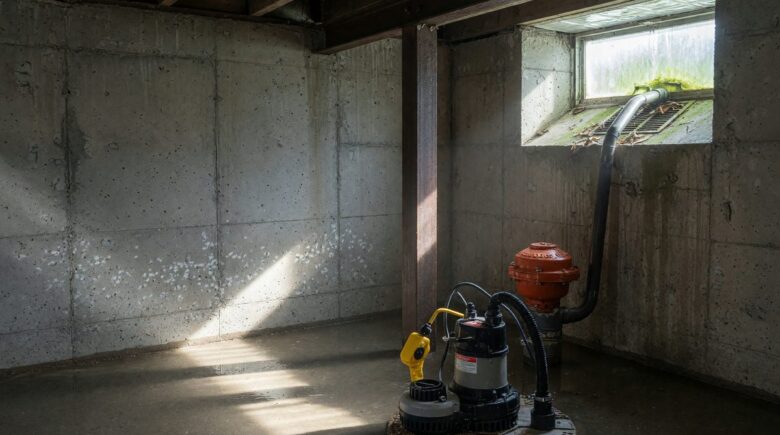
Every homeowner with a basement should add sewer backup coverage as an endorsement to their policy, ideally at a $25,000 limit or higher. The endorsement costs $50–$250 per year and covers the real risk: sewage in your finished basement, ruined contents, and remediation bills that routinely exceed $15,000. The case against it is narrow, if you have no basement, minimal personal property below grade, and live in a newer subdivision with recently upgraded municipal lines, the risk calculus shifts. For everyone else, skipping this coverage is one of the most common and most expensive insurance mistakes I see.
Sewer backup claims are not rare events. The Insurance Information Institute’s 2025 data shows that about one in 67 insured homes files a property damage claim related to water damage or freezing in any given year, with an average payout of $15,400. When sewage is the water source, cleanup costs climb fast and the smell alone can render a home uninhabitable for days.
This article is for homeowners who suspect their policy has a gap but have never confirmed it. What makes the recommendation work is understanding exactly what the standard exclusion says, what an endorsement actually covers, and where even good endorsements fall short.
Key Takeaways
- Standard homeowners policies exclude sewer backup damage. The Minnesota Department of Commerce confirms that a typical policy excludes damage from sewer back-ups or sump pump failures entirely, requiring a separate endorsement.
- The cost of a water damage claim averages $15,400 according to Insurance Information Institute 2025 data, but finished basement losses with contents can run two to three times that.
- The nation’s 500,000-plus miles of sewer lines average over 30 years old, per the Insurance Information Institute, and the rate of backed-up sewers is increasing at roughly 3 percent annually.
- Sewer backup endorsements typically cost $50–$250 per year, making this one of the lowest-cost, highest-value add-ons available on a homeowners policy, in my view, the single best endorsement most people are not buying.
- Some carriers cap sewer backup endorsements at $10,000, a limit that routinely falls short once you account for professional remediation, drywall replacement, and contents in a finished basement.
Why Your Standard Homeowners Policy Leaves You Exposed
Here’s the thing: most homeowners assume “water damage is covered” because they remember hearing that burst pipes are covered. Sewer backups are treated entirely differently. Standard homeowners policies cover sudden and accidental discharge from within the plumbing system, a pipe that splits, a washing machine supply line that fails. They do not cover water or sewage that enters the home from outside, flowing back through drains or toilets.
The Minnesota Department of Commerce puts it plainly: a typical homeowner’s insurance policy excludes damage caused by sewer back-ups or sump pump failures, so homeowners must purchase a separate product or endorsement for protection. The exclusion usually appears in the “Water Damage” exclusion clause of your policy’s Section I, and it applies whether the backup originates from your private lateral line or the municipal main.
The distinction matters because many homeowners believe the city is responsible when the municipal system fails. Sometimes it is, but only for damage to the public infrastructure, not your interior. Your insurer steps back entirely unless you have bought the right endorsement. If you want a fuller picture of what a standard policy actually covers before adding riders, our homeowners insurance beginner’s guide is a useful starting point.
What I see in practice: Readers who file claims without this coverage often tell me they had no idea the exclusion existed until they were already standing in two inches of sewage. The declarations page rarely highlights exclusions, you have to read the full policy language or ask your agent directly.
What a Real Sewer Backup Claim Looks Like
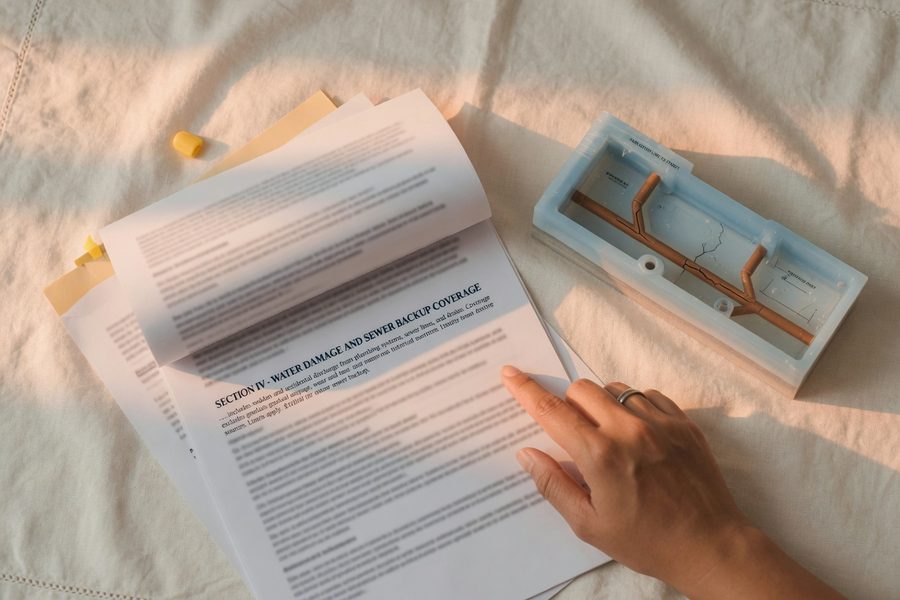
The arithmetic is sobering. A basic sewage backup cleanup in an unfinished basement, pumping, disinfecting, drying, typically runs $3,000–$7,000. Add a finished basement and the numbers change completely.
Consider a realistic scenario: a 600-square-foot finished basement with drywall walls, laminate flooring, a bathroom, and $20,000 in personal property (furniture, electronics, a home gym). Remediation costs $6,000. Drywall and flooring replacement: $12,000. Contents replacement at actual cash value: $14,000. Total: $32,000. A $10,000 endorsement limit leaves the homeowner absorbing $22,000 out of pocket. Even the $15,400 average claim figure from the Insurance Information Institute understates finished-basement events because it blends all water damage claims, including minor ones.
Why Standard Limits Fall Short
Most carriers offer sewer backup endorsements with limits between $5,000 and $25,000. The $5,000 and $10,000 options are priced attractively but are designed for partial, unfinished spaces. If your basement has finishes, a wet bar, a home office, or significant stored property, those low caps are not protection, they are a small offset against a large loss.
What clients often miss: Personal property in basements is often undervalued. People forget about holiday decorations, power tools, seasonal gear, and stored clothing. I routinely tell readers to walk their basement with a phone camera and add it up before picking a coverage limit, the number almost always surprises them.
How Sewer Backup Endorsements Actually Work
An endorsement covers sudden discharge of water or sewage from a sewer, drain, or sump pump, not every water-related loss that happens to involve a drain. That distinction is critical.
Covered perils typically include: overflow from a drain line blocked by debris, sewer backup caused by municipal system overload, and sump pump failure resulting in water intrusion. What the endorsement does not cover: flood water entering through the foundation (that requires a separate NFIP or private flood policy), gradual seepage through cracks, and in many policies, any backup caused by a septic system failure. Here’s the thing most competitors miss: some carriers explicitly carve out backups caused by tree root intrusion or municipal line overloads, even if your own lateral is undamaged. That exclusion can deny a claim even when the homeowner did nothing wrong. Read the endorsement language, not just the marketing summary.
Cost, Limits, and Choosing the Right Amount of Coverage
Annual premiums for sewer backup endorsements typically run $50–$250, depending on your carrier, location, and chosen limit. At $100 per year for a $25,000 limit, the coverage costs less than $9 per month. That cost matters to readers already watching rising insurance premiums, but sewer backup riders have remained relatively affordable because they are still underwritten separately from catastrophe-driven lines.
| Coverage Limit | Typical Annual Premium | Best Fit | Key Risk |
|---|---|---|---|
| $5,000 | $50–$75 | Unfinished basement, minimal contents | Covers remediation only; no room for contents or repairs |
| $10,000 | $75–$120 | Partial finish, limited stored property | Leaves gap on fully finished spaces averaging $20,000+ in losses |
| $25,000 | $120–$175 | Finished basement, moderate contents | May still fall short for high-end finishes or large personal property |
| $50,000+ | $175–$250 | Luxury finishes, home office, significant property | Not offered by all carriers; may require underwriting review |
Location is a real pricing factor. Homes in older urban neighborhoods with aging clay or cast-iron laterals, or in areas with frequent heavy rainfall, may face slightly higher premiums or underwriting scrutiny. The Insurance Information Institute notes the nation’s 500,000-plus miles of sewer lines average over 30 years old, and backed-up sewers are increasing at 3 percent per year. Age and deterioration are exactly why the coverage is worth having now, before a claim triggers underwriting restrictions. For broader tips on managing your policy costs, see our article on saving money on homeowners insurance.
Key Exclusions and Policy Gotchas Worth Knowing
Three carve-outs trip up homeowners most often, and most competitor articles ignore at least one of them.
First: flood water is not sewer backup. If heavy rain causes a storm drain to overflow and water enters your basement through the window well, that is flood damage under most policy definitions. Your sewer backup endorsement will not respond. The Garrett County, Maryland guidance notes that Maryland law requires insurers to offer sewer and water backup coverage in writing at policy issuance or renewal, which signals that even regulators recognize how often homeowners miss this option, but even a mandated offer does not mean flood is included.
Second: the endorsement covers interior damage, not sewer line repair. If a tree root cracks your lateral 40 feet from the house, the resulting interior backup may or may not be covered depending on your policy’s language around the cause. The line repair itself requires a separate service line endorsement, which covers underground pipe repair or replacement. These are two different products. Some carriers bundle them; most do not. If you are in an older home, you likely need both.
Third: documentation requirements are stricter than most homeowners expect. Insurers can and do deny sewer backup claims when there is no evidence of the event’s source, no maintenance records, or when they argue the damage was gradual rather than sudden. Taking photos and video before any cleanup begins is not optional, it is essential. Professional moisture mapping from a remediation firm creates the kind of timestamped record that supports a claim.
Where this gets tricky: The “sudden versus gradual” distinction is where I see the most claim disputes. If a slow root intrusion finally causes an overflow, the insurer may argue it was a maintenance issue. Having a recent sewer scope inspection on file can be the difference between a paid claim and a denial.
How to Verify and Add Coverage Before It’s Too Late
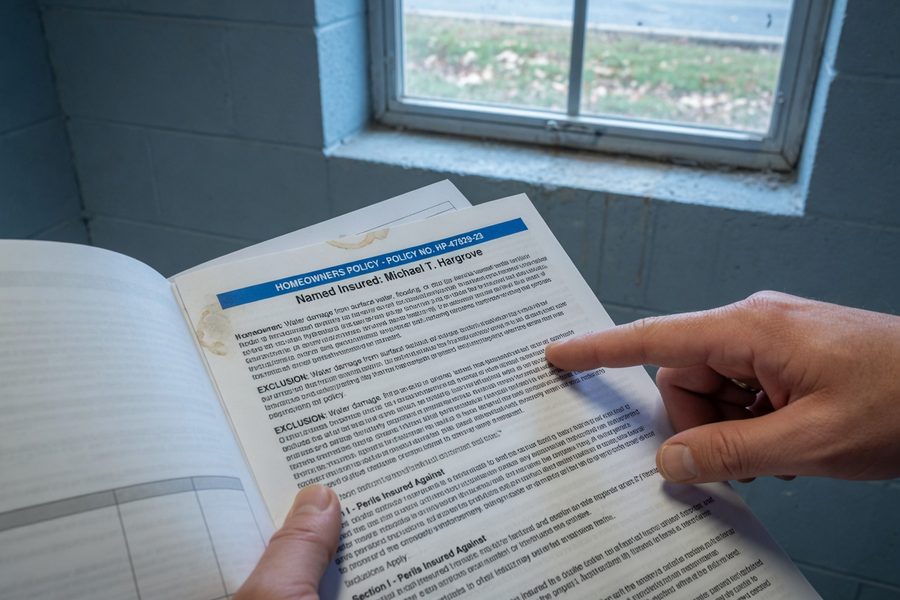
Start with your declarations page, not to confirm coverage, but to identify the endorsement section. Look for a line item labeled “Water Backup,” “Sewer Backup,” or “Drain Backup.” If it is not listed, you do not have it. Then pull the full policy and locate the Water Damage exclusion in Section I. Read the precise exclusion language; what it says, not what you remember being told.
When calling your agent, ask these specific questions: Does the endorsement cover tree-root-caused backups? Does it cover municipal system overloads? What is the maximum available limit? Is a service line endorsement separate, and what does it cost? Can I add the endorsement mid-policy, or must I wait for renewal?
Most carriers allow mid-policy additions for endorsements without underwriting delay, unless you have had a recent claim. After a sewer backup loss, some carriers will restrict or decline to renew the endorsement. The Columbine Water and Sanitation District advises homeowners to discuss coverage additions directly with their insurance agent before an event occurs, timing matters because post-claim additions often come with new exclusions or waiting periods. You should also review what other homeowners insurance endorsements you may be missing while you’re already reviewing your policy.
Shopping multiple carriers is worth the hour it takes. Endorsement terms vary enough that one carrier’s $25,000 limit with no tree-root exclusion may cost the same as another carrier’s $10,000 limit with three exclusions. The EPA estimates 23,000–75,000 sanitary sewer overflows per year in the U.S., not counting backups into buildings, which means the underlying risk is structural and not going away.
Where This Recommendation Falls Short
The recommendation to add sewer backup coverage is sound for most homeowners, but there are real conditions under which it makes less sense, and I think it is worth naming them directly.
The most honest concession: if you have no basement and your home is slab-on-grade with a single story, your exposure is dramatically lower. A backup would likely affect one bathroom or a utility room, not a finished 800-square-foot living space. At that exposure level, a $50,000 limit at premium is overkill, and even a $5,000 limit may be more insurance than the risk warrants. A slab-home owner who maintains their private lateral and has a newer connection to a recently upgraded municipal system may reasonably decide the premium, even at $75 per year, is not worth the expected value.
The catch with endorsement quality is real. Some carriers have quietly narrowed their sewer backup endorsements after large regional loss events, removing tree-root and municipal-overload coverage while keeping the same marketing language. Homeowners who bought coverage years ago and have not re-read the endorsement may find out at claim time that the product is substantially weaker than when they purchased it. That is not an argument against buying coverage, it is an argument for re-reading your endorsement annually, the same way you’d check whether your other home coverages still match your actual exposure.
The tradeoff between a sewer backup endorsement and a full service line endorsement is also real. If you have an older home with clay lateral pipes, the more pressing financial risk may be the line repair itself, which can run $5,000–$15,000, rather than interior cleanup. In that case, a service line endorsement (roughly $40–$80 per year separately) should come first, and you should carry both. Not everyone can afford both immediately, and the honest answer is that service line coverage may have a higher expected value for a 1950s home with trees in the yard.
Finally: this coverage is not a substitute for maintenance. A denied claim because of documented neglect costs you the premium and the loss. A $200 sewer scope inspection every few years is a risk-management tool that makes your coverage more defensible, not less necessary.
How We Sourced This
This article draws from the Insurance Information Institute’s 2025 homeowners insurance statistics report, the U.S. Environmental Protection Agency’s current data on sanitary sewer overflows, and official guidance from the Minnesota Department of Commerce, Garrett County Maryland, and Columbine Water and Sanitation District in Colorado. Premium ranges cited ($50–$250) reflect current endorsement pricing as reported across major carrier quote tools and industry publications. Claim cost figures use the III’s weighted average severity data covering the 2019–2023 policy period. All institutional source links were verified as live in July 2026. The worked cost scenario in the claim section uses round figures consistent with the III’s published severity average and publicly available remediation contractor pricing.
Frequently Asked Questions
Does homeowners insurance cover sewer backup damage?
No, not under a standard policy. Sewer backup damage is explicitly excluded from most homeowners policies under the Water Damage exclusion. You must purchase a separate endorsement or rider, typically called “water backup” or “sewer backup” coverage, to have any protection.
How much does sewer backup coverage cost per year?
Most homeowners pay between $50 and $250 per year depending on the coverage limit and carrier. A $25,000 limit typically runs $120–$175 annually. Location, home age, and prior claims can push the premium toward the higher end of that range.
What is the difference between sewer backup coverage and flood insurance?
Sewer backup endorsements cover sewage or water that enters through drains, toilets, or sump pits from within your plumbing system or connecting sewer lines. Flood insurance, available through the National Flood Insurance Program or private carriers, covers surface water entering from outside the structure. The two causes of loss are treated separately and require separate policies.
Does sewer backup coverage pay to fix the broken sewer line itself?
No. A sewer backup endorsement pays for interior property damage caused by the overflow, cleanup, drywall, flooring, contents. Repair or replacement of the actual lateral pipe requires a separate service line endorsement. If you have an older home with aging underground pipes, you likely need both.
What coverage limit should I choose for my sewer backup endorsement?
For any home with a finished basement, start at $25,000 and consider $50,000 if you have significant personal property or high-end finishes. Walk your basement, estimate the replacement cost of everything stored or installed there, and add $6,000–$8,000 for professional remediation. That sum is your floor for choosing a limit, not a ceiling.
Sources
- Insurance Information Institute, Facts + Statistics: Homeowners and Renters Insurance (2025)
- Insurance Information Institute, Protect Your House from Sewer Backups
- U.S. Environmental Protection Agency, Sanitary Sewer Overflows (SSOs)
- Minnesota Department of Commerce, Sewer Backup Coverage
- Garrett County, Maryland, Homeowner Insurers Must Offer Sewer Backup Coverage
- Columbine Water and Sanitation District, Sewer Line Responsibility and Insurance Coverage
- Federal Emergency Management Agency, National Flood Insurance Program
- Smart Insurance 101, Homeowners Insurance Guide: A Beginner’s Overview