
Fact-checked by the Smart Insurance 101 editorial team
Quick Answer
A term life insurance medical exam tests blood pressure, BMI, cholesterol panels, blood glucose, liver enzymes, kidney function, HIV and hepatitis antibodies, cotinine (nicotine), and drug metabolites. Results place applicants into rate classes that can shift premiums by 50% or more. No-exam alternatives typically cost 20–50% more for equivalent coverage.
What does the paramedical examiner actually look for when you sit down for a term life insurance medical exam? The question matters more than most applicants realize, because the same policy from the same carrier can cost dramatically different amounts depending on where your lab results land. Insurers aren’t checking that you’re alive and stopping there, they’re building a probabilistic picture of how long you’re likely to stay that way, according to the Insurance Information Institute’s overview of life underwriting.
This guide covers every component of the standard exam: the paramedical interview, physical vitals, blood and urine panels, and the age-triggered add-ons most applicants never expect. Two honest caveats upfront: testing panels vary by carrier, and a borderline result is not always fatal to your application, but only if you know how to respond.
Key Takeaways
- Cotinine screening in blood and urine detects nicotine use for up to 3–4 days (blood) or 3–4 weeks (urine) after last exposure, meaning recent quitters may still be classified as tobacco users (CDC Biomonitoring).
- No-exam term life policies carry premiums that are, on average, 20–50% higher than fully underwritten policies for healthy applicants (Policygenius).
- HIV antibody testing and hepatitis B/C screening are standard on most carrier panels; a confirmed positive on either typically results in an automatic decline, regardless of policy term (Insurance Information Institute).
- Elevated liver enzymes (ALT/AST) above roughly 2–3 times the normal reference range frequently trigger substandard rating or postponement, even without a formal hepatic diagnosis (NAIC Life Underwriting Guidelines).
- The MIB Group database and prescription history databases are cross-referenced with exam results, so undisclosed conditions are regularly detected during the underwriting process (MIB Group).
In This Guide
- Why Term Life Insurers Still Require a Medical Exam in 2026
- The Paramedical Interview: What Health History Questions Reveal
- Physical Vitals Measured on Exam Day
- Blood Sample Analysis: Specific Markers Insurers Test
- Urine and Other Fluid Tests: What They Detect
- Age- or Policy-Triggered Add-On Tests
- How Exam Results Translate Into Premiums or Denials
Why Term Life Insurers Still Require a Medical Exam in 2026
The exam survives because it remains the most accurate tool underwriters have for pricing long-term mortality risk. A 20-year term policy on a 40-year-old represents a two-decade financial commitment, and lab data predicts mortality outcomes far better than self-reported health surveys alone.
Risk Assessment and Rate Class Determination
Carriers assign applicants to rate classes, typically Preferred Plus, Preferred, Standard Plus, and Standard, followed by substandard tables, based on underwriting findings. The premium difference between Preferred Plus and Standard on a $500,000, 20-year policy can easily exceed 50% annually. That pricing gap is why the exam exists: it lets healthy applicants pay less, and it lets carriers avoid systematically underpricing risk.
No-exam term products have expanded since the COVID-era push toward accelerated underwriting. Carriers like Haven Life, Bestow, and Ethos now issue policies up to $1.5 million without a physical exam for qualified applicants. But accelerated underwriting still pulls data from MIB Group records, prescription databases such as Milliman IntelliScript, and motor vehicle reports. The exam disappears from the process; the scrutiny does not. And no-exam policies typically run 20–50% more expensive for equivalent coverage, which makes the traditional exam route the better financial choice for applicants in good health. You can compare specific carriers side-by-side in our guide to the best term life insurance companies for 2026.
Even when no physical exam is required, most accelerated underwriting platforms query the MIB Group database and a prescription drug history service. Conditions you did not disclose on the application are routinely surfaced this way, and material misrepresentation can void a policy at the time of a claim. State insurance departments, including those operating under NAIC model regulations, treat such misrepresentation as grounds for rescission.
The Paramedical Interview: What Health History Questions Reveal
Before a single vial of blood is drawn, the paramedical examiner conducts a structured interview. The answers go directly into your underwriting file.
Personal health history covers current and past diagnoses, surgeries, and any ongoing prescriptions. Family history questions focus on first-degree relatives (parents and siblings) and typically ask whether any died before age 60 from cardiovascular disease or cancer, both weighted heavily in actuarial models. Lifestyle questions address tobacco use, alcohol consumption, and hazardous occupations or hobbies. How you answer the alcohol question matters: underwriters correlate self-reported drinking levels against liver enzyme results during blood analysis, and inconsistencies raise flags. For a broader look at how health history interacts with different coverage types, see our Life Insurance 101 overview.
Physical Vitals Measured on Exam Day
Height, weight, blood pressure, and pulse rate are recorded first, and these four readings carry more underwriting weight than most applicants expect.
BMI and Blood Pressure
Body mass index (BMI) is calculated from height and weight. Most carriers begin applying substandard ratings at BMI values above 35–37, though exact thresholds vary by carrier and age. Blood pressure is typically measured twice, with readings above 140/90 mmHg, the threshold the American Heart Association defines as Stage 1 hypertension, triggering additional scrutiny.
A single elevated reading doesn’t automatically tank your rate class. Documented white-coat syndrome (anxiety-driven BP elevation in clinical settings) can be mitigated with a letter from your physician or a follow-up reading, particularly at carriers with flexible underwriting guidelines like Protective Life or Banner Life. Chronic, medicated hypertension is treated differently from uncontrolled hypertension, and generally more favorably, provided the medication is disclosed and blood pressure is within normal limits on exam day.
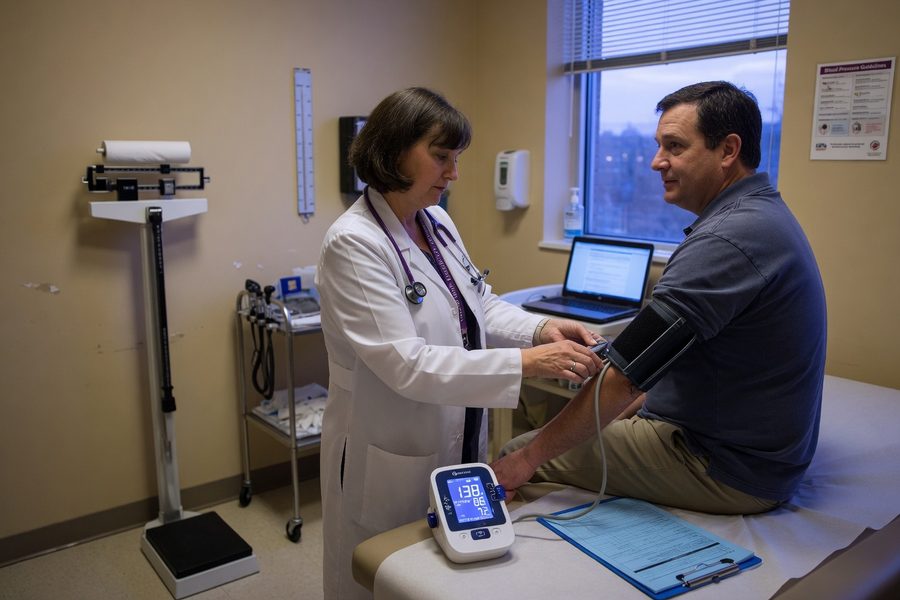
The premium difference between Preferred Plus and Standard rate classes on a $500,000, 20-year term policy for a 40-year-old can exceed 50% per year, meaning exam results directly determine how much you pay for the same coverage amount.
Blood Sample Analysis: Specific Markers Insurers Test
The blood draw is where the most diagnostic information is gathered. A standard panel for term life underwriting covers several distinct categories of markers.
Metabolic and Cardiovascular Markers
A complete metabolic panel (CMP) typically includes fasting glucose or HbA1c for diabetes screening, creatinine and BUN for kidney function, and liver enzymes ALT and AST. Cholesterol is evaluated as a full lipid panel covering total cholesterol, HDL, LDL, and triglycerides. Carriers like SBLI and Lincoln Financial weight the total cholesterol-to-HDL ratio more heavily than total cholesterol alone, because the ratio is a stronger predictor of cardiovascular events according to the National Heart, Lung, and Blood Institute. A ratio below 5.0 is generally favorable; above 6.0 starts drawing attention.
Liver enzymes deserve specific attention. ALT and AST values at 2–3 times the upper limit of normal (roughly ALT above 60–90 U/L depending on the lab’s reference range) frequently result in a postpone or substandard rating, even without a formal diagnosis of liver disease. Heavy alcohol use and non-alcoholic fatty liver disease are two common causes. Carriers cross-check these results against self-reported alcohol consumption from the paramedical interview, so understating alcohol use and then showing elevated enzymes is a combination that underwriters notice.
Infectious Disease and Substance Screening
HIV antibody testing and screening for hepatitis B surface antigen and hepatitis C antibodies are standard components of most carrier panels. A confirmed positive result for HIV or active hepatitis C typically results in an automatic decline, regardless of the applicant’s current health status or treatment. This is one area where the industry’s underwriting approach has been slow to reflect modern treatment outcomes, an honest limitation worth knowing going in. The U.S. Department of Health and Human Services has documented how effective HIV treatment has extended life expectancy considerably, yet most underwriting manuals have not caught up.
Drug screening covers metabolites of common controlled substances: THC, cocaine, opioids, and amphetamines. Cotinine, the primary metabolite of nicotine, is also measured in blood. Blood cotinine is detectable for 3–4 days after last exposure, according to CDC biomonitoring data. Someone who smoked a cigarette at a party the previous week and identifies as a non-smoker may still test clean on blood alone, but urine testing, discussed in the next section, extends that detection window considerably.
If an initial blood test returns an abnormal result, most major carriers, including Protective Life and Banner Life, have formal retest policies that allow a second specimen before a final underwriting decision is issued. Applicants are not always informed of this option automatically; it often requires asking directly through the broker.
Urine and Other Fluid Tests: What They Detect
Urine analysis runs parallel to the blood draw and catches several markers that blood panels either miss or confirm at a different detection window.
Nicotine, Sugar, Protein, and Undisclosed Substance Use
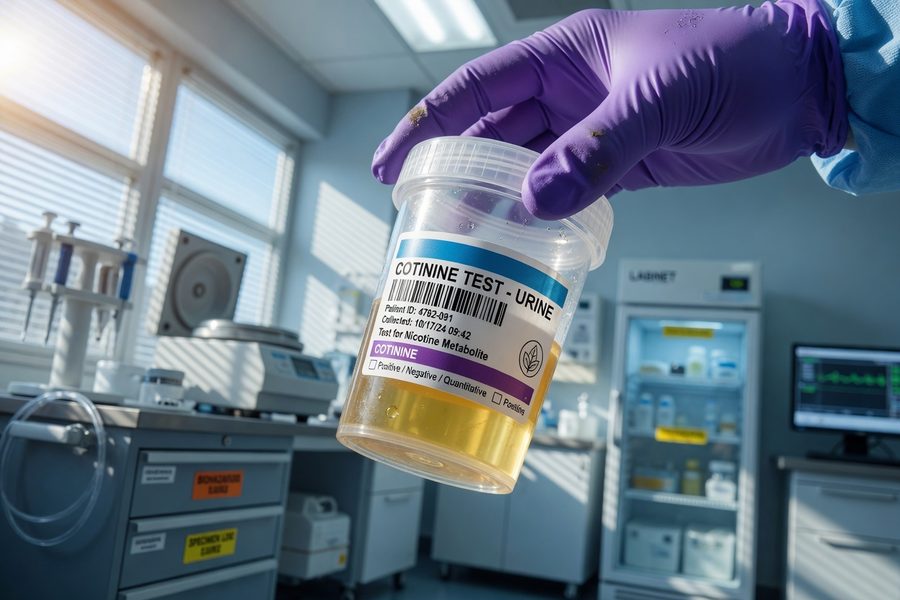
The most consequential urine test for most applicants is cotinine. Urine cotinine is detectable for 3–4 weeks after last nicotine exposure, according to CDC occupational health data on cotinine elimination. This is the marker that catches applicants who quit smoking several weeks before the exam but identify as non-smokers. A positive cotinine result, regardless of the stated reason, places the applicant in the tobacco rate class, which typically raises premiums by 2–3 times compared to non-tobacco rates for the same coverage.
Urine panels also check for glucose (confirming or flagging diabetes when blood glucose is borderline) and protein (an early marker of kidney disease), with creatinine tested to verify the sample is not diluted. Electrolyte balance and microalbumin levels may be tested in older applicants or those applying for higher coverage amounts. Prescription drug metabolites may appear in urine even when the medication is disclosed, helping underwriters confirm that the treatment history in the MIB Group and prescription databases matches what the applicant reported. Services like ExamOne, a subsidiary of Quest Diagnostics, process a significant share of these panels on behalf of carriers.
Age- or Policy-Triggered Add-On Tests
Standard panels cover most applicants. Beyond a certain age or coverage threshold, additional tests are required, and these are the ones applicants rarely anticipate.
EKGs, Stress Tests, and Cognitive Screenings
An electrocardiogram (EKG) is routinely required for applicants aged 45 and older, or for any applicant seeking coverage above $1 million, depending on carrier guidelines. The EKG captures heart rhythm abnormalities, evidence of prior cardiac events, and structural irregularities. An unexpected finding here, say, an undiagnosed bundle branch block, can result in postponement pending cardiology evaluation.
Applicants over 60 applying for significant coverage may also face a chest X-ray or a treadmill stress test. Cognitive screening, while not universal, is beginning to appear in some carriers’ requirements for applicants over 70, reflecting the actuarial significance of early dementia on mortality projections. These add-ons reflect the statistical reality that mortality risk rises sharply with age, and carriers price for that risk. Understanding how premiums are built from the ground up is worth reading about in our piece on what drives the cost of insurance.
How Exam Results Translate Into Premiums or Denials
Exam findings feed into a rate class decision, and that decision determines your actual premium. The path from lab results to final offer is more nuanced than a simple pass/fail.
Rate Classes, Substandard Tables, and Outright Declines
Most carriers use a four-to-six class system: Preferred Plus (best), Preferred, Standard Plus, Standard, and then a series of substandard “table ratings” (Table A through Table P, or numbered 1 through 16 depending on the carrier). Each table rating above Standard adds roughly 25% to the base premium. An applicant with well-controlled Type 2 diabetes might land at Table B or C, still insurable, but paying meaningfully more than someone with clean metabolic results.
Conditions that reliably produce automatic declines include active HIV infection, hepatitis C with cirrhosis, recent cancer (generally within 2–5 years, depending on type), and current substance dependency. Controlled conditions, medicated hypertension, treated hypothyroidism, resolved non-cirrhotic hepatitis, are evaluated more favorably, and documentation from a treating physician can shift an outcome from a table rating to a standard offer. The National Association of Insurance Commissioners (NAIC) publishes model underwriting guidelines that many state regulators use as a reference when reviewing carrier practices.
One path that many applicants overlook: if your results are borderline, shopping multiple carriers is frequently the right move. Underwriting guidelines vary enough between carriers that a result triggering Table D at one company might receive a Standard offer at another. A licensed independent broker who knows which carriers have favorable underwriting for specific conditions is worth the consultation. If your premiums have shifted due to exam findings, it is also worth understanding the broader forces behind why insurance premiums are rising across the board.
| Exam Finding | Likely Rate Class Impact | Notes |
|---|---|---|
| Preferred Plus | No adverse findings; optimal BP, BMI, lipids | Best available rate; typically requires BP below 130/80 |
| Preferred | Minor issues; e.g., slightly elevated cholesterol | Still competitive rate; most healthy applicants land here |
| Standard | Controlled chronic conditions, BMI 35–37, borderline glucose | Insurable; premiums 30–50% above Preferred Plus |
| Substandard (Table Rating) | Diabetes, significant cardiac history, liver enzyme elevation | Each table step adds ~25% to the standard premium |
| Tobacco Rate Class | Positive cotinine in blood or urine | Premiums typically 2–3x the non-tobacco rate |
| Decline | Active HIV, hepatitis with cirrhosis, recent cancer, active substance dependency | No-exam or guaranteed issue policies may be the only option |
MIB Records and Prescription Database Cross-Checks
Exam results don’t stand alone. Underwriters compare them against two external data sources: the MIB Group database, which stores coded medical information from previous insurance applications, and prescription drug history databases supplied by services like Milliman IntelliScript or ExamOne. A medication on your prescription history that wasn’t disclosed in the paramedical interview, an antidepressant or a blood thinner, for instance, will surface during underwriting. Material misrepresentation at application can void a policy at claim time, which is a risk no beneficiary should inherit. State insurance regulators operating under NAIC model regulations generally allow carriers a two-year contestability window to challenge claims on this basis. For context on how life insurance fits into broader financial planning, our guide to types of insurance and their benefits covers the full picture.
Related reading: Term Life Insurance for Self.
Frequently Asked Questions
How long does a term life insurance medical exam take?
Most paramedical exams take between 20 and 45 minutes. The examiner conducts an interview, records vitals, draws blood, and collects a urine sample, all at a location of your choosing, often your home or office.
Can I fail a term life insurance medical exam?
There is no binary pass/fail. Exam results place you into a rate class, which determines your premium. Only specific findings, active HIV, recent cancer, confirmed hepatitis with cirrhosis, or active substance dependency, typically result in an outright decline. Most borderline results lead to a higher rate class rather than a denial.
Does a positive cotinine result automatically classify me as a tobacco user?
Yes. Any detectable cotinine in blood or urine places an applicant in the tobacco rate class, regardless of how they identify on the application. The tobacco rate typically runs 2–3 times higher than the non-tobacco rate for equivalent coverage. Most carriers require 12 consecutive months of tobacco-free results before reclassifying an applicant.
What happens if my blood test comes back abnormal?
Most major carriers have a formal retest policy for initial abnormal results. Ask your broker or the carrier directly whether a second specimen is permitted before a final underwriting decision is issued. A retest is not guaranteed, but at many carriers it is standard practice for borderline findings.
Do no-exam term life policies skip all medical scrutiny?
No. Accelerated underwriting platforms replace the physical exam with data from the MIB Group, prescription drug history databases, motor vehicle records, and sometimes third-party health data aggregators. The result is faster processing, but applicants with undisclosed conditions are still routinely identified. The main trade-off is cost: no-exam policies typically run 20–50% more expensive for comparable coverage amounts.
Will a single elevated blood pressure reading affect my rate class?
Not necessarily. A one-time elevated reading, especially when attributable to white-coat syndrome or temporary stress, can often be explained with documentation from your physician. Chronic, uncontrolled hypertension is weighted more heavily than a controlled condition managed with medication and confirmed normal on exam day.
Schedule your exam for the morning after a full night of sleep and at least 8 hours of fasting. Avoid alcohol for 48 hours beforehand. These steps alone can improve fasting glucose, triglycerides, and blood pressure readings, all of which directly influence your rate class assignment.
Sources
- Insurance Information Institute, How Life Insurance Companies Assess Your Life Expectancy
- American Heart Association, Understanding Blood Pressure Readings
- National Association of Insurance Commissioners (NAIC), Life Insurance Underwriting Guidelines Reference
- Centers for Disease Control and Prevention (CDC), Cotinine Biomonitoring Fact Sheet
- National Heart, Lung, and Blood Institute (NHLBI), Cholesterol and Cardiovascular Risk
- U.S. Department of Health and Human Services, HIV Policy and Treatment Outcomes
- National Association of Insurance Commissioners (NAIC), Model Regulations and Consumer Resources
- MIB Group, Medical Information Bureau for Insurance Underwriting
- Centers for Medicare and Medicaid Services (CMS), Diabetes Screening and Prevention Reference
- Mayo Clinic, Blood Urea Nitrogen (BUN) Test Overview
- Mayo Clinic, Liver Function Tests (ALT/AST) Explained
- U.S. Food and Drug Administration (FDA), HIV Testing Overview
- Centers for Disease Control and Prevention (CDC), Hepatitis C Information
- National Heart, Lung, and Blood Institute (NHLBI), Metabolic Syndrome and BMI Reference
- Social Security Administration, Actuarial Life Tables Used in Mortality Projections