Fact-checked by the Smart Insurance 101 editorial team
The Verdict
Non-owner car insurance is worth buying if you borrow or rent a vehicle more than a few times a year and do not own a car. At roughly $46 per month, it costs far less than standard coverage and protects you from liability gaps the vehicle owner’s policy may leave open. Skip it if you drive exclusively as a licensed household member already listed on someone else’s policy.
The single factor that determines whether non-owner car insurance makes sense for you is how often you drive a car you do not own, and whether the vehicle owner’s policy would actually cover you when it counts. According to Insurify’s 2024 national data, non-owner policies average just $46 per month, roughly 69% less than a full-coverage policy for the same driver. That gap is substantial enough to make this a real financial decision, not a footnote.
The stakes rose in 2024 and into early 2025 as auto insurance premiums climbed sharply across most states. If you are between cars, rely on rentals, or regularly borrow a friend’s vehicle, this coverage type closes a liability gap most people do not know exists until they are standing on the side of the road after an accident.
| Reason | Reasons to Get Non-Owner Insurance | Reasons to Skip It |
|---|---|---|
| Cost | Averages $46/month, often 69% cheaper than full coverage | Adds a monthly expense if you rarely or never borrow a vehicle |
| Liability Protection | Covers bodily injury and property damage you cause to others | Does not cover damage to the vehicle you are driving |
| Coverage Gaps | Kicks in when the car owner’s limits are exhausted | Useless if you are already listed on the owner’s policy |
| SR-22 Filing | Satisfies state financial responsibility requirements without owning a car | Not needed if your license is clean and no SR-22 is required |
| Continuous Coverage | Prevents a coverage gap that raises future premiums | Gap penalty is minor if the lapse is under 30 days in most states |
| Rental Situations | Can substitute for expensive counter rental coverage | Still excludes physical damage to the rental vehicle itself |
Key Takeaways
- You borrow or rent a car at least four to six times per year with no regular access to a household vehicle.
- The vehicle owner’s bodily injury liability limit is at or below your state’s minimum, often $25,000 per person or less, and you want a secondary layer of protection.
- You need an SR-22 certificate filed with your state but do not currently own a vehicle.
- You are between vehicles and want to avoid a coverage gap that could raise your future full-coverage premium by 10% or more.
- You use car-sharing platforms like Turo or Getaround regularly, where host-provided coverage has significant exclusions and low caps.
- Your annual driving exposure would cost less than the $748 average annual premium in potential out-of-pocket liability from even a minor at-fault accident.
- You live in a no-fault state where PIP requirements may still apply to you as a non-owner driver and your state’s DMV requires proof of insurance.
What Does Non-Owner Coverage Actually Include, and Exclude?
Non-owner car insurance is a liability-only policy: it pays for bodily injury and property damage you cause to other people while driving a vehicle you do not own. It does not cover the car itself. That distinction is the most important thing to understand before buying.
The Texas Department of Insurance describes it plainly: “If you don’t own a car, but borrow a car often, you can buy a nonowner liability policy that pays for damages and injuries you cause to other people while driving a borrowed car.” Notice what is absent from that definition, no mention of your own injuries, no mention of the borrowed vehicle’s repair costs. Those are on you unless you have separate coverage.
Some insurers offer optional add-ons. Uninsured/underinsured motorist coverage (UM/UIM) can be attached to a non-owner policy at some carriers, Progressive, GEICO, and State Farm are among the major names that offer this product, though add-on availability varies significantly by state and insurer. MedPay, which covers your own medical bills after an accident regardless of fault, is another occasional add-on. Neither is automatic. You have to ask specifically, and you should, because the default policy leaves your medical costs entirely uncovered.
The New York State Department of Financial Services notes that these policies “provide bodily injury and property damage liability coverages to the insured individual who frequently uses vehicles that they do not own”, confirming the scope is narrow and intentional. For a broader overview of how liability protection works across coverage types, see our guide on what liability insurance is and how it works.

How Much Does Non-Owner Car Insurance Cost?
Cheaper than almost any other auto insurance product, that is the accurate, short answer. Insurify’s data puts the national average at $46 per month, which is 37% less than liability-only coverage and 69% less than a full-coverage policy for the same driver profile.
Annual figures vary by source and methodology. Forbes Advisor data cited by Car and Driver puts the average annual cost at $748. At $46 per month, that works out to $552 per year, so depending on your driving record and location, you should expect somewhere in the $550 to $750 range annually. State-level pricing swings are real: Insurance.com reports California non-owner policies averaging $299 per year, well below the national midpoint.
Here’s the thing: the price gap versus full coverage is so wide that even infrequent drivers almost always come out ahead financially. If you rent a car four times a year and pay $30 per day for the rental counter’s collision damage waiver, that is $120 annually in damage-only coverage, with no liability layer at all. A non-owner policy at $552 per year adds liability protection for every rental and every borrowed vehicle for just $432 more. The math favors the policy for anyone who is not driving less than once or twice a year total.
Factors that push your price up: a recent at-fault accident, a DUI on record, an SR-22 requirement, or higher chosen liability limits. Your state’s minimum requirements also set the floor. If you are shopping around, our step-by-step guide to car insurance quote comparison walks through exactly what to look for when evaluating quotes side by side.
Who Actually Needs Non-Owner Car Insurance?
Four driver profiles account for the vast majority of people who genuinely need this coverage. The first: frequent renters who skip the rental counter’s daily coverage fee. The second: people who borrow family members’ or friends’ vehicles more than occasionally. The third: drivers under an SR-22 requirement who do not own a vehicle. The fourth: anyone between car purchases who wants to avoid a coverage gap on their insurance history.
The SR-22 situation deserves specific attention. An SR-22 is a certificate of financial responsibility that states like Illinois, Texas, and California require after certain violations, DUI convictions, license suspensions, or serious at-fault accidents. You need active insurance to file one. A non-owner policy satisfies that requirement even if you have no vehicle. Without it, your license remains suspended in most SR-22 states regardless of whether you are actually driving.
The Louisiana Department of Insurance flags a related gap that surprises many people: “Company cars and other non-owned cars regularly available to you may not be covered by your personal automobile policy unless you purchase endorsements for such vehicles.” If you drive a company-provided vehicle as part of your job, your employer’s commercial fleet policy covers the car, but not necessarily your personal liability exposure beyond the policy’s limits. This is a coverage gap most employees never think to ask about. For a broader look at commercial auto situations, see our overview of commercial insurance and what it covers.
One profile that does not need it: a household member who is already listed as a driver on the vehicle owner’s policy. Coverage follows the car and the listed drivers. Buying a separate non-owner policy in that situation is redundant and wasteful.

How Non-Owner Policies Interact with Rentals, Rideshares, and Car-Sharing
Non-owner insurance works well for traditional rentals, but it has clear limits on newer platforms that most articles do not address directly. Here is where those limits matter most.
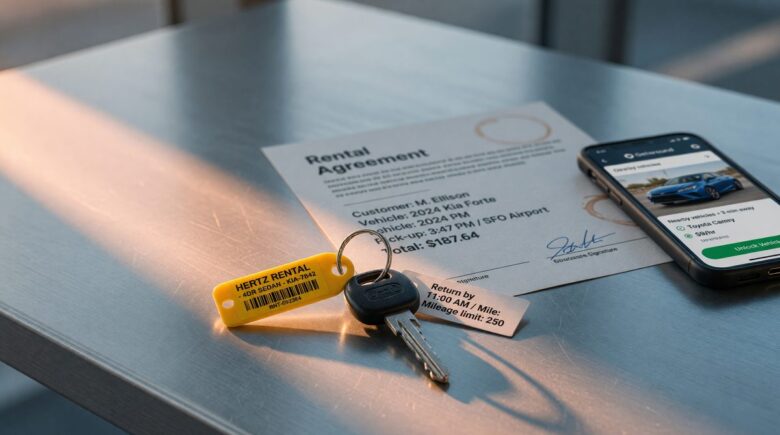
With a traditional rental from Enterprise, Hertz, or Avis, a non-owner policy covers your liability to others. It does not cover physical damage to the rental car. That means you still need either a credit card with rental damage benefits or the counter’s collision damage waiver if you want protection for the vehicle itself. Most non-owner policies are also secondary, they kick in only after the rental company’s own liability coverage is exhausted.
Peer-to-peer car-sharing platforms like Turo and Getaround are a different story. Turo provides hosts with liability protection up to $750,000 under its partnership with Travelers Insurance, but guest coverage is structured in tiers, the cheapest Turo plan shifts most physical damage liability to the guest. A non-owner policy would cover your third-party liability on a Turo rental, but it will not cover damage to the host’s vehicle. That gap can be significant: the average used car repair bill after a collision runs well over $3,000 in most markets.
For Uber and Lyft drivers, non-owner coverage is largely irrelevant because rideshare platforms provide their own commercial liability coverage while the app is active. The genuine gap for rideshare drivers is during Period 1 (app on, no ride accepted), where platform coverage is minimal. A rideshare endorsement on a personal policy addresses that, non-owner insurance does not.
One angle worth flagging for international travelers: non-owner policies issued in the United States are almost never valid outside the country. If you plan to rent a vehicle abroad, you need either the rental counter’s coverage or a travel-specific policy. Do not assume your U.S. non-owner policy follows you to Europe or Mexico.
Who Should and Who Should Not
Good candidates
These are the people for whom a non-owner policy pays for itself quickly, either financially or in peace of mind.
- Frequent renters who rent four or more times per year and want liability coverage beyond what the rental counter provides
- Urban residents without a car who regularly borrow a parent’s, partner’s, or friend’s vehicle on weekends or for errands
- Drivers required to carry an SR-22 certificate who do not currently own a vehicle and need active insurance to maintain their license
- People between vehicles who sold one car and have not yet purchased another, and want to avoid a coverage gap that raises future premiums
- Gig workers or employees who drive a company vehicle and want an extra liability layer beyond the employer’s commercial fleet policy limits
Who should skip it
In these situations, a non-owner policy either duplicates existing coverage or does not match the actual risk.
- Household members already named on the vehicle owner’s auto policy, the policy already covers them and a second policy adds nothing
- People who drive borrowed vehicles fewer than two or three times per year with no license or SR-22 issues, the annual premium likely exceeds the risk exposure
- Drivers who need physical damage coverage for vehicles they regularly drive, non-owner policies do not cover the car itself, ever
- Rideshare drivers whose primary gap is during app-on, no-ride-accepted periods, a rideshare endorsement addresses that gap; a non-owner policy does not
Frequently Asked Questions
Does non-owner car insurance cover damage to the car I’m driving?
No. Non-owner car insurance covers liability only, meaning damage or injuries you cause to other people and their property. If you damage the car you are borrowing or renting, you are responsible for those repair costs unless you have separate coverage such as a credit card rental benefit or the rental company’s collision damage waiver.
Can non-owner car insurance satisfy an SR-22 requirement?
Yes, it can. If your state requires an SR-22 certificate after a DUI, license suspension, or serious violation, a non-owner policy provides the active insurance needed for your insurer to file the SR-22 on your behalf. This applies even if you do not own a vehicle, which is one of the most practical uses of this coverage type.
Will filing a claim on a non-owner policy hurt my rates when I eventually buy a car?
Possibly. Claims filed under a non-owner policy become part of your insurance history and can affect future rates, just as claims under a standard auto policy would. Insurers check your claims history through databases like CLUE (Comprehensive Loss Underwriting Exchange), and an at-fault claim typically stays on record for three to five years. The impact on future full-coverage rates depends on the severity of the claim and the insurer’s underwriting rules.
Is non-owner car insurance valid when I drive for Turo or Getaround?
It covers your third-party liability on peer-to-peer car-sharing platforms, but it does not cover damage to the host’s vehicle. Turo and Getaround both offer their own protection plans that include physical damage coverage for the car, you should select one of those if you want to avoid paying out of pocket for vehicle repairs. Never assume a non-owner policy fills all the gaps on these platforms.
Does a coverage gap matter if I go without insurance for only a month or two?
A gap of 30 days or less is often treated leniently by insurers, but a gap of 60 days or more can trigger a surcharge of 10% to 20% or more on your next policy, depending on the carrier and state. Maintaining a non-owner policy during a gap in vehicle ownership is a straightforward way to protect your rate tier, especially if you have a clean record worth preserving. For more on how premium increases work, see our breakdown of why insurance premiums are climbing.
Do I need non-owner insurance if I only drive my spouse’s car?
Not if you are listed as a driver on your spouse’s policy, you are already covered. The issue arises when you are not listed, which some couples overlook. Call your spouse’s insurer and confirm you appear on the declarations page; if you do not, you need to be added rather than buying a separate non-owner policy. Our complete guide to car insurance covers how household driver listings work in more detail.
Sources
- Insurify, Non-Owner Car Insurance: Average Costs and Coverage
- Car and Driver / Forbes Advisor, How Much Is Non-Owner Car Insurance?
- Insurance.com, Non-Owner Car Insurance in California
- Texas Department of Insurance, Auto Insurance Consumer Guide
- New York State Department of Financial Services, Automobile Insurance FAQs
- National Association of Insurance Commissioners (NAIC), Auto Insurance Consumer Guide
- Insurance Information Institute (III), What Is Auto Insurance?


