Fact-checked by the Smart Insurance 101 editorial team
Quick Answer
An SR-22 is a certificate of financial responsibility filed with your state’s DMV by your insurer, not a separate insurance policy. Most states require drivers to maintain it for 3 years, though periods range from 2 to 5 years. The average cost of SR-22 insurance is $1,204 per year, and premiums can rise by up to 103% after the filing requirement is triggered.
SR-22 insurance requirements are among the most misunderstood obligations in personal auto coverage. The SR-22 itself is not a policy at all, it is a state-mandated certificate that your insurer files with the DMV, confirming you carry the minimum liability coverage required by law. According to WalletHub’s 2024 SR-22 analysis, the filing fee is typically just $15 to $25, but the resulting premium increase can nearly double what you pay each year.
If your license has been suspended, you were caught driving uninsured, or a court ordered an SR-22, this guide covers exactly what you need to do, how much it will cost, and how long the obligation follows you. You will also find state-specific duration differences and a clear explanation of what happens if coverage lapses.
Key Takeaways
- An SR-22 is a certificate of financial responsibility, not a standalone insurance product, your insurer files it directly with the DMV on your behalf. (California DMV)
- Most states require the filing to be maintained for three years, though Texas requires only two years and some states extend to five or more for repeat offenders. (WalletHub, 2024)
- The average annual cost of SR-22 insurance is $1,204, driven primarily by the high-risk surcharge applied to the underlying auto policy. (WalletHub, 2024)
- A driver’s premium can increase by up to 103% once an SR-22 requirement is in place, depending on the triggering violation and the insurer. (WalletHub, 2024)
- Twelve states do not require SR-22 or FR-44 filings, so if you move, your obligation may change based on the destination state’s laws. (WalletHub, 2024)
In This Guide
- What an SR-22 Actually Is (and What It Is Not)
- What Situations Trigger an SR-22 Requirement?
- How Long Does the SR-22 Obligation Last?
- Minimum Coverage Limits You Must Carry
- How Do You Obtain and File an SR-22?
- The Financial Impact: Rate Increases and Real Costs
- What Happens If Your Coverage Lapses or Is Cancelled?
What an SR-22 Actually Is (and What It Is Not)
Here’s the thing: most people assume SR-22 is a special type of insurance policy you buy separately. It is not. An SR-22 is a certificate, a standardized form that your insurance company submits to your state’s Department of Motor Vehicles or equivalent agency to confirm you are carrying the required minimum liability insurance. The underlying policy is ordinary auto insurance; the SR-22 is just proof that it exists.
The California Department of Motor Vehicles describes it as a “California Proof of Insurance Certificate,” acceptable as evidence of financial responsibility when a driver must meet minimum liability limits of $30,000/$60,000/$15,000. The structure is the same across most states: the insurer is legally obligated to notify the DMV if the policy is cancelled or lapses, which is precisely why this certificate carries real consequences.
SR-22 vs. FR-44: What’s the Difference?
A related but stricter filing is the FR-44, used primarily in Florida and Virginia. Where an SR-22 typically requires proof of state-minimum liability coverage, an FR-44 requires liability limits that are double the state minimum. In Florida, for example, an FR-44 is triggered by a DUI conviction and requires $100,000/$300,000 bodily injury limits rather than the standard $10,000/$20,000. The distinction matters because it changes both what you must buy and how much you will pay. If you are unsure which filing applies to you, your state’s DMV notice will specify.
Twelve states do not require SR-22 or FR-44 filings at all, according to WalletHub’s 2024 data. If you relocate to one of those states while still under an SR-22 obligation from another state, you may still need to satisfy the original state’s requirement until it expires.
What Situations Trigger an SR-22 Requirement?
Courts and state DMVs impose SR-22 requirements after specific high-risk events, not minor moving violations. The most common trigger is a DUI or DWI conviction, but several other circumstances can produce the same outcome.
Common and Less-Obvious Triggers
The standard list includes driving under the influence, being caught driving without insurance, causing an at-fault accident while uninsured, accumulating too many points on a driving record within a set period, and driving on a suspended or revoked license. Less commonly discussed triggers include unsatisfied court judgments (when you cause an accident and cannot pay the damages), and in some states, filing a false insurance certificate.
State law determines the exact triggers. The Arizona Department of Transportation refers to this as “future financial responsibility” and requires the filing after certain traffic violations or failure to maintain insurance. Iowa takes a similar approach: the Iowa Department of Transportation requires proof of financial responsibility via SR-22 filing from the first day of a suspension or revocation. That distinction matters, the clock may start at the moment of suspension, not the moment you file.
If you are working through the broader picture of what auto insurance covers and what it costs, our guide on everything you need to know about car insurance provides a useful foundation before adding SR-22 complexity on top.
How Long Does the SR-22 Obligation Last?
Three years is the baseline in most states, but the exact duration depends on where you live and what triggered the filing. Several states deviate meaningfully, and a single lapse can restart the clock entirely.
State-by-State Duration Differences
The Arizona Department of Transportation requires the filing to be maintained for 3 years from the end date of a revocation or suspension, with shorter periods possible for less serious violations. Iowa requires two years of continuous coverage from the first day of the suspension, per the Iowa DOT’s official guidance. Vermont’s standard is three years from the date of the event that triggered the requirement, according to the Vermont Department of Financial Regulation. Indiana offers an unusual case: certain drivers can satisfy the filing requirement after just 180 consecutive days of maintained coverage, as noted by the Indiana Bureau of Motor Vehicles.
At the far end of the spectrum, repeat offenders in some states face five-year requirements or longer. Texas requires only two years from the most recent conviction or judgment date, shorter than most. The key takeaway: contact your state DMV directly to confirm the exact end date of your obligation, and do not assume you are done because a third year has passed.
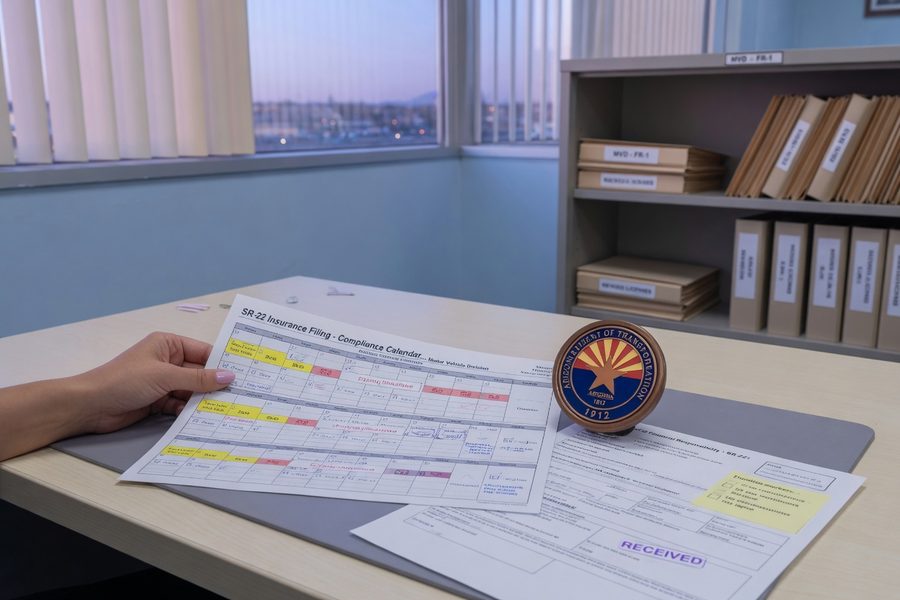
In most states, an SR-22 must be maintained for a minimum of 3 years of continuous coverage. A single lapse, even one day, can trigger an automatic license suspension and restart the clock, according to WalletHub’s 2024 SR-22 data.
Minimum Coverage Limits You Must Carry
While on an SR-22, you must carry at least your state’s minimum liability limits, the same minimums required of all drivers. The SR-22 certificate simply proves you have them. What changes for FR-44 holders is the threshold itself.
State Minimums in Comparison
California mandates $30,000/$60,000/$15,000 in bodily injury and property damage liability. Texas requires $30,000/$60,000/$25,000. Florida’s standard SR-22 minimum is lower, but an FR-44 triggered by a DUI escalates the required bodily injury limit to $100,000/$300,000. Virginia similarly uses FR-44 for DUI cases with doubled limits. Understanding where you live, and which form applies, is not optional.
| State | Filing Type | Required Minimum Liability (BI/PD) | Standard Duration |
|---|---|---|---|
| California | SR-22 | $30,000 / $60,000 / $15,000 | 3 years |
| Texas | SR-22 | $30,000 / $60,000 / $25,000 | 2 years |
| Florida (DUI) | FR-44 | $100,000 / $300,000 / $50,000 | 3 years |
| Virginia (DUI) | FR-44 | $50,000 / $100,000 / $40,000 | 3 years |
| Arizona | SR-22 | $25,000 / $50,000 / $15,000 | 3 years (from suspension end) |
| Iowa | SR-22 | $20,000 / $40,000 / $15,000 | 2 years |
| Vermont | SR-22 | $25,000 / $50,000 / $10,000 | 3 years |
Non-owner SR-22 policies are an important exception worth understanding. If you do not own a vehicle, you can obtain a non-owner auto policy paired with an SR-22 filing. These policies carry the same liability minimums and satisfy most states’ financial responsibility requirements. They do not cover a vehicle you own or regularly use, but they are a legitimate path for drivers who rely on rentals or borrowed cars during the filing period.
How Do You Obtain and File an SR-22?
Contact your current auto insurer first. Many standard carriers will file an SR-22 on your behalf, though some will non-renew your policy once a serious violation appears on your record. If that happens, you will need to shop high-risk specialists.
The Filing Process Step by Step
Once you find a carrier willing to cover you, request the SR-22 filing. The insurer submits the form electronically to your state DMV, typically within one to three business days. You will pay a one-time filing fee of $15 to $25, per WalletHub’s 2024 analysis. The larger cost is the premium increase that comes with being reclassified as a high-risk driver.
The three-year clock, in most states, does not start until the DMV receives and accepts the filing. This is why delays matter. If you wait two months after your suspension to obtain an SR-22, those two months generally do not count toward your required period. Filing quickly is always in your interest.
For a broader look at how to compare auto insurance options before choosing a carrier, the step-by-step guide to car insurance quote comparison on this site walks through the process in detail.
Set a calendar reminder 60 days before your SR-22 obligation ends. Do not cancel coverage the day the period expires; wait for written confirmation from your DMV that the requirement has been satisfied. Cancelling even one day early can trigger a suspension and restart the process entirely.
The Financial Impact: Rate Increases and Real Costs
The filing fee is the least of your concerns. The real cost of an SR-22 is what it does to your premium.
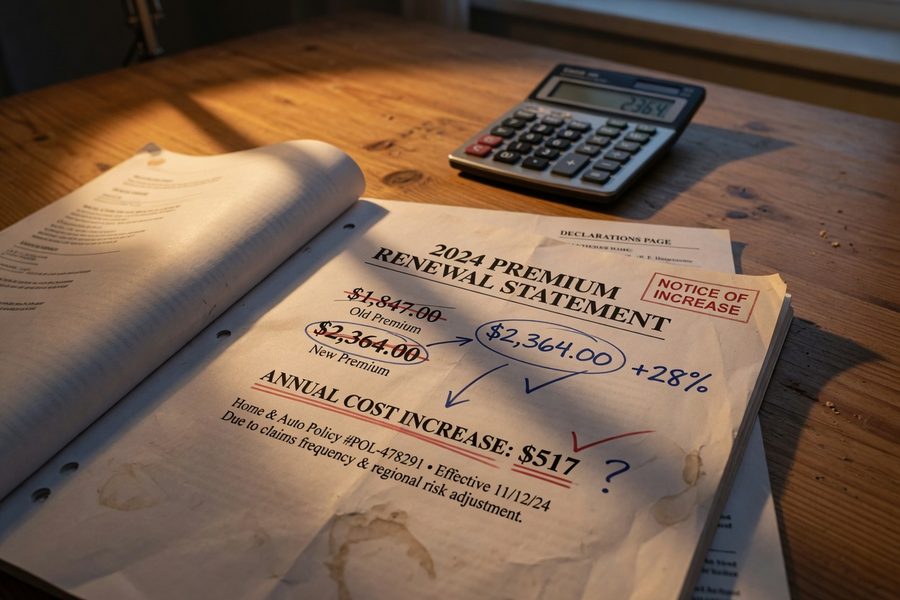
According to WalletHub’s 2024 data, the average annual cost of SR-22 insurance is $1,204, and premiums can rise by up to 103% once the requirement is in place. To put that in concrete terms: if you were paying $800 per year before the SR-22 requirement, a 103% increase would push your annual premium to approximately $1,624, an extra $69 per month. The exact increase depends on the triggering violation, your driving history, your state, and the insurer. A DUI typically produces a steeper surcharge than an uninsured-motorist violation.
Those surcharges often persist beyond the SR-22 filing period itself. Even after your DMV removes the requirement, your insurer may keep your rate elevated for several additional years based on your driving record. Shopping around once the SR-22 period ends, or even before it ends, if your state allows mid-term shopping, can recover significant savings. For context on why auto and insurance rates broadly have been rising, see our coverage of why insurance premiums are exploding.
What Happens If Your Coverage Lapses or Is Cancelled?
A coverage lapse during an active SR-22 obligation is one of the most damaging mistakes a driver can make. When your policy is cancelled or non-renewed, your insurer is legally required to file an SR-26 form with the DMV. That form notifies the state that your SR-22 coverage is no longer active.
What Follows an SR-26 Notice
Most states respond to an SR-26 with an automatic license suspension, typically within a matter of days. Some states issue a warning notice; others act immediately. Reinstating your license after a lapse usually requires a new SR-22 filing, payment of a reinstatement fee, and in some cases, restarting the entire required filing period from zero. That means a single missed payment could extend your total obligation by months or years.
The only real protection against a lapse is continuous, unbroken coverage. Drivers who know they are at risk of missing a payment should set up automatic billing or contact their insurer to adjust the payment date. Allowing the policy to lapse and then reinstating it is almost always more expensive than keeping coverage active, even if money is tight. For a deeper look at reducing auto insurance costs without sacrificing coverage, see these 9 ways to reduce your auto insurance that apply even for high-risk drivers.
When an insurer cancels an SR-22 policy, the SR-26 cancellation notice sent to the DMV can trigger license suspension within days, sometimes before the driver is aware the policy has lapsed. Maintaining automatic payments and confirming renewal dates with your insurer is the most reliable safeguard.
Frequently Asked Questions
Does an SR-22 requirement follow you if you move to another state?
Generally, yes. If your original state imposed the SR-22 requirement, you must satisfy it regardless of where you move, unless you surrender your license in that state entirely. Your new state may also impose its own financial responsibility requirements, which means you could technically owe compliance to two jurisdictions simultaneously. Contact both states’ DMVs to confirm your obligations before assuming a move ends the requirement.
Can you get SR-22 insurance if you don’t own a car?
Yes, through a non-owner SR-22 policy. This type of policy provides liability coverage when you drive a vehicle you do not own, a rental, a borrowed car, or a car-share service. It carries the same state-minimum liability limits required of any SR-22 filer and satisfies most states’ financial responsibility standards. Non-owner policies cost less than standard auto policies because they exclude physical damage to a vehicle you own.
How quickly does an SR-22 filing take effect?
Most insurers file electronically and the DMV receives the form within one to three business days. However, the required filing period does not begin until the DMV processes and accepts the SR-22, not the day you request it from your insurer. In states where the clock starts at suspension or revocation, a delay in filing can leave you in a longer total obligation period than necessary.
Will an SR-22 requirement show up on a background check or affect life insurance?
An SR-22 itself is not reported to background check databases used by employers, but the underlying violation, a DUI conviction, for example, may appear in criminal records checks or motor vehicle reports. Life insurers do review driving records when underwriting term and permanent policies, and a DUI can raise premiums or affect eligibility. If you are shopping for life coverage while under an SR-22 requirement, our review of the best term life insurance companies outlines which carriers take a more flexible approach to high-risk applicants.
What is the cheapest way to handle an SR-22 requirement?
File immediately after the requirement is imposed, delays extend your total obligation. Then shop multiple high-risk auto insurers, since premiums for SR-22 drivers vary significantly between carriers. Avoid any lapse in coverage, which is both the most common and most costly mistake SR-22 drivers make. The $15 to $25 filing fee itself is trivial; the premium surcharge, which can reach 103%, is where the real cost lies.
Do all insurance companies offer SR-22 filings?
No. Many standard carriers will file an SR-22 for existing customers with minor violations, but some will cancel the policy outright after a serious offense like a DUI. High-risk specialty insurers and non-standard market carriers are often the most reliable option for drivers who have been dropped by a standard carrier. Comparing quotes from multiple companies before the policy renews is the most direct way to find competitive pricing.
Sources
- WalletHub, SR-22 Insurance: Costs, Requirements, and State Rules (2024)
- California Department of Motor Vehicles, Insurance Requirements and SR-22 Filing
- Arizona Department of Transportation, Future Financial Responsibility (SR-22)
- Iowa Department of Transportation, Proof of Insurance After Suspension
- Vermont Department of Financial Regulation, Auto Insurance and SR-22 Requirements
- Indiana Bureau of Motor Vehicles, Proof of Financial Responsibility and SR-22