Fact-checked by the Smart Insurance 101 editorial team
If you drive fewer than 10,000 miles a year, you are almost certainly overpaying for car insurance, and by a significant margin. Traditional auto insurance charges a flat annual premium regardless of whether you drive 500 miles or 15,000. That means a retired teacher who drives three days a week is subsidizing the premiums of a daily commuter, even though her actual risk on the road is a fraction of theirs. Pay per mile insurance was designed specifically to fix this imbalance, and millions of low-mileage drivers still have no idea it exists.
The financial stakes are real. According to the Bureau of Transportation Statistics, roughly 35% of American households drive fewer than 10,000 miles per year. The average American spends approximately $1,771 annually on auto insurance premiums, according to the Insurance Information Institute. Low-mileage drivers who switch to usage-based models report savings of 20% to 40% on those premiums, translating to $354 to $708 back in their pockets every single year. Over five years, that gap compounds into thousands of dollars.
This guide cuts through the marketing noise. You will get a precise breakdown of how pay-per-mile pricing works, which insurers offer the most competitive rates, who saves the most, and the hidden traps that could erase your savings entirely. Whether you are a retiree, remote worker, or city dweller with a rarely-used car, you will leave with a clear answer about whether switching makes financial sense for your specific situation.
Key Takeaways
- Low-mileage drivers (under 10,000 miles/year) can save 20%–40% annually by switching to pay-per-mile insurance, an average of $354–$708 per year.
- Most pay-per-mile policies charge a base rate of $29–$59/month plus a per-mile rate of $0.02–$0.10 per mile driven.
- Metromile (now part of Lemonade) reported that customers who drove under 5,000 miles/year saved an average of $947 annually compared to traditional insurance.
- Approximately 35% of U.S. households drive fewer than 10,000 miles per year, making them prime candidates for usage-based pricing.
- Privacy is a legitimate concern: telematics devices track location, speed, braking, and time of day, data that may be shared with third parties under certain policy terms.
- Pay-per-mile insurance is currently available in 42+ states, with availability expanding rapidly–2025.
In This Guide
- What Is Pay-Per-Mile Insurance and How Does It Work?
- How the Pricing Model Actually Works
- Who Benefits Most from Pay-Per-Mile Insurance
- Top Pay-Per-Mile Insurance Providers Compared
- Telematics, Tracking, and Your Privacy
- Pay-Per-Mile vs. Traditional Auto Insurance
- Pay-Per-Mile vs. Other Usage-Based Insurance Programs
- Potential Downsides and Hidden Costs
- How to Switch to Pay-Per-Mile Insurance
What Is Pay-Per-Mile Insurance and How Does It Work?
Pay-per-mile insurance is an auto insurance model where your premium is calculated based on how many miles you actually drive, rather than a fixed annual estimate. Unlike traditional policies that use demographic proxies, your zip code, age, credit score, to guess your risk level, pay-per-mile ties your cost directly to road exposure.
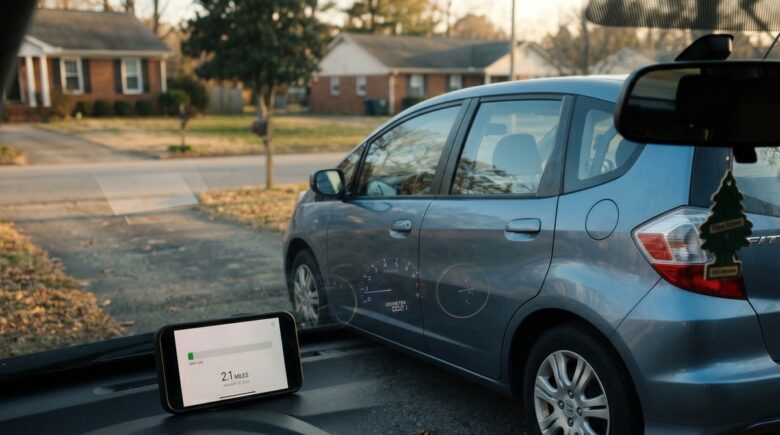
The mechanics are straightforward. Insurers provide a small telematics device, typically a plug-in OBD-II dongle or a smartphone app, that records your daily mileage. At the end of each month, your bill reflects a base rate plus the total miles you logged. Drive less, pay less. It is a simple equation that standard insurance has never offered.
A Brief History of Usage-Based Auto Insurance
The concept of usage-based insurance dates back to a 1998 patent by Stanford professor and entrepreneur Martin Litman. Progressive Insurance was among the first major carriers to pilot the model with its Snapshot program in the early 2000s. However, purely mileage-based pricing, as opposed to behavior-based scoring, only gained commercial traction after Metromile launched in 2011.
By 2020, the COVID-19 pandemic became an unlikely accelerant. Millions of Americans suddenly stopped commuting, yet their insurance bills didn’t drop. That frustration drove a surge of interest in pay-per-mile products. According to the Insurance Information Institute, inquiries into usage-based insurance products increased by over 30% during the 2020–2021 period.
The Two Core Components of Every Pay-Per-Mile Policy
Every pay-per-mile policy has two billing components. The base rate is a fixed monthly charge, typically $29–$59, that covers your vehicle when it is parked, including theft, vandalism, and weather damage. The per-mile rate is the variable component, usually between $0.02 and $0.10 per mile driven.
Some insurers cap the per-mile charge at a daily maximum, Metromile historically capped billing at 250 miles per day. This protects drivers who occasionally take road trips from a catastrophic monthly bill. Understanding both components is essential before comparing providers.
The OBD-II (On-Board Diagnostics) port used by most pay-per-mile devices is the same port mechanics use to diagnose engine problems. Every car sold in the U.S. after January 1, 1996 is required by law to have one.
How the Pricing Model Actually Works
Understanding the math behind pay-per-mile pricing is the fastest way to determine whether it will save you money. The formula is simple: Monthly Cost = Base Rate + (Miles Driven × Per-Mile Rate). But the inputs vary enough between providers that the same driver could pay very different amounts depending on their insurer.
Let’s run a concrete example. Suppose your base rate is $40/month and your per-mile rate is $0.06. If you drive 400 miles in a given month, your bill is $40 + (400 × $0.06) = $40 + $24 = $64. Over 12 months at that pace, you’d pay $768 annually. A comparable traditional policy in many U.S. markets would run $1,200–$1,500 per year for the same coverage level.
The Break-Even Mileage Threshold
Every driver has a break-even mileage point, the annual mileage at which pay-per-mile costs equal your current traditional premium. Below that threshold, you save money. Above it, you overpay. For most drivers, the break-even sits between 8,000 and 12,000 miles per year.
To calculate your own break-even: take your current annual premium, subtract 12 times the monthly base rate, then divide by the per-mile rate times 12. This gives you the monthly mileage at which the two options cost the same. If your actual driving is below that number, pay-per-mile wins.
A driver logging 5,000 miles/year with a $40 base rate and $0.06/mile rate pays approximately $660/year, compared to a national average traditional premium of $1,771/year. That is a savings of $1,111 annually, or $92.58 per month.
How Daily Mileage Caps Protect You on Road Trips
Most pay-per-mile providers impose a daily mileage cap, typically 150–250 miles, beyond which additional miles are not billed. This is a crucial feature for drivers who make occasional long-distance trips but otherwise drive very little.
Without a daily cap, a single 500-mile road trip could add $30–$50 to your monthly bill on top of your regular driving costs. With the cap in place at 150 miles and a $0.06 rate, your maximum daily charge is $9, regardless of whether you drive 150 miles or 1,500. Always confirm the daily cap before enrolling.

Who Benefits Most from Pay-Per-Mile Insurance
Not every driver will come out ahead with a mileage-based model. The savings are highly concentrated in specific driver profiles. Knowing whether you fit one of these profiles is the most important step in evaluating this option.
Retirees and Seniors
Retired drivers are the single largest group of low-mileage motorists in the U.S. According to the Federal Highway Administration, drivers aged 65 and older average just 7,646 miles per year, well below the national average of 13,476 miles. Yet traditional insurers often charge seniors elevated premiums due to actuarial age risk factors.
Mileage-based pricing flips this equation. A retiree driving 6,000 miles annually could pay $600–$800 per year under a mileage-based model versus $1,200–$1,600 under a traditional policy. The savings are especially significant in high-premium states like Michigan, Florida, and Louisiana.
Remote Workers and Work-From-Home Professionals
The shift to remote work permanently changed millions of Americans’ driving habits. A pre-pandemic commuter driving 15,000 miles per year may now drive fewer than 8,000. But unless they actively seek a new policy, they are still paying for the old version of their life.
Remote workers are among the fastest-growing segment of pay-per-mile customers. If you have worked from home for more than 12 months, it is worth pulling your odometer reading from your last two oil changes and calculating your actual annual mileage before your next renewal.
Check your car’s trip odometer or your last two service receipts to calculate your actual annual mileage before getting a pay-per-mile quote. Most drivers significantly overestimate how much they drive, knowing your real number gives you negotiating clarity.
Urban Residents with Secondary Vehicles
City dwellers who primarily use public transit but own a car for occasional weekend use are ideal candidates. A vehicle driven 3,000–4,000 miles per year under a traditional policy might cost $1,400–$1,800 annually in a metro area. Under pay-per-mile pricing, that same vehicle could cost under $600 per year.
Multi-car households also benefit when one vehicle is a primary driver and the other sits mostly idle. Applying pay-per-mile coverage to the low-use vehicle can cut that car’s insurance cost by 50% or more.
Top Pay-Per-Mile Insurance Providers Compared
The pay-per-mile market has consolidated significantly since 2020. Metromile, once the category leader, was acquired by Lemonade in 2022. A handful of major insurers and newer entrants now compete for low-mileage customers. Here is how the leading options stack up.
| Provider | Base Rate (Monthly) | Per-Mile Rate | Daily Cap | Availability |
|---|---|---|---|---|
| Lemonade (Metromile) | $29–$59 | $0.02–$0.08 | 250 miles/day | Select states |
| Nationwide SmartMiles | Varies by profile | $0.03–$0.06 | 150 miles/day | 37+ states |
| Allstate Milewise | $1.50/day | $0.06–$0.10 | 150 miles/day | 20+ states |
| Mile Auto | $30–$70 | $0.03–$0.07 | No cap | 13 states |
| Hugo | Pay-as-you-go | Variable | N/A | Select states |
Lemonade / Metromile
After Lemonade acquired Metromile in 2022 for approximately $500 million, the combined entity became the dominant pure-play pay-per-mile insurer in the U.S. Metromile’s technology infrastructure, including its Pulse OBD-II device and trip-tracking app, was integrated into Lemonade’s platform. Customers previously insured through Metromile were transitioned to Lemonade policies.
Lemonade’s pay-per-mile offering is strongest in California, Washington, Oregon, and Illinois. Their AI-driven claims processing is fast, the company claims some claims are resolved in under three minutes. However, availability remains limited compared to national carriers.
Nationwide SmartMiles
Nationwide’s SmartMiles program is one of the most widely available pay-per-mile options, accessible in 37+ states. It uses a plug-in device to track mileage only, not driving behavior, which is a meaningful privacy advantage over behavior-scoring programs. Nationwide also offers a 10% discount for safe nighttime driving behavior, adding a behavioral layer for those who want it.
Allstate Milewise
Allstate’s Milewise is structured differently: it charges a daily base rate (approximately $1.50/day) rather than a monthly flat fee. This structure benefits drivers who park their car for extended periods, if you don’t drive at all for two weeks, you only pay the daily base rate. The per-mile rate of $0.06–$0.10 is on the higher end, making it less competitive for moderate low-mileage drivers.
Mile Auto is unique among pay-per-mile providers in that it does not require any device installation. Instead, policyholders submit a monthly photo of their odometer via a smartphone app. This completely eliminates real-time tracking and is the most privacy-friendly option currently available.
Telematics, Tracking, and Your Privacy
The telematics device or smartphone app that makes pay-per-mile pricing possible also raises legitimate privacy questions. Before enrolling in any program, you need to understand exactly what data is collected, how it is stored, and who it can be shared with.
What Data Gets Collected
Most OBD-II plug-in devices collect: miles driven, time of day, GPS location, speed, hard braking events, and rapid acceleration. Some providers, like Nationwide SmartMiles, collect only mileage and time of day, not location or driving behavior. Others, like earlier versions of Metromile’s Pulse device, tracked detailed trip routes in real time.
Smartphone-based programs (common with Progressive Snapshot and some Allstate programs) access your phone’s GPS and accelerometer. This can be more invasive than an OBD-II device and may create battery drain issues on older phones.
Some pay-per-mile insurance policies include clauses allowing the insurer to share telematics data with third parties, including data brokers and law enforcement, under certain conditions. Always read the data privacy section of your policy before signing. California drivers have stronger protections under the CCPA, but residents in other states may have limited recourse.
Data Sharing and Third-Party Risks
A 2023 investigation by the New York Times revealed that telematics data from major insurers had been purchased by data brokers and shared with employers and other insurers without clear consumer disclosure. This is not hypothetical, it is a documented commercial practice in the broader telematics ecosystem.
The safest options from a privacy standpoint are: Mile Auto (odometer photo, no real-time tracking) and Nationwide SmartMiles (mileage and time only, no GPS). If privacy is a top concern, these providers should be your starting point.
The National Association of Insurance Commissioners has noted that consumers enrolling in telematics programs are, in practical terms, agreeing to generate a continuous stream of behavioral data, and the discount they receive is the price insurers pay for that information. The NAIC recommends consumers request a copy of their insurer’s data-sharing policy in writing before enrolling. When you plug in a telematics device, you are accepting a trade: lower premiums in exchange for detailed data about your movements and habits. That trade is worth making for many low-mileage drivers, but it should be a deliberate choice, not an afterthought.
Pay-Per-Mile vs. Traditional Auto Insurance
The fundamental difference between these two models is the underlying philosophy of risk allocation. Traditional insurance pools risk broadly across demographic categories. Mileage-based pricing assigns risk individually based on actual road exposure.
Cost Comparison at Different Annual Mileage Levels
| Annual Mileage | Traditional Premium (Est.) | Pay-Per-Mile Est. (Base $40/mo + $0.06/mi) | Annual Savings |
|---|---|---|---|
| 3,000 miles | $1,400–$1,800 | $660 | $740–$1,140 |
| 5,000 miles | $1,400–$1,800 | $840 | $560–$960 |
| 8,000 miles | $1,400–$1,800 | $1,056 | $344–$744 |
| 10,000 miles | $1,400–$1,800 | $1,200 | $200–$600 |
| 12,000 miles | $1,400–$1,800 | $1,344 | $56–$456 |
| 15,000 miles | $1,400–$1,800 | $1,560 | -$160 to +$240 |
These estimates use a mid-range base rate and per-mile charge. Your actual savings depend on your state, vehicle type, driving history, and the specific provider you choose. If you want to learn more about how traditional auto insurance premiums are calculated, our guide on car insurance quotes explained breaks down every pricing factor in detail.
Coverage Equivalence: What You Do and Don’t Give Up
Pay-per-mile policies offer the same standard coverage types as traditional insurance: liability, collision, comprehensive, uninsured motorist, and personal injury protection. You do not give up coverage breadth by switching. The difference is purely in how the premium is calculated.
One area to watch: some pay-per-mile providers have higher minimum deductibles or more limited roadside assistance packages than the major national carriers. Compare coverage details, not just price, when evaluating options.

Pay-Per-Mile vs. Other Usage-Based Insurance Programs
Pay-per-mile is one type within the broader category of usage-based insurance (UBI). It is important to distinguish it from behavior-based programs, which can cut your premium, or raise it, based on how you drive, not just how much.
| Program Type | Primary Pricing Factor | Examples | Best For |
|---|---|---|---|
| Pay-Per-Mile | Miles driven only | Metromile, SmartMiles, Milewise | Low-mileage drivers |
| Behavior-Based UBI | Driving behavior score | Progressive Snapshot, State Farm Drive Safe | Safe drivers at all mileages |
| Hybrid UBI | Mileage + behavior | Nationwide SmartMiles (optional), some Allstate programs | Low-mileage + safe drivers |
| Traditional (Fixed) | Demographics, history | Most standard policies | High-mileage drivers |
Why Behavior-Based Programs Can Backfire
With behavior-based programs like Progressive Snapshot, your premium can actually increase if the app or device judges your driving as risky, hard braking, late-night driving, phone use. Progressive has acknowledged that a significant minority of Snapshot participants see their rates go up, not down.
Pure mileage pricing carries no such behavioral penalty. Your per-mile rate is fixed. If you drive cautiously, you get no additional discount. But if you have occasional aggressive braking, you face no surcharge either. For drivers who want predictability, the pure mileage model is lower risk.
According to a 2022 J.D. Power U.S. Auto Insurance Study, 39% of drivers enrolled in behavior-based UBI programs reported that their rates stayed the same or increased after enrollment. Pay-per-mile programs carry no behavioral penalty, your rate per mile is fixed at policy inception.
The Rise of Insurance Premium Volatility
Traditional auto insurance premiums have risen sharply in recent years. Understanding why premiums are rising across all lines of coverage helps contextualize why pay-per-mile is gaining traction. Our article on why insurance premiums are exploding provides a detailed look at the systemic forces driving costs upward, forces that make low-mileage alternatives increasingly attractive.
Potential Downsides and Hidden Costs
Mileage-based insurance is not universally better. There are real scenarios where it can cost you more, limit your flexibility, or create unexpected complications. Evaluating these risks objectively is essential before committing.
High-Mileage Months Can Spike Your Bill
Life is unpredictable. A family emergency requiring a 2,000-mile drive, a summer road trip, or a temporary job requiring daily commuting can dramatically inflate your monthly premium. Without a daily cap (or with a high per-mile rate), a single unusual month can cost $150–$200 when you budgeted for $65.
This volatility is the single biggest complaint from pay-per-mile customers. If your driving is highly inconsistent month to month, the unpredictability of your insurance bill may outweigh the average savings. Drivers who want a consistent, plannable premium may prefer traditional coverage.
Limited Availability in Certain States
Despite growing rapidly, pay-per-mile insurance is not available everywhere. Rural states with limited regulatory frameworks for telematics-based products have fewer options. Before investing time comparing providers, verify availability in your state. Some providers, like Mile Auto, operate in only 13 states.
If you lease your vehicle, check your lease agreement before installing any OBD-II device. Some leasing companies prohibit third-party device installation and may charge fees if discovered. Smartphone-based programs are typically lease-friendly since they require no hardware installation.
Device Malfunctions and Mileage Disputes
OBD-II devices can malfunction, lose connection, or report inaccurate mileage. Most providers have a dispute resolution process, but the burden of proof often falls on the customer. Keep your own mileage records, a monthly odometer reading logged in a notes app takes 10 seconds and can resolve any billing dispute instantly.
The Insurance Information Institute has noted that billing accuracy disputes are among the most common complaints filed by telematics-program customers, and that keeping independent odometer records is the single most effective way to protect yourself. Savings are genuine for the right driver, but so are the complications when device errors go undetected for several billing cycles.
How to Switch to Pay-Per-Mile Insurance
Switching is simpler than most drivers expect. The process mirrors getting any new insurance policy, the only addition is the telematics enrollment step. Here is what to expect from start to finish.
Calculating Your Current Cost Per Mile
Before comparing pay-per-mile quotes, calculate your current effective cost per mile. Take your annual premium and divide it by your annual mileage. If you pay $1,600 per year and drive 8,000 miles, your current cost is $0.20 per mile. If a pay-per-mile provider charges a $40 base ($480/year) plus $0.06/mile ($480 at 8,000 miles), your total is $960–40% less.
This calculation instantly reveals whether the switch is worthwhile before you spend time filling out applications. For a broader look at how to compare car insurance options systematically, our step-by-step car insurance quote comparison guide walks through the full evaluation process.
Getting Accurate Quotes
Pay-per-mile quotes require your actual estimated annual mileage as an input. Be honest, most providers verify mileage through the telematics device after enrollment. If your estimated mileage is significantly lower than your actual driving, you may face a mid-term rate adjustment or even policy cancellation.
Get quotes from at least three providers. Rates vary substantially, a driver in California might find Lemonade’s offering 30% cheaper than Allstate Milewise for the same mileage, or vice versa depending on their vehicle and driving record.
| Switching Step | Time Required | Key Action |
|---|---|---|
| Calculate current cost per mile | 5 minutes | Divide annual premium by annual miles |
| Check provider availability | 5 minutes | Verify your state is covered |
| Get 3+ quotes | 20–30 minutes | Use real mileage estimates |
| Review data privacy terms | 10–15 minutes | Read the telematics data section |
| Enroll and install device | 10 minutes | Plug in OBD-II or download app |
| Cancel old policy | 10 minutes | Time to avoid a gap in coverage |
For additional strategies on reducing your auto insurance costs beyond switching models, see our resource on 9 ways to reduce your auto insurance, several of those tactics stack well with pay-per-mile coverage.
You can often switch mid-policy without a penalty. Most traditional insurers will prorate a refund for the unused portion of your premium if you cancel before the policy term ends. This means you don’t need to wait for your renewal date to start saving.

A 2023 survey by ValuePenguin found that 68% of drivers who switched to usage-based insurance were satisfied or very satisfied with their decision. Among those who drove fewer than 7,500 miles per year, satisfaction rose to 79%.
Real-World Example: How Maria Cut Her Insurance Bill by $892 Per Year
Maria is a 63-year-old retired librarian living in Portland, Oregon. She owns a 2018 Honda Civic and has a clean driving record, no accidents or violations in over 15 years. Despite this, her traditional insurance premium with a major national carrier was $1,480 per year for full coverage. She drove to her book club, the grocery store, and occasional day trips, roughly 5,200 miles annually. She had no idea she was overpaying by nearly $900 per year.
After reading about pay-per-mile insurance in a consumer finance newsletter, Maria requested quotes from three providers. Lemonade quoted her $38/month base rate and $0.055 per mile. Nationwide SmartMiles came in at a $44/month base with $0.052 per mile. Allstate Milewise offered $1.50/day base with $0.07 per mile. Running the numbers for her typical 5,200-mile annual driving pattern, Lemonade came out to $742/year, Nationwide to $800/year, and Allstate to approximately $912/year. She chose Lemonade.
Maria installed the Pulse OBD-II device in under five minutes. Her first three months of bills averaged $61.83/month, right in line with the estimate. She reviewed her data privacy settings through the app and opted out of data sharing for marketing purposes. After 12 months, her total insurance spend was $588, even lower than projected, because two months she drove under 300 miles due to travel abroad.
Her total savings in year one: $892 compared to her prior premium. Over five years, assuming modest premium increases of 3% per year on her old policy, the projected cumulative savings exceed $5,200. Maria now recommends pay-per-mile insurance to every retired friend who drives less than she does.
Your Action Plan
-
Calculate your actual annual mileage
Pull your odometer reading today and compare it to your reading from 12 months ago. Alternatively, check your last two oil change receipts, the mileage is printed on both. This single number determines whether pay-per-mile makes financial sense for you.
-
Compute your current cost per mile
Divide your current annual premium by your annual mileage. If your effective cost per mile exceeds $0.14–$0.18, you are almost certainly overpaying under a traditional model and should investigate pay-per-mile options seriously.
-
Verify provider availability in your state
Check availability for Lemonade/Metromile, Nationwide SmartMiles, Allstate Milewise, and Mile Auto. If you live in a rural state with limited options, note which single provider is available and proceed accordingly.
-
Get quotes from at least three providers
Use your actual estimated annual mileage as the input. Compare total annual costs, not just per-mile rates. Factor in the daily mileage cap, as it significantly affects cost if you occasionally take long drives.
-
Review the data privacy policy of your top choice
Read the telematics data section carefully. Identify what is collected, whether location data is tracked, and whether data can be shared with third parties. If privacy is a priority, favor Mile Auto (odometer photo only) or Nationwide SmartMiles (mileage and time, no GPS).
-
Enroll and install your device or app
OBD-II installation takes under 10 minutes. Smartphone apps require location permission to be granted during setup. Log your odometer reading on day one as a baseline for future billing disputes.
-
Track your first three months of bills
Compare your actual monthly bills against your projected savings estimate. If your bills are higher than expected, audit your driving patterns, you may be driving more than you thought, or the per-mile rate may be higher than you realized for your usage level.
-
Cancel your old policy and collect any prorated refund
Contact your old insurer to cancel and request a prorated premium refund for the unused portion of your policy term. Most insurers process this within 14 business days. Confirm your new policy is active before canceling the old one to avoid any gap in coverage.
Related reading: Auto Insurance Alternatives That Actually Work for High.
Frequently Asked Questions
What is pay-per-mile insurance and how does it differ from regular car insurance?
Pay-per-mile insurance charges you a small monthly base rate plus a per-mile charge for every mile you drive. Traditional car insurance charges a fixed annual premium regardless of how much you drive. Your cost is directly tied to your road exposure, drive less, pay less.
How much can I realistically save with pay-per-mile insurance?
Savings depend on your current premium, your mileage, and which provider you choose. Drivers under 7,500 miles per year typically save $300–$900 annually. At very low mileage (under 4,000 miles/year), savings exceeding $1,000 per year are achievable. Drivers above 12,000 miles per year are unlikely to save and may pay more.
Is my coverage as good with pay-per-mile insurance as with a traditional policy?
Yes. Pay-per-mile policies offer the same coverage categories: liability, collision, comprehensive, uninsured motorist, and personal injury protection. Coverage limits and deductibles are set the same way as any other policy. The only difference is the billing structure.
What happens if I drive more miles than expected in a given month?
You will simply pay more for that month based on the actual miles driven. Most providers have a daily mileage cap (typically 150–250 miles) that prevents any single day from generating an exorbitant charge. However, if you have a series of high-mileage months, your annual cost could approach or exceed what a traditional policy would have cost. Track your mileage monthly to avoid surprises.
Does the OBD-II device affect my car’s performance or warranty?
No. OBD-II devices are read-only, they collect data but do not send commands to your vehicle’s systems. They cannot affect engine performance, fuel economy, or any mechanical system. The OBD-II port is a standardized diagnostic interface required on all U.S. vehicles built after 1996, and plug-in devices do not void manufacturer warranties.
Can I get pay-per-mile insurance for a leased or financed vehicle?
In most cases, yes. Coverage requirements for leased and financed vehicles (typically full coverage with specific liability minimums) can be met through pay-per-mile policies. However, check your lease agreement before installing any OBD-II device, some leasing companies prohibit third-party hardware. Smartphone-based programs are generally lease-friendly since they require no hardware installation.
What if I occasionally take long road trips? Will pay-per-mile insurance still make sense?
It depends on frequency. If you take one or two long trips per year, totaling 2,000–3,000 extra miles, the math likely still favors pay-per-mile at low base mileage. The daily cap feature on most policies limits your maximum charge per trip day. If you take monthly road trips, the cost advantage shrinks considerably and you should run a full annual mileage projection before committing.
Is pay-per-mile insurance available in every state?
Not yet., pay-per-mile insurance is available in approximately 42 states. Certain rural and lower-population states have fewer provider options or no pay-per-mile offerings at all. Availability is expanding year over year as telematics regulation matures at the state level.
Does pay-per-mile insurance track my driving behavior or just my mileage?
It depends on the provider. Nationwide SmartMiles and Mile Auto track mileage and time only, no GPS, no behavior scoring. Allstate Milewise and Lemonade’s platform track GPS location and may track speed and braking events depending on your policy and settings. If behavioral tracking is a concern, choose a mileage-only provider and read the data policy carefully.
Can I be dropped from a pay-per-mile policy if my mileage suddenly increases?
Most providers will not cancel your policy for driving more miles than estimated, they will simply charge you accordingly. However, if your actual mileage differs dramatically from your declared estimate at enrollment, some insurers may adjust your base rate at renewal. A few providers include language allowing mid-term rate adjustments if mileage significantly exceeds declared levels. Read the terms on this point before enrolling, particularly if your driving is seasonal or unpredictable.
How does pay-per-mile insurance interact with other insurance policies I hold?
Pay-per-mile auto insurance operates independently of your other policies, homeowners, health, or life insurance. There is no cross-policy impact. However, if you bundle multiple insurance types with a single provider, switching your auto insurance to a pay-per-mile specialist could reduce or eliminate any multi-policy discount you currently receive on your other coverage. Calculate the net effect on your total insurance spend before switching. For a broader view of how different insurance types interact, see our overview of types of insurance and their benefits.
Will my credit score affect my pay-per-mile insurance rate?
Yes, in most states. Even pay-per-mile insurers use traditional underwriting factors, including credit-based insurance scores, driving history, vehicle type, and age, to set your base rate and per-mile rate. The mileage model changes how you are billed, not the initial underwriting process. States like California, Hawaii, and Massachusetts prohibit credit-based insurance scoring for auto policies, so residents of those states are unaffected by this factor. Our guide on everything you need to know about car insurance covers underwriting factors in more depth.
Sources
- Insurance Information Institute, Auto Insurance Facts and Statistics
- Federal Highway Administration, Highway Statistics 2022: Licensed Drivers by Age and Sex
- National Association of Insurance Commissioners, Usage-Based Insurance and Telematics
- Bankrate, Pay-Per-Mile Car Insurance: What It Is and How It Works
- California Legislative Information, California Consumer Privacy Act (CCPA) Section 1798.100
- Consumer Financial Protection Bureau, Auto Loans and Insurance Consumer Tools


