
Fact-checked by the Smart Insurance 101 editorial team
Imagine filing a homeowners insurance claim for a stolen $8,000 engagement ring — only to learn your policy will pay out just $1,500. That is the harsh reality facing thousands of policyholders every year who assume their standard homeowners coverage protects everything inside their home. A scheduled personal property endorsement exists precisely to close that gap, yet most homeowners never add one until after a devastating loss.
The Insurance Information Institute reports that standard homeowners policies cap coverage on jewelry at $1,500 and silverware at $2,500 — limits that have barely moved in decades while the value of personal property has skyrocketed. The global fine jewelry market alone exceeded $340 billion in 2023, and the average household owns collectibles, electronics, and instruments worth far more than most people realize. Meanwhile, the FBI estimates that property crime results in over $15 billion in annual losses across the United States, with personal property theft accounting for a significant share.
In this guide, you will get a complete, data-driven breakdown of exactly how a scheduled personal property endorsement works, which items demand it, what it costs, and precisely when the endorsement saves — or fails — to save policyholders from financial ruin. By the end, you will know whether you need one, how to get it, and what questions to ask your insurer before signing anything.
Key Takeaways
- Standard homeowners policies typically cap jewelry coverage at $1,500 — a fraction of what most engagement rings cost in 2024 (average: $6,000+).
- A scheduled personal property endorsement covers individual high-value items for their full appraised value, with no deductible in many policies.
- Scheduling a $10,000 piece of jewelry typically costs between $100 and $200 per year — roughly 1–2% of the item’s value annually.
- Scheduled endorsements provide “all-risk” coverage in most cases, including mysterious disappearance — a peril excluded from standard policies.
- According to the Insurance Information Institute, fewer than 35% of homeowners have ever added a floater or endorsement for high-value personal property.
- Insurers require a professional appraisal dated within the last 2–5 years before scheduling most items; outdated appraisals can result in underpayment at claim time.
In This Guide
- What Is a Scheduled Personal Property Endorsement?
- Standard Homeowners Policy Limits and Their Dangerous Gaps
- What a Scheduled Personal Property Endorsement Actually Covers
- Which Items Need to Be Scheduled?
- How Much Does a Scheduled Personal Property Endorsement Cost?
- How to Get a Scheduled Personal Property Endorsement
- Endorsement vs. Floater vs. Standalone Policy: Key Differences
- Common Mistakes That Leave You Underinsured
- When You Probably Do Not Need a Scheduled Endorsement
What Is a Scheduled Personal Property Endorsement?
A scheduled personal property endorsement is an add-on to your homeowners or renters insurance policy that provides individualized, itemized coverage for specific high-value belongings. Unlike the blanket personal property coverage in a standard policy, a scheduled endorsement lists each item by name, description, and agreed value. This means your insurer has already accepted the item’s worth before any claim is filed.
The word “scheduled” simply means the item appears on a schedule — a formal list attached to your policy. Think of it as a VIP list for your most valuable possessions. Each item gets its own line, its own coverage limit, and in most cases, its own set of broader protections than the base policy provides.
Scheduling is sometimes called “floating” coverage because the protection follows the item wherever it goes — at home, in a hotel, traveling abroad. This portability is a major advantage over standard coverage, which is often tied to the physical location of your home.
How It Differs From Base Personal Property Coverage
Standard homeowners insurance includes Coverage C, which protects all personal property as a group — usually up to 50–70% of your dwelling coverage limit. However, this blanket coverage applies sub-limits to specific categories. Jewelry, watches, furs, silverware, guns, and collectibles all face strict caps regardless of their actual value.
A scheduled endorsement overrides those sub-limits for each listed item. If your guitar is appraised at $4,000, your endorsement covers it for $4,000 — not the standard $500 musical instrument sub-limit that some policies apply. The difference between those two numbers is the difference between replacing your instrument and walking away with nothing useful.
Agreed Value vs. Actual Cash Value
One of the most important distinctions in a scheduled endorsement is whether it pays agreed value or actual cash value (ACV). Agreed value policies pay the full scheduled amount without depreciation deductions. ACV policies subtract depreciation, which can dramatically reduce your payout on older items. Always confirm which method your endorsement uses before you purchase it.
Most scheduled personal property endorsements operate on an agreed value basis — meaning you receive the full appraised amount at claim time, with zero depreciation deducted. This is significantly more favorable than the actual cash value method used in many standard homeowners claims.
Standard Homeowners Policy Limits and Their Dangerous Gaps
To understand why scheduling matters, you first need to see exactly how little a standard policy covers for high-value items. Most homeowners policies are built around protecting the structure of your home and providing a general safety net for personal belongings. They were never designed to fully insure a $15,000 watch or a $20,000 violin.
If you want a broader overview of what standard policies include and exclude, our Homeowners Insurance Guide: A Beginner’s Overview breaks down the full structure of a typical policy in plain language.
Typical Sub-Limits by Category
| Item Category | Typical Standard Sub-Limit | Average Real-World Value |
|---|---|---|
| Jewelry & Watches | $1,000–$1,500 | $5,000–$20,000+ |
| Silverware & Goldware | $2,500 | $3,000–$30,000 |
| Firearms | $2,000–$2,500 | $500–$10,000+ |
| Business Property (at home) | $2,500 | $5,000–$50,000 |
| Fine Art & Antiques | Usually $0 (excluded) | $1,000–$500,000+ |
| Musical Instruments | Varies; often no sub-limit | $500–$100,000+ |
| Collectibles / Coins / Stamps | $200–$1,000 | $500–$100,000+ |
These sub-limits apply per theft occurrence or per loss event — not per item. So if three rings are stolen at once, you still receive just $1,500 total, not $1,500 per ring.
The Deductible Problem
Standard policies also require you to meet your deductible before any payout. If your deductible is $1,000 and your jewelry sub-limit is $1,500, a jewelry theft nets you just $500 after the deductible. Many scheduled endorsements waive the deductible entirely for listed items, making the endorsement even more financially valuable in practice.
The average engagement ring in the United States now costs approximately $6,000, according to The Knot’s 2023 Jewelry and Engagement Study — four times the typical $1,500 jewelry sub-limit on a standard homeowners policy.
It is also worth noting that inflation has significantly eroded the real value of these static sub-limits. An item appraised at $3,000 in 2010 may now be worth $5,000 or more. Standard sub-limits have not kept pace, making the protection gap even wider than it appears on paper. This is a key reason why insurance premiums are rising even as coverage gaps persist — insurers price for risk without necessarily expanding protection.
What a Scheduled Personal Property Endorsement Actually Covers
One of the most compelling reasons to add a scheduled endorsement is the breadth of covered perils. Standard policies cover personal property against a named list of perils — fire, theft, windstorm, and a handful of others. Scheduled endorsements typically provide open perils or “all-risk” coverage, meaning everything is covered unless specifically excluded.
Covered Perils Under a Scheduled Endorsement
| Peril | Standard Policy | Scheduled Endorsement |
|---|---|---|
| Theft | Yes (sub-limits apply) | Yes (full scheduled value) |
| Fire / Smoke | Yes | Yes |
| Water Damage (sudden) | Yes | Yes |
| Accidental Breakage | No | Yes (most policies) |
| Mysterious Disappearance | No | Yes (most policies) |
| Loss While Traveling | Limited | Yes (worldwide) |
| Natural Disasters (earthquake, flood) | No (separate policy needed) | Sometimes included |
The Mysterious Disappearance Clause
Mysterious disappearance is a coverage term that deserves special attention. It refers to items that simply vanish with no clear explanation — you had your ring at the gym, and now you don’t. Standard policies explicitly exclude this scenario. A scheduled endorsement covers it. For jewelry wearers, this single provision can be worth the entire cost of the endorsement.
According to the Jewelers Mutual Group, roughly 30% of jewelry claims involve mysterious disappearance or accidental loss — perils that standard homeowners policies would deny outright. That statistic alone makes the case for scheduling jewelry compellingly clear.
“Most consumers don’t realize that ‘theft’ requires a visible sign of forced entry to trigger coverage on a standard policy. If your ring simply goes missing, you have no claim — unless you’ve added a floater or scheduled endorsement that explicitly covers mysterious disappearance.”
What Is Typically Excluded
Even scheduled endorsements have exclusions. Common ones include wear and tear, gradual deterioration, inherent defect, and intentional damage. Flood and earthquake damage may also be excluded depending on your insurer and state. Some policies exclude coverage for items used in a business context, so a photographer’s camera used for paid work may need separate commercial coverage.
Always read the exclusions section of your endorsement carefully — not just the declarations page. The declarations page shows what is scheduled; the exclusions section tells you when those items are not covered.
Which Items Need to Be Scheduled?
Not every possession in your home warrants individual scheduling. The decision hinges on whether the item’s replacement value exceeds the standard sub-limit, and whether the risks you face go beyond what a standard policy covers. A $200 watch probably does not need scheduling. A $4,500 watch almost certainly does.
High-Priority Items to Schedule
- Engagement rings and fine jewelry — The most commonly scheduled category, given the $1,500 industry standard sub-limit versus an average ring value of $6,000+.
- Luxury watches — Mechanical and designer timepieces regularly appreciate in value; a Rolex purchased for $8,000 may now appraise at $14,000.
- Fine art and sculptures — Often excluded entirely from standard policies; requires scheduling and sometimes a standalone fine art policy.
- Antiques and collectibles — Standard policies cap coins and stamps at $200–$1,000; serious collectors need far more.
- High-end musical instruments — A professional violin or acoustic guitar can exceed $10,000; scheduling protects the full value and often covers performance-related damage.
- Camera and photography equipment — A full professional mirrorless camera kit can easily exceed $5,000; standard policies often treat this as electronics with modest limits.
- Firearms collections — Standard theft limits hover around $2,500 total for all firearms; serious collectors may have $20,000+ in inventory.
- Furs and luxury clothing — High-end coats and fashion items depreciate under ACV but can be covered at agreed value when scheduled.
Create a home inventory spreadsheet with photos, serial numbers, purchase receipts, and current appraisal values for all high-value items. Store copies both digitally in cloud storage and physically off-site. This documentation speeds up claims dramatically and protects you if appraisals are ever disputed.
Items That May Not Need Scheduling
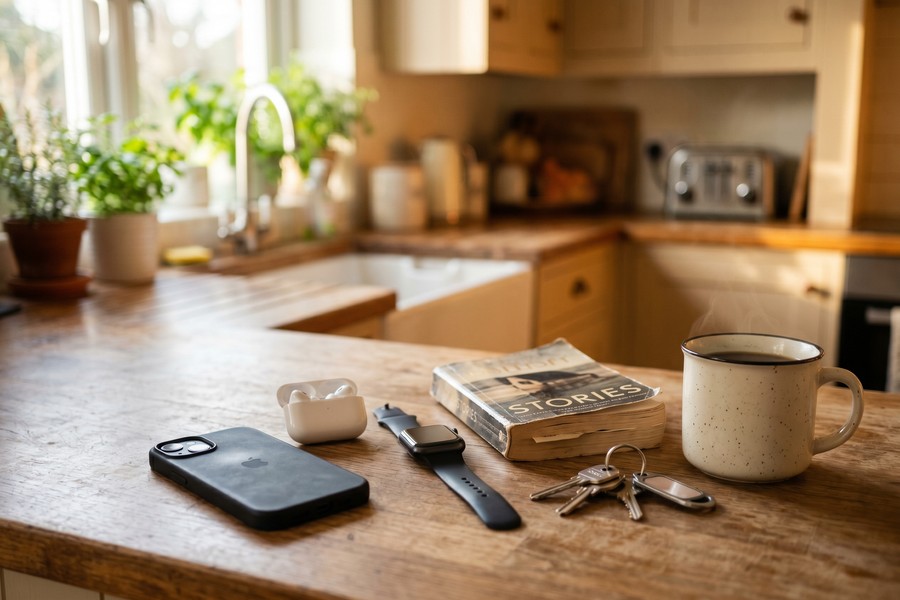
Items with a replacement cost below your standard sub-limit and no unusual loss risks generally do not need individual scheduling. Everyday electronics like smartphones and laptops are often better covered through a separate electronics floater or your carrier’s personal articles policy, depending on the coverage terms and cost. Additionally, if your home inventory value is modest overall, understanding your standard personal property coverage first will help you identify the actual gaps before you pay for additional endorsements.
How Much Does a Scheduled Personal Property Endorsement Cost?
Cost is often the first question homeowners ask, and the answer is more affordable than most expect. Scheduling personal property is one of the highest-value-per-dollar insurance add-ons available, particularly for jewelry and fine art where standard limits are most inadequate.
Typical Premium Rates by Category
| Item Type | Approximate Annual Premium Rate | Example: $10,000 Item |
|---|---|---|
| Jewelry | 1.0%–2.0% of appraised value | $100–$200/year |
| Fine Art | 0.5%–1.5% of appraised value | $50–$150/year |
| Musical Instruments | 1.0%–2.0% of appraised value | $100–$200/year |
| Firearms | 0.5%–1.5% of appraised value | $50–$150/year |
| Cameras / Electronics | 1.5%–3.0% of appraised value | $150–$300/year |
| Collectibles / Coins | 0.5%–1.5% of appraised value | $50–$150/year |
Rates vary by insurer, location, and the specific item’s theft risk profile. Jewelry in high-crime urban areas may carry a higher rate than the same piece in a rural location. Some insurers offer volume discounts when you schedule multiple items simultaneously.
Appraisal Costs to Factor In
Most insurers require a certified professional appraisal before scheduling an item. Jewelry appraisals typically cost $50–$150 per piece from a GIA-certified gemologist. Fine art appraisals from a certified appraiser (credentialed through the American Society of Appraisers) run $150–$500 per piece. These are one-time or periodic costs, not annual expenses — most insurers require updated appraisals every three to five years to keep coverage current.
Scheduling a $6,000 engagement ring typically costs $60–$120 per year — roughly the price of one dinner out. Without scheduling, your standard policy would pay just $1,500 for the same ring if it were stolen, leaving a $4,500 gap in recovery.
Comparing Endorsement Cost to the Risk
When you divide the annual premium by the coverage gap being filled, the math almost always favors scheduling. A $150/year endorsement on a $10,000 watch fills an $8,500 coverage gap (assuming a $1,500 sub-limit). You would need to go 57 claim-free years before paying more in premiums than the gap coverage is worth — an almost impossible scenario given how frequently jewelry and luxury items are lost, stolen, or damaged.
For guidance on evaluating overall insurance costs and value, our article on what determines insurance costs provides a useful framework for assessing any coverage decision.
How to Get a Scheduled Personal Property Endorsement
Adding a scheduled endorsement is a straightforward process, but several steps require careful attention to avoid coverage gaps or claim denials down the road. Doing it correctly the first time saves significant headaches later.
Step-by-Step Overview
- Identify items that exceed your standard sub-limits. Review your current policy’s declarations page and personal property sub-limits carefully.
- Get professional appraisals. Contact a certified appraiser specific to your item type — gemologist for jewelry, ASA-certified appraiser for art and antiques.
- Contact your current insurer first. Many carriers allow you to add a scheduled endorsement directly to your existing homeowners policy, which is often the most cost-effective option.
- Compare standalone floater quotes. If your insurer’s rates are high or their coverage terms are limited, compare quotes from specialty carriers like Jewelers Mutual, Chubb, or PURE Insurance.
- Review the endorsement terms carefully. Confirm whether coverage is agreed value or ACV, whether a deductible applies, and what perils are covered and excluded.
- Update appraisals regularly. Schedule a reminder every three years to refresh appraisals and update your coverage limits accordingly.
Some insurers will accept a purchase receipt in lieu of an appraisal for recently bought items. However, if you bought a piece years ago and it has appreciated significantly, a current appraisal is essential. Filing a claim with outdated documentation often results in the insurer paying based on the lower documented value — not the item’s current worth.
Choosing the Right Insurer
Not all carriers offer equally strong scheduled endorsements. Chubb, AIG Private Client, and PURE Insurance are widely recognized as leaders in high-value personal property coverage. Standard carriers like State Farm, Allstate, and USAA also offer personal articles floaters with competitive terms. Independent insurance brokers can compare multiple carriers simultaneously, which is particularly helpful when scheduling collections worth $50,000 or more. Our post on choosing an insurance broker explains how a broker can save you both time and money in the process.

Endorsement vs. Floater vs. Standalone Policy: Key Differences
The terms “endorsement,” “floater,” and “personal articles policy” are often used interchangeably in the insurance industry, but there are meaningful distinctions worth understanding. Choosing the wrong vehicle can mean paying for coverage you don’t need — or missing coverage you do.
Definitions and Distinctions
A scheduled endorsement is an amendment added directly to your existing homeowners or renters policy. It modifies your base policy by appending a schedule of covered items. A floater (or personal articles floater) is technically a separate policy document but is often issued alongside your homeowners policy by the same carrier. A standalone policy is a completely independent policy from a specialty insurer, completely separate from your homeowners coverage.
| Coverage Type | Attached To Existing Policy? | Typical Cost | Best For |
|---|---|---|---|
| Scheduled Endorsement | Yes | Low (added to existing premium) | Individual high-value items |
| Personal Articles Floater | Sometimes | Low to moderate | Multiple items across categories |
| Standalone Policy | No | Moderate to high | Large collections, fine art, estates |
For most homeowners scheduling one to five items, a scheduled endorsement added to their existing policy is the simplest and most cost-effective approach. Collectors with $100,000+ in valuables should consider a standalone specialty policy for broader, more tailored protection.
“For clients with significant jewelry collections, we almost always recommend a standalone floater rather than an endorsement. The coverage terms are broader, the claim process is typically faster, and the insurers who specialize in this space understand valuables in a way that general carriers simply don’t.”
Common Mistakes That Leave You Underinsured
Even policyholders who have added a scheduled endorsement can end up underinsured if they are not careful. The most common errors are surprisingly easy to make and just as easy to avoid with a little attention.
Failing to Update Appraisals
Gold prices have increased over 80% in the past decade. Diamond values have fluctuated significantly. A jewelry piece appraised at $4,000 in 2015 may now be worth $7,000 or more. If your scheduled coverage is still listed at the 2015 value, you will be paid $4,000 at claim time — not what the ring is actually worth today. Most experts recommend refreshing appraisals every three to five years, or whenever you have reason to believe significant appreciation has occurred.
Assuming All Risks Are Covered
Even open-perils endorsements have exclusions. Wear and tear is universally excluded — meaning gradual chipping, scratching, or prong damage to jewelry is not a covered loss. Earthquake and flood damage may also be excluded depending on your policy and location. War, government seizure, and nuclear hazard are standard exclusions across all personal property policies. Read every exclusion before assuming you are protected.
If you use a high-value item for business purposes — such as a professional photographer’s camera or a musician’s instrument used for paid gigs — your personal endorsement may not cover losses that occur in a commercial context. Business use typically requires a separate commercial inland marine policy.
Not Listing Every Item Separately
A common misconception is that scheduling “my jewelry collection” covers all jewelry items under one umbrella limit. In reality, each piece must be individually listed with its own description and scheduled value. If a ring is not on the schedule by name and value, it falls back to the standard sub-limit. When adding a scheduled endorsement, work with your agent to itemize each piece explicitly — not just as a group.
Many insurers allow you to add a “blanket” jewelry endorsement that covers your entire collection up to a set limit — say, $20,000 total — without itemizing each piece. This can be more flexible than scheduling every item individually, but it typically comes with a per-item sub-limit of $3,000–$5,000. For pieces worth more than that sub-limit, individual scheduling is still the better choice.
When You Probably Do Not Need a Scheduled Endorsement
While the case for scheduling is strong for high-value items, there are situations where it is not the best use of your insurance dollars. Understanding both sides of the equation helps you make a genuinely informed decision.
When Standard Coverage Is Sufficient
If your jewelry, watches, and collectibles total less than your standard sub-limits, scheduling adds cost without adding protection. A $1,000 costume jewelry collection, for instance, is fully covered under a standard policy’s $1,500 sub-limit — no endorsement needed. Similarly, if all of your personal property falls well below the standard replacement cost threshold and you primarily face named-peril risks like fire or theft, the breadth of open-perils coverage may not justify the added premium.
When Other Solutions Make More Sense
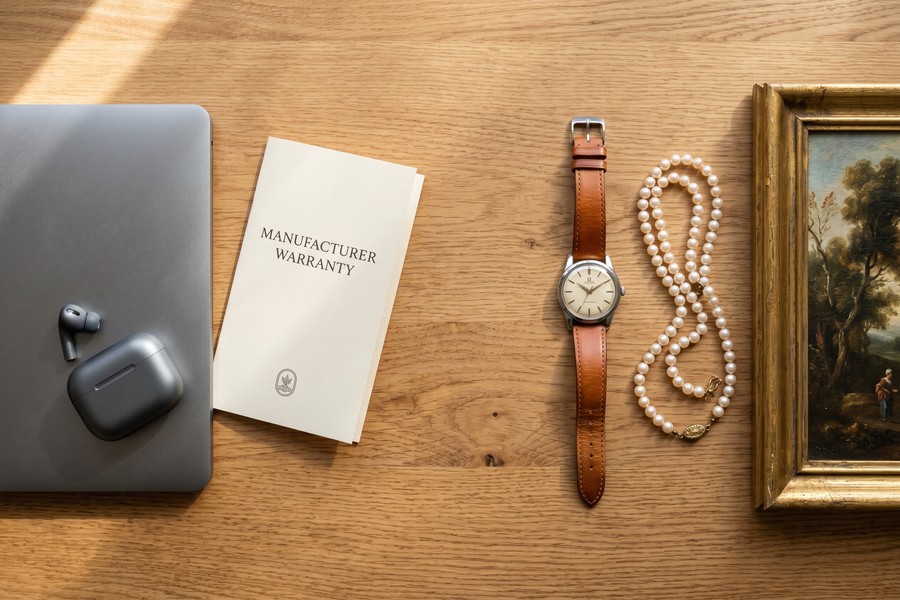
Some high-value electronics are better covered by a manufacturer’s extended warranty or a dedicated electronics protection plan. Business property used professionally should be covered under a commercial policy — not a personal endorsement. And if you are a renter with minimal personal property, the gap between your standard renter’s policy limits and your actual exposure may not warrant the added cost of scheduling. Understanding the full landscape of important homeowners insurance policy types can help you identify which solution fits your situation best.
“The decision to schedule an item should be driven by a simple calculation: what does it cost me to replace this item out of pocket, versus what will my standard policy actually pay? If that gap is more than the annual endorsement premium by a significant margin, scheduling is the right call.”
The Insurance Information Institute estimates that most homeowners significantly underestimate the total replacement value of their personal property — often by 40% or more. A comprehensive home inventory is the single most important step toward identifying what actually needs to be scheduled.
Real-World Example: The Martins’ $12,000 Lesson in Jewelry Coverage
In March 2022, Sarah and Tom Martin of Nashville, Tennessee discovered that Sarah’s engagement ring — a custom platinum and diamond piece appraised at $11,500 — was missing after a weekend trip to Chicago. The ring had slipped off at a hotel and was never recovered. When they filed a claim with their homeowners insurer, they were shocked to learn their policy’s jewelry sub-limit was $1,500, and their $2,000 deductible applied on top of that. Their net recovery: zero dollars.
The Martins had purchased the ring four years earlier and never thought to add a scheduled endorsement. Their homeowners premium was $1,800 per year, and their agent had never proactively mentioned the jewelry gap. After speaking with an independent broker post-claim, they learned that scheduling the ring would have cost approximately $115 per year — or $460 over the four years they owned it. Instead, they absorbed an $11,500 out-of-pocket loss to replace the ring.
After the loss, the Martins added a personal articles floater through Jewelers Mutual for the replacement ring (appraised at $12,200) at a cost of $134 per year. The new policy covers theft, mysterious disappearance, accidental loss, and damage — with no deductible. Their premium increase from year one to year five with the floater totals less than $700, a fraction of the loss they already suffered.
The Martin case illustrates a pattern the insurance industry sees repeatedly: high-value items sitting unscheduled for years, with losses occurring at the worst possible time. A four-minute phone call to an agent to add a scheduled endorsement would have changed their financial outcome entirely. Their story is not unique — it is representative of the millions of households carrying similar gaps without knowing it.
Your Action Plan
-
Audit your current homeowners or renters policy sub-limits
Pull your declarations page and endorsements. Write down the specific sub-limits for jewelry, silverware, firearms, art, musical instruments, and collectibles. This is your baseline — you need to know exactly where the gaps are before you can fill them.
-
Create a complete home inventory with current values
Walk through your home and document every item that could exceed your sub-limits. Include purchase receipts, photos, serial numbers, and the item’s current approximate value. The Insurance Information Institute’s home inventory guide provides a free template to get started.
-
Get professional appraisals for high-value items
Identify items where your estimated value significantly exceeds the relevant sub-limit. Contact a GIA-certified gemologist for jewelry, an ASA-credentialed appraiser for art and antiques, and a certified instrument appraiser for musical instruments. Budget $50–$500 per item depending on complexity.
-
Contact your current insurer to request a scheduled endorsement quote
Ask specifically about their personal articles floater or scheduled personal property endorsement. Get a written quote that specifies: the coverage limit per item, whether it is agreed value or ACV, the deductible (if any), and which perils are covered and excluded.
-
Compare quotes from specialty insurers
If your current carrier’s terms are restrictive or rates are high, obtain competing quotes from Jewelers Mutual (for jewelry), Chubb, PURE Insurance, or AIG Private Client. An independent broker can run these comparisons for you simultaneously and often find significantly better terms.
-
Add the endorsement and confirm all items are individually listed
Once you select a policy, review the schedule carefully before signing. Every item should appear with its full description, appraised value, and — for jewelry — a gemological description including carat weight, metal type, and stone characteristics. Vague descriptions like “gold ring” are insufficient and can create disputes at claim time.
-
Set a calendar reminder to update appraisals every three years
Values change over time, especially for gold, diamonds, art, and collectibles. Set a recurring calendar reminder to reassess your scheduled items and update appraisals accordingly. Notify your insurer of any significant value increases to keep your coverage current.
-
Store documentation securely off-site and in the cloud
Keep digital copies of all appraisals, photos, receipts, and your full home inventory in a cloud storage account (Google Drive, Dropbox, or iCloud). Store physical copies in a fireproof safe or safe deposit box. If your home is destroyed, you will still have the documentation needed to support a claim.
Related reading: need know about medicaid expansion.
Frequently Asked Questions
What is a scheduled personal property endorsement in simple terms?
It is an add-on to your homeowners or renters insurance that lists specific high-value items by name and appraised value, providing individual coverage that goes beyond the limits of your standard policy. Think of it as a custom coverage upgrade for your most valuable possessions.
Does a scheduled endorsement replace my homeowners policy?
No. A scheduled personal property endorsement supplements your existing policy — it does not replace it. Your homeowners policy continues to cover your home structure, liability, and all other personal property under its standard terms. The endorsement simply adds enhanced coverage for the specific items listed on the schedule.
How much does it cost to add a scheduled endorsement?
Costs vary by item type, appraised value, location, and insurer. As a general benchmark, jewelry typically costs 1–2% of its appraised value annually. A $6,000 ring would cost approximately $60–$120 per year to schedule. Most people find this surprisingly affordable relative to the coverage gap it fills.
Do I need an appraisal to schedule an item?
In most cases, yes. Insurers require a current professional appraisal before assigning a scheduled value. Some carriers accept a recent purchase receipt for newly acquired items. Appraisals are typically required to be updated every three to five years to maintain accurate coverage limits.
What happens if I do not update my appraisal and the item appreciates?
Your payout at claim time will be based on the scheduled value — not the item’s current market value. If gold prices have risen 40% since your last appraisal, your ring is now worth significantly more than your policy covers. Regular appraisal updates are essential to avoid being underinsured at claim time.
Is there a deductible on a scheduled personal property claim?
Many scheduled endorsements and personal articles floaters carry no deductible, which is one of their major advantages over standard homeowners claims. However, some policies do include a small deductible ($0–$500). Always confirm this with your insurer before purchasing the endorsement — it directly affects the value of the coverage.
Can I schedule items on a renters insurance policy?
Yes. Renters insurance policies can also be supplemented with scheduled endorsements or personal articles floaters. Since renters policies typically carry even lower personal property sub-limits than homeowners policies, scheduling high-value items is equally important — and often even more urgent — for renters.
Does a scheduled endorsement cover items when I travel abroad?
In most cases, yes. One of the key advantages of a scheduled endorsement is worldwide coverage. Your listed items are protected whether you are at home, in a hotel in Paris, or on a cruise ship. This is a significant improvement over standard homeowners coverage, which has limitations on property coverage outside the primary residence.
What is the difference between a floater and an endorsement?
The terms are often used interchangeably, but technically a floater is a separate policy document while an endorsement is an amendment attached to your existing policy. Practically speaking, both achieve the same goal — individually covering high-value items beyond standard sub-limits — and the functional differences are minimal for most policyholders.
Can I schedule items I inherited with no purchase receipt?
Yes. Inherited items without purchase receipts can still be scheduled based on a current professional appraisal. The appraisal establishes the agreed value for insurance purposes, regardless of what was originally paid (or not paid) for the item. This is common for estate jewelry, antiques, and heirlooms.
Sources
- Insurance Information Institute — Facts + Statistics: Homeowners and Renters Insurance
- Insurance Information Institute — Floaters and Other Options for High-Value Items
- Insurance Information Institute — How to Create a Home Inventory
- Gemological Institute of America (GIA) — Official Website
- American Society of Appraisers — Personal Property Appraisers Directory
- The Knot — Average Engagement Ring Cost (2023 Study)
- Jewelers Mutual — Understanding Jewelry Insurance Coverage
- FBI Uniform Crime Reporting — Property Crime Statistics
- National Association of Insurance Commissioners — Homeowners Insurance White Paper
- United Policyholders — Consumer Insurance Advocacy and Resources
- Consumer Reports — Home Insurance: Gaps in Coverage You Might Not Know About
- Chubb Insurance — Insuring Your Valuables
- PURE Insurance — Personal Articles Insurance Overview