Fact-checked by the Smart Insurance 101 editorial team
Quick Answer
Understanding flood insurance vs homeowners insurance is essential for every new buyer as of July 2025. Standard homeowners insurance covers fire, theft, and wind damage but never covers flooding. Flood insurance is a separate policy — most purchased through the National Flood Insurance Program (NFIP) — with average annual premiums of $888. To be fully protected, most homeowners need both policies.
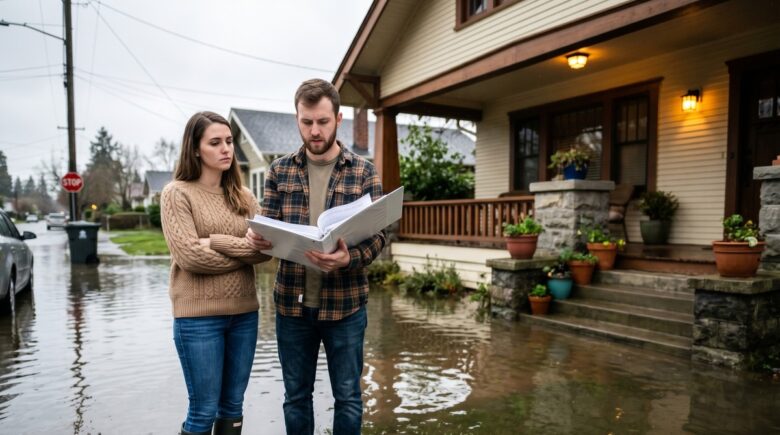
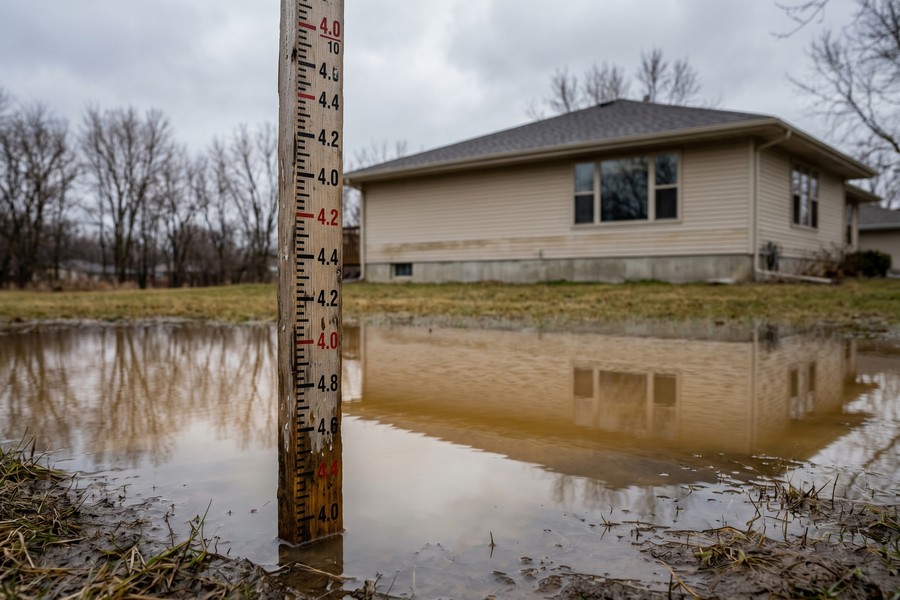
When comparing flood insurance vs homeowners insurance, the single most important fact is this: they are two completely separate policies that cover two completely different types of water damage. As of July 2025, standard homeowners insurance excludes flood damage entirely — meaning a storm surge, overflowing river, or even heavy neighborhood runoff that enters your home is 100% your financial responsibility without a separate flood policy. According to FEMA’s National Flood Insurance Program data, just one inch of floodwater can cause more than $25,000 in damage.
This distinction matters more than ever right now. Insurance premiums are rising sharply nationwide, and climate-related flood events are increasing in frequency and severity. The NOAA National Centers for Environmental Information reported that flooding was involved in 6 of the 10 costliest U.S. weather disasters in 2023, and many of those losses struck homeowners who assumed their standard policy had them covered.
This guide is written specifically for first-time homebuyers and new homeowners who want a clear, step-by-step breakdown of what each policy covers, what it costs, when you need both, and how to buy the right combination of coverage. By the end, you will know exactly what to ask your insurance agent and what to avoid.
Key Takeaways
- Standard homeowners insurance does not cover floods — not even water damage from a nearby overflowing river. This exclusion applies to every major carrier, per the Insurance Information Institute.
- The average NFIP flood insurance policy costs $888 per year, but private flood insurance can cost significantly less for low-risk properties, according to FEMA NFIP rate data.
- Homeowners in high-risk FEMA flood zones with a federally backed mortgage are legally required to carry flood insurance, as outlined by FEMA’s mandatory purchase requirement.
- More than 40% of NFIP flood claims come from properties outside high-risk flood zones, according to FEMA — meaning low-risk areas are not safe zones.
- Homeowners insurance typically covers your dwelling up to $300,000–$500,000 for structure replacement, while NFIP flood policies cap building coverage at $250,000 for residential properties per FEMA coverage limits.
- There is a standard 30-day waiting period before NFIP flood insurance takes effect — so buying it the week before a storm is too late, per FEMA policy rules.
In This Guide
- Step 1: What Does Homeowners Insurance Actually Cover?
- Step 2: What Does Flood Insurance Cover That Homeowners Insurance Doesn’t?
- Step 3: Do I Need Both Flood Insurance and Homeowners Insurance?
- Step 4: How Much Does Flood Insurance Cost Compared to Homeowners Insurance?
- Step 5: How Do I Buy Flood Insurance as a First-Time Homeowner?
- Step 6: Should I Choose NFIP or Private Flood Insurance?
- Frequently Asked Questions
Step 1: What Does Homeowners Insurance Actually Cover?
Homeowners insurance covers damage to your home’s structure and personal belongings from a defined list of perils — but flooding is never on that list. A standard HO-3 homeowners policy (the most common type in the U.S.) covers your dwelling on an open-perils basis, meaning it pays for damage from any cause except those explicitly excluded, and flood is one of the biggest exclusions.
What a Standard Homeowners Policy Covers
A typical homeowners policy is divided into several coverage components. Understanding each one helps clarify why flood damage falls through the cracks. For a full overview, see our Homeowners Insurance Guide for Beginners.
- Dwelling coverage (Coverage A): Pays to rebuild or repair your home’s structure after covered damage like fire, wind, hail, or lightning.
- Other structures (Coverage B): Covers detached garages, fences, and sheds — typically at 10% of your dwelling limit.
- Personal property (Coverage C): Replaces furniture, electronics, and clothing damaged by covered perils — usually 50–70% of dwelling coverage.
- Loss of use (Coverage D): Pays for hotel and living costs if your home becomes uninhabitable after a covered loss.
- Liability protection (Coverage E): Covers legal costs if someone is injured on your property.
- Medical payments (Coverage F): Pays minor medical bills for guests injured on your property.
What Homeowners Insurance Does NOT Cover
The exclusions in a homeowners policy are just as important as the inclusions. Flood damage — defined as water that enters from the ground up or from an external body of water — is universally excluded. Other notable exclusions include earthquakes, sewer backup (unless added as an endorsement), and normal wear and tear.
Many homeowners confuse flood damage with water damage. Homeowners insurance often covers sudden water damage from a burst pipe or a roof leak during a storm — but it never covers water that enters your home from rising groundwater, storm surge, or an overflowing river. That distinction determines whether your claim is paid or denied.
It is also worth noting that even “wind-driven rain” coverage varies by policy and insurer. If a hurricane breaks a window and rain enters, some policies pay — but if storm surge backs up through your foundation, that is a flood claim and requires separate coverage. You can also review important homeowners insurance policies you should know for a deeper look at policy types and endorsements.
Step 2: What Does Flood Insurance Cover That Homeowners Insurance Doesn’t?
Flood insurance specifically covers physical damage caused by flooding — a term with a precise legal definition under FEMA’s National Flood Insurance Program. A flood is defined as an inundation of two or more acres of normally dry land or two or more properties, from an overflow of inland waters, unusual accumulation of surface water, mudflow, or the collapse of land along a shoreline.
Two Coverage Components Under NFIP
NFIP flood policies split coverage into two separate components, and you can purchase them together or separately. This is a critical distinction most first-time buyers miss.
- Building property coverage: Covers the physical structure of your home up to $250,000. This includes electrical and plumbing systems, HVAC equipment, appliances, flooring, and built-in cabinets.
- Personal contents coverage: Covers personal belongings up to $100,000. This includes clothing, furniture, and electronics stored above ground level. Basement contents receive very limited coverage.
What Flood Insurance Does NOT Cover
Even with a flood policy in place, some items are excluded. Knowing these gaps helps you decide whether additional coverage is needed.
- Temporary housing and living expenses while displaced (unlike homeowners insurance, flood insurance has no loss-of-use coverage)
- Financial losses from business interruption
- Vehicles — those are covered by comprehensive auto insurance
- Property outside your insured building, such as landscaping, decks, and pools
- Most basement contents and improvements, including finished flooring and drywall below grade
FEMA updated its NFIP pricing methodology in 2021 with a program called Risk Rating 2.0. Under this new system, premiums are calculated based on your individual property’s flood risk — including distance to water, elevation, and home value — rather than just your flood zone map. Some homeowners saw premiums drop, while others saw significant increases.

Step 3: Do I Need Both Flood Insurance and Homeowners Insurance?
Most homeowners need both policies to be fully protected — homeowners insurance alone leaves a major gap that a single flood event can turn into a financial catastrophe. Whether you are legally required to carry both depends on your flood zone designation and your mortgage type.
When Flood Insurance Is Legally Required
If your home is located in a Special Flood Hazard Area (SFHA) — labeled Zone A or Zone V on FEMA’s flood maps — and you have a mortgage backed by a federal agency (FHA, VA, USDA) or a federally regulated lender, you are legally required to carry flood insurance. This mandate is enforced by the Flood Disaster Protection Act of 1973 and its 1994 amendments.
When Flood Insurance Is Strongly Recommended Even If Not Required
Even if you are not in a high-risk zone, the risk is real. More than 40% of all NFIP flood claims come from properties in moderate- or low-risk flood zones. If you live near a drainage channel, in a low-lying neighborhood, or in a region experiencing more intense rainfall events, voluntary flood coverage is a smart investment.
According to FEMA, the average flood insurance claim payout is $52,000. Without a flood policy, that entire amount comes out of your pocket — homeowners insurance will not cover it.
Here is a practical framework for deciding what you need based on your situation. This comparison also highlights the core differences in the flood insurance vs homeowners insurance debate in a side-by-side format:
| Coverage Feature | Homeowners Insurance (HO-3) | NFIP Flood Insurance |
|---|---|---|
| Flood damage from rising water | Not covered — excluded | Covered up to $250,000 (building) |
| Fire damage | Covered — open perils | Not covered |
| Wind and hail damage | Covered in most states | Not covered |
| Personal property (contents) | Covered up to 50–70% of dwelling limit | Covered up to $100,000 separately |
| Temporary living expenses | Covered — typically 20–30% of dwelling | Not covered |
| Liability protection | Covered — typically $100,000–$500,000 | Not covered |
| Sewer/drain backup | Only with added endorsement (~$50–$250/year) | Not covered unless flood-caused |
| Average annual premium | $1,428/year (national average) | $888/year (NFIP average) |
| Waiting period | Typically same-day or next-day | 30 days (NFIP standard) |
| Who sells it | Private insurers (State Farm, Allstate, USAA, etc.) | NFIP via Write Your Own carriers; also private flood insurers |
“Too many homeowners find out after a flood that their standard policy offers zero protection. The gap between what homeowners insurance covers and what flood insurance covers can mean the difference between rebuilding your home and walking away from it.”
Step 4: How Much Does Flood Insurance Cost Compared to Homeowners Insurance?
The cost of flood insurance vs homeowners insurance depends heavily on your property’s location, construction, and risk profile — but national averages give a useful starting point for budgeting. Together, these two policies typically cost between $1,500 and $3,500 per year for most U.S. homeowners.
Average Cost of Homeowners Insurance
The national average homeowners insurance premium is $1,428 per year (approximately $119/month) for a home insured at $300,000, according to the Insurance Information Institute’s 2024 industry data. However, premiums vary dramatically by state — Florida homeowners pay over $3,600/year on average, while Oregon homeowners average closer to $700/year. For more on managing these costs, see our guide on how to save money on your homeowners insurance.
Average Cost of Flood Insurance
The average NFIP flood insurance policy costs $888 per year nationally. Under Risk Rating 2.0, your actual premium is based on five key factors: your property’s flood risk, proximity to water, type of flooding, cost to rebuild, and your home’s elevation. Higher-risk properties in coastal zones or floodplains can pay $2,000–$10,000+ per year under the updated methodology.
Factors That Affect Your Flood Insurance Premium
- Flood zone designation: Zone AE and VE properties carry the highest premiums; Zone X (low risk) policies can cost as little as $400–$600/year.
- Elevation Certificate: Homes elevated above the Base Flood Elevation (BFE) pay significantly less — sometimes 50–70% less than homes at or below grade.
- Coverage amount selected: Choosing $250,000 in building coverage plus $100,000 in contents coverage maximizes your protection but increases your premium.
- Deductible chosen: Higher deductibles reduce premiums. NFIP offers deductibles ranging from $1,000 to $10,000.
If your home was built after your community joined the NFIP’s flood map program, request your Elevation Certificate from your local floodplain manager or the builder. This document proves your home’s elevation relative to flood risk and can substantially lower your flood insurance premium — in some cases by hundreds of dollars per year.
Step 5: How Do I Buy Flood Insurance as a First-Time Homeowner?
Buying flood insurance is a straightforward process, but it requires you to act early — the standard NFIP policy has a 30-day waiting period before it takes effect, which means you cannot buy it the week before a storm. Here is a step-by-step process to get covered correctly.
How to Purchase an NFIP Flood Policy
- Check your flood zone: Go to FEMA’s Flood Map Service Center and enter your address. This tells you whether you are in a high-risk (Zone A, V), moderate-risk (Zone B, X shaded), or low-risk (Zone X) area.
- Contact a licensed insurance agent: NFIP policies are sold through private insurance carriers (called “Write Your Own” companies) — not directly through FEMA. Your current homeowners insurer likely offers NFIP flood policies, so start there.
- Gather your property information: You will need your home’s year of construction, square footage, number of floors, foundation type (slab, crawlspace, basement), and elevation (if you have an Elevation Certificate).
- Select your coverage amounts: Choose separate limits for building coverage (up to $250,000) and contents coverage (up to $100,000). Buying both in the same policy is typical.
- Pay your first premium: NFIP flood insurance premiums are paid in full annually — monthly payment plans are not standard through the NFIP, though some private insurers offer them.
- Confirm the waiting period: Your coverage begins 30 days after your payment date. Plan accordingly, especially if you are closing on a home near a flood season.
What to Watch Out For
The 30-day waiting period has exceptions. If you are purchasing flood insurance as part of a home loan closing, coverage can begin immediately. If a community is newly added to the NFIP, a 1-day waiting period may apply. Confirm the exact start date with your agent in writing before assuming you are covered.
Do not assume your mortgage lender’s flood insurance requirement means you are fully covered. Lenders only require enough coverage to protect their loan balance — often far less than your home’s full replacement cost. You may need to purchase additional coverage above what your lender mandates to truly protect your investment.
Step 6: Should I Choose NFIP or Private Flood Insurance?
The choice between the NFIP and private flood insurance is one of the most important decisions in the flood insurance vs homeowners insurance planning process. Private flood insurers have entered the market aggressively since 2016, and for many homeowners, they offer better coverage at lower prices.
Key Differences Between NFIP and Private Flood Insurance
The NFIP is the dominant player — it covers approximately 95% of all flood insurance policies in the U.S. — but private insurers offer meaningful advantages, particularly for lower-risk properties and higher-value homes.
- Coverage limits: The NFIP caps building coverage at $250,000. Private insurers often offer limits of $500,000, $1 million, or higher — essential for luxury homes or high-cost markets.
- Contents coverage: NFIP caps contents at $100,000. Private policies may offer unlimited contents replacement.
- Waiting period: Many private flood insurers offer 10–14 day waiting periods versus the NFIP’s standard 30 days.
- Loss of use: Some private flood policies include temporary living expense coverage — the NFIP does not.
- Premium pricing: For low- to moderate-risk properties, private insurers can sometimes undercut NFIP premiums by 20–40%. For high-risk properties, the NFIP may still be cheaper due to federal subsidization.
- Claims stability: The NFIP is federally backed, meaning it will pay claims even in catastrophic events. Private insurers can exit markets or become insolvent after major disasters.
Which Option Is Right for You
Start by getting a quote from both your current homeowners insurer (for the NFIP option) and at least two private flood carriers — companies like Neptune Flood, Palomar Specialty Insurance, or Wright Flood are active in the private flood market. Compare coverage limits, deductibles, waiting periods, and premiums side by side. For high-value homes, a private policy layered over an NFIP base policy is also an option. You can also consult our guide to ways to get the best home insurance coverage and save money for broader cost-comparison strategies.
“The private flood insurance market has matured significantly. For homes in moderate-risk zones, a private policy often delivers broader coverage at a lower cost than the NFIP — but homeowners need to verify the financial strength of any private insurer before purchasing.”

Frequently Asked Questions
Does homeowners insurance cover flooding from heavy rain?
No — homeowners insurance does not cover flooding from heavy rain if the water enters your home from the ground or from surface runoff. Standard homeowners policies specifically exclude flood damage, regardless of what caused the flood. If rain comes through a damaged roof or broken window, that may be covered — but groundwater accumulation or street flooding is always excluded and requires a separate flood insurance policy.
What happens if I don’t have flood insurance and my home floods?
Without flood insurance, you are personally responsible for 100% of the repair costs — which average $52,000 per NFIP claim and can easily exceed $100,000 for severe damage. Federal disaster assistance through FEMA is only available if the president declares a major disaster in your area, and even then, grants are typically limited to $5,000–$8,000 — a fraction of most flood repair bills. Homeowners may also be eligible for low-interest SBA disaster loans, but those must be repaid.
Can I get flood insurance if I’m not in a flood zone?
Yes — any homeowner can purchase flood insurance regardless of their flood zone designation. In fact, the NFIP actively encourages low- and moderate-risk property owners to buy coverage because over 40% of NFIP claims come from outside high-risk zones. Premiums for low-risk Zone X properties are often quite affordable, sometimes as low as $400–$600 per year.
How long does it take for flood insurance to kick in after I buy it?
The standard NFIP flood insurance waiting period is 30 days from the date you pay your first premium. There are limited exceptions: if you buy flood insurance at the time of a mortgage closing, it takes effect immediately. Some private flood insurers offer shorter waiting periods of 10–14 days. Never wait until a storm is in the forecast — by then, it is too late to get coverage.
Is flood insurance worth it if I’m in a low-risk flood zone?
For most homeowners in low-risk zones, flood insurance is worth the cost. At roughly $400–$700 per year for a low-risk property, the premium is modest relative to the potential loss. Flood risk is also changing — climate shifts are expanding flood-prone areas, and many properties are being reclassified into higher-risk zones. Buying flood insurance before a reclassification locks in lower premiums through a provision called grandfathering.
Does flood insurance cover my basement and its contents?
NFIP flood insurance provides very limited coverage for basements. The policy covers essential mechanical systems in the basement — electrical panels, HVAC units, water heaters, fuel tanks, and foundation walls. However, it does not cover finished flooring, drywall, personal belongings, or furniture stored in the basement. If you have a finished basement with valuables, consider a private flood policy that may offer broader basement coverage.
What is the difference between flood insurance and sewer backup coverage?
Flood insurance covers water damage caused by an external flood event — rising rivers, storm surge, or surface water accumulation. Sewer backup coverage is a separate endorsement available on some homeowners policies that covers damage when water or sewage backs up through your home’s drains or sewer lines. Sewer backup is typically caused by overwhelmed municipal systems, not a flood, so it falls into a coverage gap between both policies. You can add a sewer backup endorsement to most homeowners policies for roughly $50–$250 per year.
Will my flood insurance cover me if a hurricane hits my area?
It depends on the type of damage. A hurricane causes multiple types of damage — wind, storm surge, and rain — and each is covered by a different policy. Wind and rain damage to your roof or walls is typically covered by homeowners insurance. Storm surge flooding — seawater pushed inland by the hurricane — is flood damage and requires flood insurance. Having both policies is essential in hurricane-prone states like Florida, Louisiana, and Texas.
How do I find out my home’s FEMA flood zone?
You can check your home’s FEMA flood zone designation for free using the FEMA Flood Map Service Center. Enter your property address to view the official Flood Insurance Rate Map (FIRM) for your area. Your flood zone label — such as Zone X, AE, or VE — determines whether you are legally required to carry flood insurance and significantly affects your premium. Your local county or city floodplain manager can also provide clarification on your specific map designation.
Can I use the same insurance agent for both flood and homeowners insurance?
Yes, and it is often the most efficient approach. Most licensed property and casualty insurance agents can sell you both a homeowners policy through a private insurer and an NFIP flood policy through the same agency. Some agents also represent private flood insurers, allowing you to compare all options in one conversation. Working with a single agent simplifies billing, renewals, and claims coordination. For help finding the right coverage, consider choosing an insurance broker who can compare options across multiple carriers.
Sources
- FEMA — National Flood Insurance Program Overview
- FEMA — Mandatory Purchase of Flood Insurance Guidelines
- FEMA — NFIP Risk Rating 2.0 Pricing Methodology
- FEMA — NFIP Flood Insurance Waiting Period
- FEMA — Flood Map Service Center
- Insurance Information Institute — Background on Flood Insurance
- Insurance Information Institute — Homeowners and Renters Insurance Statistics
- NOAA National Centers for Environmental Information — Billion-Dollar Weather and Climate Disasters
- FEMA — NFIP Policy Coverage and Limits
- Consumer Financial Protection Bureau — What Is Flood Insurance?


