
Updated July 2026
Key Takeaways
- Texas insurers are required to pay valid death benefit claims within 60 days under state law, and grace periods for missed premiums run at least 30 days, per the Texas Department of Insurance.
- Shelter costs, the biggest line item in most family budgets, rose 3.3% year-over-year (BLS series CUUR0000SAH1), which is one reason parents keep underestimating how much income replacement they actually need.
- Healthy adults age 18-30 overestimate the cost of a $250,000 20-year term policy by 10-12 times the real price, according to LIMRA and Life Happens research.
- Reader implication: if you have kids under 10 and a mortgage, a 20-year term policy is the one financial product built to expire right around the time your kids stop needing you to pay for anything.
Texas parents raising young kids keep making the same mistake: they assume life insurance is expensive, complicated, or something to handle “later.” It isn’t, and the data on 20-year term life texas policies backs that up. A healthy 32-year-old can lock in $500,000 of coverage for roughly $31 a month, a number pulled from real 2026 market pricing, not a marketing estimate. Yet 42% of American adults say they have no coverage or not enough, representing about 102 million people who are betting their family’s finances on nothing going wrong.
This matters more for parents of young kids than almost any other group, because the financial exposure is concentrated and time-bound. A 20-year term policy is built to cover exactly the years when your children are financially dependent on you, and no longer than that.
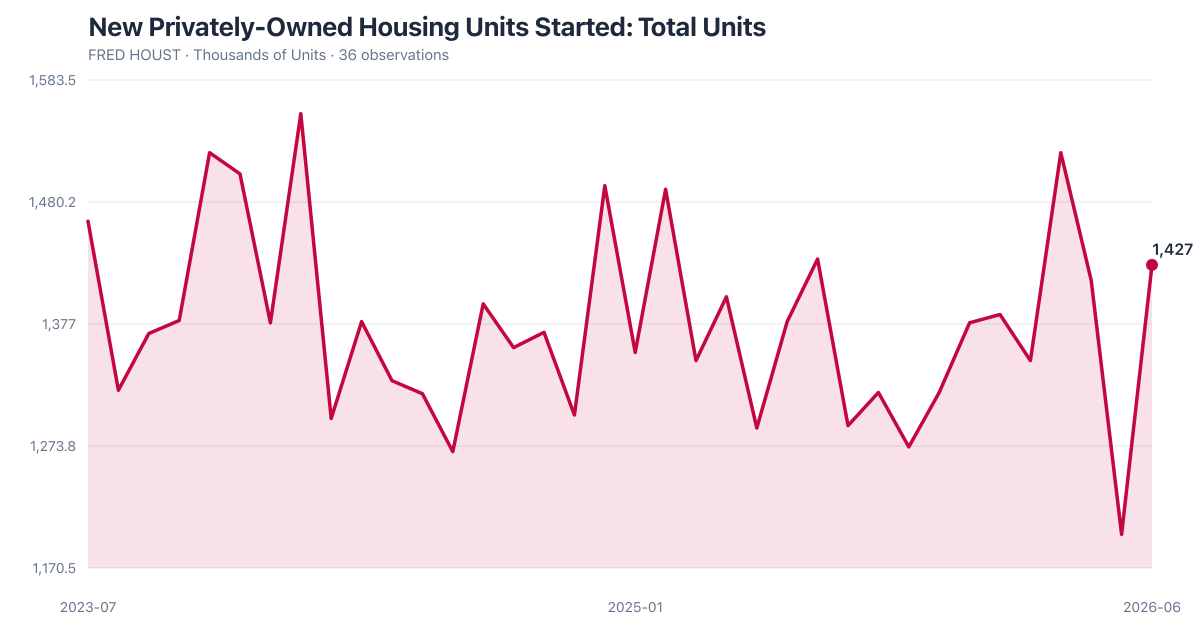
Chart data: BLS series CUUR0000SAH1 (Shelter, U.S. city average, not seasonally adjusted), monthly observations through June 2026.
Series & as-of dates
Primary series: BLS CUUR0000SAH1 (Shelter in U.S. city average, all urban consumers, not seasonally adjusted), monthly frequency, latest observation June 2026. This publication also references Texas Department of Insurance complaint index filings for 2024-2025 and FRED series HOUST and UNRATE for supplementary context. All figures are drawn from public BLS, FRED, and Texas DOI observations maintained by this publication.
What Changed
The bottom line: shelter costs, the single biggest recurring expense for a family with young kids, rose to 429.062 on the BLS index in June 2026, up from 428.677 in May, a monthly gain of 0.1% and a yearly gain of 3.3% (BLS series CUUR0000SAH1). That’s not a dramatic spike. It’s a steady grind upward that has continued for years, and it’s exactly the kind of slow-moving cost that a term life death benefit is supposed to absorb if a primary earner dies unexpectedly.
Housing starts also jumped 19% between May and June 2026 (HOUST, FRED), while unemployment ticked down slightly to 4.2%. None of that changes the case for coverage directly, but it confirms the backdrop: mortgages are still getting signed, families are still buying homes, and the monthly obligations parents are leaving behind if something happens to them are not shrinking.
| Period | Value (Shelter Index) | Change |
|---|---|---|
| June 2026 | 429.062 | +0.1% MoM, +3.3% YoY |
| May 2026 | 428.677 | prior month |
| Housing starts, June 2026 | 1.4K thousand units | +19% vs May |
| Unemployment rate, June 2026 | 4.20% | -2.3% vs May |
Key Takeaway: Shelter costs rose to 429.062 in June 2026, up 3.3% year-over-year (BLS CUUR0000SAH1), meaning the housing obligation a term policy needs to cover keeps climbing, not shrinking.
Why Texas Parents With Young Kids Need Protection Now
Losing a primary earner is a math problem before it’s an emotional one. A mortgage doesn’t pause. Daycare doesn’t get cheaper. Property taxes in Texas, which run higher than in most states since there’s no income tax offsetting them, keep coming due whether one parent is working or two. A 20-year term policy exists to solve exactly this kind of problem: it replaces income for a fixed, predictable window.
Young kids create what amounts to a 15-to-22-year dependency window, and that window lines up almost perfectly with a 20-year term. A newborn needs support through college-age independence. A 5-year-old needs it through their mid-20s. The math isn’t complicated, but it’s routinely ignored, partly because of the cost myth: LIMRA and Life Happens found that adults under 30 overestimate term life costs by 10 to 12 times the actual premium. That gap in perception is probably the single biggest reason so many young Texas families go without coverage they can easily afford.
What 20-Year Term Life Insurance Actually Provides
A 20-year term policy locks in a level premium and a fixed death benefit for exactly 20 years. No cash value builds up, no investment component, no complexity. You pay the same amount every month for two decades, and if you die during that window, your beneficiaries get the full payout. If you outlive the term, the policy simply ends, and you walk away with nothing but the coverage you already used.
Most Texas carriers also build in convertibility, meaning you can convert some or all of the term coverage to a permanent policy without a new medical exam, typically up to somewhere between ages 65 and 70 depending on the carrier. That matters if your health changes later and you still want coverage after the term ends. It’s a meaningful safety valve, and it’s worth confirming in writing before you buy, since not every carrier structures it the same way. If you’re weighing this against other structures, the tradeoffs between level and decreasing term life insurance are worth understanding before you commit to either one.
Why 20 Years Matches the Needs of Parents Raising Young Kids
Twenty years covers the stretch from a newborn to a young adult finishing college, or from a 5-year-old through their mid-20s when most kids have found steady work. It also tends to match the back half of a typical 30-year mortgage or the full length of a 15-year mortgage taken out around the time kids arrive, which means the death benefit and the debt obligation expire on roughly the same timeline. That’s not a coincidence; it’s why 20-year term is the default recommendation for this exact life stage.
A Texas family with a new baby and a fresh 30-year mortgage might actually want a slightly longer term, or a laddered approach using two policies of different lengths, something explored in more detail in strategies for stacking multiple term life policies. A family with a 10-year-old and 10 years left on their mortgage is often better served by the standard 20-year term alone, since it covers both the remaining debt and the child’s path to independence without paying for years of coverage they won’t need.
Texas-specific protection: State law requires insurers to pay valid death benefit claims within 60 days and provide at least a 30-day grace period for missed premium payments, according to the Texas Department of Insurance. The state guaranty fund also backs claims up to $300,000 in death benefits per insured life if a carrier becomes insolvent, adding a layer of protection that national buying guides rarely mention.
Real 2026 Costs for Texas Families Buying 20-Year Term
Pricing for 20-year term in Texas remains competitive, partly because the state charges no premium tax on life insurance and hosts dozens of active carriers competing for the same buyers. A healthy 32-year-old non-smoking male can typically secure $500,000 of 20-year term coverage for around $31 a month. Women in the same age and health bracket often pay slightly less, since mortality tables favor longer female life expectancy.
Here’s the arithmetic worth doing before you buy: $31 a month comes out to $372 a year. Compare that to a $1,000,000 policy for the same profile, which often runs closer to $55 to $65 a month, or roughly $660 to $780 a year. Doubling the death benefit doesn’t double the price, because underwriting and policy fees are spread across a larger face value. For a dual-income Texas household with two kids and a $350,000 mortgage, running the numbers on $750,000 versus $1,000,000 in coverage is a five-minute exercise that can meaningfully change what your family walks away with.
Texas Regulations and Advantages That Affect Your Policy
Texas law gives buyers a few concrete protections that national comparison articles tend to gloss over. Beyond the 60-day claim payment rule and 30-day grace period already mentioned, most policies carry a two-year contestability period, meaning the insurer can only challenge a claim for misrepresentation during the first two years of the policy. After that window closes, the claim is very difficult to deny except for nonpayment or fraud proven at the time of purchase.
Healthy applicants under 40 also increasingly qualify for accelerated underwriting, skipping the medical exam entirely in favor of database checks and a health questionnaire. That shortens approval from several weeks to a few days in many cases. If you do need the traditional exam route, it helps to know what the medical exam actually tests for so there are no surprises. And when you’re shopping across carriers, understanding how to compare term life insurance quotes without getting misled will save you from mistaking a teaser rate for a real offer.
Key Takeaway: Texas’s 60-day claim payment rule, two-year contestability window, and lack of a premium tax combine to make 20-year term life texas coverage both faster to collect on and cheaper to buy than in many other states.
How Much Coverage Texas Parents Typically Need
A rough starting formula: take 10 to 12 times your annual income, add your remaining mortgage balance, add projected college costs (Texas in-state tuition and room and board commonly runs $25,000 to $40,000 a year per child), then subtract existing savings and any other coverage you already carry. A dual-income household with two young kids, a $300,000 mortgage, and combined income of $140,000 might land somewhere between $1.2 million and $1.6 million in total need across both parents, split according to who earns more or who would otherwise take on more unpaid childcare responsibility.
Single-earner households need to weight this even more heavily toward income replacement, since there’s no second income to fall back on. Renters without a mortgage can generally reduce the total slightly, but shouldn’t assume they need much less; childcare, private school if applicable, and daily living costs still add up fast. This is also the moment many new parents restructure their entire insurance portfolio rather than treating life insurance as an isolated purchase.
Related Context
Shelter costs and life insurance needs move together in a practical sense, even though they’re separate markets. As the BLS shelter index climbed to 429.062 in June 2026 (BLS CUUR0000SAH1), the housing cost a surviving spouse would need to keep covering rose right alongside it. Meanwhile, the average new individual life insurance policy purchased in 2023 carried a face value of just $206,000, according to ACLI data cited by MarketWatch, a number that looks thin next to the $1.2 million-plus needs calculation many Texas families with young kids should actually be running.
- Shelter index (BLS CUUR0000SAH1): 429.062, up 3.3% year-over-year
- Average new life insurance face amount (ACLI, 2023): $206,000, likely below what most parents with a mortgage and young kids actually need
- Texas complaint data (2025): Texas Life Insurance Company carried a complaint index of 9.60 against 257,271 policies in force, well below the state average of 1.00 baseline scaling, indicating a low complaint rate relative to its book of business
Key Takeaway: Rising shelter costs confirm that the obligations a term policy needs to cover are climbing, while the average $206,000 policy size suggests many families are underinsured relative to real housing and income-replacement needs.
What This Means for You
If you have a child under 10 and at least 10 years left on your mortgage, a 20-year term policy sized at 10 to 12 times your income plus your remaining mortgage balance is a reasonable starting point, and you can adjust from there. If your youngest child is already a teenager, a 15-year term might fit better and cost less, since you don’t need protection through their late 20s.
If you’re self-employed or work in an occupation with higher disability risk (construction, oil field services, and similar Texas-heavy industries come to mind), ask about a waiver-of-premium rider, which keeps your policy active if you become disabled and can’t pay premiums yourself. And if your health has already changed since you last shopped for coverage, don’t assume you’re stuck; accelerated underwriting programs and simplified-issue policies exist specifically for people who don’t qualify for the best rate class anymore.
Key Takeaway: If your youngest child is under 10 and you carry a mortgage, size a 20-year term policy at 10-12 times income plus remaining debt; reassess only if your kids are already teenagers or your mortgage is nearly paid off.
Term vs. Whole Life for Young Texas Families
Term life premiums are commonly about one-tenth the cost of a whole life policy carrying the same death benefit. For a parent whose main goal is covering a finite window of dependency, that cost gap is decisive: paying ten times more for lifelong coverage rarely makes sense when the actual need expires in 20 years. Whole life can still make sense for specific goals, like funding a special-needs dependent for life or handling estate liquidity, but those are edge cases, not the default for a young family.
The honest tradeoff with term is that it builds no cash value and pays nothing if you outlive it. Some parents dislike that “use it or lose it” feel. But paying a fraction of the price to guarantee protection during the years it matters most, and investing the
Frequently Asked Questions
Is 20-year term life insurance the right choice if my child is already in high school?
If your youngest child is a teenager, a 15-year term might be more appropriate. It aligns better with the time until they graduate and become financially independent, especially if your mortgage is also nearing payoff. However, if you’re still covering major expenses like college or a long-term mortgage, 20-year term can still make sense.
Can I get a 20-year term policy in Texas without a medical exam?
Yes, many Texas insurers offer accelerated underwriting for healthy applicants under 40. These programs use data from medical records and health questionnaires instead of a full exam. Approval can happen in days, not weeks. Check with carriers like Guardian, AIG, or New York Life for no-exam options.
What happens if I outlive my 20-year term policy?
Nothing. The policy simply expires. There’s no refund, no cash value, and no ongoing premium. The goal is to cover the window when your kids are dependent, not to build savings. If you still need coverage later, you can convert to a permanent policy or buy a new term policy, though premiums will be higher due to age.
How much does 20-year term life cost for a healthy 35-year-old in Texas?
A healthy 35-year-old non-smoker in Texas can expect to pay around $38 per month for $500,000 in coverage. Women typically pay $5–$10 less per month due to longer average life expectancy. Prices vary by carrier, health status, and exact coverage amount.
Do Texas insurers pay claims faster than other states?
Yes, Texas law mandates that insurers pay valid death benefits within 60 days of receiving a complete claim, which is faster than the national average. The state also requires at least a 30-day grace period for missed payments, and carriers are backed by the Texas Life Insurance Guaranty Association up to $300,000 per policy.
Can I convert my 20-year term policy to whole life later?
Most Texas carriers allow conversion to a permanent policy without a new medical exam, typically up to age 65 or 70. This is especially valuable if you develop a health condition later, as it preserves access to coverage. Confirm the conversion terms in writing before buying, as not all policies offer the same flexibility.
Sources
- Texas Department of Insurance, Consumer Bulletin 018: Life Insurance Claim Processing and Grace Periods
- BLS Series CUUR0000SAH1, Shelter Cost Index (U.S. City Average, Not Seasonally Adjusted)
- LIMRA and Life Happens, 2025 Study on Life Insurance Cost Perception Among Young Adults
- MarketWatch, Life Insurance Statistics: Policy Size and Coverage Trends (2023)
- Smart Insurance 101, Stacking Multiple Term Life Policies: A Strategy for Families
- Smart Insurance 101, How to Compare Term Life Insurance Quotes Without Getting Misled
- Smart Insurance 101, What the Medical Exam Actually Tests For
- Smart Insurance 101, New Parents: How to Restructure Your Insurance Portfolio


