Fact-checked by the Smart Insurance 101 editorial team
The Verdict
Sewer backup coverage is a cheap homeowners insurance add-on that almost always pays for itself the first time your basement takes on water. It’s worth it if your basement contains at least $5,000 in stored belongings, finished surfaces, or appliances. It’s not necessary if you have no basement, no sump pump, and live in a high-rise apartment where a sewer backup physically can’t reach your unit.
Standard homeowners insurance policies exclude damage from water that backs up through sewers, drains, or a failed sump pump, a fact most people learn only after a cleanup bill lands. The Insurance Information Institute confirms that sewer backup coverage homeowners need isn’t baked into a basic policy. It’s a separate endorsement that plugs a gap that can swallow tens of thousands of dollars in a single afternoon.
Aging municipal sewer lines and heavier rain events have made basement backups more common, and more expensive. The decision to add the coverage hinges on one thing: whether you have a space below grade where water can pool.
| Reasons to Add Sewer Backup Coverage | Reasons to Skip It |
|---|---|
| Annual cost averages $50–$250 for $5,000–$25,000 in protection | No basement, crawlspace, or sump pump on the property |
| Sump pump failure, drain clogs, and municipal sewer overflows are all common claims | You rent a second-floor apartment where a backup would flood someone else’s unit, not yours |
| Cleanup and remediation after a sewage backup often runs $10,000–$50,000+ | Your municipality has a program that indemnifies homeowners for sewer surges (rare) |
| The endorsement can be layered onto condo, renters, and landlord policies, not just standard homeowners | You have already self-funded a reserve specifically for basement water damage |
| Flood insurance won’t cover an internal backup, creating a coverage gap | Your home sits on an elevated slab with no drains below grade |
| A finished basement can triple the standard homeowners insurance policy’s blind spot | You have no items stored in the basement and the space is a bare concrete shell |
Key Takeaways
- You almost definitely need sewer backup coverage if your basement contains $5,000+ in furnishings, stored items, or mechanical equipment.
- Even an unfinished basement becomes a liability when it houses a furnace, water heater, or washer/dryer that can be ruined by a few inches of contaminated water.
- Coverage is typically available as an endorsement for $50–$250 per year, with separate deductibles of $500–$1,000.
- Standard limits start at $5,000 and can be raised to $25,000 or more, finished basements should carry at least $15,000.
- The endorsement will not pay for floodwater that enters from outside, or damage from a slow leak you ignored for months.
- Filing a claim can nudge your premium up, so it’s smarter to use the coverage for serious losses, not a few hundred dollars of soggy cardboard.
- Renters and condo owners can buy sewer backup coverage, too, it’s not limited to traditional single-family homeowners.
Sewer Backup Coverage: What It Actually Pays For (and What Gets Denied)
Sewer backup coverage reimburses you for damage to your home’s structure and personal property caused by water that backs up through sewers, drains, or a failed sump pump, but it won’t pay for floodwater that enters from outside or for damage from slow leaks you ignored. The key phrase in most policies is “sudden and accidental.” That wording gives insurers a reason to deny a claim if they find evidence of a pre-existing problem you should have fixed.
The coverage typically handles: water extraction, drying, sanitizing, and replacement of ruined drywall, flooring, and insulation. It also pays to replace personal property, furniture, electronics, stored clothing, tools, that was damaged by the backup. If the water carries raw sewage, the cleanup gets far more expensive and hazardous. The CDC warns that untreated sewage contains bacteria, viruses, and parasites that can cause serious illness, making professional remediation a health necessity, not a luxury.
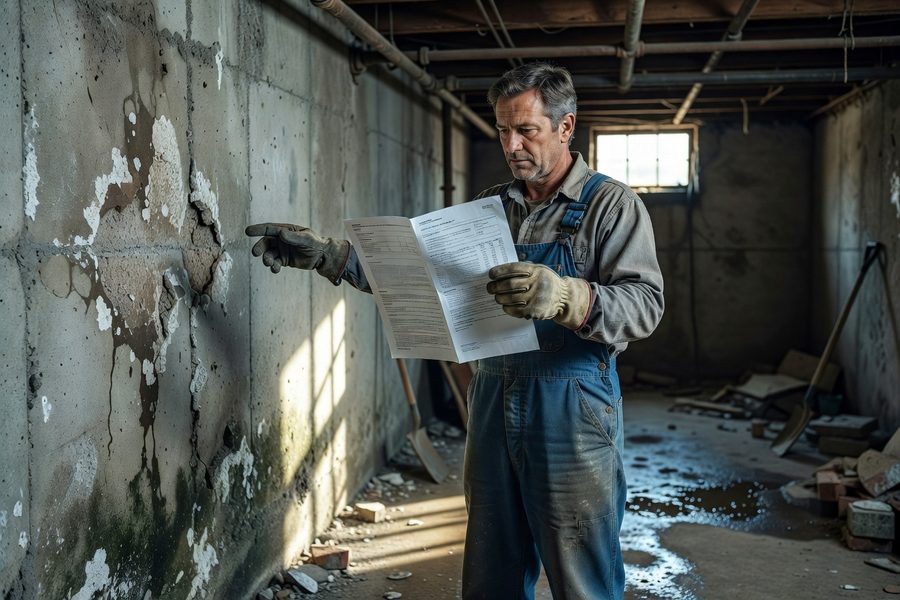
“A lot of people think if their basement is unfinished, they don’t need to worry about this. But if you store items in your basement, water backup can quickly cause damage. If you don’t have coverage, you’ll have to cover the cost of replacing those items yourself.”
Here’s the thing: sewer backup insurance and sump pump failure coverage are usually bundled into the same endorsement, but not always. Some carriers sell them separately, and an older policy may cover only drain backups while leaving sump pump overflow excluded. The Minnesota Department of Commerce notes that the endorsement varies from company to company, and consumers should check exactly how their policy will respond. That means you need to read the definition of “water backup” in the endorsement itself, not just the summary page.
What the endorsement won’t cover: flooding from heavy rain that comes through a window well, foundation crack, or door, that’s a separate flood insurance problem. It also won’t cover gradual seepage, meaning if you’ve had a damp basement for years and suddenly one day it’s a swamp, the insurer will point to maintenance neglect. And if a plumber’s report shows tree roots have been invading your sewer line for years, a backup caused by that root intrusion can be denied as a known issue you failed to address.
Here’s a subtle gap: many policies require the backup to originate from an internal drain or a sump pit. If a city sewer main collapses a block away and forces water into your basement through floor drains, that’s generally covered. But if the same city main rupture sends water over the curb, down your driveway, and into a basement window, that’s flood, not sewer backup. Knowing the distinction can mean the difference between a paid claim and a denial.
How Much Sewer Backup Coverage Costs and What Limits Make Sense
Expect to pay between $50 and $250 per year for $5,000 to $25,000 in coverage, according to NerdWallet’s analysis of water backup endorsements. The exact premium depends on your home’s location, the age of your sewer line, and whether you’re on a municipal sewer or a septic system. Homes with older clay pipes or in neighborhoods prone to combined sewer overflows sit at the higher end.
If you’re on a septic system, the equation shifts. Some insurers won’t offer the endorsement at all for septic homes, or they’ll cap limits lower, say $10,000, because septic failures are often tied to homeowner maintenance. In those cases, you may need to look for a carrier that specializes in rural properties or bundle the backup coverage with a broader homeowners insurance endorsement package that includes service line protection.
The deductible structure is another point most articles skip. Unlike your main homeowners deductible, often $1,000 or 1% of the dwelling coverage, a sewer backup endorsement usually carries its own flat dollar deductible, typically $500 or $1,000. That separate deductible applies only to the backup claim. In practice, you won’t see your main policy’s deductible reduce the payout: if you have a $10,000 limit and a $500 backup deductible, the most you’ll get is $9,500. Some carriers allow you to choose a higher deductible to lower the premium, but given the typical claim size, a lower deductible is often the smarter buy.
How much limit do you need? A bare concrete floor with a furnace and water heater: $10,000 may be enough. A partially finished basement with a home office and a TV: $15,000 is a safer floor. A fully finished basement with drywall, carpet, and a bathroom: $25,000 or more. The water damage restoration for a finished basement can easily exceed $30,000 once you factor in mold remediation and temporary housing, so don’t under-insure a finished space.

The Fine Print That Can Dead Your Claim
Insurers deny a meaningful share of water backup claims because the damage isn’t considered “sudden and accidental.” If an adjuster finds tree roots, corroded pipes, or a sump pump that hadn’t been serviced in years, the loss gets reclassified as a maintenance issue, and maintenance is the homeowner’s job. An underwriting bulletin from Travelers outlines that repeated backups or a history of clogs often result in a coverage exclusion or a claim declination.
Here’s the thing: even a single photo of basement storage boxes sitting in a damp corner can be used to argue the backup was a foreseeable result of neglected water intrusion. So if you’re buying the endorsement, clean up any existing moisture issues first and document the condition of your drains and sump pump after a plumber inspects them. That paper trail will matter if a claim ever goes to a dispute resolution.
Long-term premium impact is another quiet consequence. A sewer backup claim of $10,000 might push your annual premium up by 10–20% for several years, and some carriers may decline to renew the endorsement afterward. That doesn’t mean you should avoid filing a big claim, the whole point of insurance is to transfer a risk you can’t absorb, but it argues against using the coverage for a small, $1,000 cleanup you could handle out of pocket.
If you own a condo or rent a house, the coverage gap is even wider. The association’s master policy almost never includes sewer backup, and a landlord’s dwelling policy won’t cover your personal property. Many renters and condo insurers offer the same backup endorsement as a low-cost add-on, typically $30–$75 per year, and it’s worth it if your unit is on a ground floor or has drains that sit below the street’s sewer grade.
Who Should and Who Should Not
Good candidates
You’re a strong candidate for sewer backup coverage if one or more of these fit:
- You own a home with a basement, finished or unfinished, where possessions, mechanical systems, or drywall sit at or below ground level.
- Your neighborhood has combined storm and sanitary sewers, where heavy rain routinely overwhelms the system.
- You live on a ground-floor condo unit or rent a house where floor drains and a sump pump are present.
- Your basement contains a furnace, water heater, washer/dryer, or freezer whose replacement cost exceeds $5,000.
- You own a home with a septic system and have found a carrier willing to offer the endorsement, because septic backups can be catastrophic.
Who should skip it
The coverage is a poor fit in these situations:
- You live on a high floor of an apartment building with no sump pump or basement-level drains that could affect your unit.
- Your home sits on a concrete slab with no below-grade living space and all drains are above the sewer line.
- You’re willing to self-insure and have set aside $15,000+ in a dedicated emergency fund for basement water damage.
- Your municipality provides a sewer backup reimbursement program that covers the same losses, a rare but real perk in a handful of cities.
Frequently Asked Questions
Is sewer backup coverage worth it if I don’t have a finished basement?
Yes, unless the basement is entirely empty of any possessions, mechanical equipment, or storage. Even a furnace and water heater can cost $4,000–$7,000 to replace, and the cleanup of sewage-soaked concrete still runs into the thousands.
What does sewer backup insurance cover that flood insurance does not?
Sewer backup insurance covers water that enters your home through internal drains, sump pits, or a backed-up sewer line. Flood insurance from the National Flood Insurance Program only pays for water that comes from outside, rising rivers, storm surge, heavy rain pooling on the ground, so the two coverages don’t overlap. You may need both if your home faces both external flood risk and internal sewer surge risk.
Can I get sewer backup coverage on a condo or renters policy?
Yes. Most large insurers offer the endorsement for condo-unit owners and renters, usually for $30–$75 per year with limits of $5,000–$15,000. As a renter, it protects your personal property; as a condo owner, it covers the interior of your unit beyond what the association’s master policy handles.
How much does water backup coverage cost per year?
For a typical single-family home, expect to pay $50–$250 annually, with higher premiums in areas with old combined sewers or a history of claims. Adding $15,000 of coverage usually costs $100–$150 per year.
What is the typical deductible for sewer backup claims?
A separate flat deductible of $500 or $1,000 applies to most sewer backup endorsements. This deductible is not the same as your main homeowners policy deductible and is subtracted directly from the payout.
Are sewer backup claims hard to get approved?
They can be. Insurers scrutinize whether the backup was “sudden and accidental” and not the result of neglected maintenance like tree roots or a sump pump you hadn’t serviced in years. Keeping records of a professional plumbing inspection and promptly addressing any known issues dramatically improves your odds.