Quick Answer
Liability insurance costs are rising sharply in 2026 due to social inflation, aggressive litigation, and larger jury awards. Commercial auto liability rates have seen double-digit annual increases, and some contractors report premium hikes of 20–40% year-over-year, making coverage a top financial pressure point for U.S. businesses.
Across the U.S., liability insurance has moved from a routine budget line to one of the fastest-growing cost pressures businesses face. Premiums are climbing, coverage terms are tightening, and some insurers are leaving high-risk markets entirely. The Insurance Information Institute (Triple-I) has flagged the current environment as one of the most challenging underwriting cycles in over a decade.
Key Takeaways
- Social inflation, driven by larger jury verdicts and legal settlements, is a primary force pushing liability insurance premiums higher, with multi-million and even billion-dollar judgments becoming increasingly common according to the Insurance Information Institute.
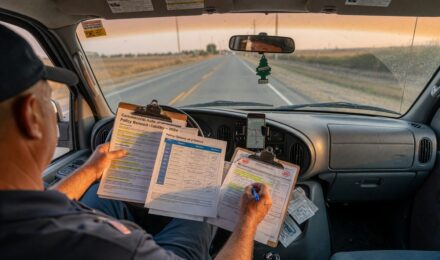
- Commercial auto liability insurance has experienced double-digit rate increases year-over-year, putting significant strain on transportation and contractor businesses, as tracked by Marsh’s Global Insurance Market Index.
- Small contractors are absorbing premium jumps of 20–40% annually, forcing many to raise prices or reduce services, according to NFIB small business economic trend data.
- Third-party litigation funding, where outside investors finance lawsuits in exchange for a share of settlements, is accelerating claim costs and making insurance pricing more unpredictable, as noted by Swiss Re Institute research.
- Umbrella liability policies, once a standard risk management tool, are becoming harder to obtain and more expensive across nearly all industries, per AM Best market analysis.
- Emerging risks including cyber liability and AI-related exposures are adding new layers of pricing uncertainty that insurers are still working to quantify, according to Lloyd’s of London risk research.
A Quiet Cost Surge Businesses Can’t Ignore
Liability insurance, once viewed as a routine line item, is rapidly becoming one of the most unpredictable and expensive costs for businesses today. Across industries, from small contractors to large corporations, premiums are climbing, coverage is tightening, and insurers are pulling back.
What’s driving this shift is a convergence of trends: larger jury awards, more aggressive litigation, and a changing regulatory environment. While it hasn’t dominated mainstream headlines like interest rates or inflation, liability insurance is quietly reshaping how businesses operate, and how much risk they can afford to carry. The Insurance Information Institute (Triple-I) has called the current environment one of the most challenging underwriting cycles in over a decade.
For many companies, the question is no longer whether they need coverage, but whether they can still afford the level of protection they once took for granted.
Inside the Liability Insurance Crunch
Over the past two years, insurers have faced a significant uptick in what’s known as “social inflation”, a term used to describe rising claim costs driven by larger legal settlements and jury verdicts. Multi-million (and even billion-dollar) judgments are no longer rare, particularly in industries like transportation, healthcare, and construction. According to Swiss Re Institute, social inflation has added billions of dollars in unexpected losses to insurer balance sheets over the past five years, changing how carriers model long-tail liability risk.
At the same time, legal costs have surged. More claims are going to trial instead of settling early, and litigation is taking longer to resolve. This increases defense costs, which insurers pass on to policyholders through higher premiums. The rise of third-party litigation funding, tracked closely by the RAND Corporation, has made it financially viable for plaintiffs to pursue cases that might previously have been dropped or settled cheaply.
Major carriers including Travelers, Chubb, and AIG have responded by tightening underwriting standards. That means stricter eligibility requirements, higher deductibles, and reduced coverage limits. Some insurers have exited certain high-risk markets altogether, a pattern documented in Marsh’s Global Insurance Market Index. AM Best has separately noted that umbrella and excess liability lines are seeing the steepest capacity reductions of any major commercial coverage category.
The numbers tell the story clearly:
- Commercial auto liability rates have seen double-digit increases year-over-year.
- Umbrella policies, designed to provide extra protection above primary limits, are becoming harder to secure at any price.
- Small businesses are increasingly required to carry higher limits to secure contracts, even when their underlying risk profile hasn’t changed.
Insurers are recalibrating their risk exposure, and businesses are absorbing the fallout.
One limitation worth naming: businesses that have historically relied on a single commercial broker for all coverage may find that broker’s market access narrower than it once was. As carriers exit segments, the practical range of options for high-risk industries, particularly roofing, trucking, and ambulatory healthcare, has shrunk, and even a well-connected broker may return only one or two competitive quotes where five were available two years ago. The National Association of Insurance Commissioners (NAIC) has flagged this availability contraction as a priority concern for state regulators entering 2026.
| Coverage Type | Average Annual Premium Increase (2024–2026) | Key Pressure Factor | Availability Trend |
|---|---|---|---|
| Commercial Auto Liability | 12–18% per year | Rising accident severity, nuclear verdicts | Tightening; some carriers exiting |
| General Liability (Small Business) | 8–15% per year | Social inflation, increased claim frequency | Available but with higher deductibles |
| Umbrella / Excess Liability | 15–25% per year | Nuclear verdicts, litigation funding growth | Significantly restricted |
| Healthcare Professional Liability | 10–20% per year | Post-pandemic claim backlog, jury sympathy awards | Tightening; higher minimums required |
| Construction Liability | 15–30% per year | Large project exposure, multi-party claims | Restricted; captive solutions growing |
| Cyber Liability | 5–12% per year (stabilizing) | AI-related exposures, evolving regulation | Available; underwriting still maturing |
According to Verisk Analytics / ISO commercial lines loss cost data, the repricing now underway reflects years of adverse development on long-tail liability lines, losses that materialized far later than carriers originally projected. Carriers including Travelers and Chubb have publicly acknowledged in earnings disclosures that prior-year reserve strengthening has been a persistent drag, and pricing is now being set to reflect actual loss trends rather than competition-driven optimism. Businesses that haven’t updated their risk management approach will find themselves either underinsured or priced out of the market.
Why This Hits Harder Than You Think
The ripple effects of rising liability insurance costs extend far beyond the insurance industry itself.
For small and mid-sized businesses, higher premiums directly compress margins. A contractor might see their annual liability premium jump by 20–40%, forcing them to either raise prices or cut costs elsewhere. In competitive markets, that’s not always an option. The National Federation of Independent Business (NFIB) identified insurance cost escalation as one of the top five operational concerns among small business owners surveyed in early 2026.
Larger companies face a different challenge: risk management complexity. As coverage becomes more expensive and less broad, companies are forced to retain more risk internally, setting aside larger reserves or accepting greater financial exposure in the event of a lawsuit. Rating agencies including AM Best and Moody’s have begun scrutinizing corporate self-insurance programs more carefully as a result.
Consumers are indirectly affected too. When businesses pay more for insurance, those costs often pass through to higher prices for housing, healthcare, and everyday services.
There’s also a broader economic implication. As liability risks grow, businesses may become more cautious: fewer new projects, reduced hiring in high-risk sectors, and heavier investment in legal and compliance functions. In extreme cases, companies avoid certain markets entirely due to liability concerns, an outcome that reduces competition and consumer choice.
Perhaps the most underappreciated consequence is the coverage gap itself. Some businesses, particularly in high-risk industries, are finding it difficult to obtain adequate coverage at any price. When that happens, companies don’t disappear; they operate exposed. That exposure creates broader economic fragility that the NAIC and state regulators are only beginning to address. The Federal Reserve’s financial stability reports have historically shown that periods of elevated corporate financial stress correlate with spikes in commercial litigation, a feedback loop that worsens the underlying problem.
What Experts Are Watching Next
Industry analysts and insurers agree: this is a structural shift, not a short-term spike.
Several factors suggest liability insurance will remain under pressure:
1. Legal Trends Aren’t Slowing Down
Plaintiff-friendly verdicts continue to rise, and litigation funding, where third parties finance lawsuits in exchange for a share of the settlement, is becoming more common. The American Bar Association’s Tort Trial and Insurance Practice Section has documented a steady increase in “nuclear verdicts”, jury awards exceeding $10 million, across virtually every major liability category.
2. Regulatory Scrutiny Is Increasing
State regulators, including those operating under the oversight framework of the NAIC, are paying closer attention to insurance pricing and availability. While this could bring some relief, it may also create additional complexity for insurers and policyholders navigating a patchwork of state-level rules.
3. Economic Uncertainty Adds Pressure
In times of economic stress, lawsuits often increase. Businesses facing financial strain may be more likely to pursue legal action, or be targeted by it. Research from the Federal Reserve’s financial stability reports suggests that periods of elevated corporate financial stress historically correlate with spikes in commercial litigation.
4. Technology Is Changing Risk Profiles
Emerging risks, including cyber liability and AI-related exposures, are adding new layers of uncertainty. Insurers are still working out how to price these risks accurately. Lloyd’s of London has published guidance warning that AI-related liability could represent one of the most significant unpriced risks in commercial insurance over the next decade.
Some experts believe we may see a longer-term rebalancing of the market, with new entrants and alternative risk solutions (like captive insurance) gaining traction. Others warn that without meaningful legal reform, a debate playing out at the state level through tort reform legislation tracked by the U.S. Chamber Institute for Legal Reform, costs will continue to climb.
What This Means Going Forward
For businesses, liability insurance is no longer a passive purchase. It’s a strategic decision that warrants the same attention as capital allocation or contract terms.
Companies are reviewing coverage limits and exclusions more carefully, investing in risk management and loss prevention, and exploring alternative insurance structures like captives and risk retention groups. Each of those steps carries its own cost and complexity, captive programs, for instance, require meaningful capital reserves and ongoing actuarial oversight that smaller businesses often can’t sustain.
For individuals, especially business owners or professionals with personal liability exposure, understanding coverage limits is becoming as important as managing cash flow. Resources from the U.S. Small Business Administration (SBA) increasingly treat liability coverage as a foundational planning element, not an afterthought.
The broader question is whether the system itself will adapt. If litigation trends continue and insurance becomes less accessible, the balance between risk and protection could shift in ways that affect the entire economy. Liability insurance has become a growing financial pressure point that businesses across every sector are being forced to confront directly.
Frequently Asked Questions
Why is liability insurance getting more expensive in 2026?
Liability insurance costs are rising primarily because of social inflation, a pattern of larger jury awards, more aggressive litigation, and increased use of third-party litigation funding. Insurers including Travelers, Chubb, and AIG have absorbed significant unexpected losses on long-tail liability claims and are now raising premiums and tightening coverage terms to restore profitability. Emerging risks like AI-related liability and cyber exposure, tracked by Lloyd’s of London, are adding additional pricing uncertainty on top of those structural pressures.
What is social inflation in insurance?
Social inflation refers to the rise in insurance claim costs driven by factors beyond general economic inflation, particularly larger jury verdicts, plaintiff-friendly legal environments, and the growing role of litigation funding firms that finance lawsuits in exchange for a portion of settlements. According to Swiss Re Institute, it has added billions in unexpected losses to carrier balance sheets over the past five years and is one of the primary drivers of commercial liability premium increases through 2026.
How much have commercial liability insurance rates increased recently?
Rate increases vary by coverage type, but commercial auto liability has seen increases of 12–18% per year, umbrella and excess liability has risen 15–25% annually, and construction liability has climbed as much as 30% per year in high-risk segments, per Marsh’s Global Insurance Market Index. General liability for small businesses has typically increased 8–15% annually over the past two years.
What is a nuclear verdict and how does it affect insurance?
A nuclear verdict is a jury award that exceeds $10 million, often seen as disproportionate to the actual damages involved. These verdicts are becoming more common across transportation, healthcare, and construction liability cases, as documented by the American Bar Association’s Tort Trial and Insurance Practice Section. They increase insurers’ loss exposure across entire coverage categories, raising premiums for all policyholders in affected lines, not just those involved in high-profile cases.
What is third-party litigation funding and why does it matter for liability insurance?
Third-party litigation funding occurs when an outside investor or firm finances a lawsuit in exchange for a share of any settlement or judgment. It allows plaintiffs to pursue cases they might otherwise drop due to legal costs, increasing both the volume and scale of claims that insurers must defend or settle. Research from the RAND Corporation has tracked its growth as a significant contributor to rising liability insurance costs across commercial lines.
Are small businesses more affected than large corporations by rising liability premiums?
Small businesses generally have less financial flexibility to absorb premium increases and cannot self-insure as easily. They also tend to concentrate in industries, construction, contracting, food service, where rates are rising fastest. Large corporations can spread costs across operations, establish captive insurance programs, or retain more risk internally. Those options are typically out of reach for businesses without the capital reserves or actuarial infrastructure to manage them. The NFIB identified insurance cost escalation as a top-five operational concern for small business owners in early 2026.
What is captive insurance and is it a good alternative?
A captive insurance company is a privately held insurer created by a business or group of businesses to cover their own risks, rather than purchasing coverage from a commercial carrier. Captives can provide more stable pricing and customized coverage terms, but they require significant capital, ongoing regulatory compliance with state insurance departments, and actuarial expertise to manage properly. They are growing in adoption as traditional market conditions tighten, but they are not a practical option for most small or mid-sized businesses without sufficient premium volume and reserve capacity.
How does rising liability insurance affect consumers?
When businesses pay more for liability coverage, those costs typically pass through as higher prices for goods and services. In healthcare, construction, and transportation, three sectors with the steepest premium increases, consumers may see direct cost impacts. Rising liability costs can also slow business expansion and reduce service availability, contributing to broader economic caution in ways that extend well beyond the insurance market itself.
What can businesses do to manage rising liability insurance costs?
Practical steps include conducting regular coverage reviews to identify gaps, investing in proactive loss prevention programs, and improving workplace safety records to qualify for better underwriting terms. Bundling policies where possible can help, and working with a commercial insurance broker who specializes in your industry is increasingly valuable in this market. One honest caveat: none of these steps will fully offset the structural pricing increases now underway. Businesses in the highest-risk segments should plan for continued premium growth and stress-test their budgets accordingly, rather than counting on a near-term market reversal.
Will liability insurance costs come down any time soon?
Most industry analysts do not expect a significant near-term reversal. The structural factors driving costs, social inflation, litigation funding growth, nuclear verdicts, and emerging technology risks, are not expected to resolve quickly. Some relief could come through state-level tort reform legislation tracked by the U.S. Chamber Institute for Legal Reform, or through regulatory intervention by bodies like the NAIC. The consensus among carriers and risk analysts is that elevated pricing is likely to persist through at least 2027.
Which industries face the highest liability insurance rate increases right now?
Construction, commercial trucking and transportation, and ambulatory healthcare are currently experiencing the steepest rate increases, in some segments, 15–30% annually. Umbrella and excess liability is under pressure across almost every sector, with availability significantly restricted per AM Best market analysis. Cyber liability has seen some stabilization in rate increases (down to 5–12% annually), though underwriting standards are tightening as AI-related exposures become harder to model. Businesses in those high-rate sectors should expect limited carrier competition and should engage brokers with surplus lines market access where admitted carriers have pulled back.
Sources
- Insurance Information Institute (Triple-I), Social Inflation Explainer
- Insurance Information Institute, Insurance Industry Profitability Background
- Marsh, Global Insurance Market Index
- Swiss Re Institute, Sigma Research on Social Inflation and Liability
- AM Best, Commercial Lines Market Analysis
- National Association of Insurance Commissioners (NAIC), Market Conduct and Regulatory Data
- National Federation of Independent Business (NFIB), Small Business Economic Trends Survey
- U.S. Chamber Institute for Legal Reform, Tort Reform Legislative Tracker
- Federal Reserve, Financial Stability and Corporate Sector Data
- Moody’s Ratings, Insurance Sector Credit Analysis