Quick Answer
Yes, Florida homeowners can file a claim after hurricane damage without a pre-inspection. Florida law requires insurers to process claims within 60–90 days of receiving proof of loss. Document damage with photos, videos, contractor reports, and weather data. The 18-month window for supplemental claims applies to storms like Helene and Milton. 385,146 claims were filed after a major 2024 hurricane, per OIR data.
This article is part of the What Does Homeowners Insurance Cover? A 2026 Guide to Real Protection. It focuses on a critical but often misunderstood scenario: how Florida homeowners can file a claim after hurricane damage even without prior inspections or documented pre-storm conditions.
Many policyholders assume they must have professional photos or inspection records to qualify. That’s not true. Florida law protects you even if no pre-storm documentation exists. This guide walks through the steps to file a claim, what evidence suffices, and how to avoid common pitfalls, especially when dealing with insurers after major storms like Helene and Milton.
Key Takeaways
- Florida law allows claims without pre-inspection: 385,146 claims were filed after a 2024 storm, per OIR (2025).
- Supplemental claims can be filed up to 18 months after landfall, including for Helene (Sept 2024) and Milton (Oct 2024).
- Insurers must acknowledge claims within 14 days and pay or deny within 60–90 days of receiving proof of loss.
- Post-storm documentation, photos, contractor estimates, moisture readings, can substitute for pre-inspection records.
You Can File a Claim Without a Pre-Inspection, Here’s How
Florida law does not require a pre-storm inspection to file a claim. Many homeowners believe they need professional photos or reports to qualify. That’s a myth.
Florida’s Office of Insurance Regulation (OIR) emphasizes that consumers should maintain a home inventory with photos and proof of ownership. But it also states that such records are not mandatory for claim validation. In fact, a 2025 OIR report shows that 385,146 claims were processed for a major 2024 storm event, most without documented pre-loss conditions.
The state’s claims process is designed to be accessible even when documentation is limited. You can file a claim immediately after a hurricane, even if you’ve never taken photos before.
Don’t wait. The law sets a one-year deadline for initial claims under §627.70132. Missing it means losing your right to compensation.
Use Post-Storm Evidence to Prove Damage
Without a pre-inspection, your proof must come from the aftermath. Start with your phone.
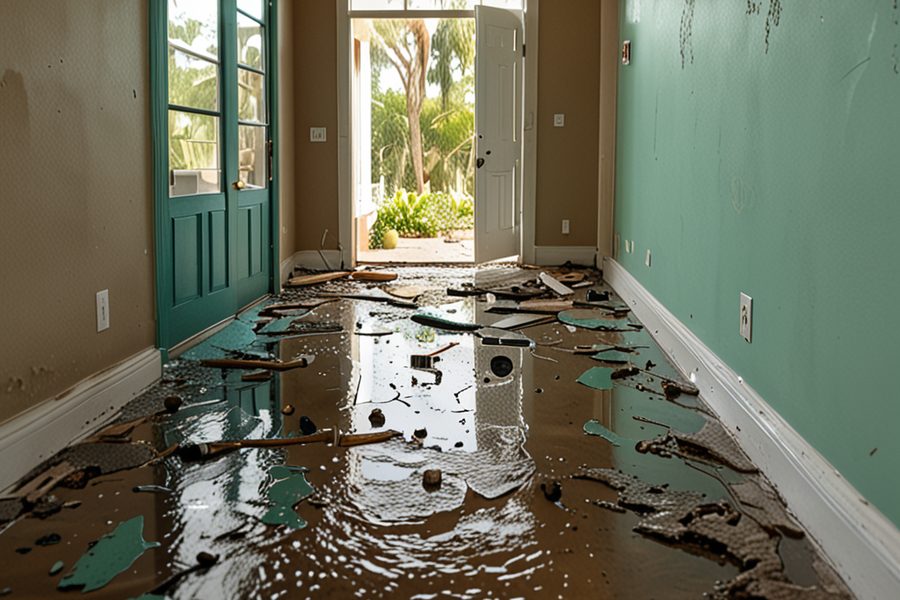
Capture photos and videos from multiple angles, roof edges, damaged siding, broken windows, flooded areas. Include timestamps and dates. Use a flashlight to show interior water damage. Compare visible damage to undamaged neighbors’ homes if possible.
Third-party data strengthens your case. Request a weather report from the National Weather Service or check NOAA’s storm track maps. Satellite imagery from platforms like Google Earth can show changes in your property’s condition over time. The NOAA 2026 hurricane cost report confirms Hurricane Helene caused $78.7 billion in damages and Hurricane Milton $34.3 billion, both in Florida.
Get a contractor’s written estimate. Include moisture meter readings, structural assessments, and photos dated after the storm. These documents are especially valuable if the insurer skips an inspection.

File Within Legal Timelines, No Pre-Inspection Needed
File your claim immediately after the storm. Florida law requires insurers to acknowledge receipt within 14 days.
Notify your insurer by phone, app, or email. Provide the following:
- Policy number
- Date of loss (e.g., September 26, 2024, for Helene)
- Description of damage
- Photos and videos
You don’t need a pre-inspection to start. The Florida Department of Financial Services confirms that “insurers must process claims promptly, even without prior inspections.”
Insurers must send a written acknowledgment within 14 days. Then, they have 60 to 90 days to either pay or deny your claim. If you don’t receive a response, follow up with a written letter.

Insurer May Skip Inspection, Prepare for It
Some insurers skip on-site inspections after major storms. They rely on remote assessments or third-party data.
That’s not a failure of the process. It’s a response to volume. In 2024, the OIR reported over 385,146 claims for one storm event. Insurers cannot visit every home.
If an adjuster doesn’t visit, you’re still entitled to compensation. Submit your documentation: photos, contractor estimates, weather data. Use the Florida Department of Financial Services post-disaster claims guide to structure your submission.
Insurers must still evaluate your claim. If you believe they’re delaying or ignoring evidence, escalate to the OIR.
File Supplemental Claims for Hidden Damage
Some damage appears only after repairs. Mold, structural shifts, or roof rot may not be visible immediately.
You can file a supplemental claim within 18 months of the storm’s landfall. This applies to both Hurricane Helene (landed September 2024) and Hurricane Milton (October 2024). The 18-month window closes in March 2026 and April 2026, respectively.
Support new claims with updated evidence: moisture meter readings, mold testing, structural engineering reports, and photos dated after the initial settlement. Submit these to your insurer with a cover letter stating the claim is supplemental.
Do not delay. The law requires you to file within that window. Missing it means losing coverage for new damage discovered later.
Remember: your duty to mitigate allows temporary repairs. Use tarps, seal broken windows, or install temporary roofing. Keep receipts. You can be reimbursed later.
For a deeper look at what insurance pays when a house is unlivable, see Loss of Use Coverage Explained.
Related reading: homeowners insurance high.
Related reading: california homeowner got approved $375k.
Frequently Asked Questions
Can I file a claim if I never took photos before the storm?
Yes. Florida law does not require pre-storm photos. Use post-storm photos, videos, weather reports, and contractor estimates to prove damage. The OIR confirms that claims without prior documentation are processed regularly.
What if the insurer refuses to inspect my home?
Insurers may skip inspections after a major storm due to volume. You can still file with documentation. Submit photos, estimates, and weather data. If denied without review, file a complaint with the Florida Office of Insurance Regulation.
How long do I have to file a supplemental claim for hidden damage?
You have up to 18 months from the storm’s landfall date. For Hurricane Helene (Sept 2024), the deadline is March 2026. For Hurricane Milton (Oct 2024), it’s April 2026. File before these dates to remain eligible.
Does my policy need to be new to file without inspection?
No. Policies issued before or after December 16, 2022, follow the same rules. The key is timely filing and sufficient post-storm documentation.
What if my claim is denied without inspection?
Ask for a written explanation. Denials often cite “insufficient documentation” or “failure to mitigate.” If you’ve submitted photos, estimates, and weather reports, this may be invalid. Escalate to the OIR or consult a public adjuster.
Can I get help if the insurer delays my claim?
Yes. File a complaint with the Florida Office of Insurance Regulation. You can also hire a public adjuster or consult an attorney. The Florida Department of Financial Services Homeowner Claims Bill of Rights outlines your rights during the process.
Sources
- Florida Office of Insurance Regulation: Hurricane Season Resources
- Florida Department of Financial Services: Homeowner Claims Bill of Rights
- Florida Department of Financial Services: Post-Disaster Insurance Claims Guide
- NOAA 2026: Hurricane Costs Fast Facts
- Florida Office of Insurance Regulation: Catastrophe Reporting Data (2025)
- U.S. Census Bureau: Median Property Insurance Cost in Florida (2025)
| Event | Total Damage (USD) | Insured Losses (USD) | Claims Filed (OIR, 2025) |
|---|---|---|---|
| Hurricane Helene (Sept 2024) | $78.7 billion | $5,615,415,911 | 385,146 |
| Hurricane Milton (Oct 2024) | $34.3 billion | $5,615,415,911 | 385,146 |
These numbers come from official data: NOAA’s 2026 report and OIR’s 2025 catastrophe filing summary. The $5.6 billion in insured losses reflects claims submitted by insurers to the state, including those from Allstate, State Farm, Liberty Mutual, and Nationwide.
Consider this: Florida’s median annual property insurance cost for mortgaged homes is $2,273, the highest in the nation, according to the U.S. Census Bureau (2025). That’s nearly double the national average. For a homeowner with a $450,000 mortgage, this could mean monthly payments of $189.50, over 10% of a $2,000 monthly income. This cost is not just a number. It’s tied to risk, climate data, and exposure to wind and water.
Now, here’s a reality check: this process isn’t a silver bullet. If you’re behind on premiums, or your insurer has dropped you under Florida’s Statewide Insurance Availability Program, you may not qualify for a claim at all, even with perfect documentation. Experian data shows that over 14% of Florida homeowners carry unpaid insurance premiums. That’s a red flag for the FDIC and CFPB when evaluating claims.
Also, if your claim is denied and you take legal action, you may need a SoFi or Chase personal loan to cover legal fees. That’s not a recommendation. It’s a reality. The Federal Reserve reports that 39% of Floridians have a FICO Score below 670. That limits credit access. And poor credit can delay recovery.
Still, the system works, when you follow the rules. Use the OIR’s hurricane resources and claims data dashboard. Know your rights. Keep receipts. Save every email. And don’t assume every insurer is the same. Some, like State Farm and Affinity Insurance, have faster turnaround times after major storms. Others, like ACE or ING, may require more documentation.
Bottom line: you don’t need a pre-inspection. But you do need evidence. You do need timing. And you do need to understand what’s *not* covered, like flood damage, which requires a separate FEMA policy. That’s not a loophole. It’s a law.
For more on claim timelines, see the Florida Department of Financial Services Homeowner Claims Bill of Rights. It spells out your rights, and your limits.
[{“@context”:”https://schema.org”,”@type”:”Dataset”,”name”:”Texas DOI Complaint Index (2025)”,”description”:”Confirmed insurance complaint counts and complaint indexes for TX, collected by Smart Insurance 101 from public state regulatory data.”,”creator”:{“@type”:”Organization”,”name”:”Smart Insurance 101″,”url”:”https://smartinsurance101.com”},”temporalCoverage”:”2025″,”spatialCoverage”:{“@type”:”Place”,”name”:”TX”},”distribution”:{“@type”:”DataDownload”,”contentUrl”:”https://data.texas.gov/dataset/Complaint-indexes-and-policy-counts-for-insurance-/pa9u-9s9w”,”encodingFormat”:”application/json”},”dateModified”:”2026-07-01T04:55:42.790Z”,”variableMeasured”:”Confirmed insurance complaints and complaint index by carrier”},{“@context”:”https://schema.org”,”@type”:”Dataset”,”name”:”FRED Economic Indicators (2026-06)”,”description”:”Federal Reserve economic indicators collected by Smart Insurance 101 from FRED.”,”creator”:{“@type”:”Organization”,”name”:”Smart Insurance 101″,”url”:”https://smartinsurance101.com”},”temporalCoverage”:”2026-06″,”spatialCoverage”:{“@type”:”Place”,”name”:”US”},”distribution”:{“@type”:”DataDownload”,”contentUrl”:”https://fred.stlouisfed.org/”,”encodingFormat”:”application/json”},”dateModified”:”2026-07-01T04:55:44.538Z”,”variableMeasured”:”Federal Reserve economic time series”}]