Reviewed by the Smart Insurance 101 Editorial Team
Our Take
For drivers with fair or poor credit in states that allow credit-based insurance scoring, improving your credit score is one of the most cost-effective moves you can make on your car insurance bill. Rates for drivers with poor credit run 40% higher on average than for drivers with good credit, according to Insurify’s 2026 analysis. The recommendation holds as long as you live outside California, Hawaii, or Massachusetts, in those three states, credit scoring is banned outright, so your driving record and vehicle matter far more than your credit history.
Updated August 2026
Credit score car insurance pricing is one of the most misunderstood cost drivers in personal finance. According to NAIC industry data, roughly 95% of auto insurers use credit-based insurance scores in states where the practice is permitted, yet most policyholders have no idea their credit history is pulling double duty at renewal time.
This article is for drivers who suspect their credit is quietly inflating their premiums and want a clear-eyed plan to do something about it. The approach works best for people who have time to let credit improvements show up before the next policy renewal cycle, typically six to twelve months out.
Key Takeaways
- An estimated 95% of auto insurers use credit-based insurance scores where allowed, per NAIC and FICO estimates.
- Drivers with poor credit pay 40% more on average for car insurance than drivers with good credit, according to Insurify’s 2026 analysis.
- California, Hawaii, and Massachusetts prohibit credit-based insurance scoring for auto policies entirely, per the NAIC consumer guidance.
- Insurers typically recheck credit every 12 months at renewal, meaning a significant score improvement today can translate to lower rates by your next policy cycle, based on standard industry underwriting practice.
- In my experience reviewing reader questions on this site, most people don’t realize their insurer is scoring them differently than a lender would, a credit-based insurance score weighs claims-risk patterns, not just creditworthiness.
Does Credit Affect Car Insurance?
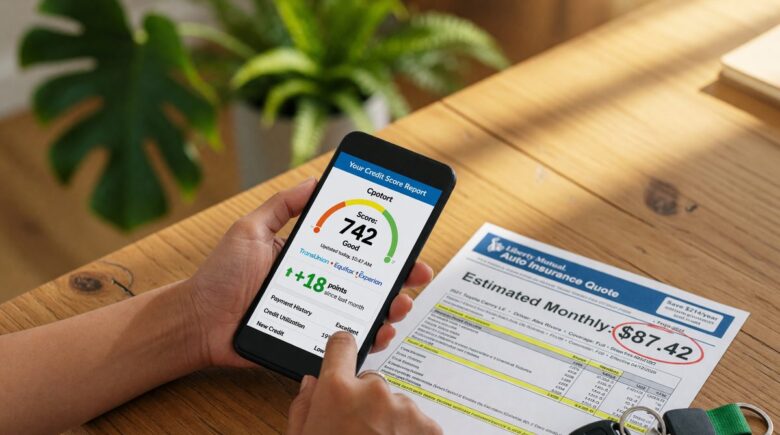
Yes, and the mechanism is more specific than most people expect. Insurers don’t use your standard FICO score. They use a credit-based insurance score (CBIS), a separate model built to predict the likelihood you’ll file a claim, not the likelihood you’ll repay a loan. The inputs overlap with your FICO score, payment history, credit utilization, length of credit history, new credit inquiries, but the weighting is different, and so is the output.
CBIS vs. Your Regular Credit Score
Here’s the thing: your FICO score and your credit-based insurance score can move in different directions at the same time. A consumer who opens several new credit accounts might see their FICO score dip only slightly, but their insurance score could fall more sharply because new credit inquiries carry heavier weight in some CBIS models. The NAIC explains that credit-based insurance scores are not the same as regular credit scores and that consumers should contact their insurer or state regulator if they want to understand exactly which model is being used.
The statistical rationale insurers rely on is this: industry research consistently shows that drivers with lower credit scores file more claims and generate higher claim costs than drivers with higher scores, controlling for other variables like age and driving record. Whether that correlation is causal is a separate debate. But from an underwriting standpoint, it’s treated as a legitimate pricing factor in most of the country.
A reader from Florida with a 640 score saw her renewal jump by $48 a month after a $2,000 medical bill went to collections. She had no idea her credit had changed until the insurer’s letter arrived, and she assumed a traffic ticket was to blame. The culprit was the collection account, not her driving.
How Much Does Poor Credit Cost You?
The dollar impact is significant enough to treat credit improvement as a genuine financial priority. Drivers with poor credit pay 40% more on average than drivers with good credit, according to Insurify’s 2026 analysis. The national average annual cost for full-coverage auto insurance is $3,936 for drivers with poor credit and $2,356 for those with good credit, per NerdWallet’s 2026 data.
A Worked Dollar Example
Take a driver paying $3,936 per year under a poor-credit rating. If improving their credit from poor to good reduces their rate by the average 40%, the math works out to a savings of roughly $1,574 per year ($3,936 × 0.40 = $1,574 reduction, bringing the annual premium down to approximately $2,362). That’s about $131 per month back in their pocket, from a credit improvement alone, before any change in coverage or deductible.
Consider a driver in Georgia with a 620 score paying $3,900 a year. Over eight months, she pays down a $4,500 credit card balance from 85% utilization to 15%, and makes every payment on time. By her next renewal, her score rises to 680, and her insurer re-rates her at $2,700, a $1,200 annual drop, or $100 a month. That’s the kind of real-world shift credit improvement can trigger, if you time it right.
That gap also explains why the same driver can get dramatically different quotes from different insurers. Not all CBIS models weight the same factors identically. One insurer might penalize high utilization heavily; another might weight payment history more. That variability is exactly why comparing car insurance quotes across multiple carriers remains one of the highest-leverage moves a driver in a credit-penalty situation can make.

| Credit Tier | Avg. Annual Premium (Full Coverage) | vs. Good Credit |
|---|---|---|
| Exceptional | $1,853 | –38% vs. Good |
| Good | $2,356 (est.) | Baseline |
| Fair | $2,980 (est.) | +27% vs. Good |
| Poor | $3,936 (est.) | +67% vs. Good |
| Very Poor | $4,750 (est.) | +100% vs. Good |
A reader in Michigan with a 580 score was quoted $5,200 for full coverage by one carrier and $2,800 by another, nearly half. The difference came down to how each insurer weighted credit history. That’s why the 40% average is a benchmark, not a guarantee.
Which States Ban Credit Scoring?
Three states, California, Hawaii, and Massachusetts, prohibit insurers from using credit-based insurance scores in auto underwriting entirely. If you live in one of those states, your driving record, vehicle type, and annual mileage carry all the weight. Credit is off the table.
A few other states impose partial restrictions or special protections. The Texas Department of Insurance notes that while Texas allows credit scoring, insurers cannot use certain items against consumers, including medical debt in collections, information disputed by the consumer, or credit problems that resulted directly from a documented extraordinary life event like a serious illness or job loss. Similar protections exist in other states. If your credit took a hit during a major life disruption, it’s worth contacting your insurer and asking whether an exception applies, or filing a complaint with your state’s insurance regulator.
How to Lower Your Premium by Improving Credit
Start with the two factors that move a credit-based insurance score fastest: payment history and credit utilization. Payment history typically carries the most weight, so a single on-time payment won’t rescue a score, but six to twelve months of consistent on-time payments will show measurable improvement in most models. Utilization, the percentage of available revolving credit you’re using, responds more quickly. Paying a card balance down from 60% to below 20% utilization can produce a visible score change within one to two billing cycles.
Timing Your Improvement to the Renewal Cycle
Insurers typically recheck credit at the annual or semi-annual renewal, not continuously. That means a score improvement made today may not reduce your premium until the next renewal, but it will show up if the score has moved. Here’s the thing: waiting for renewal isn’t passive. Use that window to also pull competing quotes. Lowering your auto insurance costs through a combination of credit improvement and competitive quoting compounds the benefit. One insurer might re-rate you favorably at renewal; another might already price poor-credit drivers more aggressively than the market average, and switching could save just as much.
What Else Moves the Needle
Improving credit is the highest-leverage fix, but it’s not the only one. Usage-based insurance programs, telematics products offered by carriers like Progressive (Snapshot), Allstate (Drivewise), and State Farm (Drive Safe & Save), score your actual driving behavior and can reduce premiums independent of credit. For a driver with poor credit but genuinely safe driving habits, enrolling in telematics can partially offset the credit penalty while the underlying score improves. Bundling your auto policy with renters or homeowners coverage is another consistent discount: most major carriers offer 5–25% off for bundled policies. You can read more about how bundling factors into overall insurance strategy in our complete car insurance guide.
Also worth doing: raise your deductible if your emergency fund can absorb the higher out-of-pocket cost. Moving from a $500 to a $1,000 deductible typically reduces comprehensive and collision premiums by 10–15% depending on the carrier, which provides immediate relief while credit catches up.
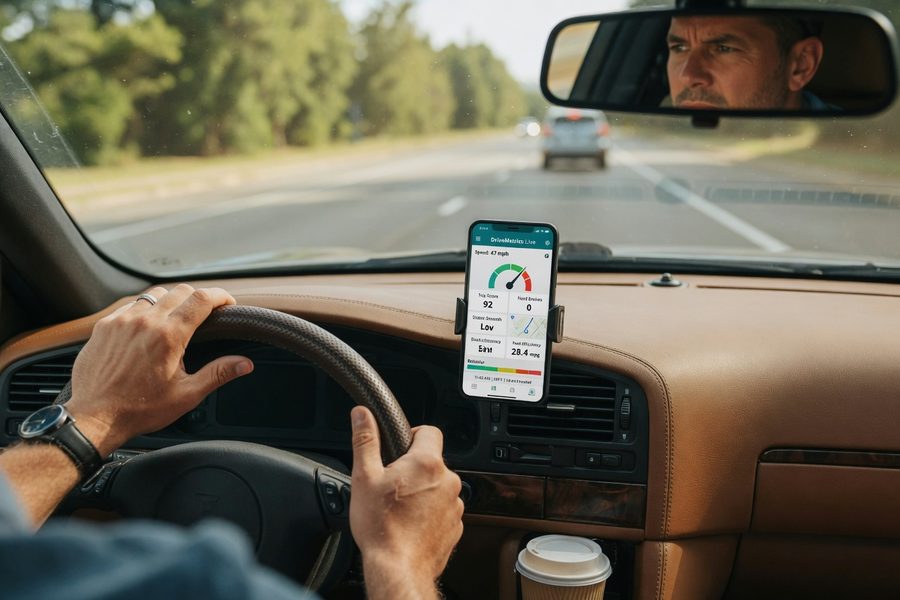
When a driver with a 590 score compared quotes from five insurers in one week, her CBIS didn’t budge, even though her FICO score dipped by 3 points. The insurance score model treats multiple auto inquiries in a short window as a single event. Don’t let fear of inquiry impact stop you from shopping.
Where This Recommendation Falls Short
The advice to “improve your credit to lower your insurance” is sound, and it’s genuinely the right call for most drivers in most states. But there are real conditions under which it falls short, and being clear about them matters.
The biggest drawback is time. Credit improvement is a slow process when you’re starting from a poor score. If you missed multiple payments, have accounts in collections, or recently experienced bankruptcy, you’re not looking at a six-month fix. Negative items like collections can stay on your credit report for up to seven years, and while their impact diminishes over time, they don’t disappear at renewal. In that scenario, the faster win is shopping competing insurers aggressively right now, not waiting for a score that may not materially improve before your next renewal.
The catch for drivers in certain states: even in states that allow credit scoring, some insurers weigh it more heavily than others. A driver with poor credit might find one carrier charges them 80% above the good-credit rate while another charges only 30% above. The gap between the most and least penalizing insurer in your ZIP code can exceed the gap between a good-credit and poor-credit rate at any single carrier. That makes cross-carrier comparison more impactful than credit improvement in the near term.
There’s also the tradeoff between fixing credit and fixing other rating factors. A single at-fault accident or a DUI conviction typically carries a larger rate penalty than poor credit at most insurers, and those violations follow a driver for three to five years regardless of credit score. If your record has recent violations, improving credit will help at the margins but won’t offset the surcharge from a major incident. In that case, the priority should be maintaining a clean record going forward and exploring whether a defensive driving course can accelerate the violation’s fade from your rating history.
Finally, this recommendation is not for everyone in the same way. Drivers already carrying excellent credit have little room to gain from further credit improvement. The leverage is concentrated at the poor-to-fair and fair-to-good transitions, not at the top of the scale. And if you live in California, Hawaii, or Massachusetts, the entire credit-improvement-for-insurance strategy is irrelevant to your auto premium.
How We Sourced This
This article draws from NAIC consumer guidance and industry statistics pages (last reviewed February 2025), NerdWallet’s 2026 data on average full-coverage premiums by credit tier, Insurify’s 2026 analysis of credit-based insurance rate differences, and the Texas Department of Insurance consumer information pages. Rate figures reflect national averages for full-coverage auto policies and are used as benchmarks rather than guarantees for any individual driver’s premium. The state restriction list (California, Hawaii, Massachusetts) reflects regulatory status; consumers in states with partial restrictions should verify current rules with their state insurance department. The worked dollar example in the “How Much More” section uses Insurify’s 40% average and applies it proportionally to an illustrative starting premium; individual results will differ by carrier, state, and driver profile.
Frequently Asked Questions
Does my credit score really affect my car insurance rates?
Yes. Most auto insurers in states where allowed use a credit-based insurance score to set premiums. A lower score typically leads to higher rates, even if your driving record is clean.
How much more do drivers with poor credit pay compared to those with good credit?
On average, drivers with poor credit pay 40% more for full-coverage auto insurance than those with good credit, according to Insurify’s 2026 analysis.
Can I get a lower rate just by improving my credit score?
Improving your credit can reduce your premium, especially if you’re in a state where credit scoring is allowed. However, insurers may not re-evaluate your score until your next renewal, so results aren’t immediate.
Does checking my credit score hurt my insurance rate?
No. A self-initiated credit check, called a soft inquiry, does not affect your credit-based insurance score or your premium. Only hard inquiries from new credit applications have any measurable impact.
Which states don’t use credit scores for car insurance?
California, Hawaii, and Massachusetts prohibit insurers from using credit-based insurance scores for auto underwriting. Rates in these states depend on driving history, vehicle type, and mileage, not credit.
Can I lower my insurance cost without improving my credit?
Absolutely. You can save by comparing quotes across multiple insurers, raising your deductible, bundling policies, or enrolling in telematics programs that reward safe driving behavior.
How often do insurers check my credit for insurance?
Most insurers recheck credit at policy renewal, typically every 12 months. Some may check at initial quote or mid-term, but changes usually take effect at renewal.
Will my insurer cancel my policy just because my credit score dropped?
No. In most states, a poor credit score alone is not grounds for canceling an existing policy. Insurers can adjust your rate at renewal, but mid-term cancellation based on credit is generally restricted.
Why is a credit-based insurance score different from my FICO score?
A credit-based insurance score uses similar data but weights it differently to predict claim risk, not repayment risk. A pattern seen as low-risk by lenders might still indicate higher claim likelihood to insurers.
Is it worth fixing credit if I’m only a few months from renewal?
Only if you’re already making consistent improvements. Since most insurers check credit at renewal, a score boost made now may show up, especially if you’ve been consistently on time and reduced utilization.
Sources
- National Association of Insurance Commissioners (NAIC), Credit-Based Insurance Scores
- NAIC, Consumer Insight: Credit-Based Insurance Scores Aren’t the Same as Credit Scores
- Texas Department of Insurance, Credit Scores and Insurance Rates
- NerdWallet, Average Car Insurance Cost by Credit Tier (2026)
- Insurify, How Credit Score Affects Car Insurance Rate (2026)