
Fact-checked by the Smart Insurance 101 editorial team
The Verdict
State minimum coverage is usually the smarter financial move if your vehicle is worth less than $5,000 and you maintain a solid emergency fund. Full coverage is not worth it when your annual premium plus deductible exceeds 10% of the car’s actual cash value. The exception: if you have significant assets a lawsuit could target, the liability limits in a minimum policy are dangerously low.
The decision between state minimum vs full coverage flips entirely on one number: what your car is actually worth. According to Insurify’s 2026 analysis, the national average for full coverage runs $2,144 a year. Minimum coverage costs roughly 65% less. For a 2009 Toyota Camry with 170,000 miles, that premium gap eats up the car’s entire value in under three years. The math doesn’t care about your driving habits or your zip code, it cares about the asset you’re insuring.
Here’s the thing: inflation has pushed repair costs up while simultaneously making older cars worth more on the used market. That means the old rules of thumb someone gave you five years ago don’t apply anymore. A 2013 Honda Accord isn’t the disposable $2,500 beater it would’ve been in 2019. You need to run the numbers fresh for 2026.
| Reasons to Keep Full Coverage | Reasons to Drop to State Minimum |
|---|---|
| Your car’s market value still exceeds $7,500 | Your vehicle is worth under $4,000, the annual premium alone is 25% or more of its value |
| You cannot afford to replace the vehicle tomorrow with cash savings | You have $5,000+ in an emergency fund and can self-insure a total loss |
| Your collision deductible is $500 or lower and claims are economical | Your deductible is $1,000 and maximum payout after depreciation won’t cover repair costs for most incidents |
| You live in an area with high uninsured motorist rates, 15.4% of U.S. drivers lack coverage | You park in a locked garage and drive fewer than 5,000 miles annually |
| You own a home, have retirement savings, or earn above median income for your area | You’re on a fixed income and the premium savings of $1,200+ per year materially improves your budget |
| Your state’s minimum liability limits are egregiously low, think $10,000 property damage | You can raise liability limits on a minimum policy without adding collision or comprehensive |
State minimum is likely the right move if you can check most of these
- Your car’s current Kelley Blue Book or NADA value is under $5,000
- Your annual full-coverage premium exceeds 10% of the car’s market value
- You carry a collision deductible of $1,000 or more
- You can cover a $3,500 replacement vehicle with cash on hand
- You have at least $50,000 in uninsured/underinsured motorist coverage on your minimum policy
- No lender holds a lien on the vehicle title
What State Minimum Liability Insurance Actually Covers
State minimum liability coverage pays for the other driver’s damage, period. It does not pay one cent toward your own vehicle repairs, your medical bills, or a rental car while yours sits in a shop. If you rear-end a Mercedes SUV carrying four passengers, your policy covers up to the limit you bought. After that, you’re personally on the hook.
Most states set minimum liability limits in a three-number split: bodily injury per person, bodily injury per accident, and property damage. Common mid-range minimums look like 25/50/25: that’s $25,000 per injured person, $50,000 total for all injuries in one crash, and $25,000 for the other party’s vehicle and property. On their surface, those numbers sound adequate. They are not. The Insurance Information Institute reports that the average auto bodily injury claim hit $28,278 in 2024. A single person’s hospital stay surpasses the $25,000 per-person minimum before they leave the ER. If two people are hurt, you’re facing a potential gap between your $50,000 total limit and combined claims that can easily reach $70,000 or more.
Here’s what minimum liability ignores entirely: your car, in every scenario. Tree branch collapses on it? Not covered. Someone smashes a window and grabs your laptop? Not covered. You slide into a guardrail on black ice? Not covered. An uninsured driver blows through a red light and totals your vehicle? Covered only if you paid extra for uninsured motorist property damage, and even then, it’s optional in most states.
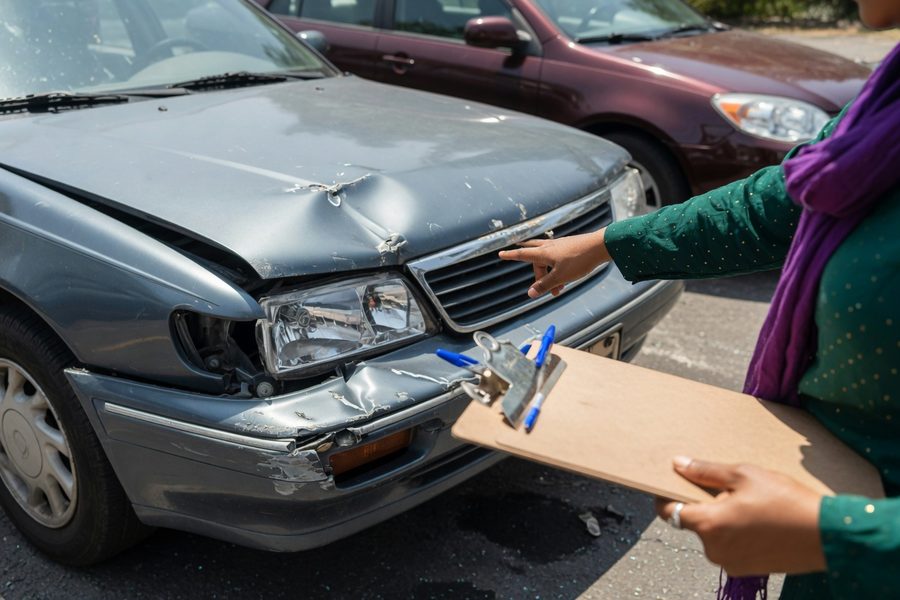
How ‘Full Coverage’ Actually Pays Out on a 10-Year-Old Vehicle
Full coverage isn’t a real insurance product. The West Virginia Offices of the Insurance Commissioner strongly discourages insurers from using the term because there is no standard definition and it misleads consumers. What people mean is liability plus collision plus comprehensive. Collision covers your car when you hit something or something hits you. Comprehensive handles theft, vandalism, fire, floods, and animal strikes.
The payout structure on a car more than 10 years old creates a brutal math problem. Collision coverage pays actual cash value, not replacement cost. Here’s the thing: actual cash value means what your car was worth the moment before the crash, depreciation included. The average collision claim severity in 2024 was $5,489, according to Insurance Information Institute data. That’s just the repair bill, not a total loss payout. If your 2011 Ford Escape is worth $4,200 and you carry a $1,000 deductible, the maximum you’ll ever collect is $3,200. Subtract two years of the premium increase over state minimum, often $800 to $1,200 annually, and you’ve paid the insurance company more than they’ll ever pay you.
Total-loss scenarios on older cars produce an even sharper sting. The insurer writes a check for the pre-crash market value minus your deductible. The market value comes from an aggregation of recent comparable sales, and insurers use services like CCC Intelligent Solutions that are notoriously conservative. A 2008 Honda Civic that would cost you $5,500 to replace on a dealer lot might generate a payout of $3,800. Deduct $1,000. You’re left with $2,800 to somehow find a safe, running replacement vehicle in 2026. That is not enough.
The Real Cost Difference in 2026: $1,547 a Year Separates the Two Options
The gap between state minimum vs full coverage widened slightly in 2026 as insurers adjusted physical damage premiums upward to account for parts inflation. MarketWatch reports the national average for minimum coverage at $63 a month, or $756 annually. Full coverage averages $2,144 per year. That’s a $1,388 difference, and it’s wider for drivers over 65 with clean records. A 65-year-old in Ohio might pay $597 for minimum coverage versus $2,274 for full, a $1,677 annual gap that buys protection on an asset likely worth $3,500.
Let’s make this tangible. Take a driver in Illinois carrying a 2012 Chevrolet Malibu valued at $5,200. Minimum liability through a major carrier like State Farm or GEICO runs roughly $52 a month. Adding collision with a $1,000 deductible and comprehensive with a $500 deductible pushes the monthly total to approximately $118. Over 24 months, the extra $66 a month totals $1,584. The Malibu’s value four years from now will be closer to $3,000. If the car isn’t totaled in those two years, and statistically, most are not, the driver paid insurance premiums equal to more than half the vehicle’s worth for coverage that returned nothing. If the car is totaled, the maximum payout after deductible is $4,200, and the driver has spent $1,584 to get it. The net benefit shrinks to $1,016.

The Illinois Department of Insurance cautions that state minimums may not be enough to fully protect you from lawsuits, and that’s the tension: the premium gap is enormous, but so is the liability exposure if you collide with something expensive. A driver who totals a Tesla Model Y while carrying only $25,000 in property damage liability could be staring at a $15,000 to $20,000 personal obligation, since the Model Y easily exceeds $40,000. You can increase liability limits without adding collision: a 50/100/50 policy or even a 100/300/100 policy costs far less than adding physical damage coverage. The liability upgrade is often $15 to $25 a month. It’s the collision and comprehensive that inflate the bill.
The Uninsured Motorist Risk That State Minimum Doesn’t Solve
One of the most overlooked gaps in the state minimum vs full coverage discussion is what happens when an uninsured driver totals your car. Roughly 15.4% of U.S. drivers had no insurance in 2023, per the Insurance Research Council data cited by the Insurance Information Institute. In states like Mississippi, Michigan, and New Mexico, that number climbs above 20%. If one of them hits you, your minimum liability policy pays nothing for your vehicle. Unless you’ve specifically added uninsured motorist property damage coverage, you absorb the entire loss.
Here’s the thing: uninsured motorist coverage is typically cheap. Adding it to a minimum liability policy costs maybe $4 to $9 a month. It covers your vehicle’s damage up to a set limit when an uninsured or hit-and-run driver is at fault. For an older car worth $4,000, a $3,500 uninsured motorist property damage limit with a $250 deductible provides meaningful protection without the overhead of full collision and comprehensive. This is the middle ground most state minimum advice misses. You don’t need full coverage to protect against uninsured drivers, you need uninsured motorist coverage, which is a separate line item on your declarations page.
Bodily injury from an uninsured driver is an even more serious threat. The average property damage liability claim runs $6,770 according to ISO data for 2024. That’s just the other person’s car. If you’re injured and the at-fault driver is uninsured, your health insurance becomes primary, and many health plans carry $5,000 to $8,000 deductibles. Uninsured motorist bodily injury coverage fills that gap, and it’s worth the small premium increase on a minimum policy. The Texas Department of Insurance notes that while state law requires a minimum amount of liability coverage, additional coverages address your own car and medical needs in ways the state minimum deliberately ignores.
Who Should and Who Should Not
Good candidates for state minimum coverage
These profiles make the strongest case for dropping physical damage coverage:
- Your vehicle’s Kelley Blue Book private-party value is under $5,000 and declining, each year you carry full coverage, you’re paying a growing percentage of the car’s worth
- You maintain $5,000 or more in accessible savings and could purchase a replacement vehicle within a week if yours were totaled
- You drive fewer than 8,000 miles annually, park in a secure garage, and have a clean seven-year accident history
- You’ve raised your liability limits to at least 50/100/50 and carry uninsured motorist coverage matching those limits
- Your annual full-coverage premium plus your deductible equals 12% or more of the vehicle’s market value
Who should keep full coverage even on an older car
These situations make dropping coverage too risky:
- Your car is still worth $7,500 or more, the premium-to-value ratio hasn’t yet crossed the threshold where math favors dropping
- You own a home with equity, maintain a retirement account, or have wage income above your state’s median, a lawsuit exceeding your minimum limits could reach those assets
- Your emergency fund is under $2,000 and you rely on the vehicle for work, a total loss without a payout would create an immediate employment crisis
- Your vehicle is a 2018 or newer model that merely has high mileage, a 2018 Toyota RAV4 with 140,000 miles can still book at $12,000, well above the threshold where collision makes sense
Related reading: Auto Insurance Alternatives That Actually Work for High.
Frequently Asked Questions
Is it worth keeping full coverage on a car worth $4,000?
Almost never. At $4,000 in value, the maximum collision payout after a $1,000 deductible is $3,000, and only if the car is totaled. If full coverage costs $800 more per year than minimum coverage, you’d need to total the car every 3.75 years just to break even. Most drivers go years between at-fault totals. Take the premium savings and put it toward a replacement fund.
How much cheaper is liability-only car insurance compared to full coverage?
Minimum liability averages roughly $756 a year nationally versus $2,144 for full coverage, saving about $1,388 annually or 65%. The exact gap varies by state, age, and driving record, but it consistently runs between 50% and 70%. For older drivers, the spread widens because age-related rate increases hit physical damage coverage harder than liability.
Can you raise liability limits without adding collision and comprehensive?
Yes, and you should. Liability limits are completely independent of physical damage coverage in every major insurer’s rating system. A 100/300/100 liability-only policy costs significantly less than a full coverage policy with identical liability limits. If asset protection is your concern, raise the liability limits and add uninsured motorist coverage before adding collision.
What is the 10% rule for dropping full coverage on an older car?
Consumer Reports recommends considering dropping collision and comprehensive when your annual premiums equal or exceed 10% of the car’s book value. If your car is worth $4,500 and full coverage costs $900 extra per year, that’s 20%, twice the threshold. The rule also suggests dropping physical damage coverage on vehicles more than 10 years old. Both conditions apply to the entire older-car segment this article addresses.
Does state minimum insurance cover a rental car if my car is in the shop?
No. Rental reimbursement is an optional add-on completely separate from liability coverage. If you carry only state minimum liability and your car needs repairs after an accident you didn’t cause, the at-fault driver’s insurance covers the rental. If you caused the accident, you have no rental coverage through your own policy unless you purchased it specifically. On an older car, bank the premium savings and cover a rental out of pocket during the rare shop visit.
Is ‘full coverage’ even a real insurance term?
No. The National Association of Insurance Commissioners states explicitly that “there is no such thing as a ‘full coverage’ auto insurance policy.” It’s a consumer shorthand that means liability plus collision plus comprehensive. Insurers and agents increasingly avoid the term because it creates false expectations about what is actually covered. When you drop collision and comprehensive, you’re not removing something called full coverage, you’re removing two specific physical damage coverages while keeping your liability protection intact.
Sources
- Insurify, 2026 Car Insurance Report: Average Cost of Full Coverage
- MarketWatch, Car Insurance Rates by State: 2026 Analysis
- Insurance Information Institute, Facts + Statistics: Auto Insurance (Collision, Bodily Injury, Property Damage Claim Severity, 2024)
- Insurance Information Institute / Insurance Research Council, Facts + Statistics: Uninsured Motorists (15.4% Rate, 2023)
- Consumer Reports, How Much Car Insurance Do You Need? (10% Threshold for Dropping Coverage)
- Illinois Department of Insurance, Auto Insurance Shopping Guide: State Minimums May Not Fully Protect You
- West Virginia Offices of the Insurance Commissioner, Bulletin 21-02: Discouraging Use of ‘Full Coverage’ in Auto Insurance Marketing
- National Association of Insurance Commissioners, Consumer Auto Insurance Tool: No Such Thing as ‘Full Coverage’