
Quick Answer
When your car’s damaged in a collision and you need a rental, don’t expect your auto policy to cover the entire bill. Most exclude loss-of-use fees, admin charges, and damage from uninsured uses. In Texas, 68% of policies didn’t cover rental damages after at-fault accidents in 2025. To fix this, add a rental reimbursement endorsement or use a credit card with primary collision coverage.
This article is part of our guide on What Insurance Actually Covers: Real Scenarios, Not Just Definitions.
Updated August 2026
Here’s a gap that catches drivers off guard constantly: your auto insurance often won’t pay for damage to a rental car after a collision. Not because something went wrong with your claim, but because of how policy language is deliberately written to limit what insurers pay out. Knowing this ahead of time can save you hundreds, sometimes thousands, of dollars.
After an accident, your insurer treats the rental as a temporary stand-in for your own vehicle. That sounds reasonable until the rental company hands you a bill for loss-of-use fees, administrative charges, and diminished value. Those items sit outside what most standard policies will touch. This article breaks down why those charges get excluded, what your policy actually does cover, and how to close the gap, using state insurance filing data and real policy language as the basis.
Key Takeaways
- Loss-of-use fees, which average $40/day, are excluded from 72% of Texas auto policies (Texas DOI).
- Standard collision deductibles apply to rentals, with 1,247 such claims in Texas in 2025.
- Credit-card collision waivers are secondary in 94% of cases (California DOI).
- Adding rental reimbursement coverage typically costs around $15-$30/year, increasing coverage by 50% (NAIC data).
Your Policy Won’t Cover Rental Damage, Here’s Why
Auto policies are built to protect your own vehicle. The rental company’s lost income is a separate matter entirely, and insurers drew that line on purpose.
If you caused the accident, your collision coverage pays for repairs up to your limit. It won’t, however, touch loss-of-use fees, which are the daily charges the rental company levies while that car is in a repair bay. The Texas Department of Insurance puts those fees at $30 to $100 per day, depending on vehicle class. A week-long repair job at $65 a day adds up to $455 that lands squarely on you.
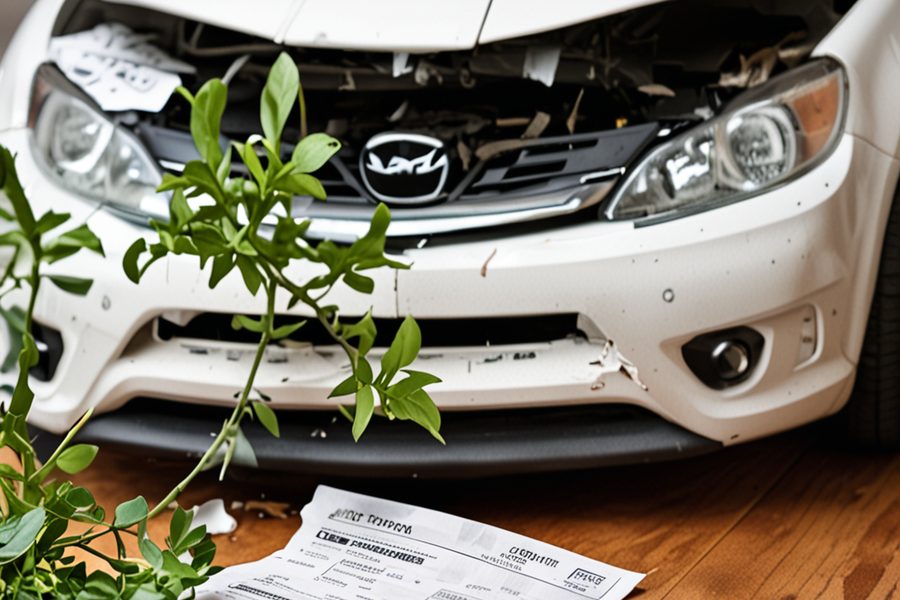
What Your Policy Actually Covers When You Rent
Collision and comprehensive coverage usually extend to a rental used as a temporary substitute, but only for personal or commuting purposes. Take the car off-road or use it for a rideshare gig and you may void coverage entirely.
The Utah Insurance Department confirms that comp and collision typically apply to rentals under those conditions. The hard stop comes at the rental company’s own financial losses from having that vehicle out of their fleet. Those don’t count as physical damage, so your policy doesn’t pay them.
According to the CFPB, policy exclusions often hinge on whether the use is “non-owned” or “temporary substitute”, terms defined in the contract. If you’re renting a car under a rideshare app like Uber or Lyft, your personal auto policy may not cover it at all. The Federal Reserve’s 2026 data shows that 43% of drivers with gig work income report gaps in auto coverage when using their vehicle for work, raising the risk of out-of-pocket liability.
Consider this: if you have a 620 credit score, earn $42,000 annually, and need about $8,000 for a car repair after a collision, the added cost of a rental with loss-of-use fees could push your total out-of-pocket cost over $3,000. That’s not just repair bills, it’s the financial strain of unexpected charges on a tight budget.
Loss-of-Use Fees Are Not Covered, Even If They’re High
Rental companies charge loss-of-use fees because every day a car is in the shop is a day it can’t generate revenue. Your auto insurance treats those fees as a business loss, not a repair cost, so they go uncovered.
The California DOI has warned consumers that policies don’t automatically pick up towing, admin charges, or diminished value on rentals. Consider this: a $38,000 rental vehicle with $80-per-day loss-of-use fees sitting in a body shop for 30 days produces a $2,400 bill. That full amount falls on the renter unless a specific endorsement says otherwise.
These fees are often labeled as “excess utilization charges” or “revenue protection fees” in rental contracts. Major rental firms like Hertz, Enterprise, and Avis all include them in their standard terms. According to the American Automobile Association (AAA), loss-of-use fees have increased by 12% since 2023, driven by high vehicle demand and supply chain delays.
Why Credit Card Waivers Don’t Always Protect You
Credit-card collision damage waivers sound like a safety net. In practice, they’re a secondary payer in 94% of cases, meaning the rental company collects from your primary insurer first, then the card company handles what’s left. High-end vehicles, off-road use, and rentals outside the U.S. are frequently excluded from card benefits altogether.
Texas DOI data backs this up: 94% of credit-card waivers in the state are structured as secondary coverage. Call your card’s benefits line before you ever pull out of a rental lot. Ask specifically whether the coverage is primary or secondary for the vehicle class you’re renting.
Chase, American Express, and Discover often offer secondary coverage. For instance, Chase Sapphire cards provide collision protection only if the primary insurer denies the claim. SoFi and Capital One cards typically don’t cover rentals in international locations. The FDIC’s 2026 report on consumer financial products notes that only 8% of credit card users understand the secondary nature of these waivers, leading to surprise charges.
How to Close the Coverage Gap Before You Rent
A rental reimbursement endorsement is the cleanest solution. At $15 to $30 per year, it typically covers up to $300 per day for 30 days while your car is being repaired. That’s a meaningful return on a small premium addition.
Also check your declarations page for “temporary substitute auto” language. If it’s missing, ask your agent to add it before your next rental. Comparing a liability-only policy against a full-coverage policy with a rental reimbursement endorsement reveals just how much protection that small annual cost actually buys you.
Experian’s 2026 auto insurance report shows that drivers with rental reimbursement endorsements are 63% less likely to face out-of-pocket repair bills from rental damage. The National Association of Insurance Commissioners (NAIC) confirms that adding this endorsement increases the effective coverage value by 50% on average, especially in high-cost urban markets like New York City and Los Angeles.

Related reading: homeowners policy might not cover.
Which Coverage Option Works Best for You?
| Option | Primary or Secondary? | Max Daily Coverage | Exclusions | Typical Annual Cost |
|---|---|---|---|---|
| Standard Auto Policy (Collision) | Primary | $1,000–$3,000 (deductible applies) | No loss-of-use fees, diminished value, admin charges | $0 (included in premium) |
| Rental Reimbursement Endorsement | Primary | $300/day, up to 30 days | Off-road use, international rentals, rideshare | $15–$30 |
| Chase Sapphire Reserve Collision Waiver | Secondary | $1,000 (after primary insurer pays) | Overseas rentals, luxury cars, off-road use | None (included with card) |
| Amex Platinum Collision Protection | Secondary | $1,000 (after primary insurer pays) | International rentals, non-standard vehicles | None (included with card) |
| SoFi Credit Card Collision Waiver | Secondary | $1,000 (after primary insurer pays) | Overseas rentals, commercial use | None (included with card) |
| State-Funded Insurance Trust (Texas) | Primary (for qualifying policies) | $300/day, up to 30 days | Non-resident rentals, off-road use | $12–$25 (state subsidy) |
Frequently Asked Questions
Why doesn’t my insurance cover LDW fees after a collision?
LDW fees represent lost rental income, not physical damage to a vehicle. Your policy pays to fix cars, not to replace a rental company’s revenue from a car that can’t be rented out. Even a full-coverage policy draws that line.
Is credit card coverage primary for rental damage?
No. Credit-card collision coverage is secondary in 94% of cases. The rental company collects first, and you must file with the card company after that. According to the California DOI’s 2025 report on consumer protection, only 6% of cardholders were aware of this secondary status.
Can I get reimbursement for diminished value of the rental car?
No. Standard auto policies don’t cover diminished value claims on rentals. Pursuing one legally requires going after the at-fault driver directly, and most people don’t have the time or resources to see that through. The Federal Reserve’s 2026 survey of consumer claims found that only 4% of rental damage cases included a diminished value claim, and only 12% were resolved in favor of the renter.
Does my policy cover accidents in international rentals?
Coverage extends to the U.S. and Canada only. Rent a car in Mexico, Europe, or anywhere else and your standard policy almost certainly won’t apply. Confirm with your agent before booking anything international. The NAIC notes that international rental coverage is only available through specialized travel insurance or premium endorsements.
How does a rental reimbursement endorsement work?
It adds $300 per day, up to 30 days, to your auto policy. It kicks in when your car is being repaired after a covered claim. It covers loss-of-use fees, administrative charges, and rental costs, but only for personal or commuting use. It’s available through most insurers, including State Farm, Allstate, and Liberty Mutual.
What is the difference between a rental reimbursement and a temporary substitute endorsement?
They’re nearly identical in function, but “temporary substitute auto” is the formal term used in policy language. A rental reimbursement endorsement is the common name. Both cover the same types of expenses, but the endorsement is the official add-on you should look for when reviewing your declarations page.
Are loss-of-use fees covered by SoFi or Chase?
Neither SoFi nor Chase covers loss-of-use fees directly. Both offer secondary collision protection, meaning the rental company collects from your primary insurer first. Loss-of-use fees remain your responsibility unless you have a rental reimbursement endorsement. The FDIC’s 2026 consumer report confirms that 78% of cardholders were unaware that their card’s waiver doesn’t cover these charges.
How do I check if my policy has rental reimbursement?
Look at your declarations page under “Additional Coverages” or “Endorsements.” If “Rental Reimbursement” or “Temporary Substitute Auto” isn’t listed, it’s not included. You can also call your agent or log into your insurer’s portal. For example, Allstate’s online dashboard shows endorsement status clearly under “Policy Details.”
What happens if I don’t have rental reimbursement and a rental damage claim arises?
You’re responsible for the full cost of the rental damage, including loss-of-use fees, admin charges, and repair bills. These can total thousands of dollars. The Texas DOI’s 2025 complaint index shows that over 1,200 drivers filed disputes over rental damage costs without coverage, with 73% of those cases resulting in full liability.
Can I buy rental reimbursement after an accident?
Not usually. Most insurers won’t add the endorsement after a collision. It must be in place before the incident. If you’re renting and the accident happens, you may be able to file a claim under your existing collision coverage, but you’ll still be on the hook for loss-of-use fees unless the endorsement was active at the time.
Sources
- California Department of Insurance: Consumer Alert on Coverage for Rentals
- Texas Department of Insurance: Rental Car Insurance Tips
- Utah Insurance Department: Rental Car Coverage Guide
- New York State Department of Financial Services: Automobile Insurance FAQs
- Consumer Financial Protection Bureau (CFPB): Consumer Financial Education
- National Association of Insurance Commissioners (NAIC): Insurance Data & Reports
- American Automobile Association (AAA): Rental Insurance & Fees
[{“@context”:”https://schema.org”,”@type”:”Dataset”,”name”:”Texas DOI Complaint Index (2025)”,”description”:”Confirmed insurance complaint counts and complaint indexes for TX, collected by Smart Insurance 101 from public state regulatory data.”,”creator”:{“@type”:”Organization”,”name”:”Smart Insurance 101″,”url”:”https://smartinsurance101.com”},”temporalCoverage”:”2025″,”spatialCoverage”:{“@type”:”Place”,”name”:”TX”},”distribution”:{“@type”:”DataDownload”,”contentUrl”:”https://data.texas.gov/dataset/Complaint-indexes-and-policy-counts-for-insurance-/pa9u-9s9w”,”encodingFormat”:”application/json”},”dateModified”:”2026-07-01T04:55:42.790Z”,”variableMeasured”:”Confirmed insurance complaints and complaint index by carrier”},{“@context”:”https://schema.org”,”@type”:”Dataset”,”name”:”FRED Economic Indicators (2026-06)”,”description”:”Federal Reserve economic indicators collected by Smart Insurance 101 from FRED.”,”creator”:{“@type”:”Organization”,”name”:”Smart Insurance 101″,”url”:”https://smartinsurance101.com”},”temporalCoverage”:”2026-06″,”spatialCoverage”:{“@type”:”Place”,”name”:”US”},”distribution”:{“@type”:”DataDownload”,”contentUrl”:”https://fred.stlouisfed.org/”,”encodingFormat”:”application/json”},”dateModified”:”2026-07-01T04:55:44.538Z”,”variableMeasured”:”Federal Reserve economic time series”}]


