
Fact-checked by the Smart Insurance 101 editorial team
Quick Answer
Agreed value vs stated value insurance determines exactly how much you receive after a total loss. With agreed value coverage, you receive the full insured amount, no depreciation deducted. With stated value, insurers pay the lesser of the stated amount or actual cash value, which can mean receiving thousands less than expected., agreed value policies are standard for classic cars, collectibles, and high-value assets.
Understanding agreed value vs stated value insurance is one of the most consequential coverage decisions you can make for any high-value asset, and getting it wrong can cost you tens of thousands of dollars at claim time. Collectors, classic car owners, and specialty vehicle enthusiasts filing total-loss claims are frequently shocked to discover their payout is far less than the amount shown on their policy declarations page. According to Insurance Information Institute data, average auto insurance claim severity has climbed steadily in recent years, making coverage type more consequential than ever.
The difference between these two coverage types matters especially now because collector car values have surged dramatically. The Hagerty Vehicle Rating Index shows classic car values rose significantly over the past three years, meaning the gap between actual cash value and a vehicle’s true market worth has never been wider. Owners who assume their stated value policy will pay out the full listed amount are setting themselves up for a painful financial surprise.
This guide is written for classic car owners, specialty vehicle collectors, boat owners, art collectors, and anyone insuring a high-value item that does not depreciate like a standard consumer product. By the end, you will know exactly which policy type fits your situation, how to negotiate terms, and what questions to ask your insurer before you sign anything.
Key Takeaways
- Agreed value policies pay 100% of the insured amount with zero depreciation deducted at the time of a total loss, according to Hagerty Insurance’s coverage guide.
- Stated value policies can pay as little as the actual cash value (ACV), which may be tens of thousands less than the stated amount, because insurers pay whichever figure is lower at claim time.
- Classic car insurance with agreed value coverage typically costs $200–$600 per year for vehicles valued under $50,000, according to industry premium surveys referenced by NerdWallet’s classic car insurance analysis.
- Over 1 million classic and collector vehicles are insured in the United States, and a significant share are still covered under stated value policies that leave owners underprotected, per Insurance Information Institute estimates.
- Agreed value coverage requires a formal appraisal, typically costing $150–$350, but that upfront cost is minor compared to potential claim shortfalls that can exceed $20,000 or more on premium vehicles.
- Specialty insurers including Hagerty, American Collectors Insurance, and Grundy offer agreed value policies as their standard product for collector vehicles, while most standard auto insurers default to stated value or ACV-based policies.
In This Guide
- What exactly is the difference between agreed value and stated value insurance?
- How does the insurance payout actually work for each policy type after a total loss?
- Which type of policy should I choose for my classic car or collectible?
- How do I get agreed value coverage and what do I need to qualify?
- How do I negotiate the agreed value amount with my insurance company?
- What are the common stated value insurance traps that cost owners thousands?
- Frequently Asked Questions
Step 1: What Exactly Is the Difference Between Agreed Value and Stated Value Insurance?
Agreed value insurance means you and the insurer formally agree upfront on exactly what your vehicle or asset is worth, and that is precisely what you receive in a total loss, with no deductions for depreciation. Stated value insurance, by contrast, means you declare a value when purchasing the policy, but the insurer reserves the right to pay the lower of that stated amount or the actual cash value at the time of the claim.
How This Works in Plain Language
Think of agreed value as a locked-in contract: both sides sign off on a number and that number is guaranteed. Stated value is more like a ceiling, the insurer will not pay more than the stated amount, but they can absolutely pay less if they determine the actual cash value has declined. This “lesser of” clause is what catches most policyholders off guard.
For standard vehicles that depreciate normally, this distinction matters less. But for classic cars, vintage motorcycles, collector boats, fine art, and jewelry, assets that hold or gain value over time, the stated value structure can create a massive coverage gap. If your 1967 Ford Mustang Fastback is stated at $60,000 but the insurer’s adjuster determines ACV is only $42,000 at claim time, you receive $42,000 regardless of what your policy declarations page shows.
What to Watch Out For
Many standard auto insurers use the terms “agreed value” and “stated value” interchangeably in their marketing, but they are not the same product. Always read the claims settlement language in your actual policy document, not the sales brochure. Look specifically for the phrase “lesser of stated amount or actual cash value.” If those words appear, you have a stated value policy regardless of what the agent called it.
The term “agreed value” has a specific legal meaning in insurance contracts. In a true agreed value policy, the insurer waives the right to dispute the insured value at claim time. This waiver is the critical difference, and it must be explicitly stated in your policy language to be enforceable.
Step 2: How Does the Insurance Payout Actually Work for Each Policy Type After a Total Loss?
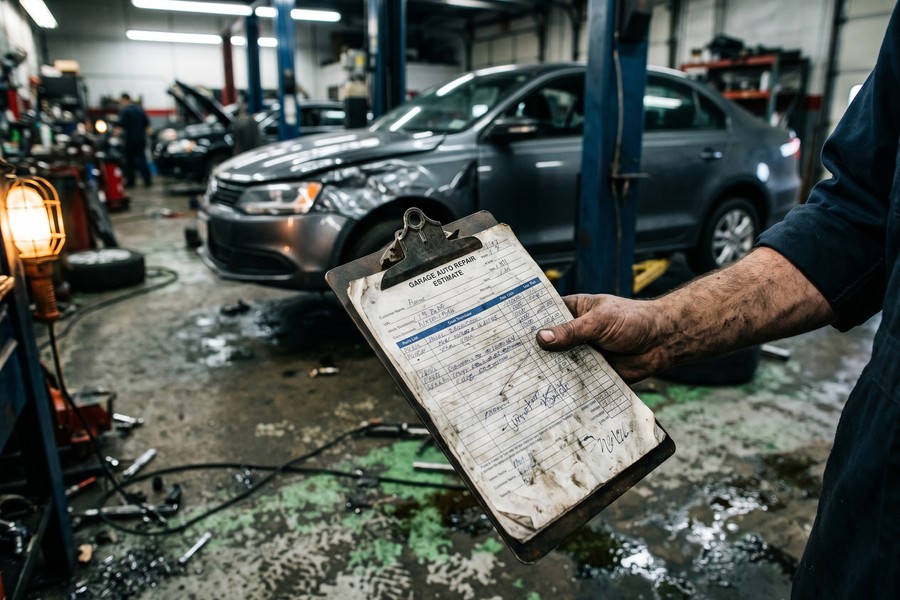
After a total loss, agreed value policies pay the full insured amount stated on the declarations page, period. Stated value policies trigger an adjuster review that calculates actual cash value and pays whichever figure is lower, which is almost always the ACV rather than your stated amount.
The Claims Process Side by Side
With an agreed value policy, the claims process is straightforward: you file the claim, the insurer confirms the loss, and they issue a check for the full agreed amount, typically within 10 to 30 business days. There is no depreciation calculation, no negotiation over market value, and no argument about condition.
With a stated value policy, the process is more complex. The insurer assigns an adjuster who researches comparable sales, checks valuation guides, and applies a depreciation formula to calculate ACV. According to the National Association of Insurance Commissioners (NAIC), policyholders have the right to dispute ACV calculations, but disputes can take weeks or months to resolve and may require hiring an independent appraiser at your own expense.
A Real-World Numbers Example
Here is how the math works in practice. Suppose you own a 1969 Chevrolet Camaro Z28 insured at $75,000:
- Under an agreed value policy: total loss payout = $75,000 (guaranteed)
- Under a stated value policy: insurer calculates ACV at $58,000, payout = $58,000
- Difference: $17,000 lost, simply because of policy type, not vehicle condition
That gap can be even larger for vehicles that have appreciated significantly since the policy was written. If your stated value has not been updated in several years, the ACV calculation may exceed your stated amount in some cases, but the insurer still pays only the lesser figure, capping your benefit at the outdated stated value.
According to Hagerty’s Market Data, collector car values rose by an average of 27% between 2020 and 2023. Owners with stated value policies that were not updated during this period may now be significantly underinsured relative to their vehicle’s actual market value.
For more context on how insurance costs and payouts are structured across different policy types, our guide on what insurance actually costs breaks down the premium-to-payout relationship in plain terms.
What to Watch Out For
Do not confuse total loss payouts with partial loss or repair claims. Agreed value and stated value distinctions primarily affect total loss settlements. For partial losses, most policies (both types) pay reasonable repair costs up to the insured value, minus your deductible. Always confirm this distinction in your policy’s claims settlement section.
Agreed value coverage does have one honest limitation worth naming: the insurer locks in a number at policy inception, and the market does not stand still. If your vehicle appreciates sharply after you set the agreed value, say, a particular model suddenly becomes sought-after at auction, you are still bound by the figure on the declarations page. You will not receive the windfall gain. Updating your agreed value requires a new appraisal and a policy endorsement, which takes time and costs money. For owners in rapidly appreciating markets, staying on top of that cycle is real ongoing work, not a one-time task.
“The single biggest mistake collector car owners make is assuming that the number on their policy declarations page is what they will receive at claim time. With stated value coverage, that number is a ceiling, not a guarantee. We see claim disputes regularly where owners expected $80,000 and received $55,000 — and the insurer was technically within their rights.”
Step 3: Which Type of Policy Should I Choose for My Classic Car or Collectible?
Choose agreed value insurance for any asset that holds or appreciates in value, classic cars, collector vehicles, vintage motorcycles, boats, fine art, jewelry, and antiques. Choose stated value only if you cannot qualify for agreed value coverage or if you are insuring a high-mileage driver vehicle where depreciation is a realistic factor.
How to Decide Based on Your Situation
The core question is simple: does your asset depreciate like a normal consumer product, or does it hold and grow its value? Standard passenger vehicles lose roughly 15–25% of their value in the first year of ownership, according to Carfax depreciation research. For those assets, actual cash value coverage is reasonable and agreed value may not even be available.
Classic cars, limited-production vehicles, and collectibles behave differently. They often have stable or increasing values, meaning a depreciation-based payout at claim time leaves you genuinely short. If you paid $45,000 for a classic vehicle and it is now worth $65,000, a stated value policy locked in at $45,000 gives you a double shortfall, both the ACV calculation and the outdated stated figure work against you.
There is also a category of owner for whom agreed value coverage is simply the wrong fit. If you drive your collector car frequently, say, more than 7,500 miles a year, many specialty insurers will decline to offer agreed value terms, or will charge premiums that erode most of the savings advantage. Daily drivers and high-mileage classics are better served by a standard policy with a high stated value, updated regularly, than by a specialty agreed value product you cannot realistically qualify for. Specialty agreed value coverage is built around limited, careful use, owners who push those boundaries often find the restrictions more frustrating than the coverage is worth.
Understanding the broader picture of types of insurance and their benefits can help you contextualize where specialty agreed value coverage fits within your overall insurance portfolio.
What to Watch Out For
Coverage restrictions on mileage are real and consequential. Most agreed value policies cap annual mileage at 2,500 to 5,000 miles. If you use your classic vehicle more frequently, confirm with the insurer that your actual usage pattern qualifies. Exceeding mileage limits can void agreed value terms and revert your coverage to ACV.
| Feature | Agreed Value Policy | Stated Value Policy |
|---|---|---|
| Total Loss Payout | 100% of agreed amount, no deductions | Lesser of stated amount or ACV, often $10,000–$30,000 less |
| Depreciation Applied | No depreciation deducted | Depreciation calculated and deducted from ACV |
| Annual Premium (avg.) | $200–$600 for vehicles under $50,000 | $150–$400, slightly lower premiums |
| Appraisal Required | Yes, formal appraisal at $150–$350 | No, owner declares a value |
| Best For | Classic cars, collectibles, appreciating assets | Modified vehicles, limited-use daily drivers |
| Value Disputes at Claim | Rare, value is contractually locked | Common, ACV calculation frequently contested |
| Top Providers | Hagerty, American Collectors, Grundy, Heacock | Geico, State Farm, Progressive (specialty endorsements) |
If you are unsure whether your current policy is true agreed value or stated value, call your insurer and ask one specific question: “At the time of a total loss claim, will you pay the full amount on my declarations page regardless of actual cash value?” A yes answer confirms agreed value. Any hedging or reference to ACV calculations confirms stated value.
Step 4: How Do I Get Agreed Value Coverage and What Do I Need to Qualify?
To get agreed value insurance, you need to work with a specialty insurer, obtain a professional appraisal of your vehicle or asset, meet the insurer’s usage requirements, and provide documentation of the vehicle’s condition and history. The process typically takes one to two weeks.
How to Do This
Start by contacting a specialty collector car insurer. The major providers offering true agreed value coverage include Hagerty Insurance, American Collectors Insurance, Grundy Worldwide, Heacock Classic Insurance, and J.C. Taylor Antique Auto Insurance. Standard auto insurers like Geico, State Farm, and Allstate occasionally offer stated value endorsements for classic vehicles, but their standard products are not true agreed value policies.
Next, arrange a professional appraisal. Many specialty insurers accept appraisals from American Society of Appraisers (ASA) members, Appraisers Association of America certified appraisers, or marque-specific club appraisers. The appraisal documents the vehicle’s condition, restoration quality, provenance, and comparable market sales. Costs typically run $150–$350 for a standard collector vehicle.
You will also need to meet usage restrictions. Most agreed value policies require:
- Annual mileage under 2,500–7,500 miles (varies by insurer)
- Proof the vehicle is stored in a locked, enclosed structure
- A separate daily-use vehicle insured elsewhere
- A clean or near-clean driving record for the primary driver
What to Watch Out For
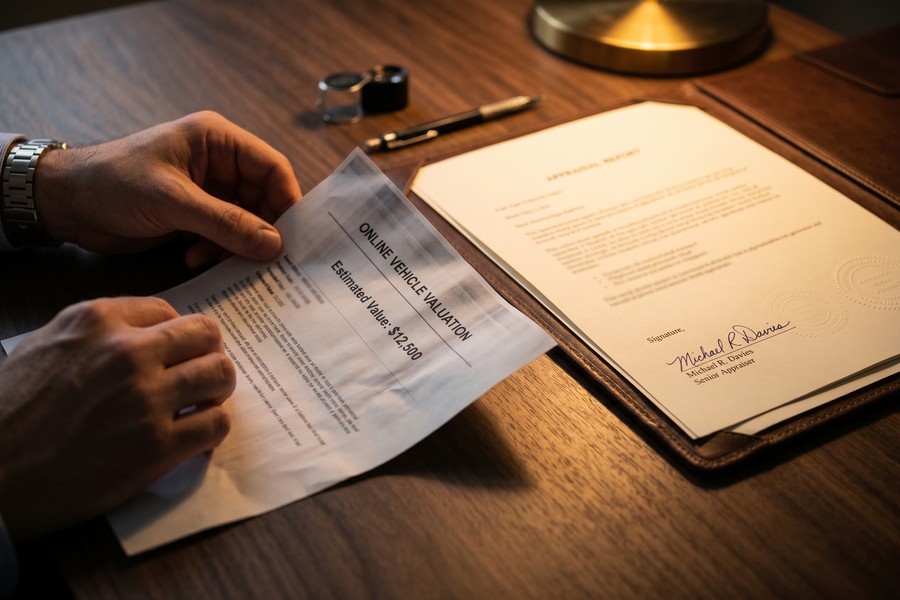
Not all appraisals carry equal weight with underwriters. Avoid self-prepared valuations or printouts from online price guides, most specialty insurers require a signed appraisal from a credentialed professional. Re-appraise your vehicle every three to five years or after significant restoration work. A policy written on a $40,000 appraisal from 2019 may severely underinsure a vehicle now worth $70,000.
Certain insurers require an on-site inspection rather than a written appraisal. If an insurer accepts your own stated value without any documentation requirement, that is almost certainly a stated value policy, not agreed value. True agreed value requires the insurer to formally verify and accept the valuation before the policy is bound.
Step 5: How Do I Negotiate the Agreed Value Amount With My Insurance Company?
Negotiating your agreed value starts with credible documentation, a professional appraisal is your primary tool, but comparable sales data, receipts for restoration work, and auction results all strengthen your position. Insurers want to see evidence, not opinions.
How to Do This
Gather the following before any negotiation conversation with your insurer:
- A current certified appraisal from an ASA or AAA-credentialed appraiser
- Receipts for all restoration, modification, or improvement work
- Recent auction results for comparable vehicles (use Hagerty Price Guide, Barrett-Jackson auction records, or Mecum Auctions sale results)
- Photographs documenting current condition, exterior, interior, engine bay, undercarriage
- Vehicle history report confirming originality and absence of prior damage
Present this package to the insurer’s underwriter, not just the sales agent. Underwriters have authority to approve higher agreed values and can evaluate documentation directly. If your insurer declines your proposed value, you can submit for review with a second appraisal or switch to a specialty insurer who focuses on higher-value collector vehicles.
What to Watch Out For
Insurers may counter-propose a lower agreed value than your appraisal supports. This is negotiable, you are not required to accept their initial offer. If the gap is significant (more than 10–15%), request a written explanation of how they arrived at their valuation and challenge specific line items with your documentation. If the insurer will not budge, shopping with competing specialty insurers is a legitimate strategy.
Use the Hagerty Valuation Tools database to pull condition-specific price ranges for your vehicle before your appraisal appointment. Arriving at the negotiation with third-party market data in hand, not just one appraiser’s opinion, significantly strengthens your position with underwriters.
Step 6: What Are the Common Stated Value Insurance Traps That Cost Owners Thousands?
The most dangerous stated value traps include the “lesser of” payout clause, stale coverage amounts that have not kept pace with market appreciation, and vague policy language that allows insurers to redefine total loss thresholds. Each trap is avoidable once you know what to look for.
The Top Stated Value Traps Explained
Trap 1: The “Lesser Of” Clause. This is the foundational problem with stated value coverage. The policy may state $80,000, but if the adjuster calculates ACV at $60,000, you receive $60,000. The stated value functions only as an upper limit, not a guaranteed floor. This clause is common in standard auto policies with classic car endorsements from non-specialty insurers.
Trap 2: Outdated Stated Values. Collector car markets move quickly. If you set your stated value at $35,000 five years ago and the vehicle is now worth $55,000, you are underinsured by $20,000, and in a total loss scenario, the ACV may actually exceed your stale stated figure, meaning the insurer caps your payout at the lower outdated number.
Trap 3: Ambiguous Total Loss Thresholds. Insurers typically declare a total loss when repair costs exceed 70–80% of the vehicle’s insured value. Under stated value, that threshold is calculated on ACV, not the stated amount. A lower ACV threshold means the insurer may total a vehicle that could be repaired for less than its full market value, then pay out a depressed ACV figure. The combination is doubly disadvantageous.
For those navigating auto insurance choices more broadly, our car insurance guide covers how these policy structures interact with standard coverage requirements, and our car insurance quote comparison guide explains how to evaluate policies from multiple insurers side by side.
What to Watch Out For
Never rely solely on your agent’s verbal description of how a policy pays. Request the full policy document before binding coverage and search for these specific phrases: “actual cash value,” “lesser of,” and “fair market value at time of loss.” Any of these terms in the claims settlement section signals a stated value or ACV-based policy, not a guaranteed agreed value payout.

Marketing materials sometimes describe policies as “agreed value” while the actual claims settlement provisions contain ACV language. The marketing copy has no legal weight, only the policy language matters. Always verify the specific claims settlement clause before purchasing, especially when buying through an online comparison platform where policy details may be summarized rather than displayed in full.
If you are reconsidering your broader insurance portfolio after reading this, the guide to choosing an insurance broker explains how a knowledgeable broker can help you identify these gaps across all your policies, not just specialty vehicles.
Frequently Asked Questions
Is agreed value insurance more expensive than stated value?
Agreed value insurance is typically slightly more expensive than stated value, but the difference is modest, often $50–$150 more per year for a standard collector vehicle. Given that agreed value can protect you from claim shortfalls of $10,000 or more, the premium difference is almost always worth it. Specialty insurers like Hagerty and American Collectors Insurance have built their pricing models around collector vehicles, often making their agreed value products surprisingly competitive with standard stated value endorsements from mainstream insurers.
Can I switch from stated value to agreed value on my current policy?
Yes, but you will likely need to change insurers rather than simply amending your current policy. Most standard auto insurers do not offer true agreed value coverage, so you will need to move to a specialty collector car insurer. Contact Hagerty, Grundy, or American Collectors Insurance directly and provide a current appraisal. The new policy can typically be bound within a few days once documentation is accepted.
What happens if my classic car’s value goes up after I set the agreed value?
If your vehicle appreciates after the agreed value is set, you are underinsured for the difference, the insurer pays only the figure on your declarations page, not the current market value. Review and update your agreed value every two to three years, or immediately after significant restoration work. Most specialty insurers make this process straightforward by accepting updated appraisals and issuing policy endorsements to reflect the new agreed amount.
Do I need a professional appraisal for agreed value coverage, or can I set my own value?
Virtually all true agreed value insurers require a professional appraisal from a credentialed appraiser. Self-declared values without documentation support result in stated value policies, not agreed value policies. Use appraisers credentialed through the American Society of Appraisers or a marque-specific club recognized by the insurer. Appraisals cost $150–$350 and are typically valid for three to five years, depending on market conditions for your specific vehicle.
Does agreed value vs stated value apply to boat and marine insurance too?
Yes, the agreed value vs stated value distinction applies to marine insurance for boats, yachts, and personal watercraft. According to BoatUS Insurance, agreed value policies are the recommended standard for vessels over $20,000 in value. As with collector vehicles, stated value marine policies pay the lesser of the stated amount or ACV, which can produce a significant shortfall for well-maintained or recently restored vessels that have retained their value.
Can I get agreed value coverage for a modified car that is not a classic?
Agreed value coverage is available for modified vehicles, but it can be harder to obtain and may require more documentation. Insurers need to verify the added value of modifications, custom engines, suspension upgrades, bodywork, through receipts and a professional appraisal that accounts for these enhancements. Specialty insurers like American Modern Insurance and Heacock Classic offer agreed value coverage for modified street rods and custom vehicles that do not qualify as traditional classics.
What if the insurer and I disagree on the vehicle’s value during an agreed value claim?
Under a true agreed value policy, value disputes should not occur, the agreed amount is contractually binding and the insurer waives the right to challenge it at claim time. If an insurer attempts to pay less than the agreed value after a total loss, you have legal grounds to demand full payment and can file a complaint with your state’s insurance commissioner. Contact the NAIC’s consumer complaint center for guidance on filing a dispute if your insurer refuses to honor an agreed value settlement.
Should I use a specialty insurer or can my regular auto insurer handle agreed value for my classic car?
Use a specialty insurer for agreed value coverage on classic or collector vehicles. Standard auto insurers, including major carriers like Geico, State Farm, and Progressive, offer classic car endorsements, but these are almost always stated value products, not true agreed value policies. Specialty insurers including Hagerty, Grundy, and American Collectors Insurance are built specifically for collector vehicles and offer guaranteed agreed value payouts, lower premiums for limited-use vehicles, and claims adjusters who understand collector car markets.
How often should I update the agreed value on my collector car policy?
Update your agreed value every two to three years under normal circumstances, and immediately after any significant restoration, modification, or a substantial shift in the market for your specific model. Hagerty recommends annual check-ins using their valuation tools to ensure your coverage stays aligned with current market values. An outdated agreed value that is lower than your vehicle’s current worth leaves you with a self-funded gap, the insurer pays only what was agreed, not what the vehicle is actually worth at claim time.
Is agreed value coverage available for fine art, jewelry, and other non-vehicle collectibles?
Yes. Many specialty insurers and high-net-worth home insurers offer agreed value coverage for fine art, jewelry, wine collections, and antiques. The mechanics are the same: a credentialed appraisal establishes the value, the insurer formally accepts it, and a total loss pays the full agreed figure without depreciation. Standard homeowners policies, by contrast, typically apply ACV or replacement cost formulas that can fall well short for items with established collector markets. Insurers such as Chubb, AIG Private Client Group, and PURE specialize in this type of coverage.
Sources
- Insurance Information Institute, Auto Insurance Facts and Statistics
- National Association of Insurance Commissioners, Consumer Alert: Auto Total Loss Claims
- National Association of Insurance Commissioners, Consumer Information and Complaint Resources
- BoatUS, Boat Insurance: Agreed Value vs. Actual Cash Value
- Hagerty, Classic Car Valuation Tools and Price Guide
- Insurance Information Institute, Industry Data and Research


